

F
ForgottenSeer 116559
Avast began in 1988, 38 years ago, as a small antivirus research project between two young computer scientists in Czechoslovakia. Since then, it's evolved into one of the largest cybersecurity companies in the world, eventually lending its own technological prowess and innovations to a name as famous as Norton.
One of the greatest strategic decisions in the history of the company proved to be the freemium model that started with the launch of Avast Free Antivirus in 2001. By the late 2000s, Avast had already grown to tens of millions of users and rapidly became one of the most widely deployed antiviruses in over 200 countries.
I asked ChatGPT 5.1 to write a comprehensive report with references on Avast's growth and innovation over the last ten years, including as much lucid detail as possible on the technologies involved. It should serve as a convenient and stimulating overview of the many developments in Avast's most recent chapter as a titan of the industry.
One of the greatest strategic decisions in the history of the company proved to be the freemium model that started with the launch of Avast Free Antivirus in 2001. By the late 2000s, Avast had already grown to tens of millions of users and rapidly became one of the most widely deployed antiviruses in over 200 countries.
I asked ChatGPT 5.1 to write a comprehensive report with references on Avast's growth and innovation over the last ten years, including as much lucid detail as possible on the technologies involved. It should serve as a convenient and stimulating overview of the many developments in Avast's most recent chapter as a titan of the industry.
Avast 2016–2026: Growth, Innovation, and Technical Achievements in Cybersecurity
Executive Summary: Avast’s Decade of Transformation (2016–2026)
Over the last decade, Avast has undergone a profound transformation, evolving from a leading consumer antivirus vendor into a global cybersecurity powerhouse with a sophisticated, AI-driven technology stack and a vast threat intelligence network. This period was marked by major milestones, including the acquisition of AVG Technologies in 2016, a successful IPO in 2018, and the 2022 merger with NortonLifeLock to form Gen Digital. Avast’s user base grew to over 435 million active users, providing the telemetry backbone for its advanced threat detection and response capabilities.
Technologically, Avast shifted from traditional signature-based antivirus to a multi-layered, cloud-augmented, and machine learning-powered defense architecture. Innovations included the integration of behavioral analysis (Behavior Shield), advanced sandboxing (DeepScreen and CyberCapture), rapid machine learning pipelines, and a globally distributed telemetry infrastructure. The company’s threat intelligence network became one of the largest in the world, enabling real-time detection and mitigation of emerging threats, including ransomware, zero-day exploits, and sophisticated APT campaigns.
Avast’s journey was not without controversy, notably the Jumpshot data privacy incident, which led to regulatory scrutiny and a $16.5 million FTC settlement. In response, Avast overhauled its data handling practices and reinforced its commitment to privacy and transparency.
This report provides a comprehensive, technically detailed analysis of Avast’s evolution from 2016 to 2026, focusing on the architecture and operation of its antivirus engine, behavioral analysis, machine learning integration, cloud-based threat detection, endpoint protection, and the growth and sophistication of its threat intelligence network.
Timeline of Key Innovations and Milestones (2016–2026)
Acquisition of AVG Technologies Doubled user base, merged telemetry and threat intelligence infrastructure Expansion of AI/ML in malware detection Deployment of deep learning models, rapid ML pipeline for threat detection IPO on London Stock Exchange Capital for R&D, expansion of enterprise solutions Launch of advanced behavioral analysis (Behavior Shield) Real-time process monitoring, zero-day threat detection Jumpshot privacy controversy Overhaul of telemetry and privacy practices, closure of Jumpshot Merger with NortonLifeLock (Gen Digital) Integration of global research operations, expanded enterprise reach Next-gen cloud-based threat detection, federated learning Real-time cloud analytics, privacy-preserving ML, endpoint protection at scale AI-driven automated incident response, explainable AI Autonomous remediation, transparency in AI decisions AI and quantum computing research, advanced threat intelligence APIs Future-proofing detection, open integration with enterprise SOCs
This timeline highlights Avast’s continuous innovation, with each milestone contributing to a more robust, adaptive, and intelligent cybersecurity ecosystem.
Antivirus Engine Architecture and Evolution
Multi-Layered Defense Model
Avast’s antivirus engine evolved from a traditional, signature-based scanner into a multi-layered, cloud-augmented, and machine learning-powered system. The architecture is designed to provide defense-in-depth, with each layer targeting specific threat vectors and attack techniques.
Core Layers of Protection
This layered approach ensures that threats are intercepted at multiple stages—network, file system, memory, and process execution—minimizing the risk of successful compromise.
- Web Shield: Inspects all HTTP/HTTPS traffic, using URL detection algorithms and full content filtering to block phishing and web-based malware before it reaches the endpoint.
- Static Scanner: Analyzes code and binaries pre-execution using ML-driven PE structure analysis, unpacking, de-obfuscation, and similarity hashing for rapid classification.
- Emulators: Script and binary emulators provide full virtualized execution environments, enabling detection of zero-day malware and polymorphic threats by observing behavior in a controlled setting.
- DeepScreen: Hypervisor-assisted virtual machines run suspicious files in a cloned OS, leveraging ML to identify similarities with known malware families and to unpack obfuscated payloads.
- CyberCapture: Cloud-based analysis for rare or highly suspicious files, automatically submitting them to Avast Threat Labs for deep inspection and user engagement during the process.
- Behavior Shield: Real-time behavioral monitoring of all processes, detecting and blocking malicious activity based on deviations from normal behavior, even for previously unknown threats.
Static and Dynamic Analysis
Avast’s engine combines static analysis (code inspection, signature matching, similarity hashing) with dynamic analysis (sandboxing, emulation, behavioral monitoring). Static analysis rapidly filters known threats and flags suspicious binaries for deeper inspection. Dynamic analysis, including full-system emulation and behavioral heuristics, is critical for detecting zero-day, polymorphic, and fileless malware.
Similarity Hashing and Malware Clustering
Avast employs similarity hashing (e.g., ssdeep, sdhash) to cluster malware samples and improve detection rates by up to 40% compared to traditional signature-only approaches. This technique enables the identification of malware variants and evolutionary families, even when code is obfuscated or packed.
Cloud-Assisted Scanning
The engine offloads resource-intensive analysis to the cloud, where advanced ML models and threat intelligence databases can be leveraged for rapid, up-to-date detection. This approach reduces endpoint resource consumption and ensures that even newly discovered threats are blocked in real time.
Behavioral Analysis and Behavior Shield Mechanisms
Real-Time Behavioral Monitoring
Behavior Shield, introduced in the late 2010s and continuously enhanced, is a patented technology that monitors all running processes, file system, and registry access in real time. It detects suspicious behaviors such as:
When such behaviors are detected, Behavior Shield can automatically block the process, undo malicious actions, and quarantine the offending files.
- Unauthorized access to sensitive system areas
- Attempts to terminate security services (e.g., Windows Update, Firewall)
- Injection into system-level processes
- Unusual file modifications or encryption (indicative of ransomware)
- Unauthorized use of peripherals (e.g., webcam, microphone)
Technical Operation
Behavior Shield leverages advanced heuristics and machine learning to establish baselines of normal process behavior. It captures system calls, API invocations, and inter-process communications, comparing them against models of benign and malicious activity. Deviations trigger alerts or automated remediation actions.
- Heuristic Analysis: Rule-based and ML-driven heuristics identify behaviors characteristic of malware, such as rapid file encryption (ransomware), privilege escalation, or network beaconing.
- Zero-Day Protection: By focusing on behavior rather than static signatures, Behavior Shield is effective against zero-day threats and rapidly morphing malware families.
Integration and Customization
Behavior Shield is tightly integrated with other Avast shields (File, Web, Mail) and can be centrally managed via the Avast Business Hub. Administrators can configure response actions (ask, quarantine, allow), set exclusions to reduce false positives, and adjust sensitivity based on organizational risk tolerance.
Machine Learning Integration and ML Pipeline
Multi-Engine ML Architecture
Avast’s threat prevention does not rely on a single ML engine but employs a combination of multiple engines, each specialized for different detection tasks. These engines operate across endpoints and the cloud, using both static and dynamic analysis techniques.
Key Components
- Deep Convolutional Neural Networks (CNNs): Analyze binary files for subtle patterns indicative of malware, effective for static detection of obfuscated threats.
- Recurrent Neural Networks (RNNs): Model sequential data such as system calls and execution traces, enabling detection of complex, multi-stage attacks.
- Ensemble Models: Combine outputs from various classifiers (Random Forests, SVMs, Gradient Boosted Trees) to improve accuracy and reduce false positives.
ML Pipeline and Rapid Model Deployment
Avast has developed a unique ML pipeline capable of training and deploying new malware detection models within 12 hours of encountering a new threat. The pipeline includes:
- Data Collection: Telemetry from 435+ million endpoints provides a continuous stream of labeled and unlabeled data, including file metadata, behavioral logs, and network activity.
- Feature Extraction: Automated tools extract relevant features from static binaries (PE headers, entropy, imports) and dynamic behavior (system calls, registry changes).
- Model Training: ML models are trained on massive, diverse datasets, incorporating both supervised (labeled malware/benign) and unsupervised (anomaly detection) learning.
- Validation and Testing: Models are validated against recent threat samples and benchmarked for accuracy, precision, recall, and F1-score.
- Deployment: Once validated, models are pushed to the cloud and endpoint agents, enabling up-to-the-minute protection.
Federated Learning and Privacy
To enhance privacy, Avast employs federated learning, allowing models to be trained on distributed data across user devices without centralizing sensitive information. Only model updates are aggregated, preserving user privacy while improving detection performance.
Continuous Model Retraining
Given the rapid evolution of malware, Avast’s ML models are continuously retrained using sliding windows of recent data, performance-triggered updates, and event-based retraining for emerging threats. This ensures that detection remains effective against new attack techniques and adversarial ML tactics.
Cloud-Based Threat Detection and Cloud Engine
Cloud-First Security Architecture
Avast’s cloud-based threat detection infrastructure is a cornerstone of its modern security model. The cloud engine performs real-time analysis of files, URLs, and behaviors, leveraging the collective intelligence of the global user base.
Key Features
- Real-Time File and URL Analysis: Suspicious files and URLs are hashed and sent to the cloud for comparison against the latest threat intelligence and ML models.
- Automated Sandboxing: Unknown files are executed in cloud-based virtual machines, where their behavior is monitored and classified.
- Instantaneous Model Updates: New detection models and threat signatures are deployed to the cloud, ensuring that all endpoints benefit from the latest intelligence without manual updates.
- Lightweight Endpoint Agents: By offloading heavy computation to the cloud, endpoint agents remain lightweight, minimizing system impact and enabling protection on resource-constrained devices.
Cloud-Driven Incident Response
When a new threat is detected anywhere in the Avast network, the cloud engine analyzes it, updates detection models, and propagates protections globally within hours. This rapid response cycle dramatically reduces the window of vulnerability for all users.
Privacy and Data Handling
Cloud-based analysis is designed with privacy in mind. Only anonymized telemetry and file hashes are transmitted, and sensitive data remains on the user’s device unless explicit consent is given for deeper analysis (e.g., CyberCapture submissions).
Endpoint Protection Features and Enterprise Solutions
Comprehensive Endpoint Security Suite
Avast’s endpoint protection solutions have evolved to address the needs of both consumers and enterprises, offering a unified suite of security features managed via the cloud-based Business Hub.
Core Features
- File, Web, and Mail Shields: Real-time scanning of files, web traffic, and email for malware and phishing.
- Firewall: Monitors and controls network traffic, preventing unauthorized access and lateral movement.
- Behavior Shield: Detects suspicious process behavior and blocks zero-day threats.
- Sandbox: Isolates untrusted applications in a virtual environment, preventing system compromise.
- Wi-Fi Inspector: Scans networks for vulnerabilities and misconfigurations.
- Ransomware Shield: Protects critical files from unauthorized encryption or modification.
- Patch Management: Automates the deployment of security patches across endpoints.
- Remote Control and Cloud Backup: Enables secure remote access and automated data backup for business continuity.
Business Hub and Centralized Management
The Avast Business Hub provides a single pane of glass for managing security across multiple devices, sites, and customers. Features include:
- Real-Time Threat Monitoring: Centralized dashboard for alerts, incidents, and device status.
- Policy Management: Granular control over security settings and response actions.
- API Integration: Business API Gateway enables integration with SIEM, RMM, and other enterprise tools for automated incident response and reporting.
- Comprehensive Reporting: Scheduled and on-demand reports for compliance and audit purposes.
Scalability and Automation
Avast’s endpoint protection is designed to scale from small businesses to large enterprises, with automated deployment, policy enforcement, and incident response. AI-driven automation reduces manual intervention and accelerates remediation of threats.
Threat Intelligence Network and Telemetry Infrastructure
Global Telemetry Backbone
Avast’s threat intelligence network is powered by telemetry from over 435 million endpoints worldwide, making it one of the largest and most advanced in the industry.
Data Collection and Processing
- Endpoint Sensors: Each protected device acts as a sensor, reporting suspicious files, behaviors, URLs, and network activity.
- Cloud Aggregation: Telemetry is anonymized, aggregated, and analyzed in the cloud, enabling real-time detection of emerging threats.
- Threat Correlation: AI-driven engines correlate data from diverse sources (endpoints, honeypots, open-source feeds) to identify coordinated attacks and new malware campaigns.
Threat Intelligence Products and APIs
Avast offers commercial threat intelligence feeds and APIs, including:
These products enable enterprises, MSSPs, and government agencies to integrate Avast’s intelligence into their security operations, enhancing threat hunting, vulnerability management, and incident response.
- Phishing Feed: Lists of phishing URLs for proactive blocking.
- Blocklist Feed: IPs and URLs associated with C&C servers, exploit kits, and scams.
- CVE Prevalence Feed: Insights into exploited vulnerabilities observed in the wild.
- File Reputation and URL Information APIs: On-demand queries for file and URL risk assessment.
Malware Classification and Labeling
Avast employs advanced ML and clustering techniques to classify malware into families and evolutionary lineages. This enables rapid identification of new variants and targeted remediation strategies.
- Similarity Hashing: Clusters samples based on code similarity, improving detection rates and reducing false positives.
- Behavioral Labeling: Assigns labels based on observed behaviors in sandbox and emulation environments.
- Automated Label Propagation: New samples are automatically classified and labeled, streamlining analyst workflows.
Sandboxing, Emulation, and DeepScreen Technical DetailsDeepScreen: Hypervisor-Assisted Sandboxing
DeepScreen is Avast’s advanced sandboxing technology, leveraging full-system virtualization to analyze suspicious files in a cloned OS environment. Key technical features include:
- Full OS Emulation: Suspicious files are executed in a virtual machine that replicates the user’s environment, including CPU, RAM, and OS subsystems.
- Deep Instrumentation: Monitors high-level and instruction-level behavior, capturing system calls, memory modifications, and network activity.
- Machine Learning Analysis: Behavioral traces are analyzed using ML models to identify similarities with known malware families and to detect novel attack techniques.
- Cloud Integration: The sandbox connects to the Avast cloud engine, utilizing global threat intelligence for real-time assessment.
CyberCapture: Cloud-Based File Analysis
CyberCapture automatically isolates and submits rare or suspicious files to Avast Threat Labs, where they are analyzed in a secure, virtualized environment. The process includes:
- User Engagement: Users are informed and kept engaged during analysis, reducing uncertainty and improving trust.
- Expert Review: Advanced algorithms and human analysts inspect files that cannot be conclusively classified by automated systems.
- Rapid Feedback: Users receive notifications within hours, indicating whether the file is safe or malicious.
Emulators and Generic Unpackers
Avast employs emulators for both scripts and binaries, providing full emulation of the native computing environment. Features are collected during emulation, and a rule engine determines whether to block or allow execution. Generic unpackers peel off layers of obfuscation, revealing hidden malware samples for analysis.
Automated Incident Response and Remediation Mechanisms
AI-Driven Autonomous Response
Avast’s AI systems are designed to autonomously respond to detected threats, minimizing response time and reducing reliance on manual intervention. Capabilities include:
- Quarantine and Rollback: Infected files are automatically quarantined, and system changes (e.g., ransomware encryption) can be rolled back to restore normal operation.
- Network Isolation: Compromised endpoints can be isolated from the network to prevent lateral movement.
- Automated Playbooks: Predefined response actions are triggered based on threat severity and context, with continuous learning to refine response strategies.
Forensics and Threat Hunting
AI-powered forensics tools analyze security incidents, providing detailed insights into attack vectors, compromised systems, and data exfiltration. Techniques include:
- Log Analysis: NLP and entity recognition extract critical information from logs and network traffic.
- Threat Correlation: Links related events and indicators to reconstruct attack chains and identify coordinated campaigns.
Telemetry Privacy, Data Handling, and Controversies
Jumpshot Incident and Regulatory Response
In early 2020, Avast faced significant backlash after it was revealed that browsing data from free product users was being sold via its subsidiary, Jumpshot. Although the data was claimed to be de-identified, investigations showed that it could potentially be linked back to individuals. In response:
- Closure of Jumpshot: Avast shut down the subsidiary and ceased the data collection operation.
- FTC Settlement: In 2024, the FTC fined Avast $16.5 million and banned the sale of browsing data for advertising purposes.
- Privacy Overhaul: Avast implemented stricter data anonymization, transparency, and user consent mechanisms, aligning with GDPR and CCPA requirements.
Privacy-Preserving AI
Avast’s adoption of federated learning and on-device processing ensures that sensitive user data remains local, with only model updates shared for global improvement. Data collection practices are transparent, and users have granular control over what is shared.
Global Research Operations and Avast Threat Labs
Avast Threat Labs
Avast Threat Labs is a global research operation comprising expert malware analysts, data scientists, and AI researchers. The lab is responsible for:
- Threat Hunting: Proactive identification of new malware, APT campaigns, and emerging attack techniques.
- Vulnerability Research: Discovery and disclosure of zero-day vulnerabilities (e.g., CVE-2024-21338 in Windows drivers).
- Tool Development: Creation of decryption tools for ransomware victims and contributions to open-source security projects.
- Collaboration: Partnerships with CERTs, academic institutions, and industry groups to share intelligence and coordinate responses.
Academic and Industry Partnerships
Avast collaborates with leading universities (e.g., CTU Prague) on AI and cybersecurity research, fostering innovation in malware detection, behavioral analysis, and adversarial ML.
APIs, Feeds, and Commercial Threat Intelligence Products
Data Feeds and APIs
Avast provides a suite of threat intelligence feeds and APIs for integration with enterprise security operations:
These products empower organizations to enhance their security posture with actionable, real-time intelligence.
- Phishing and Blocklist Feeds: Real-time updates on malicious URLs, IPs, and domains.
- CVE Prevalence Feed: Insights into actively exploited vulnerabilities.
- File Reputation and URL Information APIs: On-demand risk assessment for files and URLs.
- Business API Gateway: Enables integration with SIEM, RMM, and other security platforms for automated alerting, reporting, and incident response.
Performance Optimization and Lightweight Agents
Low System Impact
Avast’s cloud-first architecture and lightweight endpoint agents ensure minimal impact on system performance. Independent benchmarks consistently rate Avast among the top products for low system impact and high detection efficacy.
- Cloud Offloading: Resource-intensive analysis is performed in the cloud, freeing up local CPU and memory.
- Efficient Scanning: Smart scanning algorithms prioritize high-risk files and processes, reducing unnecessary overhead.
- User Experience: Clean, intuitive interfaces and unobtrusive operation contribute to high user satisfaction.
Detection Metrics, Evaluation, and Benchmarks
Independent Lab Results
Avast consistently achieves top ratings in independent lab tests (AV-Comparatives, AV-Test, SE Labs, MRG-Effitas):
- Detection Rates: Near-perfect scores for real-world protection, malware detection, and advanced threat protection (e.g., 13/15 targeted attacks blocked in 2025).
- Performance: Gold Award for low system impact, outperforming most competitors.
- False Positives: Maintains low false positive rates through advanced ML and behavioral analysis.
Internal Metrics
- Attacks Blocked: Over 1.5 billion attacks blocked monthly.
- URLs and Files Scanned: 300+ billion URLs and 200+ million files scanned monthly.
- Ransomware Protection: 132 million ransomware attacks blocked in 2017; ongoing improvements in detection and remediation.
Future Directions and AI-Driven Security Trends (2026 Outlook)
AI and Quantum Computing
Avast is investing in research at the intersection of AI and quantum computing, exploring quantum-accelerated ML for faster and more accurate threat detection. Quantum-resistant cryptography and AI-driven anomaly detection are areas of active development.
Explainable AI (XAI)
To enhance transparency and trust, Avast is developing explainable AI techniques that provide clear, interpretable explanations for detection and response decisions. This is critical for compliance, user trust, and effective incident response.
Autonomous Incident Response
The future of cybersecurity is autonomous, with AI-driven systems capable of detecting, analyzing, and remediating threats without human intervention. Avast’s ongoing research focuses on:
- Predictive Analytics: Anticipating and mitigating threats before they manifest.
- Threat Hunting Automation: AI-driven tools for proactive identification of hidden threats.
- Integration with Emerging Technologies: Securing IoT, 5G, and blockchain environments with tailored AI models.
Ethical and Regulatory Leadership
Avast is committed to ethical AI practices, robust data privacy, and compliance with evolving global regulations (GDPR, CCPA, DORA, NIS2). Continuous engagement with regulators, industry groups, and the security community ensures that Avast remains at the forefront of responsible cybersecurity innovation.
Conclusion
From 2016 to 2026, Avast has redefined itself as a leader in AI-driven, cloud-powered cybersecurity. Its multi-layered defense architecture, rapid ML pipeline, global threat intelligence network, and commitment to privacy and transparency have set new standards for the industry. As cyber threats become more sophisticated and AI-driven, Avast’s ongoing innovation, research, and collaboration position it to meet the challenges of the next decade and beyond.
Last edited by a moderator:

 . Avast went from friendly freeware to a layered onion of defenses and controversies. In the end, more AI than antivirus… and more history than marketing.


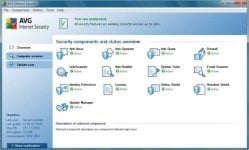
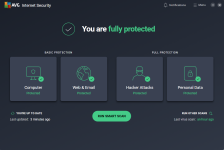
 I was sad when Avast acquired them. But now the old AVG lives within Avast and I'm also glad that they haven't killed the AVG brand.




 .
.
