
- Content source
- https://www.youtube.com/watch?v=HhEc8469d9Q
Good job Avast 


Open MalwareTips from your Home Screen or desktop. Follow discussions, find answers and pick up where you left off.
If you cannot find an install option, update your browser or use its bookmark option to keep MalwareTips close.
After installation, open the app and sign in. Enable push notifications in Preferences if you want alerts. On iPhone and iPad, push requires a Home Screen web app and iOS or iPadOS 16.4 or later.
Sign in to manage notificationsInstallation is optional. Your notification settings stay under your control.

The last 10'000+ samples test results of unbeatable K and Avast reminded me posting this video.I am unsure why the author of the video thinks that the result is unexpected on 100 samples, at least 6 days old.
Such a result is expected for Avast, Kaspersky, and all popular AVs.
The only shocking thing is the title of the video.
I could not notice if the video shows the section of settings concerned with "Hardened mode"; I am not sure if it was enabled or not.I noticed that at least one malware was able to bypass Avast Hardened Mode Sandbox and get high privileges. Next, it was probably remediated and removed by Avast.
View attachment 290682
Sorry, I had in mind Avast CyberCapture Sandbox. I corrected my post.I could not notice if the video shows the section of settings concerned with "Hardened mode"; I am not sure if it was enabled or not.

DeepScreen and CyberCapture don’t seem to be resistant to virtualisation detection, so the malware probably evaded the analysis, did not deliver the true behaviour. Later on it dropped/downloaded a few executables which triggered Avast. Both Avast and Kaspersky have very deep remediation, but the possibility for injection remains. Avast was good at detecting injections, it had a specific detection name for them.I noticed that at least one malware was able to bypass AvastHardened ModeCyberCapture Sandbox and get high privileges. Next, it was probably remediated and removed by Avast.
View attachment 290682
"The Devil and the Truth are in the Details."Weird.

My expectation of the typical security solution on the market is that it helps me avoid getting hit and taken out by a bus.I thought we had moved beyond AV/AM testing and debating it's usefulness as a modern security product? Obviously not
AV/AM is only a fraction of the security solutions you should use and consider as part of your arsenal. Things have moved on!
I'd be more concerned these days with identity management and authentication and how many YubiKeys you own these days.

You're right to call out the misleading tone of the video. When a domain like capclap[.]online has been circulating for over 26 days, it's expected that top-tier AVs like Avast and Kaspersky would catch it. The real surprise isn’t the detection—it’s the title trying to make routine results sound dramatic.I am unsure why the author of the video thinks that the result is unexpected on 100 samples, at least 6 days old.
Such a result is expected for Avast, Kaspersky, and all popular AVs.
The only shocking thing is the title of the video.

2I thought we had moved beyond AV/AM testing and debating it's usefulness as a modern security product? Obviously not
AV/AM is only a fraction of the security solutions you should use and consider as part of your arsenal. Things have moved on!
I'd be more concerned these days with identity management and authentication and how many YubiKeys you own these days.
Does allowing outbound connection to svchost exe only per service can overcome malicious dll injection and connection to c2 servers?We cannot exclude the possibility that some malware injected a malicious DLL into Svchost (or another system process) and established a connection to the C2 server
I think the title because a free AV performed equal to a paid one.The real surprise isn’t the detection—it’s the title trying to make routine results sound dramatic
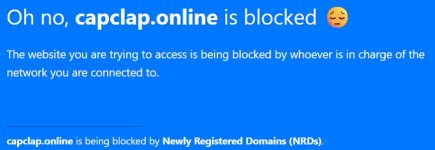
Even NextDNS is blocking it; layered security measures is more efficient than any AV regardless of its name and reputation.You're right to call out the misleading tone of the video. When a domain like capclap[.]online has been circulating for over 26 days, it's expected that top-tier AVs like Avast and Kaspersky would catch it. The real surprise isn’t the detection—it’s the title trying to make routine results sound dramatic.
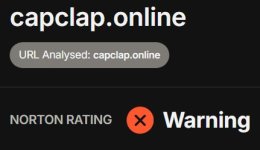
In fact, as of the latest scan, VirusTotal shows only two detections for the domain. That’s hardly a widespread consensus across engines, and it reinforces your point: this is standard behavior for popular AVs, not some shocking revelation.
You can verify it yourself:
Malware sample detected only by Avast and/or Kaspersky:

Members who viewed this thread in the last 5 minutes


