Gandalf_The_Grey
Level 86
Verified
Honorary Member
Top Poster
Content Creator
Well-known
Forum Veteran
If you shop at Amazon, you may have noticed a rising number of sellers that sound like a very bad draw at Scrabble. Try searching for common items such as powerbanks, USB cables, or dog beds.
You find the usual assortment of known brands and also plenty of offers from sellers that you may have a hard time pronouncing.
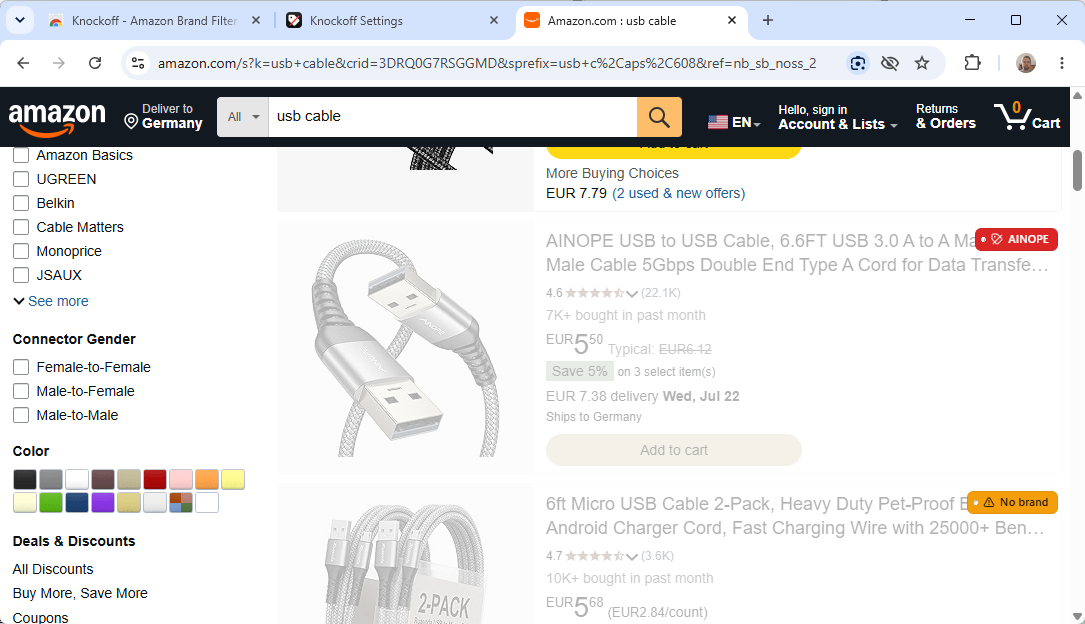
Enter the Knockoff extension: it is designed to filter these sellers on Amazon. The developer of the open source extension explains its purpose in the following way:
Amazon is flooded with trademark-squat “brands” (SZHLUX, HORUSDY, LATTOOK, DOZAWA…): random strings registered at the USPTO purely to unlock Amazon Brand Registry, selling commodity goods with no company, no warranty, and no reputation behind them. Knockoff detects those listings and hides, dims, or labels them, right in the search results.
The extension runs locally in the browser. It comes with a seed list of “notorious pseudo-brands” and two other lists — “established Chinese-owned brands” and “established brands”, that you can enable or disable based on your preferences. It uses name heuristics on top of that and can also identify brand-less offers. You may also add companies to your own allowlist or blocklist.
The extension goes through all lists, starting with the allowlist and blocklist, to resolve each product listing on Amazon. Furthermore, you can set filter levels from relaxed to strict, which determine what is getting filtered:
Relaxed Known pseudo-brands + your blocklist Standard (default) + suspect-looking names + unbranded listings Strict + anything not on a known-brands list (allowlist-only)
Browser extension filters pseudo-brands on Amazon - Chipp.in Tech News and Reviews
If you shop at Amazon, you may have noticed a rising number of sellers that sound like a very bad draw at Scrabble. Try searching...
 chipp.in