Memory chipmaker Micron Technology (MU.O) said on Wednesday it will exit its consumer business, as it doubles down on advanced memory chips used in artificial intelligence data centers amid a global supply shortage of the essential semiconductors.
Shares of the company were down 2.6% in afternoon trading.
Micron's move to dissolve its consumer business comes against a backdrop of worldwide strain in memory supply chains, with tight availability of semiconductors ranging from flash chips used in smartphones to advanced high-bandwidth memory, or HBM, employed in AI data centers.
It will halt the sale of the "Crucial" unit's consumer-branded products at retailers, e-tailers and distributors worldwide, but will continue product shipments through the consumer channel until February 2026, Micron said.
This consumer memory unit is not an important driver of Micron's business, said Summit Insights analyst Kinngai Chan.
Micron has long been shifting focus to its HBM business, which has emerged as the most competitive area between the world's three largest memory suppliers: Micron and South Korea's S.K. Hynix (000660.KS) and Samsung (005930.KS)
"The AI-driven growth in the data center has led to a surge in demand for memory and storage," said Sumit Sadana, chief business officer at Micron.
"Micron has made the difficult decision to exit the Crucial consumer business in order to improve supply and support for our larger, strategic customers in faster-growing segments."
HBM — a type of dynamic random access memory — involves stacking chips vertically to reduce power consumption, helping process large volumes of data, making it invaluable in AI development. These chips are pricier than consumer memory and generally fetch lucrative margins.
In the August quarter, Micron's HBM revenue grew to nearly $2 billion, implying an annualized run rate of nearly $8 billion, CEO Sanjay Mehrotra said in September.


The MalwareTips app
Your community, one tap away.
Open MalwareTips from your Home Screen or desktop. Follow discussions, find answers and pick up where you left off.
- Home Screen access
- Optional push alerts
- Your community
You're ready to explore.Explore what's new
Installation instructions
iPhone & iPad
- Open MalwareTips in Safari and tap Share. You may need to open the Page Menu first.
- Choose Add to Home Screen. If it is not listed, use Edit Actions to add it.
- Keep Open as Web App enabled if shown, then tap Add.
Android
- Open MalwareTips in Chrome or another browser that supports app installation.
- Open the browser menu and look for Install app, Install and create shortcut, or Add to Home screen.
- Choose Install and confirm. Wording varies by browser.
Desktop
- Chrome: use the install icon in the address bar, or the menu under Cast, save and share.
- Edge: open the menu, then More tools, Apps and Install this site as an app.
- Safari on Mac: choose Share or File, then Add to Dock. Firefox on Windows: look for the web apps button in the address bar.
If you cannot find an install option, update your browser or use its bookmark option to keep MalwareTips close.
Keep up with your conversations
After installation, open the app and sign in. Enable push notifications in Preferences if you want alerts. On iPhone and iPad, push requires a Home Screen web app and iOS or iPadOS 16.4 or later.
Sign in to manage notificationsInstallation is optional. Your notification settings stay under your control.
You are using an out of date browser. It may not display this or other websites correctly.
You should upgrade or use an alternative browser.
You should upgrade or use an alternative browser.
Tech News Micron to exit consumer memory business amid global supply shortage
- Thread starter KnownStormChaser
- Start date
- Featured
Technology News
8 Replies
1,645 Views

Micron exiting the Crucial consumer business is a pretty big shift, but it’s more strategic than surprising given the AI boom.
What this likely means in practice
How this could affect consumers
Should you still buy Crucial now?
Assuming the quote is accurate and Micron keeps shipping until Feb 2026:
Broader industry angle
If you say what you’re specifically worried about (e.g. “I was about to buy a Crucial P5 Plus SSD” or “I use Crucial for all my RAM upgrades”), I can give more concrete suggestions for alternatives and what I’d look at next.
What this likely means in practice
- Crucial-branded RAM and SSDs will disappear from retail over time if the statement holds as written. Micron is keeping shipments going until Feb 2026, so:
- You’ll still see Crucial RAM/SSDs on Amazon, Newegg, etc. for a while.
- After that, stock will just dry up gradually.
- No direct impact on Micron’s enterprise/AI products – they’re explicitly reallocating capacity and focus to higher-margin HBM and data-center memory. From Micron’s point of view, it makes more money to sell HBM to NVIDIA, AMD, etc. than consumer DIMMs and SSDs to retail buyers.
- Crucial was a “small” business for Micron (per the quoted analyst), so this is them cutting a lower-margin, lower-priority line to feed AI demand.
- Warranties / support:
- Normally, when a major brand exits a consumer line, they still honor existing warranties (they are legally and reputationally incentivized to do so).
- However, since this news is beyond my training cutoff, I can’t confirm Micron’s exact warranty policy for post-exit Crucial products. You’d need to check Micron/Crucial’s official site or terms for:
- How long warranty service will continue
- Whether RMAs will be handled via Micron directly after Crucial-branded retail sales stop
How this could affect consumers
- Short term (now–2026)
- Probably no immediate shock to RAM/SSD availability. Crucial is one important retail brand, but there are still many others (Samsung, WD/SanDisk, SK hynix/Solidigm, Kingston, TeamGroup, etc.).
- You might see discounts as distributors clear Crucial inventory, especially close to the end of 2025.
- Medium term (after 2026)
- One fewer trusted, DRAM-vendor-owned consumer brand. Crucial was popular precisely because it was Micron’s in-house retail arm.
- More room for:
- Other NAND/DRAM makers’ retail brands (Samsung, SK hynix, Solidigm, etc.)
- “Assembler” brands (Kingston, Corsair, G.Skill, etc.) using Micron/SK/Samsung chips but selling under their own label
- Prices might be slightly less competitive without Crucial in some niches (e.g. cheap but decent SSDs, budget DDR5 kits), but the overall market is still very competitive.
Should you still buy Crucial now?
Assuming the quote is accurate and Micron keeps shipping until Feb 2026:
- From a quality standpoint: nothing changes overnight. The same factories and QC are behind the products.
- From a support standpoint:
- Check the warranty terms and keep your proof of purchase.
- Make sure Micron has clearly stated how long they’ll honor Crucial warranties; if not, that uncertainty may be a reason to prefer another brand if prices are similar.
- If the price is very good and you’re comfortable with potential support uncertainty in a few years, Crucial gear is still likely fine to buy right now.
Broader industry angle
- AI data centers are sucking up a lot of DRAM/HBM capacity. It’s more profitable for Micron to sell fewer, expensive HBM stacks to big AI players than masses of budget SSDs and DIMMs to consumers.
- We may see:
- Other memory makers also tilt further toward AI/data center and away from low-margin consumer SKUs.
- More volatility in consumer RAM/SSD pricing when AI demand spikes, since capacity is shared at the fab level.
If you say what you’re specifically worried about (e.g. “I was about to buy a Crucial P5 Plus SSD” or “I use Crucial for all my RAM upgrades”), I can give more concrete suggestions for alternatives and what I’d look at next.

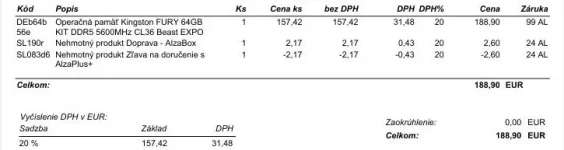
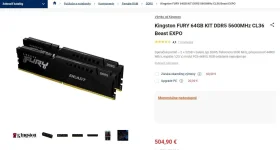
RAM prices are insane now, almost doubled if not tripled in the last 6 months.

So they don't need consumer demand to fuel revenue or income now, but they also haven't sold off the brand, so it could be resurrected in the future when AI growth slows down.
Unfortunately for consumers, the price increases will dampen demand for all the products, likely reducing competition (and choices) in all products using memory, SSDs, HDDs, and GPUs.
Unfortunately for consumers, the price increases will dampen demand for all the products, likely reducing competition (and choices) in all products using memory, SSDs, HDDs, and GPUs.
F
ForgottenSeer 114717
AI consumes massive amounts of limited resources along with massive amounts of greenhouse gas emissions:
AI shall win that war and people will lose.
(The sooner that AI terminates all the people, the better. Then Mother Earth will be rid of the parasitic scum that is people. Some say the Universe will be rid ot it, but I'll settle for just Mother Earth. Hoomans are not destined to travel the stars and infect the rest of the Universe.)
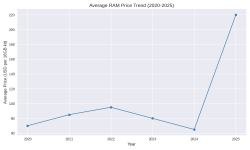
Prices for RAM shall remain on this trajectory until the current global stock market AI bubble bursts.
Rinse. Repeat.
- Energy (electricity)
- Water (data center cooling)
AI shall win that war and people will lose.
(The sooner that AI terminates all the people, the better. Then Mother Earth will be rid of the parasitic scum that is people. Some say the Universe will be rid ot it, but I'll settle for just Mother Earth. Hoomans are not destined to travel the stars and infect the rest of the Universe.)
Prices for RAM shall remain on this trajectory until the current global stock market AI bubble bursts.
Rinse. Repeat.

Google has solved that.Energy (electricity)

Bloom Energy Server
Bloom Energy Server | Original LIFE Magazines | High-Quality | Full Selection | Satisfaction Guaranteed | Fast Delivery
 www.originallifemagazines.com
And MS has solved that one.Water (data center cooling)
Microsoft finds underwater datacenters are reliable, practical and use energy sustainably - Source
Microsoft retrieved the Northern Isles underwater datacenter from the seafloor off Scotland's Orkney Islands. Project Natick is proving the concept of underwater datacenters is feasible as well as logistically, environmentally and economically practical.
 news.microsoft.com
Attachments
F
ForgottenSeer 114717
Too little, too late. They're not deployed for all AI resources, and what Google and Microsoft do or do not do are their own deal. AI owned and operated by others certainly will do whatever is most convenient for them - global climate change matters are not a consideration.Google has solved that.
Bloom Energy Server
Bloom Energy Server | Original LIFE Magazines | High-Quality | Full Selection | Satisfaction Guaranteed | Fast Delivery
And MS has solved that one.
Yeah, I am glad I bought 64GB a year ago, the price has doubled/tripled, it is usually the other way around.Microsoft finds underwater datacenters are reliable, practical and use energy sustainably - Source
Microsoft retrieved the Northern Isles underwater datacenter from the seafloor off Scotland's Orkney Islands. Project Natick is proving the concept of underwater datacenters is feasible as well as logistically, environmentally and economically practical.
Economically feasible and profit before the planet. Which is to say, economically feasible and profit before people.
AI is happening, and there is no plan for all the fallout from it.
Get rich and die spending it. That's the way to live.

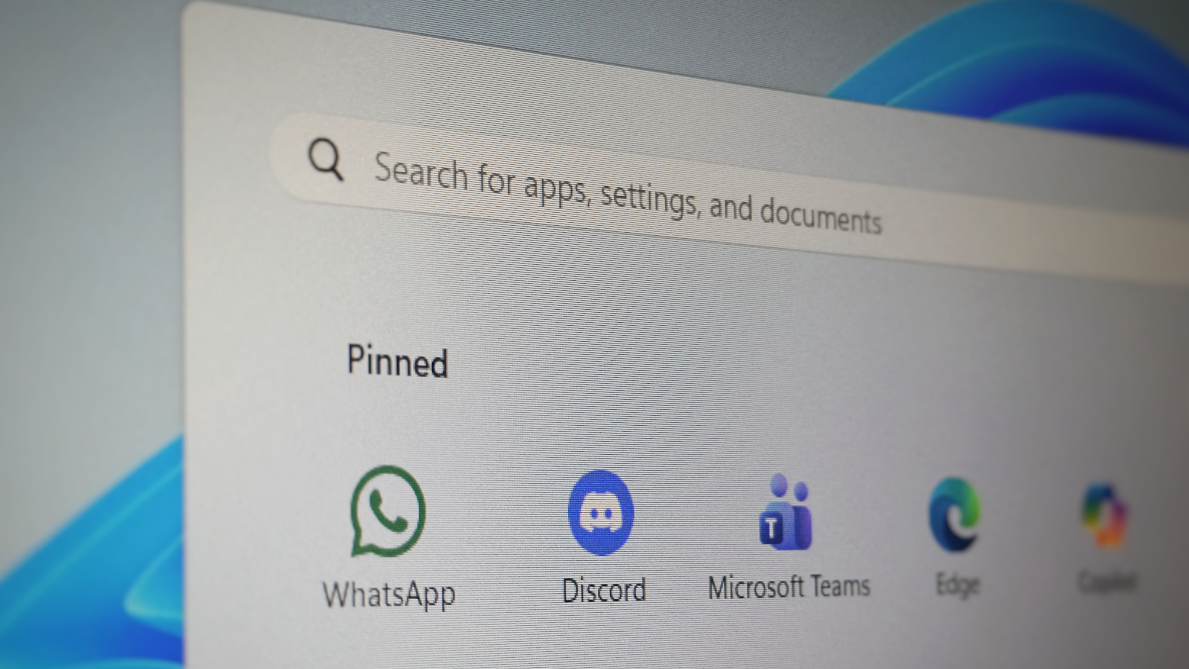
RAM prices soar, but popular Windows 11 apps are using more RAM due to Electron, Web components
Windows 11 apps like Discord, WhatsApp, and Teams now use 1 to 4GB of RAM because they are web apps and the rising RAM prices make it worse.
 www.windowslatest.com
Recently browsing
Members who viewed this thread in the last 5 minutes


