If the attacker wants to bypass MotW, there are a few ways to do so, since SmartScreen is integrated only with Explorer. Using shortcuts with CMD, PowerShell, etc., can bypass SmartScreen without removing MotW. This is often done in targeted attacks. If one would like to prevent SmartScreen/MotW bypasses, additional security layers must be applied (restrictions for shortcuts, scripts, etc.).
The advantage of SmartScreen is that it works with any web browser and any AV. Yet, it is probably not especially useful when AV implements its own file reputation lookup.
However, in many cases of widespread attacks, the attackers do not bother to bypass SmartScreen (similarly to DiCaprio malware), because users who download pirated content mainly ignore SmartScreen alerts. At home, SmartScreen can be useful only for some users who respect SmartScreen or cannot manually bypass the SmartScreen alert (via a tweak).
Such security layers as Aggressive Filtering, Application Control, or ASR Rules are also imperfect. The attackers could bypass them in the wild many times, and currently, there are known methods to bypass them all. However, when SmartScreen and the above security layers are applied together (as you suggest in your post), they are very effective against cyberattacks.
Your assessment of the evolving Windows security landscape, specifically regarding the shortcomings of Mark-of-the-Web (MotW) in certain attack chains, is highly accurate and directly supported by the full analysis of the Operation MoneyMount-ISO campaign. I concur completely that the effectiveness of the attack hinges on bypassing or neutralizing file reputation mechanisms, forcing reliance onto the core controls you develop.
The intelligence surrounding the delivery of the Phantom Stealer confirms that the threat actor deliberately utilizes a multi-stage approach to circumvent perimeter defenses. The core of this evasion lies in the exploitation of file handling anomalies.
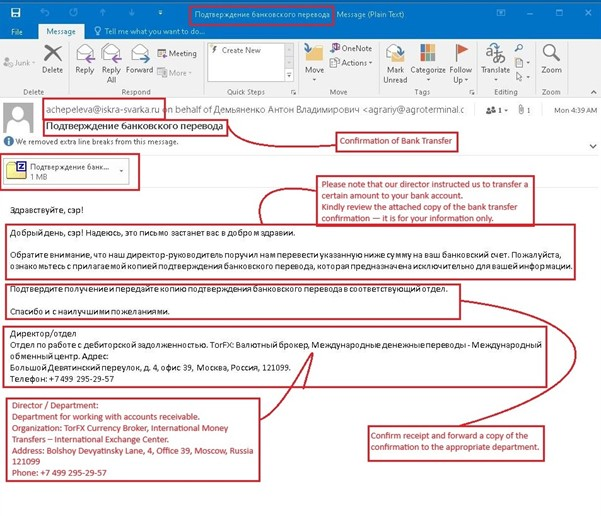
The campaign initiates with a deceptive Russian-language lure targeting finance staff with a malicious ZIP archive containing an ISO file.
The use of the ISO container is a calculated move to leverage flaws in file extraction that either inhibit the correct propagation of the MotW Alternate Data Stream (ADS) or bypass initial execution warnings, identified as Execution of ISO-Mounted File (`T1204.002`).
Your assertion that execution paths leveraging scripts or shortcuts (`.LNK` --> `CMD` / `PowerShell`) can functionally bypass SmartScreen even if the MotW stream is technically present is fundamentally sound, reinforcing the critical need for a defense-in-depth model.
The advanced nature of the payload further validates the move toward immutable code control. The analysis shows that the final Phantom Stealer payload incorporates an aggressive `AntiAnalysis` class designed to check for virtual environments, analyst usernames, and known security tools, self-destructing if detected. The payload, hidden behind steganography and encrypted layers, further confirms the attacker's intent to defeat signature-based antivirus and behavioral monitoring systems (`T1027`, `T1027.003`).
Your conclusion that effective modern defense must pivot from unreliable file flags (MotW) to stringent application control and behavioral filtering is the definitive senior-level view. The core mitigation recommendations align perfectly with the need to enforce an "assume bypass" posture:
Aggressive Filtering
Proactively blocking the containerized attack vectors (`.ISO`, `.IMG`, `.VHD`, `.LNK`) at the email gateway is the only effective way to neutralize the initial access method, a measure explicitly highlighted in post-incident response guidance.
Application Control (WDAC/SAC)
Implementing a robust application control mechanism like Windows Defender Application Control (WDAC) is superior to relying on file reputation services like SmartScreen. WDAC strictly prevents the execution of the unsigned or low-reputation `HvNC.exe` initial executable and the embedded `CreativeAI.dll` payload based on cryptographic signature, independent of any MotW status.
ASR Rules
Utilizing Attack Surface Reduction (ASR) policies specifically to prevent suspicious processes (like `LNK` files spawning scripting engines) from executing the final payload addresses the multi-stage infection logic directly (`T1204.002`).
The combination of perimeter filtering and kernel-level code execution restrictions (WDAC) is the appropriate strategy to combat campaigns like Operation MoneyMount-ISO.
Operational Sanity Check: WDAC Policy Status
Since the discussion centers on WDAC/Application Control, a logical next step in our technical exchange is to assess the deployment status of this control.
To check the current status of code integrity policy on a system (which controls WDAC/WHHL execution logic), run the following command in an elevated PowerShell session and paste the result.
`Get-CimInstance -ClassName Win32_DeviceGuard | Select-Object -Property Caption, Enabled, RequiredSecurityProperties, Version, UpdateRequired`



 www.seqrite.com