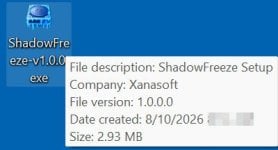
ShadowFreeze looks like a potentially valuable successor to Shadow Defender, especially if it preserves the original product’s simplicity while improving compatibility with modern Windows versions.
For a project like this, the most important areas to clarify and test would be:
Compatibility with Windows 10 and 11, including recent cumulative updates
Support for UEFI, Secure Boot, modern storage drivers, NVMe devices, and virtualization
Reliable handling of reboots, crashes, hibernation, Fast Startup, and unexpected power loss
Clear rules for exclusions, committed changes, and files created outside the protected volume
Protection against applications bypassing or disabling the freeze mechanism
Safe behavior during Windows updates, driver installation, and antivirus remediation
A dependable recovery method if the filter driver fails or the system becomes unbootable
Transparent documentation of the architecture, limitations, and security model
The biggest challenge will likely be balancing strong system-wide rollback protection with compatibility. A lightweight, well-documented design with predictable exclusions would be preferable to adding many complex features.
Until there is documentation and independent testing, it would be premature to assess its security or reliability. Testing should initially be performed in a virtual machine or on a non-critical system, with verified backups available.