Technical Analysis & Remediation
MITRE ATT&CK Mapping
T1566.001
(Phishing: Spearphishing Attachment)
T1574.002
(Hijack Execution Flow: DLL Side-Loading)
T1056.001
(Input Capture: Keylogging)
T1090
(Proxy)
CVE Profile
N/A [CISA KEV Status: Inactive].
The attack relies on abusing native Windows features (ClickOnce, .NET runtime, Office macros) rather than exploiting specific unpatched vulnerabilities.
Telemetry
Hashes
Unknown (Not provided in source).
Target Binaries/Strings
NGenTask.exe
mscorsvc.dll.
Constraint
The structure resembles a highly modular remote access framework. BurrowShell masquerades C2 traffic as Windows Update service communications and encrypts payloads using a 32-character RC4 key.
Execution Flow
The primary attack chain begins with PDF lures that direct targets to ClickOnce application manifests. These manifests deploy a DLL sideloading package . The package uses the legitimate Microsoft .NET runtime executable (NGenTask.exe) to load a malicious module (mscorsvc.dll), which ultimately decrypts and runs the BurrowShell x64 implant. The secondary chain uses macro-enabled Excel files to drop a Rust-based keylogger.
Remediation - THE ENTERPRISE TRACK (NIST SP 800-61r3 / CSF 2.0)
GOVERN (GV) – Crisis Management & Oversight
Command
Initiate supply chain and geopolitical risk assessments if your organization operates within or adjacent to South Asian government, telecommunications, or energy sectors.
DETECT (DE) – Monitoring & Analysis
Command
Deploy SIEM hunting queries looking for anomalous child processes originating from NGenTask.exe or phoneactivate.exe.
Command
Alert on the loading of unsigned or unexpectedly located instances of mscorsvc.dll.
RESPOND (RS) – Mitigation & Containment
Command
Isolate impacted endpoints from the corporate network immediately.
Command
Block network traffic matching known SloppyLemming Cloudflare Workers infrastructure.
RECOVER (RC) – Restoration & Trust
Command
Reimage compromised systems entirely, as BurrowShell establishes deep file system and SOCKS proxy tunneling access.
Command
Validate clean state through comprehensive memory and file scanning before re-introducing assets to the domain.
IDENTIFY & PROTECT (ID/PR) – The Feedback Loop
Command
Disable ClickOnce deployment mechanisms via Group Policy if not explicitly required by business operations.
Command
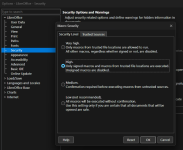
Enforce strict macro execution policies for Microsoft Office to neutralize the secondary Rust-based attack chain.
Remediation - THE HOME USER TRACK (Safety Focus)
Priority 1: Safety
Command
Disconnect from the internet immediately if you opened a suspicious PDF or enabled macros in an untrusted Excel document.
Command
Do not log into banking/email until verified clean.
Priority 2: Identity
Command
Reset passwords/MFA using a known clean device (e.g., phone on 5G), as the secondary payload includes a dedicated Rust-based keylogger.
Priority 3: Persistence
Command
Check Scheduled Tasks, Startup Folders, and Browser Extensions for unrecognized entries. Run a full scan with a reputable endpoint security product.
Hardening & References
Baseline
CIS Benchmarks for Microsoft Windows Workstation / Microsoft Office (Disable VBA Macros).
Framework
NIST SP 800-61r3 (Incident Response) / NIST CSF 2.0.
Mathematical Security Posture
To reduce the probability of a successful sideloading execution, organizations must decrease the attack surface by stripping unnecessary binaries. Evasion probability decreases as strict application control increases.
Source
Arctic Wolf Labs
The Hacker News