Technical Analysis & Remediations
MITRE ATT&CK Mapping
T1204.002
(User Execution: Malicious File)
T1059
(Command and Scripting Interpreter)
T1574.002
(Hijack Execution Flow: DLL Side-Loading)
T1219
(Remote Access Software)
CVE Profile
NVD Score: N/A
(Social Engineering / Native Feature Abuse)
CISA KEV Status: Inactive
Telemetry
Domains
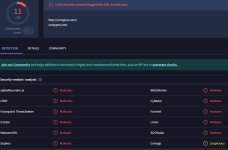
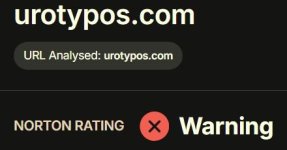
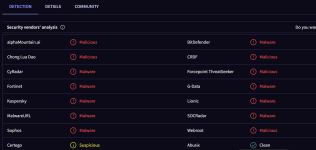
urotypos[.]com
(Payload hosting)
fresicrto[.]top
(ClickFix hosting).
IPs
"95.142.45[.]231" (Remcos C2)
"185.163.47[.]220" (NetSupport C2)
89.46.38[.]100 (StealC C2)
195.85.115[.]11 (Sectop C2)
Files
post.hta (Initial dropper)
Constraint
The structure resembles standard archive-based deployment, and the telemetry suggests DLL side-loading is achieved by pairing legitimate executables with malicious DLLs extracted into user-writable directories.
Remediation - THE ENTERPRISE TRACK (NIST SP 800-61r3 / CSF 2.0)
GOVERN (GV) – Crisis Management & Oversight
Command
Issue immediate awareness communications regarding fake CAPTCHA and "verify you are human" prompts instructing users to use the Windows Run dialog.
DETECT (DE) – Monitoring & Analysis
Command
Query SIEM and EDR for outbound network connections to "95.142.45[.]231", "185.163.47[.]220", 89.46.38[.]100, and 195.85.115[.]11.
Command
Implement behavioral alerts for mshta.exe spawning from unusual parent processes or executing files from AppData/ProgramData directories.
RESPOND (RS) – Mitigation & Containment
Command
Isolate endpoints exhibiting sequential C2 traffic matching the SmartApeSG timeline profile.
Command
Terminate unauthorized instances of NetSupport Manager and suspend suspected side-loaded processes.
RECOVER (RC) – Restoration & Trust
Command
Validate clean state by performing comprehensive memory forensics and registry analysis before reconnecting the asset to the production network.
IDENTIFY & PROTECT (ID/PR) – The Feedback Loop
Command
Disable the Windows Run menu via GPO (User Configuration > Administrative Templates > Start Menu and Taskbar > Remove Run menu from Start Menu) for non-administrative users.
Command
Implement Application Control (e.g., AppLocker/WDAC) to restrict unauthorized DLL execution in user-writable directories.
Remediation - THE HOME USER TRACK (Safety Focus)
Priority 1: Safety
Command
Disconnect from the internet immediately.
Command
Do not log into banking/email until verified clean.
Priority 2: Identity
Command
Reset passwords/MFA using a known clean device (e.g., phone on 5G).
Priority 3: Persistence
Command
Check Scheduled Tasks, Startup Folders, and Browser Extensions. (Due to the severity of this multi-RAT infection, backing up critical data and performing a full OS reinstallation is highly recommended).
Hardening & References
Baseline
CIS Benchmarks for Microsoft Windows Desktop (Restrict execution of HTA files and enforce script signing).
Framework
NIST CSF 2.0 / SP 800-61r3.
Analysis Note
The mathematical probability of a user detecting a staggered background infection without an EDR agent is effectively P(Detection)≈0, making preventative DNS blocking of known indicators essential.
Source
CyberSecurity News




 safeweb.norton.com

 cybersecuritynews.com