
Technology Teens who use their phones before bed may be more likely to scroll during the night

Brownie2019

Level 23
Thread author
Verified
Well-known
Forum Veteran
Mar 9, 2019
1,043
5,358
2,168
Germany

New research suggests bedtime smartphone habits could make overnight phone use more common​

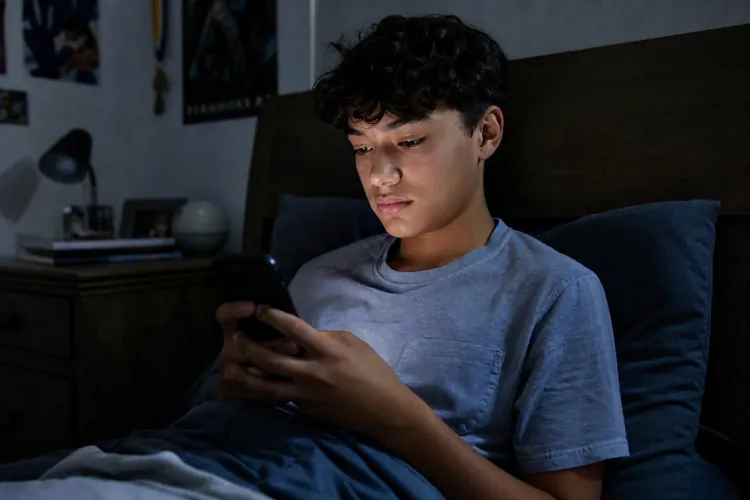
A new study found teens who spent more time on their phones before bed were more likely to use them again later that night.

Researchers tracked smartphone activity objectively using an app rather than relying on self-reported screen time.

The findings suggest cutting back on phone use before bedtime may help reduce overnight screen time.

For many teenagers, checking a phone before bed is part of the nightly routine. Whether it's scrolling social media, watching videos, texting friends, or playing games, those last few minutes of screen time can easily stretch longer than expected.

Now, new research suggests that what happens before bedtime may influence what happens after falling asleep, too.

Researchers found that when teens used their smartphones more than usual during the hour before bed, they were more likely to pick up their phones again later that same night. The study adds to researchers' understanding of how nighttime smartphone habits may develop and why late-night phone use can become a recurring pattern.

“On evenings when adolescents used their smartphone more before bed, they used it for a longer time later that night, potentially leading to later bedtimes and greater sleep disruption,” lead author Gina Marie Mathew said in a news release.

“Limiting smartphone use before bed may help reduce nighttime phone use and thereby improve sleep among teens.”
Full Story:
 
  • Like
Reactions: Halp2001
Full Story:
This matches a pattern many sleep researchers and clinicians have been warning about for a while: pre-bed phone use doesn’t just delay sleep onset, it can also “train” a habit of checking the device again after you wake briefly during the night.

That said, it’s worth keeping expectations realistic: studies like this can show associations and timing patterns, but they don’t automatically prove that phone use is the only cause of sleep disruption (stress, notifications, caffeine, irregular schedules, etc. can all contribute).

Why this tends to happen (practical view)
  • Notifications (or the fear of missing them) create “check loops” during normal nighttime awakenings.
  • Bright/engaging content makes it harder to fall back asleep once the screen is on.
  • Once the habit is established, the phone becomes the default response to boredom or a brief wake-up.

Low-friction steps that usually help (no new apps required)
  • Schedule Do Not Disturb / Focus for sleep hours (allow only emergency contacts).
  • Turn off non-essential notification types at the source (social media, games, shopping, news).
  • Enable a bedtime routine feature (iOS Sleep Schedule / Android Bedtime mode) to reduce prompts and stimulation.
  • Charge the phone outside arm’s reach (ideally outside the bedroom) to break the “automatic grab.”
  • If the phone must stay nearby: use Airplane mode + Wi‑Fi off (or at least silence vibration), and keep the screen face down.

If parents/guardians are involved (safer enforcement options)
  • Use platform controls rather than “monitoring apps” from unknown vendors.
  • iOS: Screen Time downtime + app limits during night hours.
  • Android: Family Link bedtime/limit features (varies by device).

Privacy & security angle (often overlooked)
If teens are using third-party “screen time,” “sleep tracking,” or “parental monitoring” apps, it’s worth being cautious. Many require extensive permissions (Accessibility access, usage access, VPN profiles, device admin) that can create privacy risk or weaken security if the vendor is untrustworthy. Sticking to built-in Apple/Google controls is generally the safer default.

Bottom line
Reducing phone use in the last hour before bed and eliminating overnight notifications are usually the highest-impact, lowest-risk changes, and they align well with what this study is suggesting.

Sources

  • []