Technical Analysis & Remediations
MITRE ATT&CK Mapping
T1059.005
(Command and Scripting Interpreter: VBScript/JScript)
T1059.003
(Windows Command Shell)
T1055.004
(Process Injection: Asynchronous Procedure Call)
T1566.002
(Phishing: Spearphishing Link).
CVE Profile
N/A [CISA KEV Status: Inactive]
The attack relies on native scripting engines and Windows APIs rather than software vulnerabilities.
Telemetry
File Hash (Shortcut)
6abd118a0e6f5d67bfe1a79dacc1fd198059d8d66381563678f4e27ecb413fa7 (DKM_DE000922.pdf.url)
File Hash (Python Loader)
5cab6bf65f7836371d5c27fbfc20fe10c0c4a11784990ed1a3d2585fa5431ba6 (so.py)
File Hash (Decrypted VenomRAT)
130ca411a3ef6c37dbd0b1746667b1386c3ac3be089c8177bc8bee5896ad2a02
Constraint
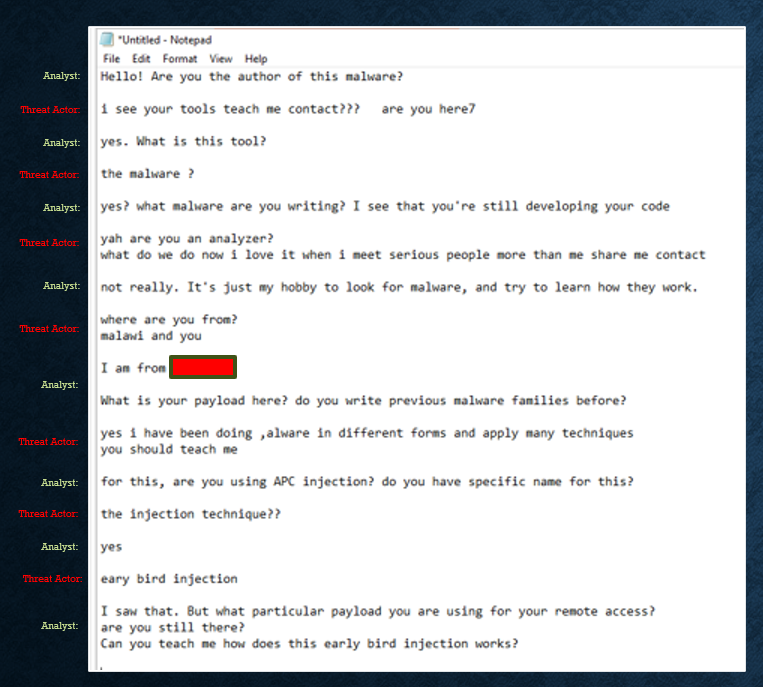
The structure resembles a lab-testing environment. The threat actor explicitly confirmed the TTP via live chat, referring to the technique as "early bird injection".
Remediation - THE ENTERPRISE TRACK (NIST SP 800-61r3 / CSF 2.0)
GOVERN (GV) – Crisis Management & Oversight
Command
Establish policy restricting outbound WebDAV (TCP 80/443 mapping to WebClient) and SMB traffic to unapproved external domains or Cloudflare tunnels.
DETECT (DE) – Monitoring & Analysis
Command
Deploy SIEM alerts for wscript.exe spawning from .url files and network connections to trycloudflare.com subdomains.
Command
Hunt for explorer[.]exe spawning in a suspended state followed by QueueUserAPC API calls originating from Python processes.
RESPOND (RS) – Mitigation & Containment
Command
Isolate endpoints executing gg.bat or pol.bat from unexpected scripting origins.
RECOVER (RC) – Restoration & Trust
Command
Reimage confirmed compromised hosts (due to VenomRAT payload) and validate clean state before returning to production.
IDENTIFY & PROTECT (ID/PR) – The Feedback Loop
Command
Block the default .url, .wsh, and .js file associations in email gateways and web filters.
Remediation - THE HOME USER TRACK (Safety Focus)
Priority 1: Safety
Command
Disconnect from the internet immediately if you clicked a fake PDF shortcut file that unexpectedly launched a command prompt. (Note: Threat execution is conditional upon Python availability).
Command
Do not log into banking/email until verified clean.
Priority 2: Identity
Command
Reset passwords and MFA using a known clean device (e.g., phone on 5G), as VenomRAT is capable of advanced credential theft.
Priority 3: Persistence
Command
Check Startup Folders for newly created batch scripts (e.g., pol.bat) and remove them immediately.
Hardening & References
Baseline
CIS Benchmarks for Windows 10/11 (Disable WSH if not explicitly required by the organization).
Framework
NIST CSF 2.0 / SP 800-61r3.
Source
G DATA CyberDefense Blog



blog.gdatasoftware.com