Battle Which antivirus program is the best solution for protecting against fake online stores and credit card fraud? I'd appreciate some recommendations.

Compare list
Kaspersky
McAfee
F-Secure
Norton
Eset
Platform(s)
  1. Microsoft Windows
Sadly brain.exe does not protect you these days and has lost it's importance in safe banking, there are so many card skimming sites whether offline or online these days.

What others have said is true, use a one time disposable digital credit card number through your bank or sign up for Revolut or similar service that offers the service.

The bigger problem I think is fake or counterfeit goods, everything from sneakers to wine to bourbon to sports/Pokemon cards is now faked and sold as real goods.

You just have to shop from legit stores that have good chargeback and returns and use a one time card number. The rest is up to you and how much you research.
 
Although your question is quite an important one, be aware that you may be looking at it the wrong way. When you ask about AV protection for your system, one can infer that the breach was in some way YOUR fault when in many cases it is not.

As a (personal) example. A number of years ago I purchased items from a company called Sally Beauty (brick and mortar store and NOT online). About 6 months later I noticed on my American Express statement that there was a charge for a one-way 1st Class ticket from Beijing to Toronto (easily reversed); a few months later the breach of the Company was made public. For something like this there is no defense. It is a fact that the company you may buy from can get breached; it is also possible that the sub-contractors they use (or share) your data with can also be breached.

In short you are a Babe in the Woods.

However, to protect one from data theft for online financial crime please change ALL the password to the financial institutions (preferably with 12-character random passwords) and always use 2 Factor authentication.

For those with SERIOUS financial accounts, the best way is to insist that that institution (normally a Bank or Brokerage house) something like Symantec VIP Access. And of course to protect against anything lifting stuff from your browsers, a combination of an OutBound alerting Firewall or a password vault or Comodo Firewall is nice (with the latter being Optimal).

m
 
Although your question is quite an important one, be aware that you may be looking at it the wrong way. When you ask about AV protection for your system, one can infer that the breach was in some way YOUR fault when in many cases it is not.

As a (personal) example. A number of years ago I purchased items from a company called Sally Beauty (brick and mortar store and NOT online). About 6 months later I noticed on my American Express statement that there was a charge for a one-way 1st Class ticket from Beijing to Toronto (easily reversed); a few months later the breach of the Company was made public. For something like this there is no defense. It is a fact that the company you may buy from can get breached; it is also possible that the sub-contractors they use (or share) your data with can also be breached.

In short you are a Babe in the Woods.

However, to protect one from data theft for online financial crime please change ALL the password to the financial institutions (preferably with 12-character random passwords) and always use 2 Factor authentication.

For those with SERIOUS financial accounts, the best way is to insist that that institution (normally a Bank or Brokerage house) something like Symantec VIP Access. And of course to protect against anything lifting stuff from your browsers, a combination of an OutBound alerting Firewall or a password vault or Comodo Firewall is nice (with the latter being Optimal).

m

And maybe a bit of a tangent, but to also put a credit freeze on your credit monitoring accounts. It came into play about 2 weeks ago when I changed phone service providers, and they couldn't confirm my credit. I had to unthaw those 3 main ones (in the US) then refreeze them afterwards. It was good to know that it actually worked.
 
If its a scam site do you lose your money with Revolut though, what sort of service do they give if you pay & don't get the service/item for example? I've never had any issues though just wondering? And if it is a fake site its likely they have other personal details such as valid phone/email/address/name etc??
Here's the thing: you do lose the money. However, if you contact the bank in certain period of time, bank will give you your money back. At least this is how it functions in the EU.
 
Here's the thing: you do lose the money. However, if you contact the bank in certain period of time, bank will give you your money back. At least this is how it functions in the EU.
Exactly. The bank or financial provider has to give your money back within reasonable time frame say a month since fraudulent charges. Visa/MC demand this for providing services to banks. I don't worry about credit cards but with bank accounts there is a worry with account takeover or scamming and off course with crypto your stuffed no matter what.
 
Although your question is quite an important one, be aware that you may be looking at it the wrong way. When you ask about AV protection for your system, one can infer that the breach was in some way YOUR fault when in many cases it is not.

As a (personal) example. A number of years ago I purchased items from a company called Sally Beauty (brick and mortar store and NOT online). About 6 months later I noticed on my American Express statement that there was a charge for a one-way 1st Class ticket from Beijing to Toronto (easily reversed); a few months later the breach of the Company was made public. For something like this there is no defense. It is a fact that the company you may buy from can get breached; it is also possible that the sub-contractors they use (or share) your data with can also be breached.

In short you are a Babe in the Woods.

However, to protect one from data theft for online financial crime please change ALL the password to the financial institutions (preferably with 12-character random passwords) and always use 2 Factor authentication.

For those with SERIOUS financial accounts, the best way is to insist that that institution (normally a Bank or Brokerage house) something like Symantec VIP Access. And of course to protect against anything lifting stuff from your browsers, a combination of an OutBound alerting Firewall or a password vault or Comodo Firewall is nice (with the latter being Optimal).

m
Thank you for your reply as well. That crossed my mind, too. It occurred to me that it might not necessarily have been my fault. I reviewed my payment and approval history, and I always try to avoid entering my bank details on unknown or untrustworthy sites. I did make a payment on one site that I later regretted, and that was the CJS CD Keys site, where I got scammed because they gave me an Eset key that turned out to be a fake. I’m still wondering if my data was leaked from there or if someone sold my information. Of course, I’m not sure if that’s true, but I investigated yesterday and found that the last places I paid online were here and on the Stacksocial site.
I never consider antivirus software to be 100% protection! There’s no such thing as 100% protection. But since I’ve paid for it, I expect to know which one performs best in this area.
 
@Szellem For online banking protection, I recommend: Kaspersky Safe Money, F-Secure Online Banking Protection, Trend Micro Online Banking Protection, Bitdefender SafePay, and finally Comodo Secure Shopping if you aren’t using any of the products I mentioned above. I’ve used all of the ones I mentioned, and they’re all very good. No, don’t install any extensions except, of course, password manager, and your antivirus if it asks you to install its official extension—and nothing else. I also recommend that you use this browser only for shopping and internet banking; for everything else, like daily browsing, use your preferred browser. I’ll leave two screenshots of Kaspersky Safe Money protecting the amazon.com website in Firefox. You can see that Kaspersky Safe Money creates a green border around the browser, indicating that your browser is protected. ;)
1777964107834.png

1777962233420.png
 
UK law is now up to £85,000 has to be returned if done by bank transfer within 5 days, using here a credit card even if you pay it up immediately gives protection over £100 as you are covered by 'the consumer credit act 1974' - PayPal returned money to me when I received a dummy phone from a well known UK retailer quickly & I have to say they were great, that's really the only problem I've ever had - Amazon have always been great too if goods haven't been delivered or damaged as I've used them from the beginning & don't abuse the system (lie).
 
Last edited:
Exactly. The bank or financial provider has to give your money back within reasonable time frame say a month since fraudulent charges. Visa/MC demand this for providing services to banks. I don't worry about credit cards but with bank accounts there is a worry with account takeover or scamming and off course with crypto your stuffed no matter what.
Some people here tend to worry about hackers gaining access to their personal details. And yes, it's not a great thing if someone else you don't know has access to your first and last name, address, phone number and e-mail address. But the reality is hackers can't do much with these these days.

The massive problem would be if hacker gets access to your personal identification number, ID/passport number and/or scan of said documents. Even the most fraudulent web shops don't ask for these as it would be to suspicious. And the fact is, the target of these scam web shops isn't to collect your personal details rather money and access to your bank account.
 
Last edited:
The massive problem would be if hacker gets access to your personal identification number, ID/passport number and/or scan of said documents. Even the most fraudulent web shops don't ask for these as it would be to suspicious. And the fact is, the target of these scam web shops isn't to collect your personal details rather money and access to your bank account.
The problem is with A.I.it's going to get easier to forge identity documents like passports or drivers license.

I do agree that the aim for fraudulent web shops is monetary, but a lot fake web shops have been setup to launder money which another thing to consider.

Honestly I wouldn't bother with unknown web shops, sure you may get a good deal or a box full of rocks but the risk is too high. Stick to well reviewed trusted shops.
 
Some people here tend to worry about hackers gaining access to their personal details. And yes, it's not a great thing if someone else you don't know has access to your first and last name, address, phone number and e-mail address. But the reality is hackers can't do much with these these days.

The massive problem would be if hacker gets access to your personal identification number, ID/passport number and/or scan of said documents. Even the most fraudulent web shops don't ask for these as it would be to suspicious. And the fact is, the target of these scam web shops isn't to collect your personal details rather money and access to your bank account.
I agree, the only issues I've had, hasn't been on my end, my device security end, but from hacked servers where my personal and business information was stored. But, I still don't mind paying a little extra for the "insurance" of an AV plus it's protection modules.

What do you think about ID protection/monitoring, is it a concern of all that information being stored on a AV companies servers, like Bitdefender, McAfee, F-Secure etc? Or, do they have a better infrastructure to be secure, let alone that information being encrypted on their end?
 
Last edited:
I agree, the only issues I've had, hasn't been on my end, my device security end, but from hacked servers where my personal and business information was stored. But, I still don't mind paying a little extra for the "insurance" of an AV plus it's protection modules.

What do you think about ID protection/monitoring, is it a concern of all that information being stored on a AV companies servers, like Bitdefender, McAfee, F-Secure etc? Or, do they have a better infrastructure to be secure, let alone that information being encrypted on their end?
Could you specify what do you mean by ID protection/monitoring? What this does exactly? Thanks!
 
Could you specify what do you mean by ID protection/monitoring? What this does exactly? Thanks!
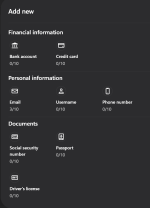
Like some of the concerns shown in this screen shot, some of what you mentioned in post# 31. I realize we can use password managers to review our passwords, and sources like haveibeenpwned to review hacked email addresses. But, do you think this type of monitoring is worth it, and is secure? With some of these services, you're supposed to be alerted (in real time, other than a email Combolist etc.) if someone tries the access the more critical information. And, thank you in advance :)

Screenshot 2026-05-06 073025.png
 
Last edited:
Like some of the concerns shown in this screen shot, some of what you mentioned in post# 31. I realize we can use password managers to review our passwords, and sources like haveibeenpwned to review hacked email addresses. But, do you think this type of monitoring is worth it, and is secure? With some of these services, you're supposed to be alerted (in real time, other than a email Combolist etc.) if someone tries the access the more critical information. And, thank you in advance :)

View attachment 297546
Oh... let me first start by saying that these kind of services are uncommon in the EU. At least I never saw any service like this being advertised or offered anywhere. It certainly has something to do with strong data protection laws. The only service of this kind I used in the past was HaveIBeenPwned when I suddenly started getting bunch of spam in my inboxes and I wanted to see if I was in some kind of data breach (spoiler alert: it never found anything).

How effective are these services? Not much. These only work if breached data was released publicly, and we have to keep in mind that the majority of these dumps are done on the dark web, or never disclosed at all. Some of them might also require payment in order to see the data and I simply don't see these companies paying hackers. Even if they do find a match, what will the service do? Nothing. You're paying only to be maybe notified if something comes up and for me, personally, this doesn't justify the price for paying for service like that.
 
Last edited:
Oh... let me first start by saying that these kind of services are uncommon in the EU. At least I never saw any service like this being advertised or offered anywhere. It certainly has something to do with strong data protection laws. The only service of this kind I used in the past was HaveIBeenPwned when I suddenly started getting bunch of spam in my inboxes and I wanted to see if I was in some kind of data breach (spoiler alert: it never found anything).

How effective are these services? I don't think much. These only work if breached data was released to the publicly, and we have to keep in mind that the majority of these dumps are done on the dark web, or never disclosed at all. Some of them might also require payment in order to see the data and I simply don't see these companies paying hackers. And even if they do find a match, what is the service like this gonna do? Nothing. You're paying only to be maybe notified if something comes up and for me, personally, this doesn't justify the price for paying for service like that.
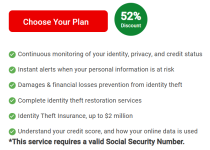
And that's why some people were miffed when Bitdefender came out with their Identity Theft Protection, as I believe it was geared towards US customers, who have a Social Security number (the asterisk). Thank you for your reply :)

Screenshot 2026-05-06 093739.png
 
You're paying only to be maybe notified if something comes up and for me, personally, this doesn't justify the price for paying for service like that.
Exactly, leaking emails and passwords in order to check whether they have leaked and relying on a secure browser, AV, internet, check services, etc. I always block it.
There have been cases, where those ID companies actually sold user data and indeed, they can not prevent anything, merely notify and then damage is already done.
 
Last edited:
Exactly, leaking emails and passwords in order to check whether they have leaked and relying on a secure browser, AV, internet, check services, etc. I always block it.
There have been cases, where those ID companies actually sold user data and indeed, they can not prevent anything, merely notify and then damage is already done.
Great point, "notify you when the damage is already done", and then for the fee $$, they'll help clean up the mess?! It's almost like an infostealer, if you realize you have one on your PC, it's too late, the damage (info sent) has already been done.