

The MalwareTips app
Your community, one tap away.
Open MalwareTips from your Home Screen or desktop. Follow discussions, find answers and pick up where you left off.
- Home Screen access
- Optional push alerts
- Your community
You're ready to explore.Explore what's new
Installation instructions
iPhone & iPad
- Open MalwareTips in Safari and tap Share. You may need to open the Page Menu first.
- Choose Add to Home Screen. If it is not listed, use Edit Actions to add it.
- Keep Open as Web App enabled if shown, then tap Add.
Android
- Open MalwareTips in Chrome or another browser that supports app installation.
- Open the browser menu and look for Install app, Install and create shortcut, or Add to Home screen.
- Choose Install and confirm. Wording varies by browser.
Desktop
- Chrome: use the install icon in the address bar, or the menu under Cast, save and share.
- Edge: open the menu, then More tools, Apps and Install this site as an app.
- Safari on Mac: choose Share or File, then Add to Dock. Firefox on Windows: look for the web apps button in the address bar.
If you cannot find an install option, update your browser or use its bookmark option to keep MalwareTips close.
Keep up with your conversations
After installation, open the app and sign in. Enable push notifications in Preferences if you want alerts. On iPhone and iPad, push requires a Home Screen web app and iOS or iPadOS 16.4 or later.
Sign in to manage notificationsInstallation is optional. Your notification settings stay under your control.
You are using an out of date browser. It may not display this or other websites correctly.
You should upgrade or use an alternative browser.
You should upgrade or use an alternative browser.
Advice Request Why doesn't Microsoft polish their products?
Share practical recommendations that address the author's needs.
That's not the point, the list doesn't look uniform, no bullet points or proper formatting.That's more permission access than fleas on a cat
What happened to privacy?..Oh wait..there wasn't any
"radio"
"Microsoft.storeFilter...."
They must be outsourcing their development or no quality assurance before releasing it.
Even Linux is more polished, and that's no where near as resourceful as M$.

Indeed from that perspective yes..Not even listed alphabetically.That's not the point, the list doesn't look uniform, no bullet points or proper formatting

Yah, its a bit sloppy, must be a new college graduate.
F
ForgottenSeer 89360
There are some which have various grammar mistakes and some don’t even make sense:
“Close themselveS and their own windows, and delay the closing of THEIR app”...
No idea what the hell this means. Whose app...?
Apps on Windows normally open and “close” whenever they like... not sure why permission is even on the list.
“Access TO your account’S username and picture.”
There are duplicates: “Access all files” and then “file system”...
Maybe not enough coffee for the devs?
Last edited by a moderator:
L
Local Host
Since when is Linux more polished?That's not the point, the list doesn't look uniform, no bullet points or proper formatting.
"radio"
"Microsoft.storeFilter...."
They must be outsourcing their development or no quality assurance before releasing it.
Even Linux is more polished, and that's no where near as resourceful as M$.
Linux is the buggiest OS in the market, is not a rival to either OSX nor Windows.
There's also a good reason for it:
- Not enough manpower,
- Lack of funds,
- No direct relationship with hardware manufacturers,
- No centralization (main reason, the system is extremely fragmentated).
Linux users spend more time fixing issues, than actually using the OS, same can't be said about Windows or OSX.
Setup PCPC setup
Microsoft is a trillion-dollar corporation. Billions of machines run its software. The very least you can expect is a tidy, well-presented Window. It takes five minutes of one's precious time.
At least tab the remaining sentence a few spaces if it goes into a new line. It looks cruddy if it's all aligned to the left.
At least tab the remaining sentence a few spaces if it goes into a new line. It looks cruddy if it's all aligned to the left.

Microsoft shut down its QA department back in 2014\2015. It fired 99 % of the QA personnel back then. The only ones from QA that were retained were managers and senior personnel. The Windows 10 QA program was replaced by the Windows Insider Program and telemetry. Developers took up some of the testing responsibility, but most are not equipped nor skilled at the art of testing. Development and QA are separate functions for multiple reasons.Why do app permissions from the Microsoft Store look unpolished?
View attachment 252196
Image: A list of permissions an app can perform once installed from the Microsoft Store.
Every Windows 10 user has been for years the QA guinea pigs.
99 % of Microsoft Quality Assurance Fired in 2014
A "chunk" of testing personnel to be laid off ended being essentially all of them.
Last edited:

Can confirm that for the year I used Ubuntu I spent significantly less time fixing the few issues I ran into. Much less time than I spend now on my Windows machine which loves to break randomly. If it wasn't for my games I'd switch back right now.Since when is Linux more polished?
Linux is the buggiest OS in the market, is not a rival to either OSX nor Windows.
There's also a good reason for it:
You easily run into issues and bugs right out of box even on the most famous Linux distros.
- Not enough manpower,
- Lack of funds,
- No direct relationship with hardware manufacturers,
- No centralization (main reason, the system is extremely fragmentated).
Linux users spend more time fixing issues, than actually using the OS, same can't be said about Windows or OSX.
Obviously not every machine is the same, nor is every Linux operating system is the same, but from my personal experience Windows is the OS which makes me waste time fiddling with things to fix the issues it creates.
Last edited:
I have little experience with Linux, so haven't got much insight on it. But, I use my main Windows laptop for around 12 hours a day every day and never have any issues to fix. On some of my other computers, where I've installed and uninstalled vast amounts of software, I've had plenty of issues. But on this computer, the only issue I can think of, is that once, it wouldn't wake up from sleep. But once I restarted it, it was fine, and it has not happened again. Right now, I can't think of any other issues I've had, and I typically go for weeks without rebooting. Even Windows Update always works fine.Can confirm that for the year I used Ubuntu I spent significantly less time fixing the few issues I ran into. Much less time than I spend now on my Windows machine which loves to break randomly. If it wasn't for my games I'd switch back right now.
I feel that some people's issues with Windows are due to privacy or security software breaking something, or problems resulting from system hardening.
Again, you're getting too excited into misinterpreting the post.Since when is Linux more polished?
The app distro stores have an uniform design, changelogs etc.
Generic bugs exist in all software, but this is plain lazy on MS's behalf.
L
Local Host
Even if you wanna focus on the APPs stores, they still extremely buggy on Linux.Again, you're getting too excited into misinterpreting the post.
The app distro stores have an uniform design, changelogs etc.
Generic bugs exist in all software, but this is plain lazy on MS's behalf.
Most experienced Linux users do not rely on the APP stores whasoever (the ones that do, rarely use the native ones).
This is on Ubuntu 20.04 on a clean install,
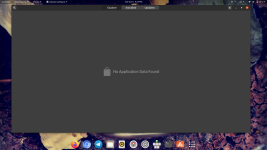
I would love to see a casual user find it's way out of that, just installed OS and is already running into issues (this one of the main reasons Linux will never be mainstream).
They currently have 77 known bugs to fix on the APP Store alone.
Last edited:
F
ForgottenSeer 72227
This could be the result of your typically big corporation mentality of "rush, get it out there, we'll fix it later..."
Every OS has it's issues.
I use both W10 latest and various Linux distros without any issues. Maybe I'm lucky but, I can find plenty of people having issues with Windows, plenty of people having issues with Linux and plenty of people having issues with MacOS. OSes today are so big and complex that issues are inevitable. Most Major W10 updates have been plagued with issues, requiring MS to pull the release of said updates and put blocks in so that the systems being impacted don't get the update until it's fixed.
Linux on the desktop hasn't taken off mostly due to the fragmentation, lack of focus, and lack of major 3rd party apps. There are other reasons, but these are the top three IMHO. Anyways this is a story for another day...
Last edited by a moderator:
Few people realize how vast Microsoft's divisions are. And their development philosophy is to fix it as they go. Of course everybody out in userland wants everything fixed yesterday, but having a mob of users leading you around by the nose isn't a viable way to develop. In short, there is a huge amount of ignorance and unrealistic expectations when it comes to users.This could be the result of your typically big corporation mentality of "rush, get it out there, we'll fix it later..."
This is true about the fragmentation, lack of focus and 3rd party apps. However, for the vast majority of ordinary home users that use their PC for just web surfing and an occasional text document, Linux has been more than sufficient for a long time. Chromebooks even more so.Linux on the desktop hasn't taken off mostly due to the fragmentation, lack of focus, and lack of major 3rd party apps. There are other reasons, but these are the top three IMHO. Anyways this is a story for another day...
Except for those that just must use Microsoft Office and\or are gamers, everybody else would be fine on Linux or Chromebook. The demographics show that Millennials (born 1980 and after) and Gen Z (born after 1998) are proficient with tech. However, in the vast majority of cases they prefer smart phones over PCs.
Even when required for work or school, having a Windows PC and installing 3rd party security software onto can be a losing strategy - as so many users can attest. Universities are aware of this fact, to the extent that engineering and science students use Linux more and more than they do Windows. The only reason for the Windows is the fact Microsoft and Adobe hold the world hostage because most in userland aren't willing to make a transition away from either.
Last edited:
Recently browsing
Members who viewed this thread in the last 5 minutes


