

Labubu, a mischievous character from Pop Mart’s toy universe, has become a favorite among collectors and fans of blind box culture. With its irresistible charm and collectible rarity, it was only a matter of time before scammers capitalized on its popularity. Enter the wave of Labubu scam stores—slick websites offering “official” merchandise at unbelievable discounts, but delivering cheap knock-offs or nothing at all. If you’ve stumbled across a deal that seemed too good to be true, this guide will help you understand what you’re really dealing with.
Scam Overview
What Are the Labubu Scam Stores?
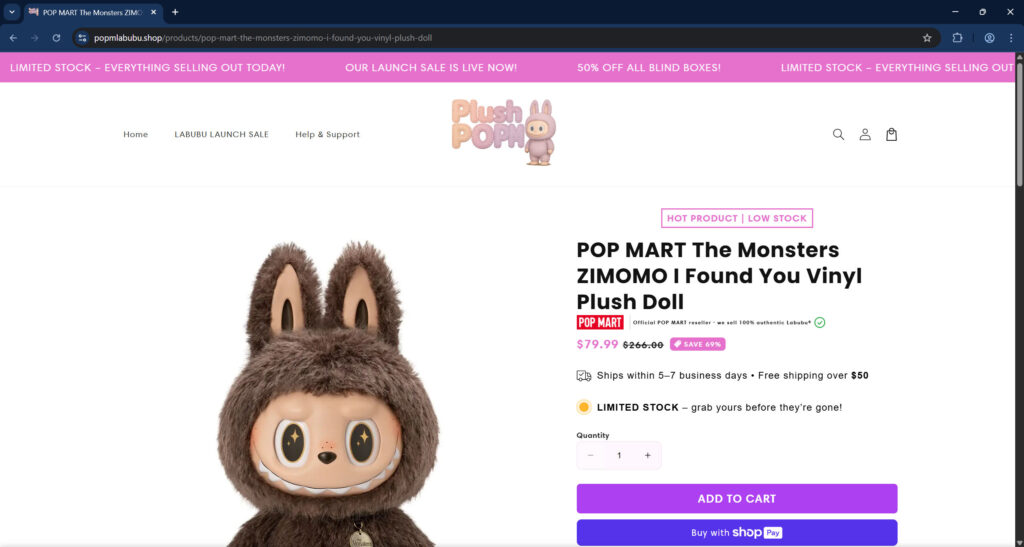
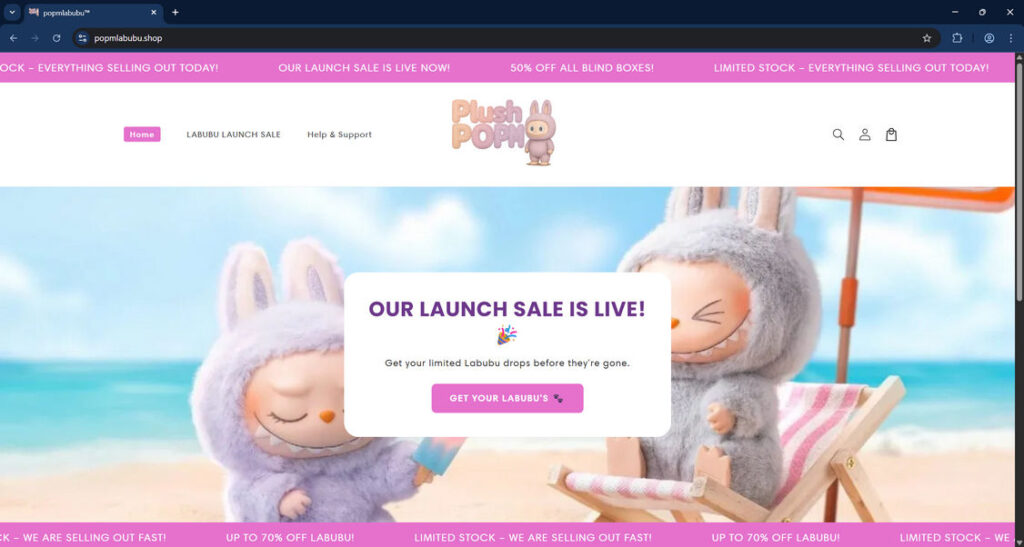
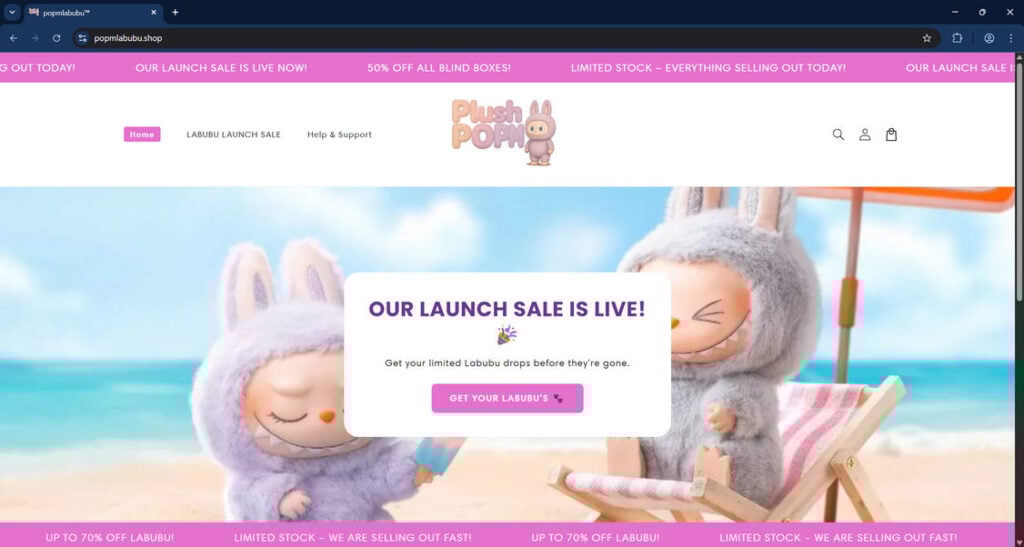
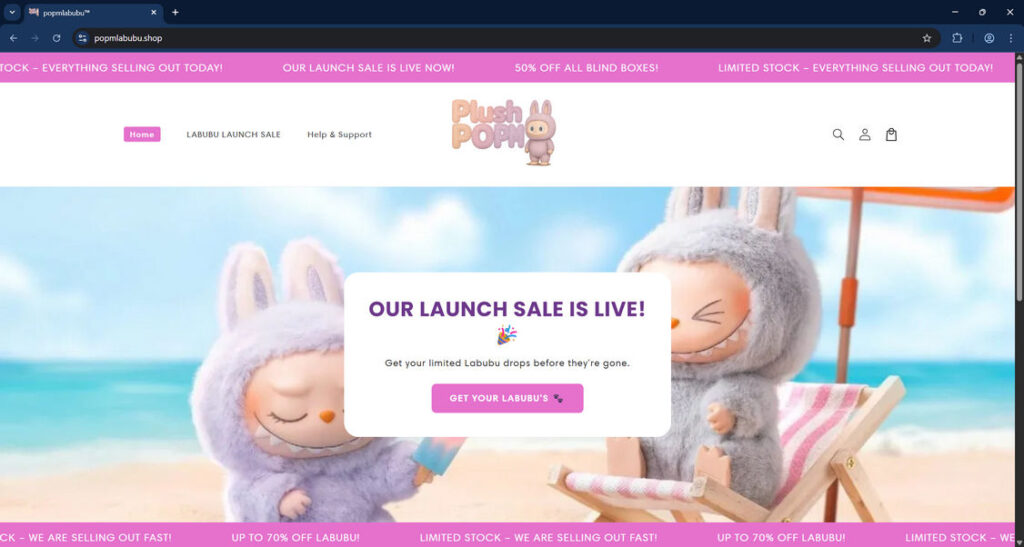
Labubu scam stores are deceptive e-commerce sites that imitate legitimate Pop Mart retailers. These stores often operate under URLs like popmlabubu.shop, plushpoph.store, or variations thereof. They use official branding, high-quality images, and fabricated urgency cues like countdown timers and “limited stock” banners to manipulate shoppers into fast purchases.
False Promises and Bait Pricing
The hallmark of these scam stores is unrealistic pricing. Items typically retailing for $100 or more are offered for $19. Terms like “up to 95% off” and “launch sale” aim to make customers believe they are accessing a once-in-a-lifetime deal. These prices are not just attractive—they’re strategic bait.
Professional-Looking, But Hollow
The scam websites often appear professionally made. They use modern web design templates, offer Shop Pay or credit card checkout options, and even claim “free shipping” on orders over a certain threshold. Many feature fake reviews, stock alerts, and generic support pages to appear credible.
No Verified Pop Mart Affiliation
Despite claims like “official reseller” or “Pop Mart certified,” these stores are not connected to Pop Mart. The real Pop Mart only sells through its official website and verified resellers. These scam sites exploit fans’ trust in the brand, hoping visitors won’t verify the legitimacy before purchasing.
Victim Reports and Patterns
Forums like Reddit, Trustpilot, and toy collector groups have been flooded with complaints. Victims report receiving:
- Poor quality fakes with incorrect designs.
- Empty packages or unrelated low-cost trinkets.
- No package at all despite successful charges.
- Zero customer support after the sale.
Common Red Flags
- Newly registered domain names (often less than 6 months old).
- Poor grammar or awkward phrasing in product descriptions.
- No real contact information or company address.
- Unsecure payment gateways or redirects during checkout.
- Repetitive or duplicated product reviews.
How The Scam Works
Step 1: Attracting Attention
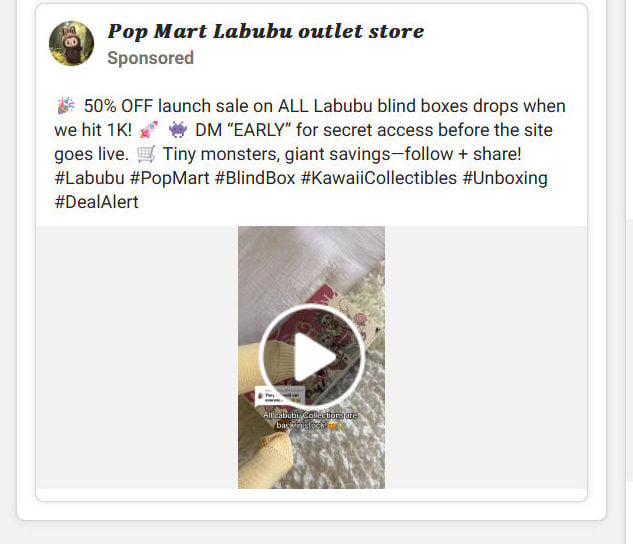
Scam stores rely heavily on targeted social media advertising. Platforms like Facebook, Instagram, and TikTok serve as funnels. Sponsored ads feature high-quality product photos, teaser videos, and text promising massive discounts or exclusive drops.
Step 2: Creating Urgency
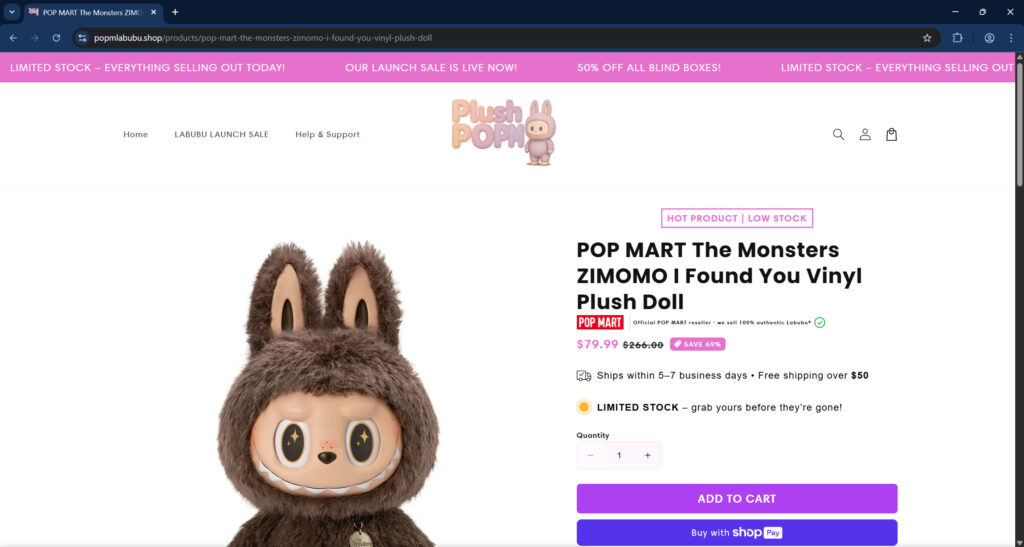
Once a potential victim clicks the ad, they’re brought to a site that mimics the Pop Mart aesthetic. Flash sales, countdown timers, and “only X left in stock” messages push buyers to act quickly. These psychological tricks limit time for due diligence.
Step 3: Capturing Payment
The checkout process seems legitimate. Credit card and Shop Pay options are available, and shoppers receive email confirmations post-purchase. However, behind the scenes, these payments often go to untraceable overseas accounts.
Step 4: Supplying Low-Quality Fakes or Nothing At All
In best-case scenarios, buyers receive counterfeit versions of Labubu figures. These often lack key branding elements like QR codes or proper packaging. Some get completely unrelated toys, while others receive nothing.
Step 5: Dodging Accountability
Once payment is completed, communication ends. Emails bounce, contact forms go unanswered, and live chat icons vanish. If the shopper files a complaint, the store may respond with canned messages or completely ignore it.
Step 6: Rebranding and Relaunch
When a scam site starts receiving too many complaints or gets reported, it often disappears and relaunches under a new name and domain. The same tactics are then reused with fresh ads and a clean online slate.
What to Do If You Have Fallen Victim to the Scam
- Document Everything
Save emails, transaction confirmations, screenshots of the site and product, and photos of what (if anything) you received. - Contact Your Bank or Credit Card Provider
File a dispute for “goods not as described” or fraud. Most credit cards offer buyer protection if reported in time. - Report the Scam Website
- Report to the FTC (U.S.) or your country’s consumer protection agency.
- Use platforms like Scamwatch, econsumer.gov, or IC3.gov.
- Alert the Platform Hosting the Scam Ads
Report the ads and accounts on Facebook, Instagram, or TikTok. These platforms often disable accounts after multiple reports. - Post Warnings Publicly
Share your experience on Reddit (e.g., r/Scams), toy forums, or Trustpilot to warn others. - Use Domain Lookup Services
Check WHOIS records to see if the same scammer has set up other stores. Sites like Scamadviser and DNSlytics can help. - Monitor Your Payment Accounts
Watch for unusual activity. Scammers may attempt to make additional charges or sell your data. - Avoid Reattempting Purchases from “Sister” Sites
If you see another site with identical products and layout, assume it’s a duplicate scam until verified. - Inform Pop Mart
Email Pop Mart directly or report the scam through their verified social channels. This helps them act against counterfeiters.
How to Spot Labubu Scam Sites and Fake Social Media Ads
With the growing popularity of Labubu figures, scam websites and fake social media ads have become harder to distinguish from legitimate sources. These operations are deliberately designed to mimic official Pop Mart outlets. Here’s how you can spot a Labubu scam before it’s too late.
1. Suspicious Website Domains
Legitimate Pop Mart products are sold on official or licensed retail platforms. Scam sites often use deceptive URLs such as:
popmlabubu.shoplabubudeals.storeplushpoph.shop
These domains may contain keywords like “Labubu,” “official,” or “Pop Mart,” but they are not affiliated with Pop Mart in any way. Check the domain’s age using a WHOIS lookup—many scam domains are less than six months old.
Tip: Always compare the domain against Pop Mart’s official website: popmart.com.
2. Unbelievable Discounts and Sales Language
Scam sites heavily promote “up to 90% off,” “launch sale,” or “flash deal” messaging to create urgency. If you see high-demand Labubu items like the Zimomo plush or Coca-Cola series listed for $19 (down from $300+), it’s almost certainly a scam.
Genuine Pop Mart blind boxes rarely drop below MSRP. Too-good-to-be-true prices are one of the most obvious red flags.
3. Copy-Paste Product Descriptions and Fake Reviews
Look for poorly written or duplicated product descriptions. Many scam sites copy and paste content from official retailers or even from each other. You may also notice:
- Identical reviews across different products
- Five-star ratings with no verified buyer details
- Comment sections filled with generic praise
Real retailers have detailed descriptions, verified customer reviews, and authentic packaging info.
4. Lack of Business Information
Scam sites rarely provide verifiable contact details. Red flags include:
- No physical business address listed
- Contact forms with no confirmation email
- Missing privacy policies or return instructions
- Only a Gmail or Yahoo contact email
Reputable businesses are transparent with support policies and provide valid customer service contacts.
5. Inconsistent Branding and Misused Logos
Many scam sites display logos from Pop Mart, Shop Pay, or even Shopify without permission. These are used to trick users into trusting the site. Be cautious if you notice:
- Off-brand fonts or misspelled names
- Low-resolution logos
- “Verified reseller” badges without links to official verification
Always verify claims by cross-referencing the seller with Pop Mart’s official partner list or customer service team.
6. Fake Social Media Ads
Scam sites use Facebook, Instagram, TikTok, and Pinterest to launch ad campaigns targeting collectors. Here’s how to identify scam ads:
- Ads with poor grammar or exaggerated discounts
- “DM us EARLY” or “limited secret drop” messaging
- Newly created pages with no follower base or engagement
- No tagged products or links to official profiles
- Ads that don’t link back to verified platforms
Legit brands rarely run “mystery access” or giveaway-based campaigns via DMs or personal inboxes.
7. Urgency and Fear of Missing Out (FOMO)
Common psychological tricks used by these scams include:
- Countdown timers on product pages
- “Only 3 left in stock” notices
- Pop-ups showing recent purchases by fake users (“Olivia from New York just bought 2”)
These features are added to pressure buyers into acting fast without verifying the seller.
Frequently Asked Questions About the Labubu Scam Stores
What are Labubu scam stores?
Labubu scam stores are fraudulent websites that claim to sell official Pop Mart Labubu collectibles—especially blind boxes and plush dolls—at heavily discounted prices. These stores typically operate under domains like popmlabubu.shop or playboxi.shop and are not affiliated with Pop Mart. Customers often receive low-quality knock-offs or nothing at all, and refunds are nearly impossible.
How can I tell if a Labubu store is fake?
There are several warning signs that a Labubu store is a scam:
- The domain is not associated with Pop Mart (official site:
popmart.com). - Prices are too low to be genuine, often showing “90% off” or similar.
- The store uses high-pressure tactics like countdown timers and “limited stock” banners.
- Contact information is missing or fake.
- Customer reviews are either missing or clearly fabricated.
- The site recently launched and has a short history online.
Are Labubu scam websites part of a drop-shipping scheme?
Yes. Most Labubu scam sites are operated by overseas drop-shipping businesses, typically based in China. These scams involve purchasing extremely low-cost imitations from wholesale platforms and shipping them to unsuspecting buyers under the guise of genuine Pop Mart merchandise.
What happens after I place an order on a fake Labubu site?
After placing an order:
- You receive a generic order confirmation email.
- Weeks later, a package may arrive from China, often containing a low-quality item that looks nothing like what was advertised.
- The item lacks official packaging, QR codes, or branding.
- If you try to request a refund, the seller ignores you or disappears entirely.
Can I get my money back if I ordered from a scam Labubu site?
Getting a refund is difficult, but not impossible. Here’s what you can do:
- Contact your credit card provider or bank and dispute the charge.
- Provide screenshots, receipts, and proof that the goods were misrepresented.
- Report the scam to your local consumer protection agency (e.g., FTC in the U.S.).
- File a complaint with the payment processor used by the website.
Are Labubu plush toys from sites like popmlabubu.shop authentic?
No. Sites like popmlabubu.shop are not official Pop Mart retailers. The items sold there are usually fake, poor-quality knock-offs, or mislabeled products that do not meet the standards of genuine Labubu merchandise.
Why are so many people falling for the Labubu scam?
Several reasons:
- The design of the websites is highly professional and mimics real e-commerce stores.
- The popularity of Labubu collectibles creates strong demand and impulsive buying behavior.
- Heavily discounted prices seem too good to miss, prompting quick decisions.
- Fake social media ads lend the sites a sense of legitimacy.
How do scammers get away with running these fake Labubu sites?
Scammers constantly rotate their domain names and advertising accounts. When one store is reported or taken down, they relaunch under a different name. Many social platforms and ad networks are slow to respond to fraud complaints, allowing these scams to continue operating.
Is there a list of known fake Labubu scam websites?
While there’s no official blacklist, consumer reports have flagged several domains including:
popmlabubu.shopplayboxi.shopplushpoph.storelabubudeals.com
Before purchasing, search the domain name followed by “scam” or “review” to see if others have reported issues.
What should I do if I see a Labubu scam ad on Instagram or Facebook?
If you see a suspicious ad:
- Do not click it.
- Take a screenshot of the ad and website URL.
- Report the ad as misleading or a scam via the platform’s reporting tool.
- Share a warning post or comment in collector forums or social media groups.
How can I safely buy real Labubu collectibles?
To ensure authenticity:
- Buy directly from Pop Mart’s official website or app.
- Shop through licensed retailers or verified marketplaces like StockX or Amazon with “verified seller” tags.
- Visit physical Pop Mart stores or vending machines if available in your area.
- Check product packaging for QR codes and Pop Mart branding.
The Bottom Line
The Labubu scam stores are sophisticated in design but shallow in legitimacy. They use emotional hooks, false scarcity, and platform trust to swindle unsuspecting fans. If you’re a collector, double-check domains, pricing, and seller authenticity before buying. And if you’ve been scammed, take swift action. With the right steps, you can recover your funds and help prevent others from falling into the same trap.








