

AeroChill Portable AC is being promoted as a tiny clip-on device that supposedly blows “real cold air” in seconds and can replace a broken car AC without installation or mechanic costs.
The product may be a real mini fan, but the marketing raises major red flags: cheap China-supplier product matches, AI-style ads and videos, fake-looking testimonials, exaggerated cooling claims, fake or unverified authority signals, and multiple sites using the same “AeroChill” name to sell different portable cooling products.
What Is AeroChill Portable Clip-On AC?
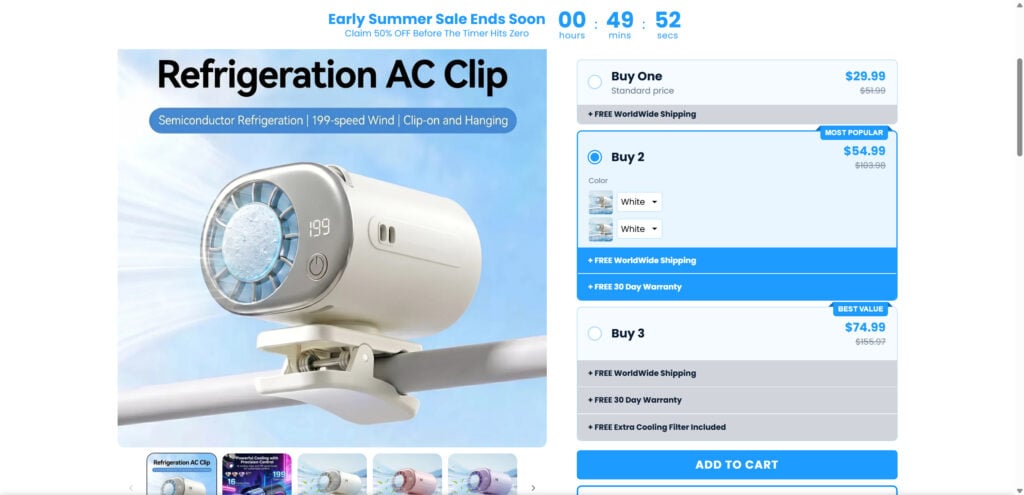
AeroChill Portable AC is advertised as a small rechargeable clip-on cooling device for cars, visors, vents, dashboards, headrests, umbrellas, waist use, or neck hanging.
The version promoted on Chillaero.store is sold as a car cooling product and claims to provide:
- real cold air
- cooling within seconds
- no car AC required
- no installation
- no mechanic
- USB rechargeable power
- clip-on use in cars
- powerful airflow
- quiet operation
- summer relief for drivers without working AC
The product page lists AeroChill at $29.99, compared with a crossed-out $51.99 price, and uses “hot product,” “low stock,” and “limited offer” messaging.
The problem is that the device appears to be closer to a small clip-on rechargeable fan than a true portable air conditioner.
The Main Problem: AeroChill Is Not a Real Car AC Replacement
A real car air conditioner uses a compressor, refrigerant, condenser, evaporator, blower, pressure lines, and a large electrical/mechanical system. That is why car AC repairs can be expensive.
A small USB clip-on device cannot realistically replace that system.
Even if AeroChill uses a small semiconductor cooling element, that does not mean it can cool a hot car cabin. Semiconductor cooling can make a small surface cold, but it also creates heat on the other side and has limited cooling capacity. In a car sitting in summer heat, the cooling load is far beyond what a tiny battery-powered fan can handle.
So the core claim is the issue: AeroChill may blow air, and it may feel slightly cooler up close, but buyers should not expect it to replace a broken car AC.
Why AeroChill Raises Red Flags
1. The product looks like a cheap China-supplier clip fan
The image you provided shows what appears to be the same type of clip-on cooling fan listed by Chinese suppliers for around $6.50 to $7 per unit.
Alibaba listings also show very similar “clip-on ice cooling fan” products with descriptions such as:
- USB high-speed fan
- waist or neck hanging fan
- umbrella fan
- clip-on cooling fan
- small rechargeable fan
- plastic body
- China origin
- bulk order pricing
That is a strong dropshipping signal.
A seller can buy a generic clip fan from a supplier, rename it AeroChill, create AI-style ads, add a dramatic car AC story, and sell it at a large markup.
2. “Portable AC” is misleading for this type of product
Calling this a “Portable AC” makes the product sound much more powerful than a fan.
A true portable air conditioner normally has a compressor, a refrigerant cycle, an exhaust hose, and measurable cooling capacity. A small clip-on device does not work that way.
At best, AeroChill appears to be a personal cooling fan. It may blow air toward your face. It may use a small cooling plate or misting-style effect. But that is not the same as air conditioning a car.
The phrase “Portable AC” can create unrealistic expectations.
3. The ads claim “Real Cold Air. No AC Needed.”
The Facebook ad you shared says:
- “Real Cold Air. No AC Needed.”
- “No AC in your car?”
- “AeroChill clips on and blows ice-cold air in seconds.”
- “No install. No mechanic. Just cold air.”
That is the exact kind of claim that can mislead buyers with broken car AC systems.
People who cannot afford a $500, $1,000, or $1,500 AC repair may think this device is a realistic substitute. It is not.
4. The product page uses extreme testimonial-style claims
Chillaero.store displays social-style “real stories” that claim people used AeroChill instead of repairing their car AC.
Examples include stories about:
- a broken AC for two summers
- kids finally stopping complaints in the back seat
- avoiding a $1,500 AC repair
- cold air in five seconds
- visible misting
- frost-like cooling
But some of the testimonial blocks on the site use generic placeholder text such as “Author name” and “Share positive thoughts and feedback from your customer.”
That is a serious credibility problem. A page claiming thousands of happy customers should not contain unfinished placeholder review blocks.
5. The review numbers look suspicious
The product page claims:
- 4.8 rating
- 1,764+ five-star reviews
- 6,890+ customers
- 94% said it made their drive bearable again
- 89% noticed real cold air within seconds
- 90% would recommend it
- results from over 2,870 orders
These numbers look scientific, but the page does not provide transparent survey details.
Buyers should ask:
- Who collected the data?
- Were reviews verified purchases?
- Can customers leave negative reviews?
- Why are there placeholder review blocks?
- Where are the raw reviews?
- Was the “cold air” measured?
- What was the outside temperature?
- What was the car cabin temperature?
- How long did the device run?
- Did it actually lower cabin temperature?
Without those details, the percentages are marketing claims.
6. AI images and AI videos are a major concern
The user flagged AeroChill as using AI images and AI videos. This fits the pattern seen with many viral dropshipping products.
These ads often use:
- AI-generated car interiors
- synthetic product shots
- fake hands or unrealistic demonstrations
- stock footage edited into a “review”
- fake TikTok-style reactions
- fake Facebook-style testimonials
- AI voiceovers
- fake news-style clips
- fake media logos or authority badges
- “as seen on” graphics without real articles
The goal is to make a cheap product feel like a breakthrough invention.
If an ad shows media logos, buyers should click through and verify whether real outlets actually reviewed the product. If there are no real articles, the logos are just trust decoration.
7. The same name appears on multiple AeroChill-style sites
AeroChill is not only being used for the tiny car clip fan. Another AeroChill page promotes a different “portable air cooler” that claims to cool up to 215 square feet, cool a room in 90 seconds, and work as an air purifier and humidifier.
That creates brand confusion.
When the same name is used across different websites, different product forms, and different claim sets, buyers should be cautious. It may indicate affiliate funnels, rebranded generic products, or short-lived landing pages created for ad campaigns.
8. The “America’s #1” and media-style claims are not proven
Some AeroChill-style pages use authority language such as “America’s #1 Rated Portable Air Cooler” or similar award-style claims.
That kind of wording should be treated skeptically unless the seller provides:
- the publication name
- the ranking methodology
- the test date
- the competing products tested
- the reviewer identity
- a link to the original article
- clear proof the award is real
Without proof, “#1 rated” is just marketing.
9. The price markup appears large
The Chillaero page sells AeroChill for $29.99, while supplier-style listings for very similar clip-on fans appear around $6.50 to $7 per unit.
That does not automatically mean the product is fake. Retailers add markup for ads, shipping, packaging, payment fees, and support.
But when the markup is paired with exaggerated “portable AC” claims, AI ads, and suspicious reviews, the buyer risk increases.
10. The site uses urgency and scarcity tactics
The page uses phrases like:
- limited offer
- order today
- 50% off
- hot product
- low stock
- save 42%
- cart reserved
These are designed to push fast decisions.
Urgency is common in dropshipping funnels because sellers want buyers to act before comparing the product elsewhere.
How the AeroChill Funnel Appears to Work
Step 1: The ad targets people with broken car AC
The ad speaks directly to people who do not want to pay hundreds or thousands of dollars for AC repair.
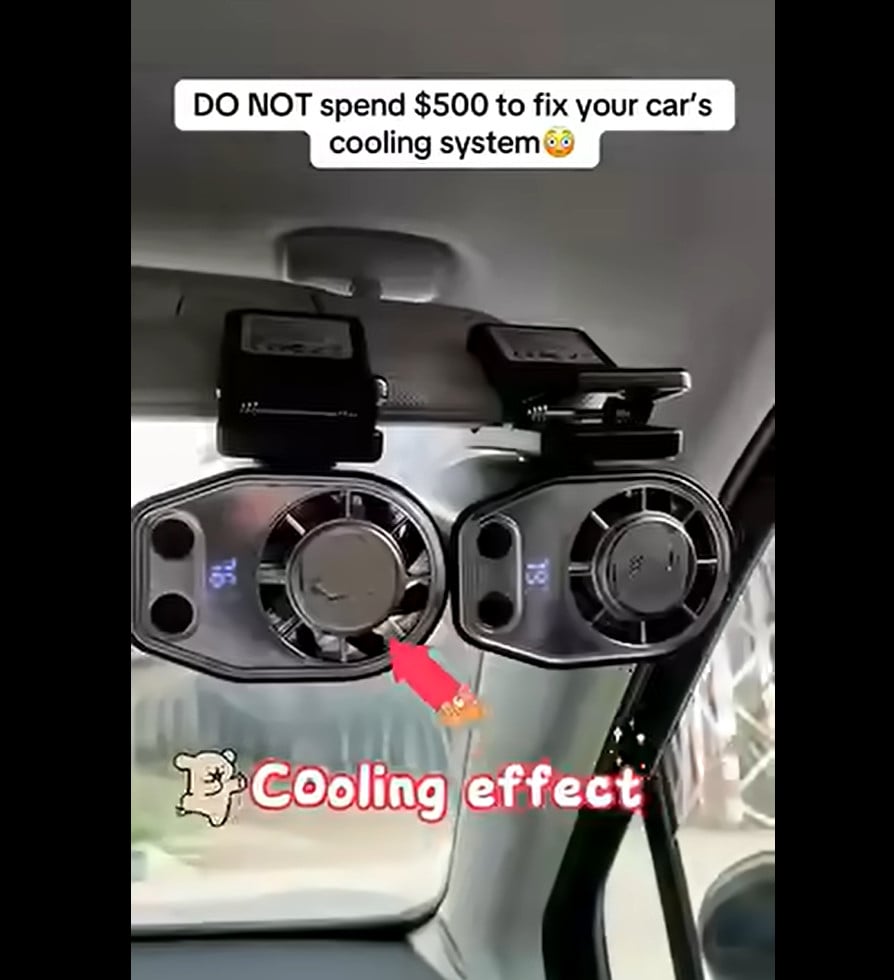
The emotional hook is simple: “Do not spend $500 fixing your car AC. Buy this instead.”
Step 2: The video shows cold-air effects
The ad may show mist, frost, condensation, or a dramatic cooling effect. These visuals make the device look much more powerful than a small fan.
Step 3: The product is framed as a breakthrough
Terms like “portable AC,” “real cold air,” “semiconductor refrigeration,” and “ice-cold air in seconds” make the product sound more advanced.
Step 4: Fake-looking testimonials create social proof
The landing page uses social-style posts, large review numbers, and percentage claims to make it look like thousands of drivers are already using it successfully.
Step 5: The buyer is rushed with discounts
The page uses limited-time discounts, low-stock warnings, and “buy now” buttons to reduce comparison shopping.
Step 6: The buyer receives a small fan
The customer may receive a real device, but it may not perform like the ad suggests. It may blow air, but it is unlikely to cool a hot car like a real AC system.
Main Red Flags
- Marketed as a “Portable AC,” but appears to be a small clip-on fan.
- Claims “Real Cold Air. No AC Required.”
- Ads claim it can replace expensive car AC repair.
- Similar products are sold by China-based suppliers for much lower prices.
- Uses AI-style images and videos.
- Uses fake or unverified media-style authority signals.
- Uses social-media-style testimonial blocks.
- Some review blocks contain placeholder text.
- Claims 1,764+ five-star reviews and 6,890+ customers without clear verification.
- Uses percentage claims without transparent testing data.
- Uses urgency tactics like “low stock” and “limited offer.”
- Same AeroChill name appears on multiple sites with different product types.
- Cooling claims are likely exaggerated compared with the device’s size and power.
Is AeroChill Portable AC a Scam?
AeroChill may ship a real device, so this may not be a simple “pay and receive nothing” scam.
The concern is false advertising and inflated expectations.
A fair conclusion is this: AeroChill Portable AC appears to be a high-risk dropshipping-style product because it combines cheap China-product similarities, exaggerated “real cold air” claims, AI-style ads, suspicious social proof, fake or unverified authority signals, and urgency-based sales tactics.
The device may work as a small personal fan. But buyers should not treat it as a real portable air conditioner or a replacement for car AC repair.
What AeroChill May Actually Do
AeroChill may provide:
- direct airflow toward your face
- mild personal cooling up close
- a fan effect while driving
- a small cooling sensation if it has a cold plate
- short-term comfort in mild heat
- clip-on convenience
AeroChill is unlikely to reliably:
- replace a broken car AC
- cool an entire car cabin
- blow truly ice-cold air for long periods
- fix summer heat in a parked car
- cool back-seat passengers effectively
- perform like a compressor AC
- justify avoiding real AC repair if the car is dangerously hot
What To Do Before Buying
1. Search for the generic product
Search for:
- clip-on ice cooling fan
- USB clip cooling fan
- waist neck hanging cooling fan
- umbrella fan USB cooling
- portable car clip fan
- AeroChill alternative
- Alibaba clip-on cooling fan
If you find the same product for a fraction of the price, slow down.
2. Do not believe “AC replacement” claims
Treat it as a fan, not an air conditioner.
If your car AC is broken, this device may make airflow more comfortable, but it will not solve the cooling problem.
3. Verify media logos and review claims
If the page shows media logos, “#1 rated” claims, or awards, look for real articles. If there are no working links, assume the logos are marketing graphics.
4. Screenshot everything
Before paying, save screenshots of:
- product page
- ad claims
- price
- discount
- shipping time
- review claims
- guarantee wording
- checkout page
- final order quantity
- merchant name
- support email
This helps if you need to dispute the charge.
5. Use a protected payment method
Use a credit card or PayPal if possible. Avoid debit cards, bank transfers, crypto, or payment methods that make disputes difficult.
What To Do If You Already Ordered
1. Check your confirmation email
Confirm:
- product name
- quantity
- total charge
- shipping charge
- merchant descriptor
- tracking number
- support email
- delivery estimate
2. Save the ad
If you bought because the ad claimed it replaced car AC, save that ad. It may be useful in a payment dispute.
3. Test expectations carefully
When it arrives, test whether it actually lowers temperature or only blows air. Take photos or videos if the product does not match the claims.
4. Request a refund quickly
Use clear wording:
“The product does not match the advertised ‘real cold air’ and ‘no AC needed’ claims. It works as a small fan, not a portable AC. I am requesting a full refund.”
5. Dispute if necessary
Contact your bank, credit card issuer, or PayPal if:
- the product never arrives
- the seller does not respond
- the device is not as advertised
- you received a cheap generic fan
- the refund is refused
- tracking is fake or stalled
- you were charged more than expected
Use dispute wording such as:
- “item not as described”
- “misleading advertising”
- “product sold as portable AC but received a small fan”
- “merchant refuses advertised refund”
- “fake or exaggerated product claims”
FAQ
What is AeroChill Portable AC?
AeroChill Portable AC is marketed as a clip-on personal cooling device for cars, but it appears to be closer to a small rechargeable fan than a real air conditioner.
Is AeroChill a scam?
It may ship a real product, but the offer has major red flags: dropshipping signals, cheap supplier matches, AI-style ads, suspicious testimonials, exaggerated cooling claims, and urgency-based sales tactics.
Does AeroChill really blow cold air?
It may feel cooler up close, especially if it uses a small cooling element, but buyers should not expect it to cool a hot car like a real AC system.
Can AeroChill replace car AC?
No. A small USB fan cannot realistically replace a car’s compressor-based AC system.
Is AeroChill made in China?
The exact manufacturer is not clearly disclosed on the Chillaero product page, but very similar clip-on cooling fans are sold by China-based suppliers.
Why are the ads misleading?
The ads suggest people can avoid expensive AC repairs and get “ice-cold air” in seconds. That creates unrealistic expectations for a small battery-powered fan.
Are the reviews real?
The review claims should be treated cautiously. The page shows large review numbers and percentage claims, but it also contains placeholder-style testimonial text.
Should I buy AeroChill?
Be cautious. If you buy it, treat it as a small fan, not a real portable AC. Compare generic versions first and use a protected payment method.
The Bottom Line
AeroChill Portable AC is promoted as a tiny device that can blow real cold air in seconds and replace a broken car AC. That claim is the problem.
The product may exist, and it may work as a small clip-on fan. But the marketing appears highly exaggerated. The biggest warning signs are the cheap China-supplier matches, AI-style ads and videos, fake-looking social proof, unverified media-style claims, “low stock” urgency, and the unrealistic idea that a small USB device can replace a real car AC system.
Treat AeroChill as a generic personal fan, not a real air conditioner. If you already ordered and the product does not match the ad, document everything and request a refund quickly.








