

Soft Serve Clothing is a real online store with a long operating history, but that does not make ordering from it low-risk. Recent complaint patterns are severe: customers repeatedly describe orders that remained unfulfilled for months or years, unanswered emails, and refunds that never arrived.
The store is still advertising fresh discounts and fast shipping. That contrast is why our recommendation is direct: avoid placing a new order right now. A polished storefront cannot outweigh a persistent pattern of non-delivery, unanswered support requests, and unresolved refunds.
Overview
SoftServeClothing.com sells hoodies, zippered sweatshirts, joggers, and shorts made from a proprietary fabric it calls Cloud Cotton. The website presents the brand as an established sustainable clothing company, says in-stock orders ship from a San Diego warehouse, and promotes a 30-day return or exchange window.
Those are stronger legitimacy signals than a newly created fake boutique. The store has sold real products, and some long-term customers say they received acceptable orders in the past. The current risk comes from what appears to be a serious breakdown in fulfillment and customer service rather than a completely invented business.
Independent review pages now show an overwhelming pattern of buyers saying they paid for preorders or regular orders, waited far beyond the promised date, and could not obtain a meaningful response. Soft Serve Clothing’s Trustpilot profile has hundreds of reviews and an extremely low score. The Better Business Bureau complaint page shows large volumes of delivery, service, and product complaints.
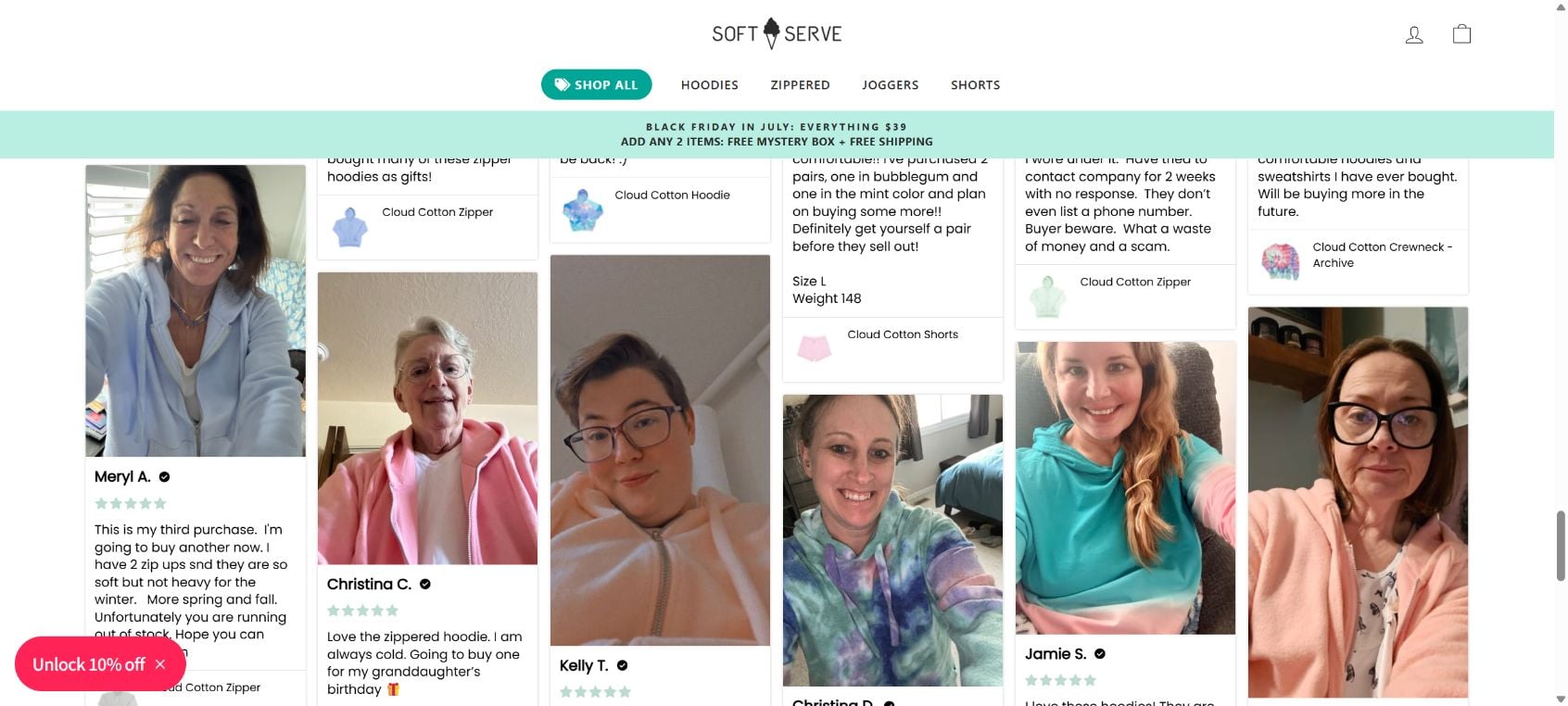
Meanwhile, the storefront continues to use aggressive sale language such as “Black Friday in July,” midnight deadlines, free mystery boxes, and a regular $85 hoodie reduced to $39. The site also displays thousands of on-site reviews and says in-stock items leave the warehouse within one or two business days.
For a new buyer, the practical verdict is clear: this is not a store we would trust with a new order while unresolved non-delivery and refund complaints remain so widespread.
What makes this case different from a typical fake store
- The company and products have existed for years.
- Some customers report successful purchases from earlier periods.
- The website publishes detailed product and return information.
- The current complaint pattern suggests operational failure, unfulfilled preorders, and poor refund handling—not necessarily a store that never had real merchandise.
Why Soft Serve Clothing Is High-Risk Right Now
Hundreds of buyers describe non-delivery
The most serious complaints are not about a slightly different color or a slow week in transit. Buyers describe orders remaining unfulfilled for a year, two years, or even longer. Several reviewers say they initially had positive experiences with the brand, then placed another order and never received either the merchandise or their money back.
That history makes the warnings more credible. These are not all people who misunderstood an unfamiliar website; some were repeat customers who knew what earlier Soft Serve orders looked like.
Customer service complaints are persistent
Many reports follow the same sequence: the customer emails repeatedly, receives a vague promise or no response, waits again, and eventually loses access to an easy card dispute because too much time has passed.
A return policy is only useful when a seller answers the request and provides workable instructions. A beautifully written guarantee cannot protect a customer if support goes silent.
The website still uses outdated delay language
The FAQ continues to reference limited staffing caused by the “current Covid pandemic.” Leaving years-old emergency wording on a current fulfillment page suggests that important customer information is not being maintained carefully.
Urgent promotions conflict with the complaint history
The storefront pushes time-limited discounts, midnight deadlines, free gifts, and fast warehouse dispatch. That sales pressure is difficult to reconcile with reports from customers who say older orders and refunds remain unresolved.
How the Soft Serve Clothing Order Problem Unfolds
Step 1: A deep discount makes the order feel safe and urgent
The shopper sees an established-looking brand, a large review count, a sustainable product story, and a hoodie marked down from $85 to $39. A countdown or “ends at midnight” message encourages immediate checkout.
Step 2: The buyer places an in-stock or preorder purchase
Preorders carry extra risk because the delivery date is already in the future. When that date passes, the customer may be encouraged to wait for a production update instead of seeking a refund immediately.
Step 3: Shipping updates become vague or stop
The order remains unfulfilled, tracking does not appear, or a promised dispatch window changes. Each new explanation buys more time while the normal dispute window continues to shrink.
Step 4: Refund requests meet silence or delay
The customer contacts the published email address, sometimes repeatedly. Complaints describe missing responses, promises that did not turn into refunds, or difficulty obtaining the information needed to return an item.
Step 5: The payment dispute becomes harder
Card issuers and payment platforms have deadlines. A shopper who patiently waits through months of assurances may discover that the simplest chargeback route is no longer available. That is why unresolved preorders should not be allowed to drift indefinitely.
What the Current Return Policy Actually Says
Soft Serve Clothing says returns and exchanges are accepted within 30 days of delivery, provided the customer contacts the company first. Original shipping, customs, and duties are not refundable. Final-sale items generally cannot be returned unless defective.
For a refund to the original payment method, the policy lists a $7 handling fee. Returned items must be resellable, and the company reserves the right to apply an additional restocking fee if it decides the condition is not acceptable.
The key phrase is “after delivery.” That policy does not solve the more serious complaint from people who say their order never arrived. In a non-delivery case, buyers should focus on cancellation, written refund demands, and payment-provider deadlines instead of waiting for a normal merchandise return.
Warning Signs to Consider Before Ordering
- Large numbers of recent non-delivery complaints.
- Repeat customers saying the company stopped answering them.
- Preorders that remained open far beyond their expected dates.
- Years-old pandemic language still used on the shipping FAQ.
- Urgent sale messaging while older fulfillment complaints remain unresolved.
- A refund process that depends on obtaining cooperation from customer service.
- Final-sale and condition rules that can narrow return eligibility.
What to Do If Soft Serve Clothing Has Not Shipped Your Order
- Collect the evidence: save the order confirmation, promised shipping date, product page, sale terms, and every support message.
- Send a clear written demand: state the order number, purchase date, amount, and a specific deadline for shipment or a full refund.
- Do not accept endless extensions: if the promised date has passed repeatedly, decide on a final deadline and enforce it.
- Check your dispute window now: contact the card issuer, PayPal, Shop Pay provider, or buy-now-pay-later service before more time passes.
- Describe the issue accurately: the dispute is for merchandise not received or a refund not processed, not simple buyer’s remorse.
- Watch installment payments: an unresolved merchant complaint does not always stop scheduled buy-now-pay-later charges automatically.
- File consumer complaints: report the transaction to the relevant state consumer office, the FTC, or your country’s consumer-protection body if the seller does not resolve it.
If the item arrived but you want to return it
Do not wash or wear it. Photograph the item and packaging, request authorization within the stated 30-day window, and use tracked shipping. Keep the tracking receipt and delivery confirmation until the refund appears on your statement.
The Bottom Line
Soft Serve Clothing is not a newly invented fake boutique, but its current complaint record makes a new purchase difficult to justify. A real company can still become unsafe to order from when fulfillment fails, customers cannot get answers, and refunds remain unresolved.
Until the company demonstrates consistent delivery and closes the gap between its fast-shipping promises and buyer experiences, the sensible choice is to avoid placing a new order. If you are already waiting, protect your dispute deadline now rather than accepting another open-ended delay.








