

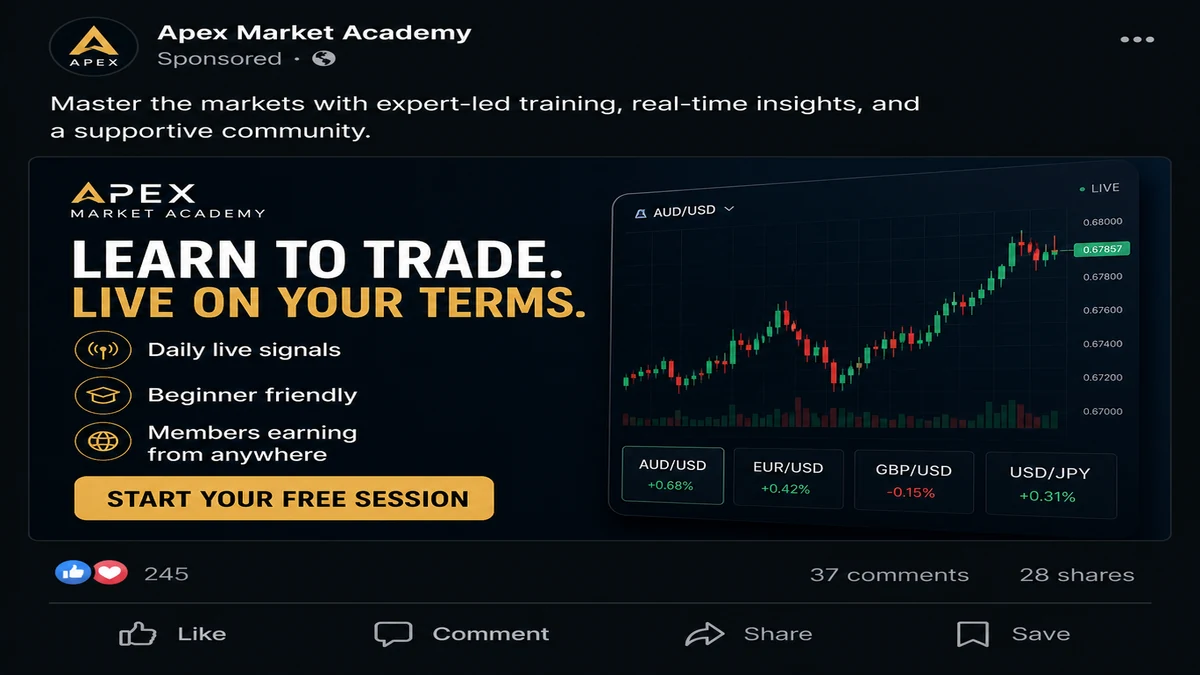
The advertisement does not begin with a balance sheet. It begins with freedom: work from anywhere, leave the ordinary job, join a winning community, and learn the method that supposedly changed someone else’s life.
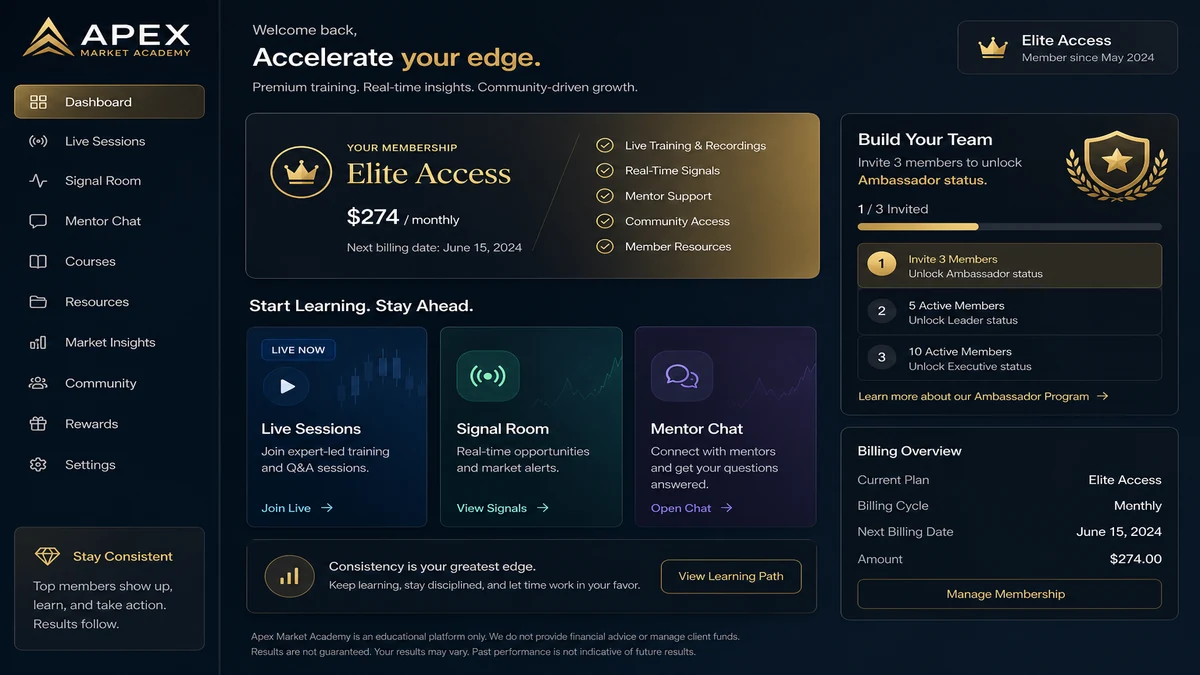
A free session leads to mentors, signals, live rooms, and a paid membership. Soon the easiest way to reduce the monthly cost may be recruiting other people.
That is the promise behind a social media investment training scam. The charts may be real, but the advertised path from beginner to dependable income can be built on claims the seller cannot support.
Overview
The lifestyle is marketed before the training can be evaluated
Social media makes financial education easy to package as entertainment. Short videos show selected trades, enthusiastic events, luxury travel, and members celebrating promotions. The viewer sees an outcome long before seeing the curriculum, instructor credentials, total cost, or typical customer result.
The FTC’s August 2026 warning about investment training scams points to International Markets Live, also known through brands including IM Mastery Academy and IYOVIA. The agency said the operation used false or baseless earnings claims to sell financial training and a multi-level-marketing venture.
The specific enforcement history matters. It does not mean every trading course is fraudulent. It shows why an earnings story must be tested against records, not a promoter’s feed.
The customer may be sold two different opportunities
One product is education: classes, market commentary, signal rooms, software, mentors, or trading tools. The other is a business opportunity built around selling memberships and recruiting additional participants.
Those paths can blur. A customer who struggles to earn from trading may be encouraged to earn commissions by marketing the program. The training purchase becomes evidence of belief, while recruitment becomes the proposed route to paying for it.
The FTC alleged that IML used similar earnings claims for both sides. Its records, according to the agency’s 2025 complaint announcement, showed that 60% of customers stopped paying within one month and 90% stopped within six months.
A profitable screenshot is not a typical-results disclosure
A winning trade can be genuine and still tell almost nothing about a program. It may omit losing trades, fees, leverage, account size, time, taxes, or whether the promoter traded live money.
The same problem applies to commission checks and rank celebrations. A top seller’s payment does not reveal how many people earned nothing, lost money, or canceled after paying for access.
Warning signs include:
- Income is presented as likely, fast, or beginner-friendly.
- Luxury lifestyle content substitutes for audited performance.
- Educator experience is described without verifiable licenses or records.
- Losses, fees, leverage, and account size are minimized.
- Recruiting is presented as the solution to membership cost.
- Promoters pressure members to post earnings or lifestyle claims.
- Refund and cancellation terms are harder to find than enrollment.
- The program has changed names while the sales structure continues.
What the FTC Case Establishes
The FTC and Nevada sued the IML operation in 2025. The agency said it had also used the names IYOVIA, iMarketsLive, IM Mastery Academy, and IM Academy.
The complaint alleged false or baseless claims about earnings from financial-market training and the related multi-level-marketing opportunity. It also alleged deliberate marketing to young people, including posts aimed at college social media pages.
According to the FTC, the scheme generated more than $1.2 billion since 2018. The agency said very few participants made substantial money from the MLM side and that many, if not most, lost money.
Several defendants reached settlements. In May 2026, the FTC announced proposed orders requiring lead defendants to surrender assets valued at roughly $90 million and barring them from selling trading-training services and investment opportunities.
The orders also address earnings claims, refund and cancellation representations, negative-option charges, and telemarketing practices. The FTC’s consumer warning later said the company was no longer in business.
The enforcement record is a concrete example of deceptive marketing, but it does not make every unrelated educator fraudulent. Judge any other course by its own claims, people, terms, evidence, and regulatory history.
How the Social Media Investment Training Scam Works
Step 1: A lifestyle post turns risk into aspiration
The promoter shows a flexible schedule, community event, profit screenshot, or personal transformation. Trading is framed less as a risky activity and more as a route out of work, debt, or limited opportunity.
The post may include a disclaimer, but its dominant message suggests that the program made the lifestyle possible.
Step 2: A free lesson lowers the first barrier
A webinar, challenge, group chat, or introductory call promises education rather than a direct investment. That distinction can make the offer feel safer because the seller is not initially asking to hold the viewer’s funds.
The free material often ends with an enrollment deadline, bonus, mentor slot, or discounted membership.
Step 3: The membership bundles training, tools, and community
The paid package may combine recorded lessons, live sessions, signals, market software, chat access, and coaching. Bundling makes it difficult to determine which component has measurable value.
A customer should ask what is taught, who teaches it, how often support is provided, and whether the tools can be evaluated without a long recurring commitment.
Step 4: Selected success stories become the evidence
Promoters highlight profitable days, high ranks, or dramatic personal stories. Typical outcomes, total customer counts, cancellations, and losses may remain absent or buried.
A testimonial cannot replace reliable substantiation for an earnings claim. Even honest members may describe a result that is unusual and difficult to reproduce.
Step 5: Recruiting becomes a second income promise
Members may be told they can offset fees by sharing the program, building a team, or reaching a rank. Training and recruitment become mutually reinforcing.
The incentive creates a conflict. A participant may promote the course before becoming consistently profitable because commission depends on enrollment, not trading skill.
Step 6: Recurring charges outlast the original excitement
Monthly access can continue while a customer is learning, inactive, or trying to cancel. Different packages, tools, events, and upgrades may have separate terms.
The FTC’s IML orders specifically addressed negative-option disclosures, informed consent, and simple cancellation. Those requirements reflect how billing can become part of the harm.
Step 7: The brand changes while the pitch survives
A program may rebrand, move communities, change product names, or rely on promoters whose accounts outlive the central company. Search results under one name may not reveal the complete history.
Research the legal company, owners, executives, sales leaders, old names, and payment descriptor. A new logo does not erase an old order or lawsuit.
How to Evaluate a Trading Course Without Trusting the Feed
Write down the exact claims before speaking with a salesperson. “Learn market basics” is different from “replace your salary.” Ask which outcome is promised, how long it supposedly takes, and what evidence supports it.
Request typical-results data that includes all customers, not a selected group. Look for the number enrolled, number who completed training, number who traded, median result, losses, fees, and the period measured.
Verify each educator. Search professional licenses, disciplinary records, employment history, and published work. A social-media title such as master trader, mentor, or academy educator is not a credential.
Ask whether examples use live trades, simulated accounts, hindsight, or selectively chosen periods. A clean chart marked with perfect entries after the fact is not a repeatable record.
Calculate the full cost: enrollment, monthly membership, software, data, events, upgrades, brokerage fees, spreads, losses, and taxes. Free access earned by recruiting is not free if it creates a sales obligation.
Read the cancellation policy before paying. Save a copy because terms can change. Test the support channel with a specific billing question and keep the reply.
Never borrow money, use rent funds, or increase leverage because a mentor says conviction is required. A legitimate educator should teach risk limits without shaming a student for protecting capital.
MalwareTips has documented other schemes where an apparent adviser controls the story and platform, including the Capital Markets Advisory scam. Training and managed-investment fraud are not identical, but both require independent verification of people, money, and results.
Questions a Promoter Should Answer in Writing
Ask what a new member is realistically expected to accomplish in the first month, three months, and year. The answer should describe learning goals, not promise a salary.
Request the current price of every required component. A low membership figure can exclude software, data feeds, events, coaching, brokerage costs, and upgraded signal rooms.
Ask how many customers joined during the period used for testimonials and how many achieved the advertised result. A denominator turns a success story into something that can be evaluated.
Find out whether results come from trading or recruitment. An income statement that combines the two can make a sales commission look like evidence that the market training works.
Ask each educator to identify relevant licenses, professional history, and the basis for any performance claim. A charismatic presentation and internal rank are not independent qualifications.
Request a plain-language explanation of risk. It should cover drawdowns, leverage, fees, slippage, losing streaks, and the possibility that a student follows the method and still loses money.
Ask whether the signals are educational examples or instructions, who produces them, and whether the complete historical record is available. Selected winning alerts do not show system performance.
Request the cancellation steps before enrolling. Ask whether canceling the training also ends tools, events, data, community access, and the business-opportunity account.
Ask what happens to referral commissions when a recruit cancels or requests a refund. Clawbacks and qualification rules can make displayed earnings different from money a participant keeps.
Find out whether promoters are permitted to make personal income claims. If the official policy prohibits them while the sales network relies on them, ask how the company monitors and enforces the rule.
Search the legal company and leaders in court databases, regulator announcements, state attorney general records, and older brand names. Do not limit research to reviews controlled by members.
Ask for all answers by email and save them. If the promoter will explain the opportunity only on a disappearing call or private chat, the missing record is itself useful information.
A legitimate seller may not have every statistic, but it should not punish careful questions. Pressure, ridicule, or claims that skepticism causes failure are sales tactics, not evidence.
Talk with someone who is not part of the sales community. A promoter, mentor, sponsor, and successful member may all benefit when a new customer enrolls.
Compare the course with lower-cost or regulated alternatives. Books, public education, licensed professionals, and brokerage learning centers may cover the same basics without a recruitment layer.
Watch a complete sample lesson, not only a highlight. Clear teaching should explain assumptions, uncertainty, mistakes, and risk rather than turning every chart into proof that the method works.
Ask whether the seller receives compensation from brokers, exchanges, software vendors, or funded-account programs. Undisclosed referral incentives can shape which tools and markets are promoted.
Set a cooling-off period before paying. Leave the group chat, close the webinar, and reread the offer the next day without music, countdowns, testimonials, or a salesperson waiting for an answer.
If the opportunity is genuine, it should survive independent research and a night of reflection. A deadline that disappears when questions begin was probably doing more work than the curriculum.
Company, Address, and Fulfillment Checks
The academy brand is not the legal seller
Identify the company on the charge, terms, privacy policy, invoice, and refund agreement. Compare it with business registrations, regulatory records, court cases, and previous names.
For the IML case, researching only one brand would miss names such as IYOVIA, iMarketsLive, IM Mastery Academy, and IM Academy. Brand history is part of product history.
The address must lead to an accountable operation
Determine whether the listed address is an office, shared suite, mailbox, residence, event venue, or service agent. A registration address does not prove that educators or support work there.
Compare the legal jurisdiction with the contract and dispute terms. If the seller cannot clearly identify where it operates, collecting a refund or serving a complaint may be difficult.
Support must work after the enrollment call
Test billing and cancellation channels before buying. Ask for a written explanation of renewal dates, trial conversion, separate subscriptions, refund eligibility, and the exact cancellation method.
Promoter chat is not billing support. The company taking payment should provide a traceable way to stop charges without requiring another sales call.
The training product must be traceable
Request a syllabus, instructor names, sample lesson, tool requirements, and a clear distinction between education, signals, and recruitment. Find out whether content remains available after cancellation.
Ask how performance claims are calculated and reviewed. If the seller cannot connect an earnings statement to complete records and reasonable assumptions, the marketing is doing more work than the product evidence.
What to Do if You Have Fallen Victim to This Scam
- Stop new payments and trading activity tied to the pitch. Do not add capital, buy an upgrade, or recruit someone to recover sunk costs.
- Cancel in writing. Use the method in the saved terms, state which memberships and add-ons must end, revoke future authorization, and request confirmation with an effective date.
- Contact the card issuer or bank. Explain any unauthorized renewal, misleading enrollment, or charge after cancellation. Provide the advertisement, terms, cancellation request, and responses.
- Preserve the claims. Save ads, videos, screenshots, chat messages, webinars, income statements, referral plans, educator profiles, receipts, billing descriptors, and every version of the terms.
- Secure financial accounts. Change passwords, remove API keys or remote access, review brokerage permissions, and contact the broker if anyone else was allowed to trade or view the account.
- Report the conduct. File with the FTC at ReportFraud.ftc.gov, your state attorney general, securities regulator when relevant, payment provider, and the social platform that carried the claim.
- Tell people you recruited. Share factual records and cancellation information. Do not repeat unverified income claims while trying to explain the loss.
- Review recurring charges. Check several months of statements for separate software, community, event, or tool subscriptions. Dispute only charges that are unauthorized or otherwise eligible under the issuer’s rules.
- Scan software and files. If a promoter asked you to install a trading tool, browser extension, or remote-support app, remove unneeded access and run Malwarebytes. It can help detect malicious programs bundled into a supposed training workflow.
- Block dangerous follow-up ads. AdGuard can reduce exposure to known malicious pages, trackers, and aggressive advertising. It cannot judge trading quality, so continue checking claims and legal identities independently.
- Reject recovery offers. Anyone promising to recover fees or trading losses for an advance payment may be starting another scam.
- Get qualified help for serious losses. A licensed attorney, accountant, or regulated financial professional can assess contracts, taxes, and reporting duties without promising a guaranteed outcome.
Frequently Asked Questions
Is every online trading course a scam?
No. Some courses provide legitimate education. Judge the specific seller by its claims, instructors, curriculum, terms, evidence, and regulatory history.
Can anyone guarantee that training will make me profitable?
No one can guarantee trading success. Markets involve risk, and a course cannot remove losses, fees, timing, or individual decision-making.
Why is recruiting a warning sign?
Recruitment can make commissions depend on selling memberships rather than demonstrating trading skill. It also gives members an incentive to repeat optimistic claims.
What does a profit screenshot prove?
It may show one selected result, but it does not establish account ownership, total performance, losses, fees, leverage, or typical customer outcomes.
What happened to IM Mastery Academy and IYOVIA?
The FTC brought an enforcement case with Nevada. The agency announced settlements and orders involving asset surrender and bans, and its August 2026 consumer alert said the company was no longer operating.
Should I dispute every course charge?
Contact the issuer promptly and describe the facts accurately. Eligibility depends on authorization, representations, cancellation history, timing, and the issuer’s rules.
The Bottom Line
A social media investment training scam sells certainty in a place where certainty does not exist. The danger grows when selected wins, luxury imagery, recurring fees, and recruitment are presented as one proven route to income.
Evaluate the educator, training, business opportunity, and billing as four separate products. If the seller cannot document typical results, qualified instruction, complete costs, and a workable exit, do not let an inspiring feed make the decision.








