

A phone, a few spare minutes, and hundreds in daily income sounds like the kind of shortcut anyone would pause to investigate.
Mobile Profits wraps that promise inside a polished presentation. The important details only become visible after the excitement is stripped away.

Overview
What the Mobile Profits pitch promises
Mobile Profits is promoted as a simple online income system for people with little experience, limited time, and no existing audience.
One sales page claims users can make up to $600 daily from a phone. Another promotes a “mobile posting system” paying up to $317 daily.
The language suggests that automation, prepared content, and a hidden phone method will handle most of the difficult work.
Viewers are told they do not need inventory, sales calls, cryptocurrency trading, or advanced technical knowledge.
What is actually being sold
The visible checkout offers digital training and access to a system described with names such as Mobile Profits and Justara AI.
The advertised entry price was $47 during our review, reduced from a displayed regular price of $77.
This is not employment, a guaranteed payment program, or a special setting hidden inside a smartphone.
It appears to be an affiliate-marketing package. Buyers must still attract attention, persuade visitors, and produce qualifying transactions.
The red flags that matter most
The presentation emphasizes large earnings before clearly explaining the work, traffic sources, expenses, competition, or typical net results.
It also uses urgency, a members-only frame, an apparent live stream, changing income figures, and a success story centered on “Jake Dobbs.”
- The earnings claims are specific, while the evidence supporting typical results is difficult to verify.
- The supposed live training can function like a prerecorded sales presentation.
- The offer price is small compared with the income displayed on the page.
- Public reviewers describe confusion, disappointment, refund problems, and additional sales pressure.
- The business responsibility behind the changing labels is not immediately clear to a visitor.
These features do not prove every transaction is identical. Together, they justify treating the offer as high risk.
Is the Mobile Profits App Real or a Scam?
Mobile Profits has real web pages and sells digital material. That does not make its central money-making story dependable.
The reviewed pages present extraordinary income as accessible to beginners while withholding the ordinary economics that determine whether affiliate marketing earns anything.
No phone setting can create buyers. Revenue requires traffic, a credible offer, conversions, accepted commissions, and income exceeding every related expense.
The “app” label can also be misleading. A purchaser may expect software producing income, yet receive training, links, templates, or access instructions.
The offer says there are no monthly fees or subscriptions. Buyers should still examine checkout boxes, processor terms, and every later offer independently.
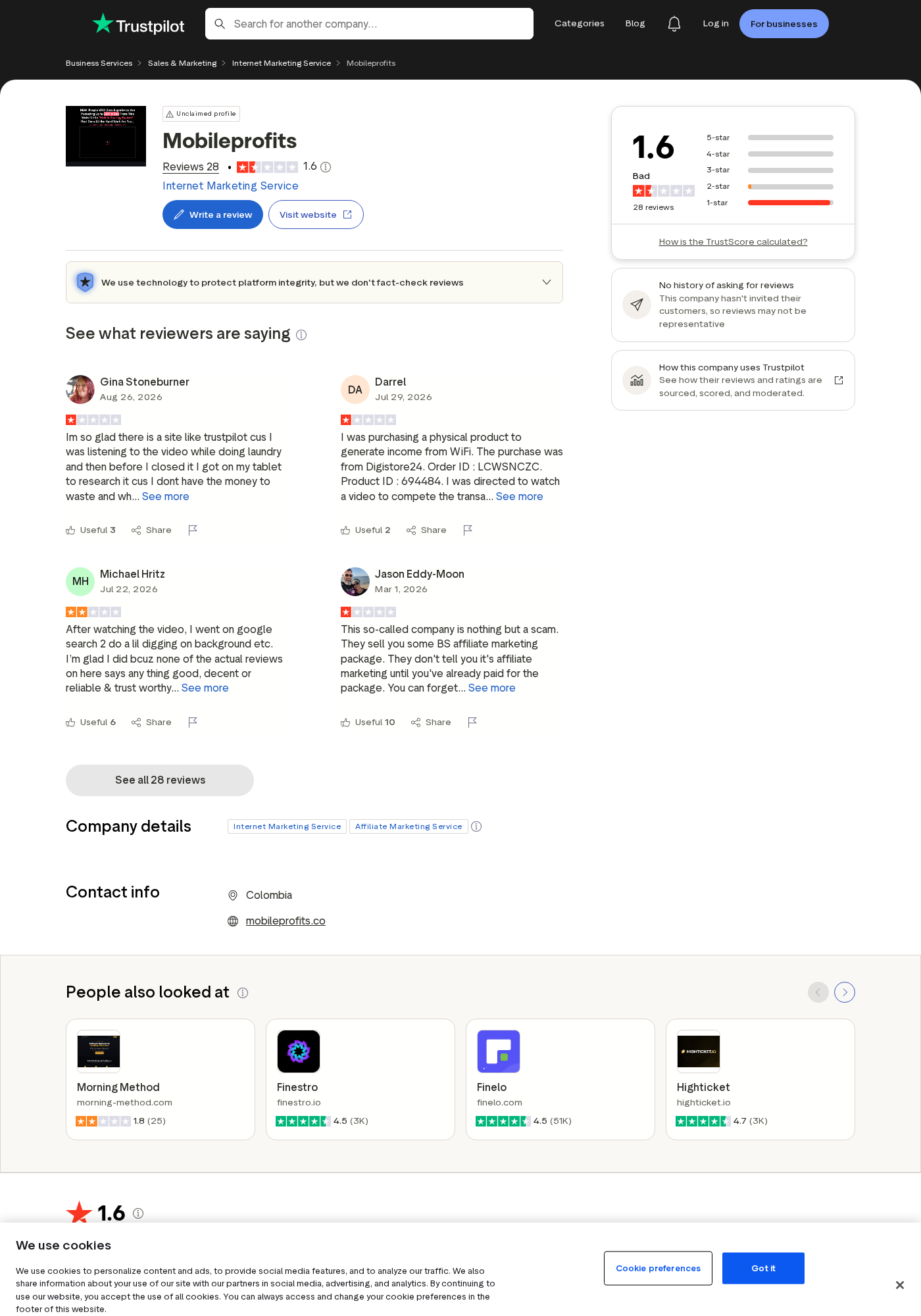
Public reviews are strongly negative at the time of our check. Several reviewers allege unclear delivery, unwanted sales pressure, or difficulty obtaining refunds.
Those comments are individual reports, not audited findings. They matter because their themes resemble the risks visible in the funnel itself.
We found no reliable evidence that an ordinary buyer can activate a secret feature and consistently collect the advertised daily amounts.
Our conclusion is straightforward: avoid Mobile Profits unless the seller provides verifiable typical earnings, complete costs, accountable company details, and testable product information.
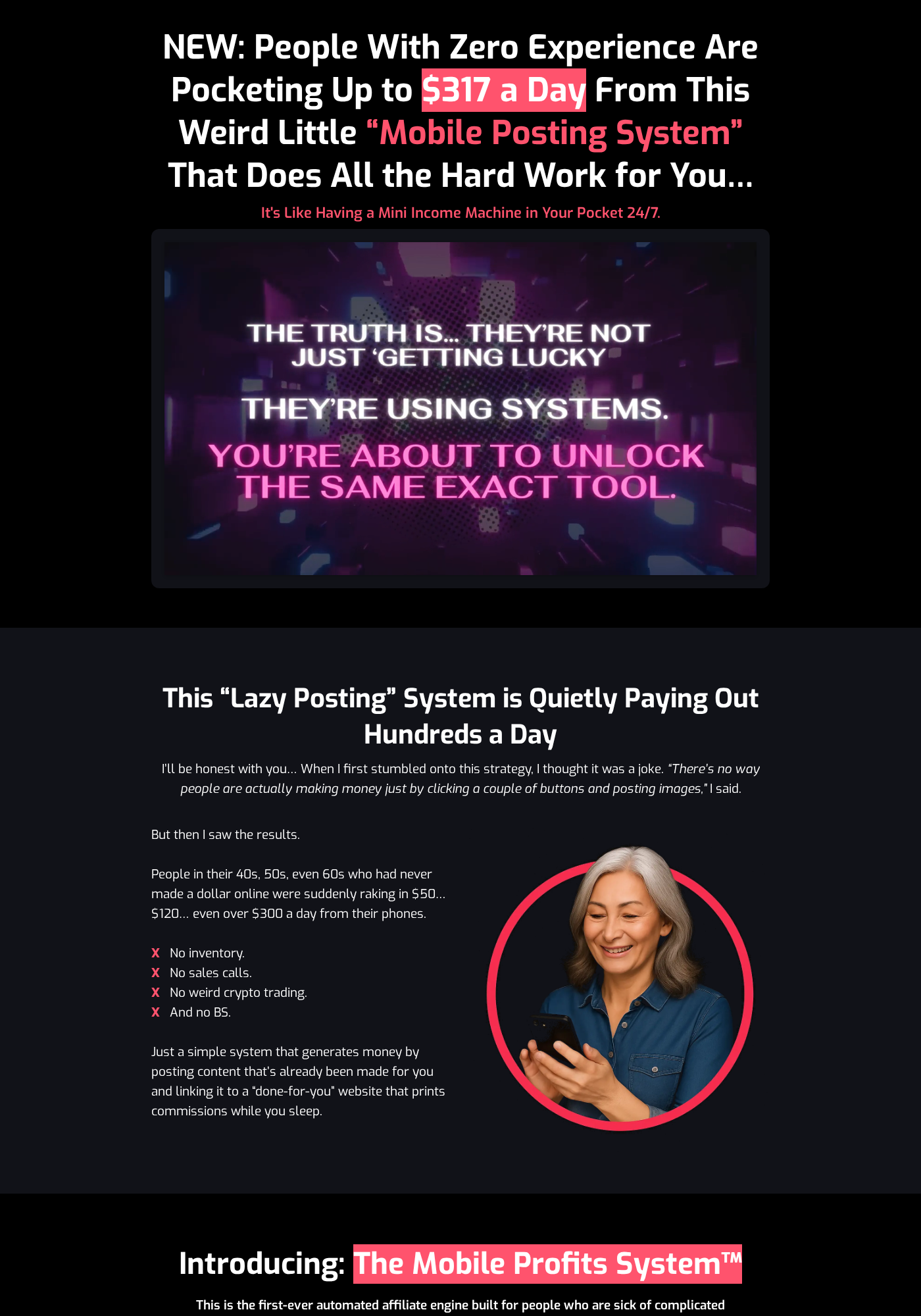
How the Mobile Profits App Scam Works
Step 1: A social ad sells a hidden phone shortcut
The journey commonly begins with a short advertisement promising that a little-known method can turn an ordinary phone into an income tool.
Some versions use phrases such as “phone trick,” “mobile posting,” or “big tech hates this” to manufacture curiosity.
The ad avoids a complete business explanation. Its job is to make the viewer click before skepticism catches up.
Someone worried about bills may interpret the displayed amount as a realistic outcome rather than an exceptional advertising claim.
Step 2: The visitor enters a staged private presentation
The next page resembles exclusive training. It displays members-only language, a viewer count, a warning that access may disappear, and a live-chat area.
A large “Live Stream in Progress” overlay encourages immediate participation, even though the presentation can be delivered repeatedly to new visitors.
This design creates social proof and urgency without proving that thousands are watching or that the host is broadcasting at that moment.
The format feels more personal than a normal sales page. That feeling can lower resistance to the claims that follow.
Step 3: A relatable narrator turns doubt into hope
The story is associated with a presenter named Jake Dobbs, portrayed as someone sharing a restricted method after discovering unusual results.
We could not independently verify the presenter’s claimed results, business record, or authority to promise the displayed income.
The narrative focuses on freedom, simplicity, and frustration with conventional work. These emotional themes are more memorable than disclosures.
Testimonials and apparent comments reinforce the impression that beginners are already succeeding. A testimonial alone cannot establish typical performance.
Step 4: The presentation keeps the mechanism vague
Viewers hear about systems, automated tools, prepared posts, and commissions. They receive far less detail about customer acquisition and conversion rates.
Affiliate marketing itself is legitimate. Publishers can earn commissions by referring buyers to merchants under clearly defined program rules.
However, the model is competitive. Posts need distribution, offers need demand, and merchants can reject commissions or reverse refunded transactions.
The word “AI” makes routine marketing tools sound proprietary. Automation can prepare material, but it cannot guarantee attention or purchases.
Step 5: A $47 payment feels trivial beside $600 daily
The page positions the entry fee against enormous potential returns. That comparison makes careful product evaluation feel unnecessary.
If $600 daily were typical, a $47 price would appear almost risk-free. The premise remains unproven, so the comparison is misleading.
Buyers should ask exactly what the payment unlocks, how long access lasts, and which outside services are needed.
A 60-day guarantee sounds reassuring, but its value depends on reachable support, documented eligibility, and actual processing.
Step 6: Additional offers can follow the first purchase
Low-cost business opportunities often introduce upgrades after payment, including coaching, traffic packages, automation, premium levels, or alternative earning programs.
Some public Mobile Profits reviewers allege expensive follow-up pitches. We could not independently confirm every amount or conversation.
Never assume a later purchase is required merely because a representative says the basic package is too limited.
A buyer who has already spent money becomes easier to pressure. Paying more can feel like protecting the first investment.
Step 7: Failure is reframed as incomplete commitment
When meaningful income does not appear, responsibility may shift toward the buyer’s effort, patience, spending, mindset, or refusal to upgrade.
This makes the central promise difficult to disprove. Success supports the marketing, while failure becomes a personal shortcoming.
A credible seller publishes typical outcomes, including people who earned nothing, and separates gross revenue from actual profit.
Without that context, screenshots and success stories show possibility at best. They do not show probability.
Why the Earnings Math Does Not Add Up
Posting content is not the same as earning money
A social post can receive no views, attract the wrong audience, or violate a platform’s advertising rules.
Even a clicked link does not guarantee a sale. Many affiliate programs pay only after a qualifying purchase survives the refund period.
To earn $317 or $600 daily, a user needs enough commission per conversion and a steady volume of profitable customers.
The presentation does not prominently show a reproducible traffic ledger proving beginners can achieve that volume.
Expenses disappear from the headline
Online marketers may pay for domains, email tools, landing pages, advertising, design services, software, compliance, and customer support.
Gross commission totals can look impressive while the underlying campaign loses money after advertising and refunded purchases.
Ask for median net profit after all costs. An isolated dashboard balance does not answer that question.
Automation cannot remove platform risk
Copied posts and mass-produced AI content can trigger spam filters, advertising restrictions, account closures, or poor audience trust.
The account owner remains responsible for claims, disclosures, intellectual property, and platform compliance.
If a system depends on endless promotional posting, its visible simplicity may conceal repetitive work and unstable traffic.
The “Live Webinar” and Testimonial Illusion
Webinar-style funnels are effective because viewers feel they are attending an event rather than watching an advertisement.
Countdowns, attendee numbers, comments, and access warnings can all be programmed. Their presence does not prove genuine live participation.
Reload the page later or visit from another browser. Repeated timing, identical interactions, and unchanged narratives suggest automation.
Testimonials require similar caution. Paid actors, stock footage, AI voices, and scripted statements can resemble independent customers.
A responsible earnings testimonial should identify the period measured, expenses, work performed, participant background, and whether compensation was provided.
Statements such as “my best week” are especially selective. They reveal nothing about losses, average weeks, or how many buyers failed.
The same applies to on-screen profit counters. A number inside a sales page is design content until independently connected to verified transactions.
How to Evaluate Mobile Profits Before Paying
Begin with one plain question: what exact action creates the money? Demand a complete answer without motivational language.
Identify the merchant whose products are promoted, the commission rate, approval rules, reversal policy, payout threshold, and payment schedule.
Request a written list of every required tool and service. Include optional upgrades that the training later recommends.
Calculate the traffic needed for the advertised income using conservative conversion rates. Include visitors who click but never buy.
Search the presenter’s name separately from the product. Look for a long-term professional record outside affiliate landing pages.
Compare the legal entity shown in the terms with the merchant on the card statement and the support address receiving refund requests.
Read negative reviews for repeated patterns, but remain fair. A review describes one person’s experience and can also be inaccurate.
Record the checkout before paying. Capture the price, guarantee, subscription status, included materials, and any preselected options.
Use a credit card rather than cryptocurrency, wire transfer, gift card, or payment app transfer. Card disputes usually provide clearer protections.
Do not finance coaching or grant remote access during an onboarding call. Legitimate training never needs control of your banking session.
Leave if the seller refuses written answers, insists on an immediate decision, or treats basic verification as negativity.
A sound business opportunity becomes clearer under scrutiny. It does not require secrecy to remain convincing.
Company, Address, and Fulfillment Checks
A brand name is not a legal identity
Mobile Profits, Mobile Posting System, and Justara AI may describe parts of a funnel, but none automatically identifies the accountable merchant.
Find the exact company on the checkout, receipt, terms, privacy policy, refund page, and card statement.
Different names are not automatically fraudulent. Unexplained differences make refunds and disputes harder, so document every one.
The address should lead to a real operator
A complete business address should identify an entity capable of receiving formal correspondence, not merely a country, mailbox, or borrowed location.
The public review profile we inspected listed Colombia as contact information but did not establish a complete operating address.
Search any stated address independently. Check whether it belongs to a residence, virtual office, unrelated company, or forwarding service.
Support must work before a refund emergency
Send a simple presale question and judge whether the response addresses it clearly. Automated reassurance is not meaningful support.
Test telephone numbers without disclosing sensitive information. Note business hours, company identification, and whether agents explain cancellation consistently.
Addresses and numbers can change after advertising complaints accumulate. Save the information visible when you purchase.
Digital fulfillment needs a traceable chain
There may be no physical package, but a digital purchase still involves a seller, payment processor, platform, affiliate, and support provider.
Determine who delivers access, who stores personal data, who charges the card, and who has authority to issue a refund.
If each company points to another provider, contact the payment processor promptly and preserve those responses.
Never install remote-control software to receive training, activate earnings, verify a refund, or demonstrate an online balance.
What to Do if You Have Fallen Victim to This Scam
- Stop paying immediately. Decline upgrades, coaching, traffic packages, recovery services, and requests to deposit money into another platform.
- Preserve the complete funnel. Save the advertisement, webinar, checkout, receipts, emails, texts, account pages, guarantee, and every support conversation.
- Request cancellation in writing. State the purchase date, amount, order number, requested remedy, and advertised refund term. Keep delivery evidence.
- Contact the card issuer. Explain any unauthorized charge or material misrepresentation accurately. Ask about disputes and blocking future merchant attempts.
- Review connected accounts. Cancel unfamiliar subscriptions, revoke third-party access, change reused passwords, and enable multifactor authentication.
- Protect financial information. Replace a compromised card and monitor statements. Consider credit freezes if identity documents were shared.
- Report the promotion. Notify the advertising platform, payment processor, FTC, IC3, and appropriate consumer-protection authority.
- Scan the device. Run Malwarebytes after suspicious downloads or remote access. Use AdGuard to reduce malicious advertising and tracking exposure.
Do not delete the purchased account until evidence is secured. Access pages may contain the only copy of terms shown after payment.
Beware of recovery agents promising guaranteed reimbursement for an upfront fee. Victim lists are valuable to secondary scammers.
Frequently Asked Questions
Is Mobile Profits a real app?
The name suggests an app, but the reviewed offer primarily presents digital training and a marketing system. Confirm the exact deliverable before paying.
Can a phone setting generate $600 a day?
No ordinary phone setting creates customers or guaranteed commissions. Any genuine affiliate income depends on traffic, conversions, program rules, and costs.
Is affiliate marketing itself a scam?
No. Affiliate marketing is legitimate when relationships are disclosed and claims are honest. The concern here is the unrealistic shortcut presentation.
Does the 60-day guarantee make the purchase safe?
Not automatically. A guarantee only helps when the responsible merchant is identifiable, support responds, eligibility is clear, and repayment actually occurs.
Are the Mobile Profits reviews conclusive?
No single review proves the entire case. Repeated complaint themes are warning evidence and should be compared with the actual sales funnel.
What if someone asks for more money after purchase?
Pause immediately. Request written costs and outcomes, refuse pressure, and never borrow or surrender account access to unlock promised earnings.
The Bottom Line
Mobile Profits turns ordinary affiliate work into a secret-phone narrative, then anchors a modest fee against unsupported daily income claims.
The funnel’s staged urgency, vague economics, unverified results, and complaint pattern outweigh its promises. Keep your money and avoid the offer.








