


ACTIVE Advantage is a discount club that ACTIVE Network sells with a 30-day free trial, so we read its sign-up page, terms and help articles to see how it ends.
The trial turns into a $99.95 yearly charge unless you cancel, and a federal agency once sued over how the club was sold, although that case ended without any finding.
Overview
What ACTIVE Advantage Sells
We opened advantage.active.com and found a paid club: a 30-day trial, then $99.95 a year for discounts on races, gear, travel and campground bookings.
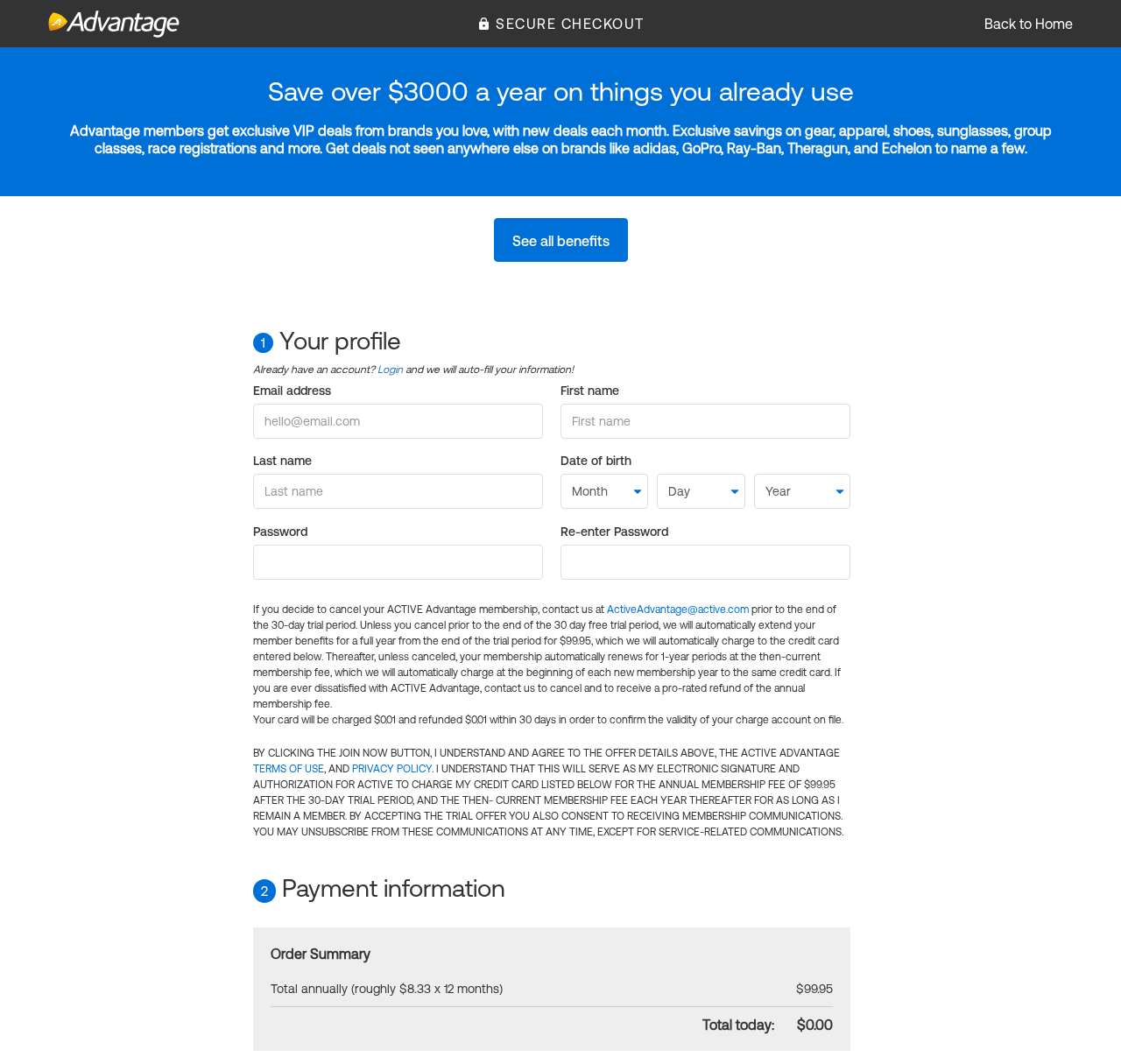
The home page promises savings of over $3000 a year, and the same headline sits above the direct sign-up form we read.
ACTIVE Network, LLC runs the club, and the same company processes registrations for races, camps and campgrounds, which is where many members meet the offer.
What the Checks Found
The direct sign-up page is clear: it names $99.95, shows $0.00 due today, and the consent box is not ticked in advance.
The help pages are less consistent. They disagree on reminder emails, on what to click to cancel and on what a refund promise means.
A 2022 federal case turned on a button inside event checkout, and it was dismissed with prejudice in 2025 without a finding.
The complaint is a set of allegations and not a finding, and the dismissal papers record no admission, so we treat both as context and not as a verdict.
What We Could and Could Not Verify
Here is where the evidence stands after our checks:
- Verified by us: the $99.95 fee, the trial and renewal wording, the unticked consent box, the cancel steps, the refund wording and the court records.
- Not found: a pre-ticked box on the direct sign-up page, a setup fee, or a cancellation fee anywhere in the terms we read.
- Not verified: the offer screen that appears inside event checkout, because it comes after payment details and we ran no purchase.
Our advice is to join only through the direct page, calendar the day the trial ends, and treat any Accept button at event checkout as a $99.95 decision.
What We Saw on the Sign-Up Page
We opened the direct trial page the way a buyer would, read it from top to bottom and typed nothing into the form.
A blue banner repeats the Save over $3000 a year headline, and the form asks for an email, a name, a birth date, a password and a card.
The order summary shows a yearly total of $99.95 and a line reading Total today of $0.00, so the page tells you the price before you commit.
Above the card fields, a notice sets the terms: the trial ends after 30 days, then $99.95 is charged automatically to your card unless you cancel first.
It adds that the membership then renews every year at the then-current fee, which means the $99.95 you see today is not a promised price.
We read the page source as plain text and found a single consent checkbox with no checked attribute, so nothing is ticked in advance on this route.
The same notice tells you to cancel by emailing ActiveAdvantage@active.com before the trial ends, which is one of several cancellation routes we found.
Testing the Free Trial Promise
A free trial promises that nothing is charged, so we checked that claim against three of the company’s own documents.
The rebate page promises that your card is not charged during the free trial, and the sign-up page shows $0.00 due today.
The same sign-up page also warns of a $0.01 charge, refunded within 30 days, to confirm that the card account is valid.
The membership terms add a third version of the same moment: your card is authorized for the then-current trial fee, if any.
None of this costs a buyer real money, but three descriptions of day one suggest the pages were written at different times by different people.
The price math shows a smaller slip. The FAQ calls $99.95 a year less than $8 per month, yet $99.95 divided by 12 is $8.33.
The sign-up page gets it right with roughly $8.33 x 12 months, so the FAQ understates the monthly cost by about 33 cents.
We read these as sloppiness, and not as deception, but they show that nobody has reconciled the wording across the program’s pages.
The Offer That Appears After You Pay
The FAQ lists three ways to join, and only the first is the direct page we just described.
The second route is a free-trial offer that appears after you submit payment for a registration or reservation on ACTIVE, ReserveAmerica or another ACTIVE Network platform.
The third route is a trial membership added to your cart during an event registration, introduced by Add to Cart callouts.
The FAQ explains the second route in a few sentences: you verify your email address, click the acceptance button, and a confirmation email follows.
That screen is the one the Bureau’s case turned on, so we tried to reach it, and we could not do it without paying for an event or booking.
The offer appears only after payment details are in, so we stopped before that point and ran no purchase.
Our server request to reserveamerica.com also returned a 403 Forbidden page, and we did not try to work around it.
So everything we can say about the checkout offer comes from the company’s own FAQ and from the court filing in the next section, not from a page we saw.
What a Federal Court Filing Alleges
We read the complaint that the Consumer Financial Protection Bureau filed against ACTIVE Network, LLC in October 2022 in the Eastern District of Texas, case 4:22-cv-00898.
The Bureau’s theory, laid out in the amended complaint, is that an inserted checkout page puts a highlighted Accept button beside a gray No thanks button.
On that theory, many people clicked Accept believing it was needed to pay for the event, and so enrolled in a trial that converts to a paid year.
The Bureau adds that the company tested button wording and kept Accept because phrases such as Start Free Trial and Enroll produced fewer sign-ups.
The Bureau further contends that the confirmation page showed the event fee without mentioning the club, and that only 26% of billed members opened the follow-up emails.
On money, the filing puts the fees at $300 million from about three million consumers since July 2011, which works out to roughly $100 each.
Of that, the Bureau counts only $8.4 million redeemed as benefits by members who joined this way, and by our arithmetic $8.4 million over $300 million is 2.8%.
The Bureau cites chargeback rates of 6% or 7% at the end of 2019, against the 1% to 1.5% that card network rules treat as concerning.
It also cites that about 72% of 2019 cancellation requests from this route came from people the company coded as unaware of their membership.
These are the Bureau’s allegations. The complaint also alleges earlier enforcement in Iowa and Vermont, after which the company stopped showing the offer in those two states.
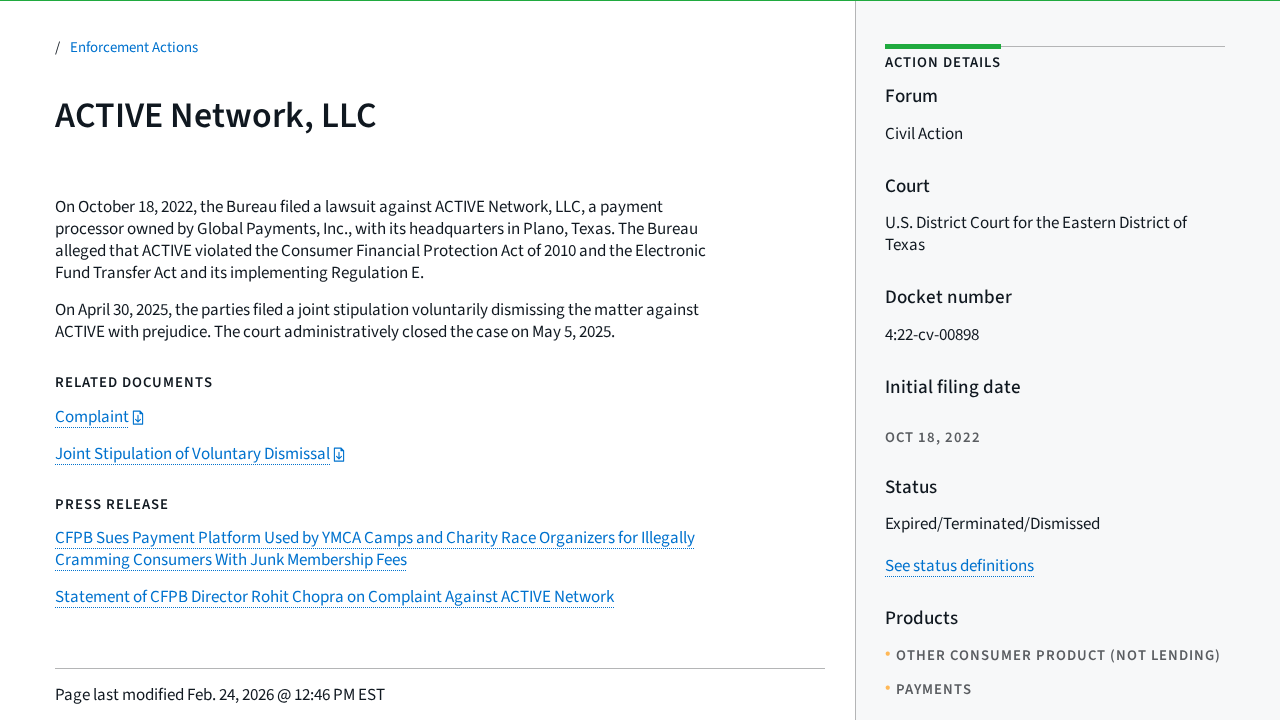
We then read how the case ended. On the Bureau’s own case page, the parties filed a joint stipulation on April 30, 2025.
The stipulation dismisses the action with prejudice, each side bearing its own costs, and the court closed the case on May 5, 2025.
The filing is three pages and contains no finding, no admission and no payment, so no court ever decided whether the allegations were true.
The fair reading is that the Bureau objected to a checkout design, and that the dispute ended without a finding on it.
Because the company never had to defend its checkout screen at trial, buyers must judge that screen themselves.
A Price That Kept Rising
We checked how the fee has moved by opening archived copies of the program’s FAQ page and reading the sentence about the annual fee.
The archived FAQ listed $64.95 in March 2014, $69.95 in April 2016 and $79.95 in February 2018 and again in November 2018.
The copy from December 17, 2018 listed $89.95, and the live pages we read today list $99.95, so the fee rose 54% from 2014 to now.
From $79.95 to $99.95 is a rise of exactly 25%, and the terms allow further increases at any time with notice.
We could not reconcile one detail. The complaint gives $79.95 for 2011 and a rise to $89.95 in January 2019, while the FAQ showed lower figures in 2014 and 2016.
The price shown on the FAQ page may differ from the price billed through the inserted offer, and we have no way to test that without paying.
We also could not date the rise from $89.95 to $99.95, because the later archived copies of the page did not show the fee in text we could read.
Cancelling: Three Routes, Three Names
We followed the company’s own instructions for cancelling, and the pages do not describe the same route.
The FAQ offers two ways: email support, or log in, open My Account, find the Active Advantage section and click a do not renew link.
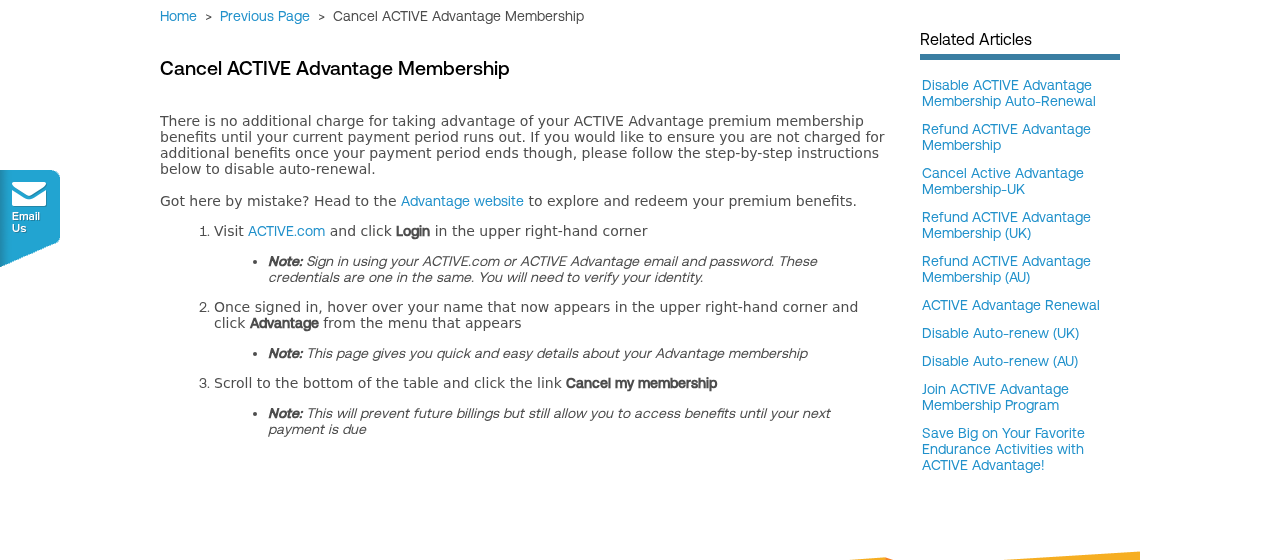
The support article instead sends you to your name menu, then Advantage, then a link at the bottom called Cancel my membership.
That article treats the step as disabling auto-renewal, with benefits staying available until your next payment would have been due.
A second support article adds a confirmation step, a Yes, turn off button, and the direct sign-up page names email as the cancel route.
The membership terms keep the club running automatically until you notify the company that you are terminating, and they name no button at all.
All of these routes may work, and we did not log in to test any of them, but a member has to guess which label matches the page.
A member who clicks the account link to stop renewal, and not to cancel, may keep a membership alive that they believed was over.
The reminder wording also differs. The FAQ promises a reminder 30 days before renewal, while the support article promises reminders 7 days and 30 days before.
The FAQ also lists a reminder 14 days into the trial, which leaves 16 days of the trial after the only message about it.
Refunds: No Questions Asked, or Considered
The Member Satisfaction Pledge promises a prorated refund of the annual fee, no questions asked, if you are ever dissatisfied during the trial or afterward.
The terms promise a prorated refund of any portion of the fee paid, except for termination tied to conduct the company judges to break the terms or involve fraud.
We then opened the support article on refunds, and its wording is softer: if you would like to be considered for a refund, you should contact the company.
No page we read defines how the proration is calculated, so a buyer who cancels six months into the year cannot compute what to expect.
The complaint alleges that the company’s practice was to prorate by several factors and not to give full refunds, but we have no way to test today’s practice.
Because refunds go through email or a contact form, keep written proof of the date you asked and the amount you expected.
The $20 Rebate Test
The registration rebate page offers a gift for trying the club: two $10 rebates on event registrations within 12 months, yours to keep even if you cancel.
We read the redemption steps and found that the rebate is a mailed check and not a credit on your card or your next registration.
To redeem, you email your registration confirmation and a postal address to a rebate mailbox, mark which rebate you want, and wait 10 to 12 weeks for the check.
Each request must reach the company within 3 months of the registration it applies to, and only one rebate may apply to each registration.
The two rebates total $20, which is 20% of the $99.95 fee, so they soften a mistaken enrollment only if you are organized enough to collect them.
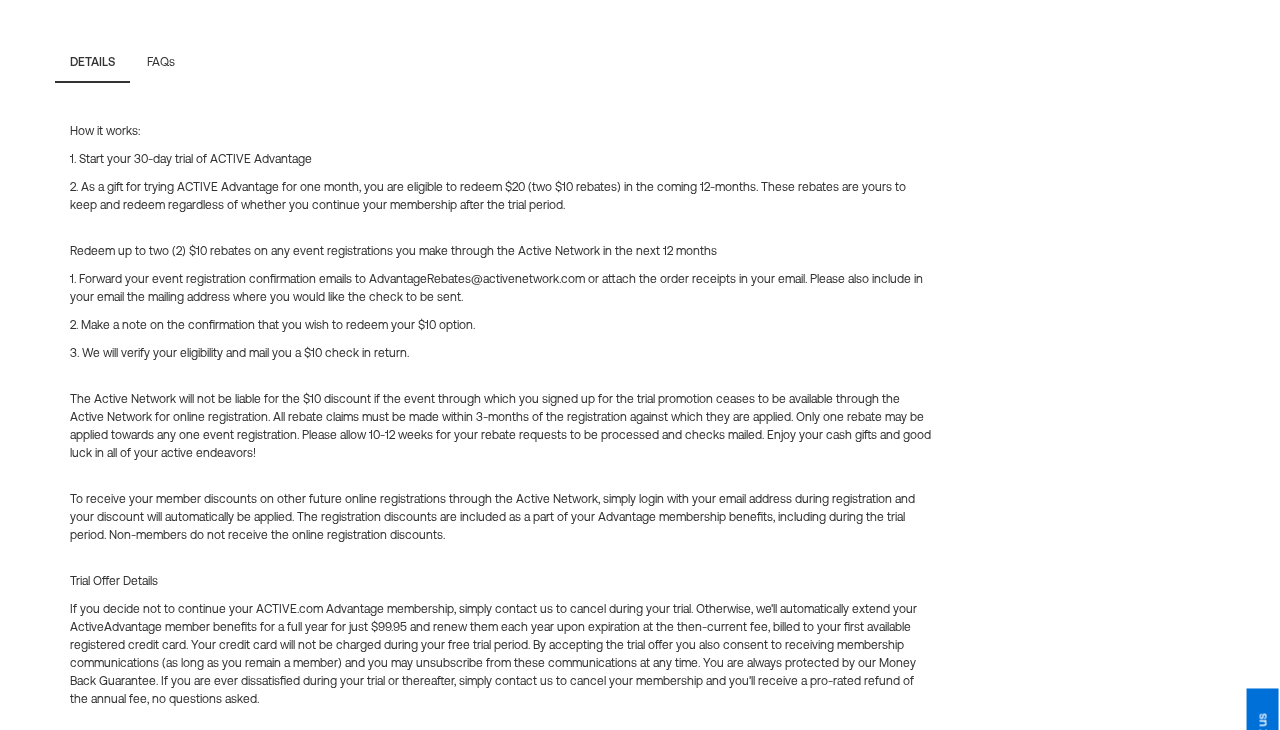
The same page carries the trial offer details, repeating that the card is not charged during the trial and that the fee renews yearly at the then-current price.
It is a fair offer for a careful member, and a poor safety net for anyone who joined without noticing.
What the Terms Add
We read the terms to the end, because they set what you can do if the cancellation or refund steps fail.
The page is dated August 10, 2020 and applies Delaware law, and enrolling means you accept the terms and agree to receive marketing from the company.
Disputes must first go to the club, which answers in writing within 60 days, and then to binding arbitration under American Arbitration Association rules.
A written notice of dispute must be sent by certified mail, and arbitration can start only if the matter is not settled within 30 days of receipt.
The terms waive jury trials and class arbitration, and the company will pay arbitration costs, up to $350, for disputes under $50,000 that are not frivolous.
Liability is capped at the last annual fee the company received from you, which for most members means $99.95.
These clauses are common in consumer subscriptions, but they mean a small dispute is more likely to end with your card issuer than in a courtroom.
How the Pitch Works
Step 1: A free trial with a date attached
Every route starts with 30 days at no cost, and the clock matters because the card on file is charged $99.95 on day 31.
The direct page states that clearly, while the checkout route relies on a short offer screen that we could not see.
Step 2: A headline worth $3000
The pages promise savings of over $3000 a year, a figure no page we read supports with a worked example.
A buyer who races once a year may never get near it, and the Bureau’s numbers put the redeemed share of fees at 2.8%.
Step 3: Renewal by default
The membership renews every year at the then-current fee, so doing nothing keeps you paying, and the price on the page today may not be next year’s.
The reminder emails exist, but the pages disagree on when they arrive, so a calendar entry of your own is safer.
Step 4: A cancel route with several names
Between the FAQ, the support article and the sign-up page, there are three labels and an email address for stopping the club.
The safest approach is to use the account page and also send an email, so that both routes leave a record.
Step 5: A refund that depends on a request
The pledge promises no questions asked, the support article offers to consider a request, and the formula is never shown.
That gap is why the dates of your emails matter more than the wording of the promise.
Who Runs ACTIVE Advantage?
The company named in the documents
The membership terms are between you and Active Network, LLC and its affiliates, and the support pages carry the same company name in their footers.
Court papers place the company’s incorporation in Delaware and its ownership with Global Payments Inc., which bought ACTIVE in 2017 for a reported $1.2 billion.
That makes this a large, established business and not an anonymous site, which is why we treat the case as a buyer-risk review.
Three addresses in three documents
The terms tell you to send notices to 10182 Telesis Court in San Diego, while the support page footers list 3550 Lenox Road in Atlanta.
The same filing places its principal business in Plano, Texas, and lists the Lenox Road address as the headquarters of Global Payments.
We cannot say which address a written notice should use today, so ask support for a mailing address before you send anything certified.
Domains and platform
RDAP shows active.com registered in 1993 and activenetwork.com in 2004, both held through MarkMonitor with the same four name servers.
The club site runs on advantage.active.com, a subdomain of the parent site, and ReserveAmerica, registered in 1999, answered our request with a 403 page.
We did not open review sites or complaint boards, so we make no claim about how members rate the club today.
What we could not confirm
We did not join, pay, log in or test a cancellation, so we cannot say how fast a request is handled or how refunds are calculated in practice.
We also did not see the offer screen inside event checkout, and the terms we read are dated 2020, so later changes would not show.
What to Do Before You Join or After You Were Charged
-
Use the direct page. Join, if at all, through advantage.active.com, where the price and renewal are stated and the consent box starts unticked.
-
Read the offer screen. At event checkout, treat Accept as a membership decision and look for No thanks before you click anything.
-
Set a reminder. Put an entry in your calendar for day 28 of the trial, because the fee is charged automatically at the end.
-
Check your statement. Look for an ACTIVE Advantage line of $99.95 after any race or campground booking, and compare it with your emails.
-
Cancel two ways. Use the account link and also email ActiveAdvantage@active.com, and keep screenshots of the confirmation and the sent message.
-
Ask for the refund in writing. Quote the pledge and the terms, ask for the prorated amount, and record the date of your request.
-
Dispute the charge if it stalls. Send your card issuer a dispute letter within 60 days of the statement.
-
Tell the FTC. File at ReportFraud.ftc.gov and name ACTIVE Network, LLC, the charge date and the screen where you joined.
Frequently Asked Questions
Is ACTIVE Advantage a scam?
We cannot call it one: a large company runs it, names its price and terms, and a federal case against it ended with no finding.
How much does ACTIVE Advantage cost?
The live pages show a 30-day free trial and then $99.95 a year, renewing yearly at the then-current price.
Can I get a refund?
The pledge and the terms promise a prorated refund, but the support article only offers to consider a request, so ask in writing and keep dates.
How do I cancel ACTIVE Advantage?
Log in, open Advantage from your name menu, click Cancel my membership, and also email ActiveAdvantage@active.com so that a second record exists.
What did the CFPB case say?
The Bureau’s theory was that an Accept button in event checkout enrolled people in the club, and the case was dismissed with prejudice in 2025 with no finding.
Did I join without noticing?
Possibly: check your card statement and inbox for ACTIVE Advantage, because the club can begin from a button after an event or campground booking.
The Bottom Line
ACTIVE Advantage is a real, documented club and not a fake store, but the trial renews at $99.95 and the cancel steps are described three different ways.
Join only through the direct page, set your own reminder for the end of the trial, and treat any Accept button at event checkout as a paid membership.
If you were charged without meaning to join, cancel two ways, ask for the prorated refund in writing, and dispute the charge with your card issuer if it stalls.

Join the discussion
0 commentsShare your experience or ask a question about this article.
Discussion
Start the conversation
Have a question or something useful to share? Add the first comment.