


AirBit Club sold memberships with a promise of daily cryptocurrency earnings. Years later, former members face another important decision when a message mentions recovering their money.
The old account balance and the new claim paperwork can tell very different stories. Knowing which records matter helps you avoid making another costly mistake.
Overview
The original memberships promised earnings from mining and trading
AirBit Club presented itself as a cryptocurrency mining and trading opportunity. Members could view supposed profits through an online portal after buying into the arrangement.
The Justice Department says those profits were fictitious and the advertised mining and trading didn’t occur. The criminal convictions established the underlying investment fraud.
The investment scheme should not be confused with the legitimate compensation process now using its name to identify the victims being helped.
A real DOJ process exists, with a specific administrator
The AirBit Victim Fund administers petitions for remission on behalf of the Justice Department. RCB Fund Services handles administration, while DOJ makes final decisions.
The official fund currently lists December 11, 2026, as the extended petition deadline. Check that page again before relying on any date in forwarded correspondence.
Participating doesn’t require a payment to the fund or DOJ. A demand for cryptocurrency to release compensation conflicts with the official program’s instructions.
Actual contributions matter more than imaginary profits
The process evaluates qualifying financial losses, not every number displayed on the AirBit portal. Eligibility and documentation requirements apply to each petition.
- Reach the fund through the link published by DOJ before entering personal information.
- Prepare records of your own contributions and all money actually withdrawn from the scheme.
- Preserve membership evidence, while recognizing that account screenshots alone don’t document the entire financial loss.
- Submit the required petition even if you previously provided information to investigators.
How the AirBit Club Scam Works
Step 1: Membership packages make investing feel like joining a community
The pitch began with a club membership rather than an ordinary brokerage relationship. Recruitment took place through personal approaches, community presentations, and elaborate promotional events.
That setting made participation social as well as financial. Joining could feel like gaining access to an opportunity already understood by the people around you.
However, a membership label doesn’t answer what produces the promised income. A club promising investment returns still needs a truthful explanation of its activities.
For readers encountering a similar offer, ask what the membership actually purchases and how an outside customer generates revenue. Recruitment alone cannot demonstrate profitable mining.
Step 2: The online portal gives the promise a daily appearance
Members received access to a portal displaying returns. Seeing a figure attached to your own account could make the promise feel personal and measurable.
But a number entered into a website isn’t independent evidence that cryptocurrency has been mined. It doesn’t identify equipment, trading results, or assets reserved for withdrawals.
In the AirBit case, the displayed profits were false. The portal provided a reassuring account of earnings without the underlying activity that supposedly produced them.
This is why the last portal balance isn’t automatically the amount used in a compensation claim. The original accounting was part of the fraud.
Step 3: Recruitment helps keep the money arriving
Members were encouraged to promote the opportunity further. A participant who believed the account display could introduce friends while thinking they were sharing a genuine benefit.
Recruitment also carried consequences beyond the initial loss. The fund’s eligibility rules distinguish ordinary investors from people who knowingly participated in or benefited from the fraud.
Don’t assume every introduction has the same significance. Someone who casually mentioned an investment to a relative differs from a paid promoter actively recruiting numerous participants.
The official process requires relevant activities to be disclosed. Let the administrator assess the facts rather than hiding a payment or guessing that your role doesn’t matter.
Step 4: Withdrawal barriers reveal that the displayed earnings aren’t available cash
The fund’s account of the scheme describes delays, substantial fees, and account freezes when members tried to withdraw. A growing portal balance didn’t guarantee access.
A request for another payment can be especially persuasive when the displayed balance is large. The victim may compare the fee with money they already believe exists.
That comparison is dangerous when the balance was fabricated. A new payment doesn’t turn an invented profit into an asset held on your behalf.
Keep withdrawal requests and actual receipts separately. An amount requested, an amount shown as approved, and an amount reaching your account may be different.
Step 5: Criminal recovery creates a separate, legitimate claims route
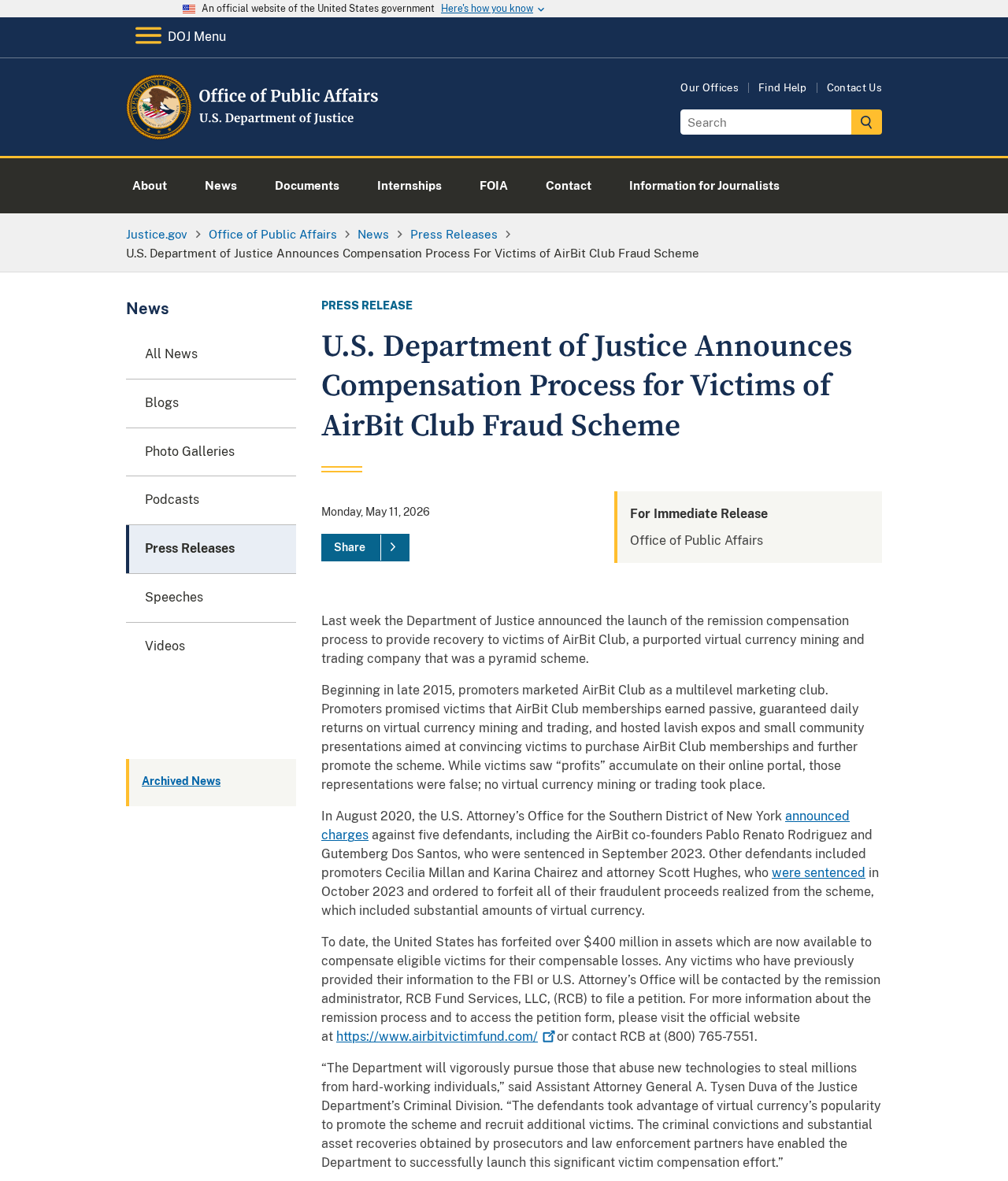
Authorities prosecuted participants in the scheme and forfeited assets. The compensation process announced in May 2026 uses recovered property to address eligible victims’ losses.
That process doesn’t continue the old investment or restore a membership. It assesses documented financial harm under its own rules.
A new message promising to reactivate AirBit earnings is therefore making a different claim from the official fund. Verify exactly which process the sender represents.
The Club, the Victim Fund, and the People Handling Claims
The original organizers are separate from the administrator
DOJ identifies AirBit co-founders Pablo Renato Rodriguez and Gutemberg Dos Santos among the prosecuted defendants. Their investment operation created the losses addressed by the compensation program.
RCB Fund Services is identified by DOJ as the remission administrator. It shouldn’t be treated as another investment promoter merely because its paperwork names AirBit.
The official link establishes which fund is being discussed
The DOJ announcement links to airbitvictimfund.com. Start there from the official announcement when checking a petition message or looking for current instructions.
Lookalike domains and forwarded links can copy a genuine program’s name. Familiar branding alone cannot establish that you’re communicating with the appointed administrator.
The fund handles petitions, while DOJ decides eligibility
Administration includes receiving records, evaluating claims, and communicating decisions. DOJ retains authority over eligibility, loss calculations, and distributions under the remission rules.
A person outside that process cannot guarantee approval by charging a fee. Don’t confuse help preparing documents with authority to decide a claim.
Public asset totals aren’t individual repayment promises
DOJ’s May 2026 announcement reported more than $400 million in forfeited assets available for compensation. That announcement doesn’t establish any particular petitioner’s payout.
Eligibility, recognized losses, and the distribution process still matter. Avoid estimating your own payment by dividing a headline total among an assumed number of members.
Preparing a Claim Without Repeating the Portal’s False Accounting
The fund’s official FAQ explains its cash-in, cash-out approach. Actual money contributed is assessed alongside money withdrawn and other applicable recoveries.
For example, suppose someone contributed $2,000 and received $500 back. A later portal balance of $6,000 doesn’t make another $4,000 a genuine cash contribution.
This hypothetical illustrates why you need outside transaction records. The administrator determines the recognized loss under the program’s rules.
Collect bank statements, transfer confirmations, and exchange records first. Membership emails and portal screenshots can help connect those transactions to AirBit participation.
If you paid cash, gather whatever contemporary supporting evidence exists and ask the administrator what it can assess. Don’t assume a personal statement will be sufficient.
Cryptocurrency contributions require transaction details and the relevant ownership documentation. Record the asset, amount, wallet address, and transaction identifier without disclosing a seed phrase.
The FAQ says cryptocurrency-funded petitions must use the online filing portal. Follow that instruction through the official fund website, rather than a portal supplied by a stranger.
Reinvested supposed profits and recruitment rewards aren’t automatically equivalent to new money from your own pocket. Keep them distinct in the records you prepare.
Likewise, disclose actual money received back even if the scheme called it profit. The label on a withdrawal doesn’t remove it from the financial history.
Eligibility can depend on more than a remaining balance. The program considers how funds were contributed, losses suffered, and participation in the underlying misconduct.
The Deadline and the No-Payment Rule Deserve Particular Attention
People outside the United States should read the same official eligibility instructions. The fund says compensation isn’t restricted to victims with American nationality.
It also states that distributions are made in conventional currency, rather than returning cryptocurrency. A message demanding a newly funded crypto wallet therefore needs careful checking.
Don’t assume a current bitcoin price determines the amount of your claim. The FAQ explains that cryptocurrency contributions are assessed using its specified historical valuation method.
Borrowing costs and missed investment opportunities aren’t treated as contributions to AirBit itself. Keep those consequences separate when calculating what you actually placed into the scheme.
The same care applies if you recruited someone. Disclose the role and any benefits honestly, then let the program apply its eligibility rules.
For a deceased investor, an estate representative may need documentation showing authority to act. Check the official requirements before submitting a petition in someone else’s name.
These distinctions can affect both documentation and eligibility. They are reasons to read the instructions that fit your situation, rather than copy another member’s application.
The published deadline is December 11, 2026. The FAQ distinguishes online submission before midnight from a mailed petition postmarked by that date.
Don’t wait for an unsolicited reminder to begin collecting documents. If an instruction is unclear, ask through the fund’s verified help route before the deadline.
Someone who previously spoke with the FBI or another office still needs to submit the petition required by the fund. Earlier contact isn’t the same filing.
The fund also states that seeking a recovery requires no payment. You don’t need to buy cryptocurrency or pay a supposed government processing charge.
Hiring an attorney is a separate personal decision. It doesn’t create a required fund fee or authorize anyone to promise approval.
After filing, watch for authenticated notices about missing information. A petition may require follow-up, and a submission receipt alone isn’t a final award.
What to Do if You Have Fallen Victim to This Scam
-
Open the official DOJ announcement and follow its fund link. Compare the program details with any message you’ve received before supplying personal information.
If the sender wants payment, stop and contact the administrator independently. Don’t use a telephone number supplied only in the suspicious demand.
-
Build a contribution and withdrawal timeline covering your AirBit participation. Identify which funds were yours and which transactions involved another person’s money.
Keep supporting documents for each entry. The fund assesses financial loss, so a single screenshot of the last displayed balance won’t answer every question.
-
Gather the membership emails, receipts, account records, and promotional correspondence connecting your transfers to AirBit. Preserve readable copies while retaining original files privately.
Don’t publish bank details or identity documents in a group asking other members for help. Use the verified submission process for sensitive material.
-
Read the eligibility and filing instructions for your circumstances. Disclose withdrawals, recruitment compensation, other recoveries, and relevant promotional activities accurately.
If you aren’t sure how to classify something, ask the fund. Don’t omit a transaction merely because the original platform used a confusing label.
-
Submit the required petition by the published deadline and save the confirmation. Cryptocurrency-funded claims must follow the official online instructions.
Check current instructions again before sending. Deadlines and administrative details may change, and a forwarded copy may no longer reflect the fund’s page.
-
Keep your contact information current through the fund’s verified channel. Review later notices for requests to correct or supplement the documentation.
Distinguish a request for missing evidence from a demand for money. The official program’s no-payment rule remains central when checking unexpected communications.
-
Report anyone using the case to demand release fees or impersonate government staff. Save the message and payment instructions without making a test payment.
The FBI’s recovery-fraud warning describes fake law firms exploiting prior victims. Accurate knowledge of the original loss doesn’t authenticate the contact.
Frequently Asked Questions
Was AirBit Club a real mining investment that failed?
DOJ describes a fraudulent scheme with fictitious portal profits and no advertised mining or trading activity. The compensation process follows criminal convictions and forfeitures.
Is the AirBit Victim Fund itself legitimate?
Yes, DOJ publicly identifies the program and links to its website. Verify your route through that official announcement before entering sensitive information.
What is the current petition deadline?
The fund lists December 11, 2026, as the extended deadline. Check its current page and filing instructions before relying on an older message.
Do I need to pay a processing or release fee?
No payment is required to participate in the remission process. A cryptocurrency demand supposedly necessary to release compensation conflicts with the published instructions.
Can an account screenshot prove everything I lost?
It can support participation, but additional transaction evidence is required to establish financial loss. The portal’s fictitious earnings aren’t equivalent to your actual contributions.
Must I file if I already gave information to investigators?
The fund says a petition is still required. Follow the administrator’s instructions about existing records and any additional information needed for your submission.
The Bottom Line
Do not buy another AirBit membership or pay to unlock its old profits. Use the genuine DOJ-linked compensation process if you suffered a qualifying loss.
Prepare your transaction evidence and check the December 11, 2026, deadline directly with the fund. Reject any payment demand disguised as a requirement for participation.

Join the discussion
0 commentsShare your experience or ask a question about this article.
Community experiences
Did this happen to you?
Your experience could help someone recognize the same scam. Submit a private report for our team to review.
I experienced this tooReports are reviewed before publication. Sharing publicly is always your choice.
Discussion
Start the conversation
Have a question or something useful to share? Add the first comment.