


The business is supposedly ready, the marketing is handled, and a coach will help you succeed. Your part begins with choosing a membership and paying.
Blueprint to Wealth sold that kind of online-income story. A later FTC refund program raises a more practical question: what were customers actually buying?
Overview
A business supposedly operated on the customer’s behalf
Blueprint to Wealth promoted memberships presented as turnkey online businesses. Customers were told the operation and marketing could be handled for them, supported by success coaches.
The FTC’s case described memberships costing at least $3,000 and as much as $21,000, with additional administrative fees. Those were substantial commitments before any income arrived.
The businesses existed to sell more memberships in the same opportunity, according to the FTC. The advertised earnings did not describe typical customer experience.
Official enforcement established a deceptive membership operation
The FTC’s original case announcement describes false income claims, recruitment-based businesses, and a court order halting the operation.
Subsequent settlements imposed industry bans and financial obligations. The record supports a warning about this particular scheme, rather than suspicion based on an ordinary coaching complaint.
- Customers paid thousands for an online business supposedly operated on their behalf.
- The business model centered on selling the same membership opportunity to more people.
- Promotional claims described large earnings without reflecting ordinary participants’ results.
- The FTC later arranged genuine refunds, including another distribution in August 2026.
The second refund round has a defined audience
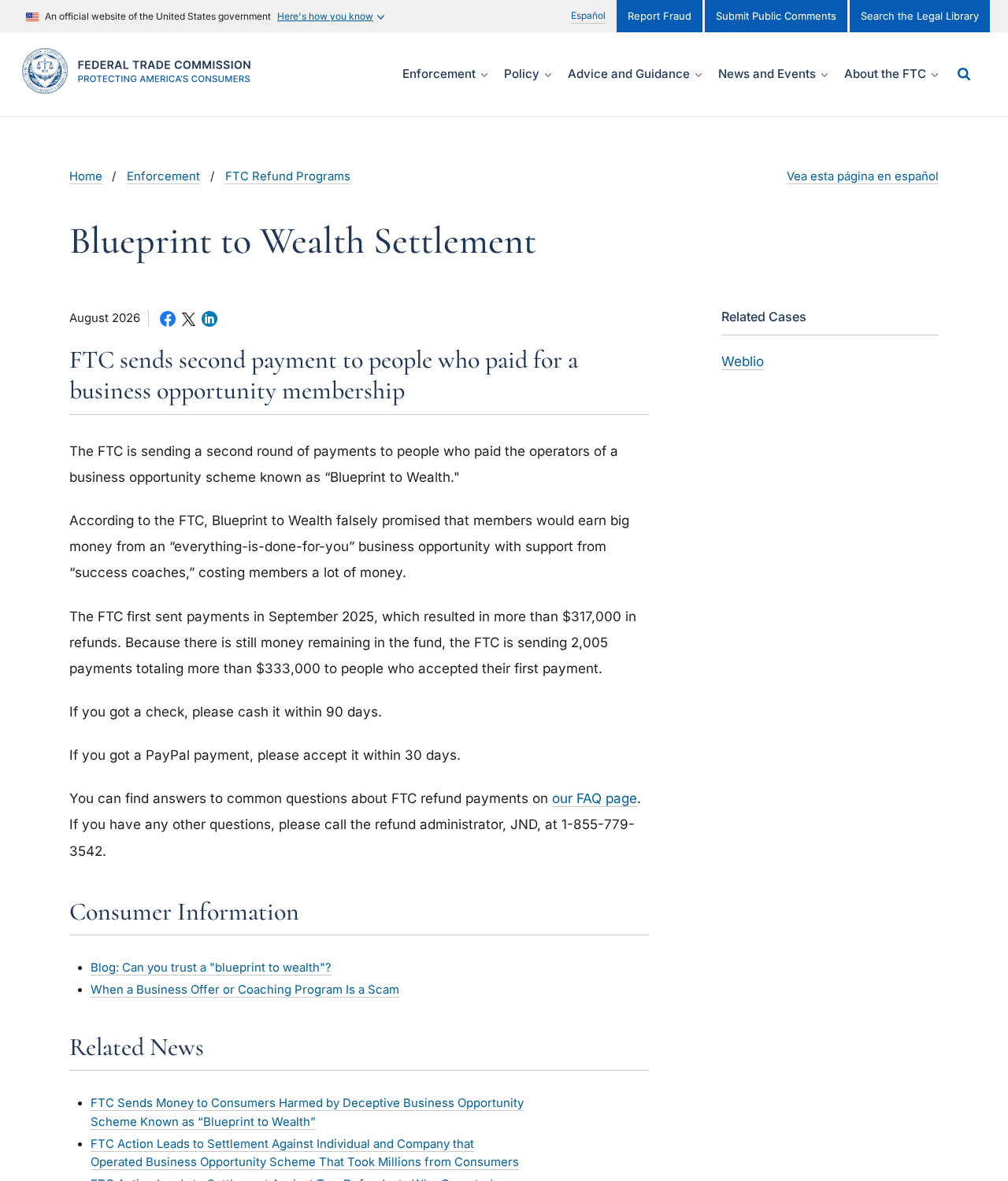
The FTC’s August 2026 refund notice describes 2,005 payments totaling more than $333,000 to people who accepted their first payment.
That is a second distribution within an existing program. It is not an invitation for everyone reading the page to apply for a new business grant.
Recipients should use their actual payment instructions and contact JND with questions. No person needs to fund another membership or pay to activate an FTC refund.
Why Having Everything Done for You Sounds So Convincing
Starting an online business requires decisions many people find unfamiliar: what to sell, how to reach customers, how to fulfill orders, and how to measure profit.
A turnkey offer appears to remove those obstacles. The more the provider promises to handle, the easier it becomes to imagine income arriving without that experience.
A coach adds another reassuring element. Instead of facing an unfamiliar project alone, the customer expects a person who can explain the next step.
Those features are not proof of deception by themselves. The problem arises when they conceal what the business actually sells and how ordinary customers realistically earn money.
In Blueprint to Wealth, the FTC described an operation whose supposed businesses existed to sell more of the same membership opportunity.
That creates a question the polished setup cannot answer: who wants the underlying product without also buying the chance to make money from another recruit?
A website and a coach can exist while the promised income remains deceptive. Delivery of some materials does not establish the economic value represented in the sales pitch.
How the Blueprint to Wealth Scam Works
Step 1: Sell a financial outcome before explaining a real customer market
The FTC described promotion through robocalls, telemarketing, and social-media advertising. Large income claims supplied the reason to pay attention and consider joining.
The appeal was especially relevant to people seeking retirement income or a way out of debt. Those were real financial needs attached to an unreliable solution.
The marketing examples in the case included claims of thousands in weekly earnings soon after joining. Such figures encouraged customers to imagine quick progress toward their own expenses.
But a revenue promise needs a source. Before paying, a prospective buyer should know which customers purchase which products and why they would do so.
If the explanation returns immediately to people buying the same opportunity, the business deserves scrutiny. The availability of digital materials does not settle that question.
Here, official enforcement identified deceptive earnings claims alongside the recruitment-centered model. The warning does not depend on whether one customer personally disliked the training.
Step 2: Collect a substantial membership payment
The advertised online business required an upfront membership costing thousands. Administrative fees added to that commitment, according to the FTC’s case materials.
Different membership levels could turn the decision into a comparison between packages. A buyer might focus on which level offers the best future income.
That can distract from the more important decision: whether the underlying business has demonstrated value at any level. A larger package does not establish greater likelihood of profit.
For someone already in financial difficulty, paying more to earn sooner is especially hazardous. The initial expense is certain while the claimed outcome remains unproved.
Keep the complete price, not merely a headline membership amount, when documenting your experience. Add fees actually charged and preserve any explanation of their purpose.
A sales call about recovering the price quickly is also material evidence. It can show why the person believed a costly commitment was manageable.
Step 3: Turn the membership itself into the supposed business
According to the FTC, the operation controlled advertising and marketing for the businesses sold to members. Those businesses existed to sell Blueprint to Wealth memberships.
That is the circular feature readers need to understand. A customer was purchasing access to an opportunity whose revenue depended on selling access to more customers.
The FTC also described digital materials bundled with membership. Their presence did not establish a viable outside market sufficient to support the advertised income.
A participant could therefore receive a website or educational files while still failing to receive the business value promised by the sales presentation.
Ask what the purchaser could sell to someone with no interest in joining the opportunity. A concrete answer should identify real customer demand rather than repeat an earning story.
Do not test that demand by buying another package first. The operator should be able to explain its existing business and typical outcomes before requesting money.
Step 4: Make assistance and exceptional income stories stand in for results
Success-coach language can make an unsuccessful participant feel one step away from progress. Another conversation or recommendation seems capable of unlocking the promised income.
However, access to encouragement is different from evidence that the business can produce the advertised returns. A coaching conversation cannot create outside customer demand.
The FTC said few consumers received commissions, let alone the large monthly earnings promoted as typical. A vivid testimonial could therefore conceal ordinary experience.
When evaluating a claim, count actual receipts after the relevant costs. Gross commissions do not show what remains after membership fees and other expenses.
For someone already involved, that calculation can be uncomfortable but useful. It separates hope about the next success from the financial position that actually exists.
The later FTC program addresses past losses. It should not be treated as another installment of the original promise that a business would soon begin paying.
The Blueprint to Wealth Names, Operators, and Refund Program
The case identifies a particular operation and its associated names
The FTC named Samuel James Smith, Robert William Shafer, Charles Joseph Garis Jr., and Business Revolution Group in the case.
Keep those identifiers with the name appearing in your original correspondence. A different program using ordinary words such as blueprint or wealth is not automatically connected.
Your receipt, website address, salesperson details, and payment date provide the practical link. Similar marketing language alone cannot establish common ownership.
Different defendants resolved their positions through civil settlements
The FTC’s September 2024 announcement describes the settlement involving Garis and Business Revolution Group, following earlier settlements with Smith and Shafer.
The orders included restrictions on telemarketing and money-making or investment opportunities. Those civil consequences should not be described as a criminal prison sentence.
They also differ from the refund amounts later returned to consumers. A judgment, assets surrendered, and checks ultimately accepted are separate financial categories.
A partially suspended judgment is not the same as collected cash
The FTC described a judgment above $567,000 for Garis and his company, partly suspended based on inability to pay. It required $100,000 plus certain account funds.
That distinction matters when reading a large settlement headline. The headline amount can differ from what the agency actually collects and distributes.
Do not use an aggregate judgment to estimate your own refund. The administrator applies the program’s records and distribution rules to individual recipients.
JND is the published refund administrator
The current FTC page identifies JND and lists 1-855-779-3542 for questions. Obtain that number directly from the official page before discussing a notice.
A real administrator’s identity can be copied into another message. Authentication comes from independently reaching the genuine contact, rather than recognizing the name in an email.
Keep the notice or payment reference ready when calling. Ask about your particular payment without posting the document or personal details in a public group.
What the August 2026 Refund Notice Actually Means
The second distribution went to people who accepted their first payment. That condition is more specific than having once heard about or paid for the opportunity.
The FTC says the earlier payments resulted in more than $317,000 in refunds. The later round concerns remaining funds within that established process.
The notice instructs check recipients to cash payments within 90 days and PayPal recipients to accept within 30 days. Those periods attach to actual payments.
Do not start counting from the day you read this article. Check the individual notice, issue date, and instructions, or ask JND to clarify.
Because the notice dates to August, someone finding an old message may already have missed the original period. Contact the administrator about the specific situation before acting.
No new application requirement appears in the second-round announcement. A person offering to submit one for a fee is making a separate claim that needs authentication.
Similarly, a refund should not require buying a training package, paying a tax to a stranger, or sending money to prove ownership of an account.
Use the genuine program to resolve uncertainty. The original loss is a reason to protect the next decision, rather than accept another promise of effortless money.
What to Do if You Have Fallen Victim to This Scam
-
Collect the membership and payment records you already have. Save the package price, administrative charges, salesperson messages, contracts, receipts, and any earnings or repayment promises.
List actual commissions or refunds separately from projected income. That produces a financial record without letting the advertised business value define your loss.
-
Verify any payment notice through the official FTC page. Find Blueprint to Wealth Settlement on FTC.gov and compare the administrator, distribution description, and contact number.
Confirm whether the message concerns the August 2026 second round. A copied case name does not establish that an unfamiliar form belongs to that program.
-
Use the date associated with your actual payment. For a check, read its printed instructions and issue date before depositing it through your normal bank.
If it has expired or contains an error, call JND using the independently verified number. Ask whether a replacement is possible and retain the response.
Do not assume the announcement’s 90-day period begins again because the page remains online. A genuine inquiry also does not guarantee a replacement payment.
-
Check an alleged PayPal payment inside your genuine account. Open your usual PayPal app or independently entered PayPal address, then review Activity for the matching transaction.
Compare the amount and date with the notice before following any action shown within the account. An email alone does not establish that money arrived.
If no matching payment appears or a request requires another deposit, stop and contact JND. The notice’s 30-day acceptance instruction is not permission to trust an unsolicited link.
-
Ask the administrator a precise question about your record. Have the notice reference and the contact information originally used available when calling 1-855-779-3542.
Explain whether you missed a payment, received an expired check, or cannot match a notice. Write down the answer and any requested next action.
If your situation does not fit the announced audience, request clarification. Do not pay a third party who guarantees a different eligibility decision.
-
Report a separate online payment demand through IC3. Begin your report at IC3.gov using File A Complaint. After reviewing the conditions, choose Accept if you wish to proceed.
Enter your contact and transaction details, identify the sender, and distinguish the original membership purchase from the later recovery approach.
Check the completed information and digital signature before selecting Submit Complaint. Save the successful-submission page immediately instead of expecting an emailed copy.
If the form returns an error, resolve it before considering the report complete. For money just sent, also contact your genuine bank or payment provider promptly.
Frequently Asked Questions
What were customers buying through Blueprint to Wealth?
They paid for memberships presented as online businesses operated on their behalf. The FTC said the businesses existed to sell the same membership opportunity to others.
Did receiving digital materials make the income claims reliable?
No, receiving files or a website does not establish genuine outside customer demand. The case concerned deceptive earnings promises and the actual value of the membership operation.
Who receives the second FTC payment?
The August 2026 notice identifies people who accepted their first payment. It does not advertise a new application open to every person reading the announcement.
How long do recipients have to use the payments?
The notice states 90 days for checks and 30 days for PayPal payments. Follow the actual payment instructions and ask JND about an expired or unclear item.
Can I calculate my refund from a settlement headline?
No, judgment amounts, money collected, and individual distributions describe different things. Eligibility and payment amounts depend on the genuine program’s records and rules.
Should someone charge me to claim an FTC refund?
Do not pay based on a promise to unlock money. Verify the request directly with the administrator listed on the FTC’s case-specific refund page.
The Bottom Line
Do not buy into a revived Blueprint to Wealth promise or pay to activate a refund. The supposed turnkey business revolved around selling memberships, with deceptive income claims.
If you paid, preserve actual charges and receipts, then check any payment notice with JND. Use the real distribution rules before trusting another effortless-income or recovery story.

Join the discussion
0 commentsShare your experience or ask a question about this article.
Community experiences
Did this happen to you?
Your experience could help someone recognize the same scam. Submit a private report for our team to review.
I experienced this tooReports are reviewed before publication. Sharing publicly is always your choice.
Discussion
Start the conversation
Have a question or something useful to share? Add the first comment.