


An ASOS notification normally means a parcel is on its way or a sale has started. On October 6, some customers saw something very different.
If you shop with ASOS, the alert raised a reasonable question: what did someone get, and is there anything you need to change?
Overview
The notification came through a real app
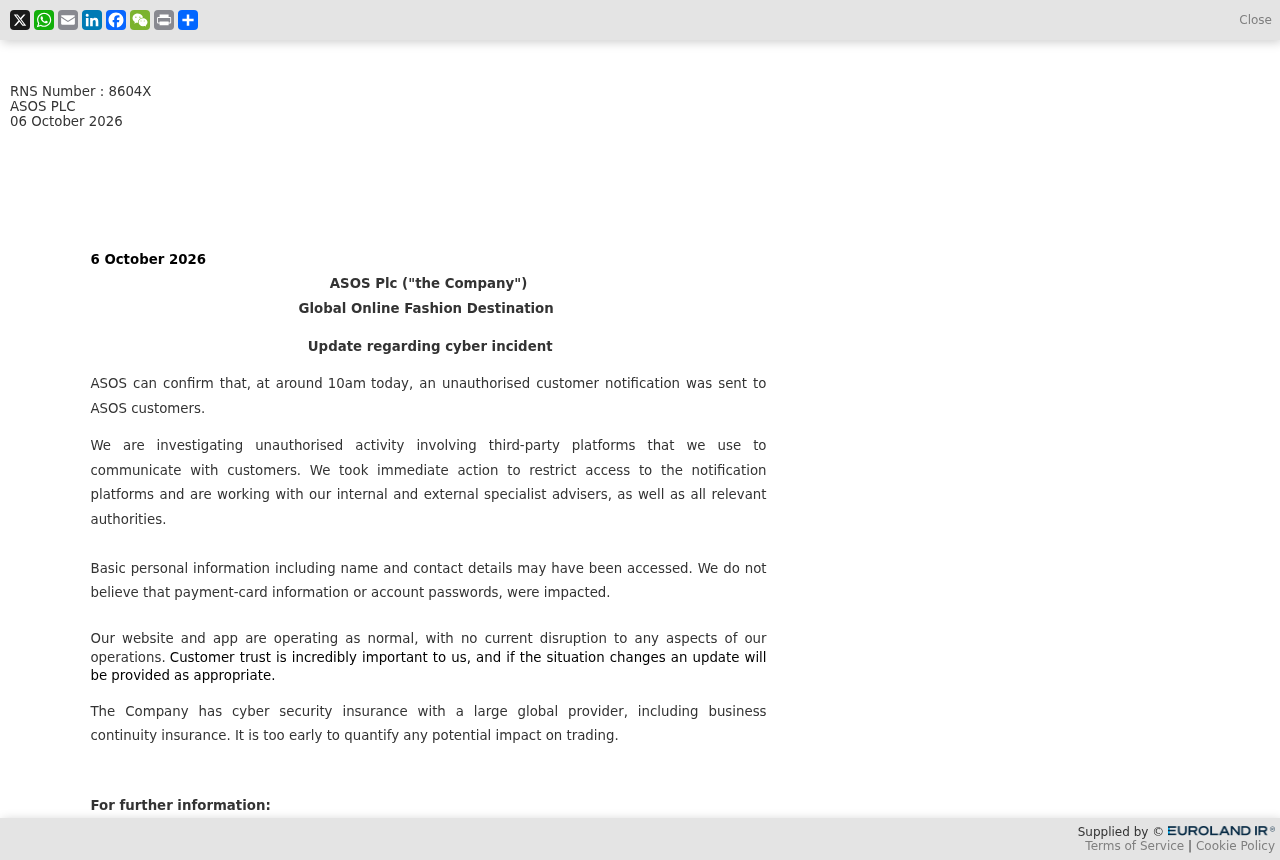
On October 6, 2026, some ASOS customers received a push notification that the retailer hadn’t authorized. This wasn’t simply a text from someone borrowing the ASOS logo.
In its final customer update, ASOS says somebody impersonated a trusted contact and obtained an employee’s login credentials. Those credentials gave the person access to certain third-party platforms.
ASOS says the same access was used to send the notification. The company locked down the affected platforms and worked with external security experts to investigate.
The distinction is useful outside this case. An alert can arrive through a real business’s app without being a legitimate instruction from that business.
Contact information and payment credentials are different exposures
ASOS says the investigation found access to some names, contact details, and non-personal account-related information. It says no payment card information or customer account passwords were accessed.
Reporting at the time described a sample containing shopping-related information, including some searches. That doesn’t tell an individual shopper exactly which information about them was present.
The retailer says the website and app continued to operate and that shoppers don’t need to take action on their accounts solely because of this incident.
That doesn’t make follow-up messages safe. A stranger can use personal details to sound like customer service without having your password or card.
Decide which part of the situation applies to you
The UK National Cyber Security Centre’s notice advises customers to watch for suspicious messages even if they didn’t see the original push notification.
- Saw the alert but didn’t follow it? Check the company notice directly. Seeing a notification does not give someone your password.
- Got a refund, delivery, or security message later? Compare it with your account activity in the real app or site.
- Typed credentials after following an alert? Treat them as exposed even though ASOS says the breach itself didn’t include passwords.
- Entered card information or noticed an unfamiliar charge? Contact your card issuer through a route you trust.
What Happened on October 6
Access started with an employee, not with shoppers signing in
ASOS describes a person impersonating a trusted contact to obtain an employee’s credentials. This is distinct from criminals attempting to sign in to many shoppers’ accounts using reused passwords.
The employee access mattered because it reached information on outside platforms that ASOS used. ASOS hasn’t said that the incident began with a flaw on its shopping site.
A shopper couldn’t have prevented this access by choosing a stronger ASOS password. Individual account security still matters if a later message tricks the shopper into revealing one.
These are separate events with separate remedies. The retailer controls access to its systems. The customer controls what they do when someone unexpectedly asks them to sign in.
The first notification isn’t a list of verified findings
An unauthorized notification can tell you that the channel was misused. Claims inside that notification aren’t an audited account of which systems or records were involved.
For instance, naming a technology provider doesn’t prove that the provider itself was breached. Access obtained through a company’s account can affect that company without compromising the entire platform.
Look at what ASOS subsequently confirmed, what the NCSC advised, and what remains unclear about individual records. Don’t let a message written by the intruder settle those questions.
If you saved the original alert, keep it as a record of what was sent. There is no reason to reopen links from it to check what they do.
The October incident is separate from the earlier US notice
MalwareTips previously covered an ASOS US incident from July 2026. That article concerns a different event and a different customer notice.
Searching for ASOS and data breach can bring both up at once. Match the dates and description before applying the advice from one incident to the other.
The October case involves an employee account and an unauthorized app alert. ASOS’s final statement for that case says customer passwords and payment card information weren’t accessed.
If you received an official notice that describes a separate event, follow the advice for that notice. One statement isn’t a blanket answer for every incident involving the retailer.
How a Follow-Up Message Can Sound Like It Belongs
A delivery problem fits the day you are already having
If you buy clothing online, a message about missing delivery instructions doesn’t look completely out of place. A correct name or address can make it seem more credible.
Check the order instead of the message. An actual issue may appear in your ASOS order history or in the carrier’s official tracking page for that shipment.
Don’t enter card information simply because a text describes a delivery fee. Look up the real delivery company using the original order details, not the text’s shortcut.
This is a plausible use of contact data, not a claim that every customer received a fake delivery message after the breach.
A refund isn’t an identity check
A caller can tell you that a retailer is refunding a purchase or compensating customers for an incident. Ask yourself whether you initiated a return or received a verified notice.
Open your order history to see what has been refunded and to which original payment method. If there isn’t a matching event, contact customer service yourself.
Don’t read a one-time code to a caller who says they need it to issue money. The service that sent the code can tell you what it authorizes.
If the person doesn’t want you to end the call and check independently, end it anyway. If the refund is real, it will still be verifiable outside the call.
A message can pick up where the news left off
Some impersonations lean on a real incident. They might claim you need to re-enroll your payment card, pay for monitoring, or activate a special account protection service.
ASOS’s final notice doesn’t require customers to do any of those things. If new instructions arrive, compare them with the current company notice rather than with a screenshot spread online.
If a supposed compensation administrator asks for money before it can release a payment, don’t pay. Find out who the organization is through sources it doesn’t control.
Sharing a warning with family can help without spreading the link. Explain what the message requested. Leave out payment details, verification codes, and other personal information.
What You Can Check Without Following the Alert
Begin with the account you already use
Open the ASOS app from your phone’s usual home screen or enter the retailer’s address yourself. Check recent orders, saved delivery details, and returns.
If you can’t sign in, use the recovery process you reached independently. Don’t let a caller transfer you to a supposedly special security team.
A real order confirmation can help you recognize unfamiliar activity. Compare the details against your order history, rather than judging an email by its fonts or logo.
If there is an unfamiliar order, preserve the transaction details and tell the retailer. Check whether it also appears on your payment statement before contacting your bank.
Change a password because of exposure, not because of a headline
If you didn’t share a password and see no suspicious activity, you don’t need to reset it because of the October incident alone.
If you typed one into a page reached from a suspicious link, change it through the actual provider. Do the same anywhere else you used the identical password.
A password manager helps keep recovery from spreading to half a dozen accounts. If you reused a password for email, secure the email account as a priority.
Where supported, add a passkey or two-step verification. Don’t approve an unexpected sign-in request just because someone on the phone says approval will help them block the attacker.
Check for payments only where payments can actually show up
A data-breach headline isn’t a card transaction. Open your real card or bank account and look for entries you didn’t make, keeping the date and merchant description.
If you shared payment details on a follow-up page, call the card issuer even if you don’t see a charge yet. Tell it what the page collected.
If you see an unfamiliar transaction, the bank needs the actual details from its own statement. It doesn’t need your interpretation of the original ASOS notification.
Don’t pay a caller to reverse the charge. Use the dispute process your bank supplies and save the reference number so you can follow up in the same channel.
Read the Early Warning and the Final Update Together
Some early notices used phrases such as “may have accessed” because the investigation was still underway. Don’t read that cautious wording as the last thing the company said.
In its later results announcement, ASOS says the investigation had concluded and repeats that payment information and customer passwords were not affected in October.
That narrows what customers need to do. It doesn’t identify the particular records each customer had on the affected platforms or make subsequent messages about individual accounts trustworthy.
Keep an older notification if it helps explain why you checked your account. If you’ve found different dates in search results, use the date of the underlying incident.
Expect this distinction when you ask ASOS about your own account. A general incident update answers a different question from whether your latest order, address, or refund changed.
If you only want to see the current statement, you don’t need to sign in through an invitation. Start with the public customer-care update and take it from there.
What to Do If You Received the ASOS Notification or a Follow-Up Message
-
Skip links in the unauthorized notice. Open ASOS directly to read its update. If you only saw the alert, nothing needs resetting because of it.
If you did more than read the alert, note which information you entered. Your next action depends on that, not on the fact you received the notification.
-
Verify later order or delivery messages against a real order. Compare the shipment, refund status, and amount with your account history. Use the carrier’s own site when relevant.
Don’t call a number in the text, even if there is a tracking number or an accurate delivery address next to it.
-
Change exposed credentials from a trusted device. Go to the real service and choose a unique replacement password. Review other accounts if the password was reused.
If you gave someone a login code, tell the provider which service sent it and when. Check whether the provider shows an unfamiliar session or recovery change.
-
Call your bank if you gave out card details or see an unauthorized payment. Use the banking app or the number printed on your card.
Tell the bank what you entered and what you see in its own records. Ask whether to lock or replace the card and how to dispute any unauthorized charge.
-
Report the message and keep what you already have. Save the screenshot, the displayed sender, and the time. Don’t reopen the suspicious page to gather extra details.
The NCSC’s phishing reporting guidance explains how people in the UK can report suspicious messages. Use your local reporting route if you’re elsewhere.
-
Check any unfamiliar order with customer care. Contact ASOS through the app or the site you opened independently. Keep the order reference and any response.
Don’t share your full card number or sign-in code with an unexpected caller who says they can resolve the order on your behalf.
Frequently Asked Questions
Was the October ASOS push notification a normal customer message?
No. ASOS says it was sent without its authorization. A message reaching the real app didn’t make the intruder’s claims or links trustworthy.
Did the October incident expose ASOS customer passwords?
ASOS says no customer account passwords were accessed. That doesn’t protect credentials you individually entered on a suspicious page afterward.
Were card details stolen in this incident?
ASOS says no payment card information was accessed. Call your card issuer if you shared payment details in a follow-up or see an unfamiliar transaction.
Is it the same as the earlier ASOS US notice?
No. The earlier notice covers an incident from July. The October incident involved an employee account, certain third-party platforms, and an unauthorized push notification.
Do I need to do anything if I never saw the alert?
You don’t need to act on your ASOS account solely because of the incident, according to the retailer. Stay alert for unexpected messages using your contact details.
Can I keep using the real ASOS app?
ASOS says the app and website remained safe and operational. Open them directly to check orders and support instead of relying on a link in an unexpected message.
The Bottom Line
Don’t act through the October ASOS alert or an unexpected follow-up. Verify the issue in the actual app or on the company site you opened yourself.
If you only saw the alert, that’s different from giving somebody access. If you entered a password, change it. If you shared your card, call your issuer.

Join the discussion
0 commentsShare your experience or ask a question about this article.
Discussion
Start the conversation
Have a question or something useful to share? Add the first comment.