


Someone says money reached your account by mistake. Before you’ve had time to find it, the person is already talking about how to get it back.
In Gentry, Arkansas, a story like that reached the point where someone was on the way to collect cash. What happened next ended up in court.
Overview
The Gentry PayPal refund scam was about a cash collection
The case began with an overpayment story. According to a police affidavit described by local reporters, fraudsters falsely told people they had received money and convinced them to return it.
One planned handoff in Gentry involved $29,500. On April 21, 2026, an undercover officer stood in for the intended victim and handed over a box containing fake currency.
That figure was the amount sought at the pickup, not cash the police recovered or a proven total for everyone targeted. That matters when reading any headline about the case.
The two people arrested later pleaded guilty
KNWA/KFTA’s court reporting says both defendants pleaded guilty to theft of property and an additional felony involving the unauthorized use of another person’s property to facilitate certain crimes.
The pleas came on June 29 and August 17. Court documents cited by the station show both received five-year suspended sentences. That’s not the same as five years served.
The genuine payment service didn’t send the courier
The people behind the approach used a story about PayPal to explain why money had to move. They didn’t need PayPal to be involved in the collection.
Even if you see a real account notice, nobody who contacts you about it gets to decide where you take cash or who takes it from you.
- The alleged overpayment and the demand to repay it were separate claims.
- The cash pickup was arranged in person. The supposed credit was a pretext.
- $29,500 was the planned handoff, not a confirmed loss in the police operation.
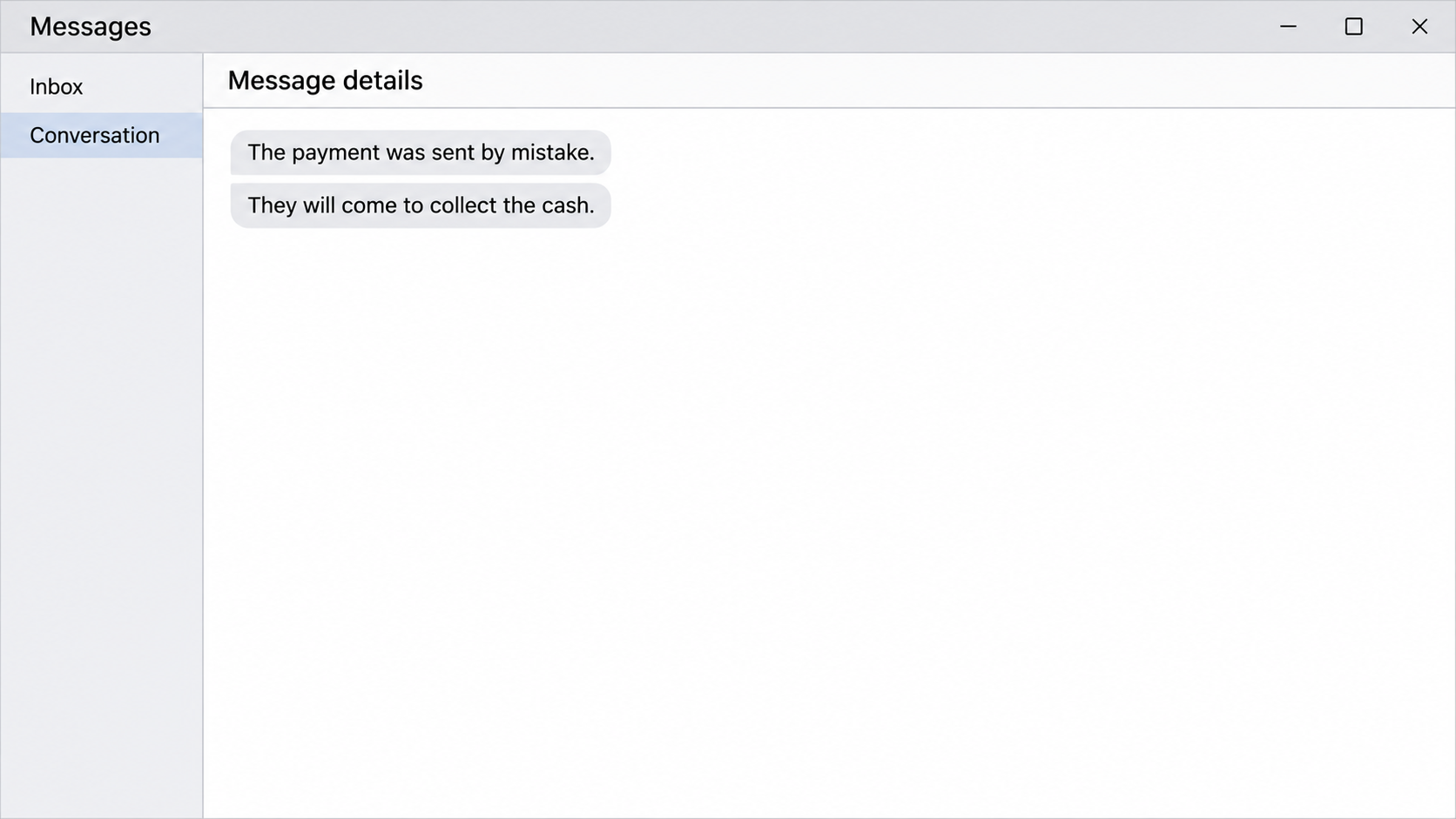
- The image illustrates the story about an overpayment and cash pickup. It isn’t an original conversation from the case.
- A payment question can be checked inside your actual account. A cash collection should be reported separately if someone is on the way.
How the Gentry PayPal Refund Scam Works
Step 1: A supposed payment creates a problem you didn’t ask for
The false story starts with money already being in your account. That’s what makes it different from a seller demanding payment for something you’ve never ordered.
Local reporters described the affidavit’s central allegation: people were falsely told they had been overpaid. The public reporting doesn’t establish how every person was first contacted.
If someone says money appeared unexpectedly, ask the service that supposedly processed it. Don’t let the person making the claim answer that question for you.
Step 2: Returning the excess sounds like a favor
Most people don’t want to keep money that belongs to someone else. The story makes doing the right thing feel like something you owe a stranger on their schedule.
That can make each new instruction sound like help. The person stays in touch, supplies an amount and offers to organize collection. None of it replaces an actual account record.
If a relative says they’re returning money, ask where the original payment appears. That’s a practical question that doesn’t require them to argue about whether the person sounded convincing.
Step 3: Looking at a picture and checking your account are different
A screenshot can show a number, a familiar logo or a transaction marked complete. It cannot tell you whether the service actually put that money in your account.
If PayPal was named, open your own PayPal app or use a known bookmark. Check activity for the specific incoming payment and look at its details, including whether it’s pending.
A separate account issue should go to the bank directly. Let the bank check its records instead of asking a stranger to explain what your balance means.
Don’t share a screen to speed up the check. The person you’re trying to verify doesn’t need a view of your accounts, permission to control your device or a code.
Step 4: The refund suddenly means cash outside the payment service
In the Gentry case, the planned collection was for $29,500 in cash. That was not a PayPal transaction going back to the payment it supposedly corrected.
PayPal’s refund guidance directs users to the original payment in their account activity. If you don’t recognize the transaction, contact support before taking action.
Don’t send money as a new payment to an unfamiliar name, let alone hand it over in person. There is no original PayPal transaction for that cash to reverse.
Step 5: Another person shows up to collect the money
The person who picks up a package needn’t be the person who first contacted you. That’s one reason it can be hard to make sense of the incident afterward.
Court reporting describes changes to the planned meeting place. Moving the exchange doesn’t make it legitimate. A public spot doesn’t make the person who arrives your bank’s representative.
If someone asks you to bring cash somewhere, don’t go. If a collector is nearby, let police know rather than approaching them.
Step 6: A police operation is not something to copy
In Gentry, officers took over before the handoff. The officer was there instead of the target, and the money in the box was not real.
For a person receiving the request today, the useful step is much simpler. Stop contact, avoid the meetup, and tell local police that someone is expected to collect money.
Do not offer a new location, confront the collector, or agree to another meeting so you can gather evidence. Save only what you already have and follow police instructions.
How to Check the Payment Without Following Their Instructions
The claimed payment isn’t in PayPal at all
A caller may say your screen isn’t up to date or that only support can see the credit. You don’t have to prove them wrong while they wait.
If you find no matching incoming payment, tell PayPal about the message and leave your money where it is. Do not treat a refund request as an obligation to pay.
Save the amount they gave you, even if it doesn’t match anything in the account. It’s evidence of what they asked for, not of what was actually transferred.
There is an incoming payment you don’t recognize
An unexpected credit isn’t a reason to spend it or immediately send it back to whichever account a stranger names. The original payment could itself be disputed or unauthorized.
PayPal warns about overpayments that do appear in a seller’s account but are later reversed. That is a separate variant from the false-credit story reported in Gentry.
Tell PayPal the actual transaction details and explain the separate repayment request. Ask how to handle the original payment. Don’t improvise a cash or wire transfer in the meantime.
The person is telling you to get cash now
If you’re still at the branch, ask to speak privately to a staff member. Say someone told you an overpayment happened and has asked to collect your cash.
If you’ve withdrawn cash and still have it, keep it secure. Contact the bank about returning it. If someone is coming to collect it, let local police know.
For more on the different ways scammers fake refunds, see the general PayPal refund scam guide. The Gentry case shows what changes when the demand moves offline.
What the Gentry Case Tells Us About Cash Pickups
A meetup can change without any change to the scam
According to the affidavit cited by the station, the original pickup was expected at a liquor store. The police handoff took place at a grocery store after the location changed.
That difference is useful if you’re trying to reconstruct what happened. Write down where you were first told to go, but identify the actual exchange location separately.
If you stopped before leaving home, say that. If you went but didn’t give anyone money, say that too. A clear account of an attempt can still be useful.
The person receiving the money isn’t necessarily the person who asked for it
The two defendants were connected to the collection, according to the station’s account. That doesn’t identify every person who supplied the payment story or handled other contacts.
In your own report, keep the caller, the person giving directions and the person collecting cash separate. Describe only what you observed, even if you suspect two roles were connected.
If your messages give you a name but you never met the sender, note that it was the name they used. Let police determine whether it identifies an actual person.
Explain the reason you gave for the withdrawal
Tell the bank what you were asked to do and what you did. Staff may need to distinguish a withdrawal you authorized from other account activity.
Mention whether the person on the phone told you how to describe the withdrawal. And if you told the bank it was for something else, explain why that happened.
If you’re helping someone else, let them describe what they remember before you fill in details. A withdrawal slip or a call time can be more useful than guessing.
What to Do If You Have Fallen Victim to This Scam
The first question is whether anyone is arriving or expecting you somewhere. Deal with that first. You can reconstruct the payment and the conversation after you’re safe.
- End contact and skip the meeting. Do not reply to arrange a cancellation or tell the caller where you’ve moved the money. Don’t hand cash to anyone they send.
- Call local police if collection is pending or already happened. Provide the time, place and amount requested. Use 911 if there is an immediate threat to someone’s safety.
- Call the bank through its official app or a known number. Say whether you withdrew cash, handed it over or sent a separate payment. Ask what action is still possible.
- Open PayPal independently. Report the impersonation and check activity for the original payment. If you really did receive money, ask PayPal how to handle it without sending a separate transfer.
- Save relevant proof. Keep the initial message, voicemail, cash withdrawal slip, claimed amount and later instructions. Write down what happened while the sequence is still fresh.
- Separate messages from account access. If you shared a password or allowed remote access, tell the bank and PayPal. Use a different trusted device to secure accounts.
- Report internet-enabled fraud to the FBI. File with IC3 if email, messaging or other online contact was involved. Include your local police report number if you have it.
- Watch for new people offering a refund. Give no money or financial details to someone who calls about recovering cash. Verify any contact independently with the agency handling your report.
If a relative took the call, ask what’s still pending before going over the conversation. Find out if anyone expects another handoff or has asked them to withdraw more.
The FTC’s response guide explains how the options differ for cash, payment apps and transfers. Don’t assume the provider can reverse a cash pickup.
If you gave someone your address, include that when you call police, even if you originally agreed to meet elsewhere. It matters whether the contact could show up at home.
Frequently Asked Questions
Was $29,500 stolen in the Gentry police operation?
The planned pickup was for that amount, but the box used by police didn’t contain real cash. The figure doesn’t represent a loss or recovery total for the wider scheme.
What happened to the people arrested in Gentry?
Court documents cited by local reporters show separate guilty pleas and five-year suspended sentences. The April arrest, June plea and August plea were different events, not a single court appearance.
Is an unexpected credit on PayPal proof the caller is real?
No. An actual incoming payment can have its own problem. Ask PayPal about the original entry and don’t send a separate payment or hand over cash to settle it.
Should I meet the person to explain that I won’t pay?
No. Stay away from the pickup. Tell local police if someone is headed to your home, waiting at a meeting spot or putting pressure on you to come.
Can a bank reverse a cash handoff?
The bank can review the withdrawal and help secure your account. If you gave someone cash, there’s no payment app transfer to reverse. Tell police how the handoff happened.
Does making a police report mean my money will come back?
No. Reporting gives investigators facts, times and evidence they can use. A stranger promising recovery if you pay first is not the same as an officer handling your case.
The Bottom Line
The Gentry PayPal refund scam took a claim about a digital payment and turned it into an in-person cash demand. Don’t hand over money to resolve a supposed overpayment.
If the pickup hasn’t happened, stay away and call local police. If you’ve already paid, contact police and your bank, and keep the records of what actually left your account.

Join the discussion
0 commentsShare your experience or ask a question about this article.
Discussion
Start the conversation
Have a question or something useful to share? Add the first comment.