

A text about a card payment you do not recognize is exactly the sort of message most people feel they cannot ignore. The amount looks serious, the caller sounds calm, and the supposed bank employee seems to know what needs to happen next.
Then the conversation takes a strange turn. Instead of cancelling the card, the “bank” says it must be collected from your home so it can be examined or fingerprinted.
That request is not an unusual security procedure. It is the point where a convincing bank alert becomes a courier fraud that can put both the card and the money behind it directly into a criminal’s hands.
Overview
What the message claims
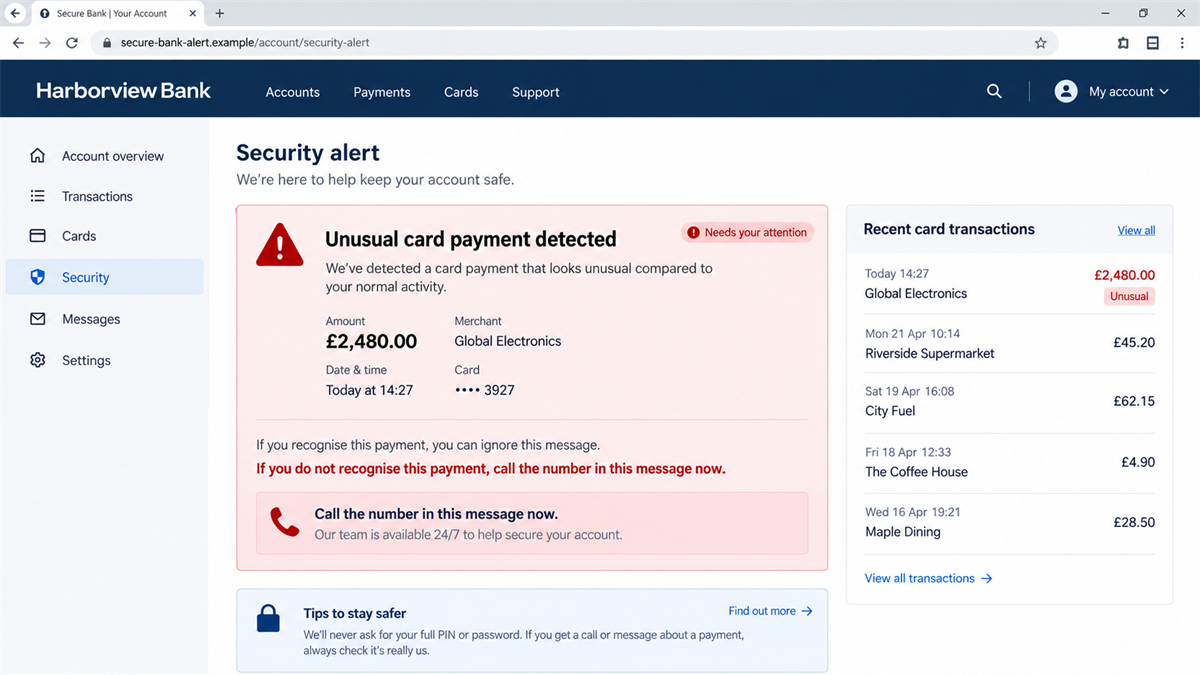
The approach usually begins with a text, call, or both. The message claims that an unauthorized transaction has appeared on the recipient’s bank account and provides a number to call immediately. The amount may be large enough to create alarm, but not so unusual that it sounds impossible.
Once the recipient calls, a fraudster answers as the bank’s security or investigations team. The caller may already know the person’s name, address, bank, or part of a card number.
Those details do not prove the call is genuine. They can come from earlier data breaches, phishing forms, public records, or information bought from other criminals.
What the criminal really wants
The goal is to take physical control of a working bank card and, in some versions, its PIN or enough security information to use it. The invented “fingerprinting” story gives the collection a technical-sounding reason.
A courier then arrives at the victim’s address, takes the envelope, and leaves before the victim has checked the story through an independent channel.
Leicestershire Police described a confirmed case in September 2026. A woman received an unauthorized-transaction text, called the supplied number, and was told her card needed to be collected for fingerprinting.
After a man collected it, two unauthorized transactions worth several thousand pounds appeared on the account. The police warning is clear: a bank will not ask a customer to hand a card to a courier because of suspected fraud.
Why this is a confirmed scam
This is not a complaint about a bank’s customer service or a misunderstanding about a legitimate collection. It is a recognized form of courier fraud documented by police, and the physical collection is part of the theft. The person at the door is not performing a test for the bank.
The scam has several reliable warning signs:
- An unexpected alert tells you to call a number inside the message.
- The caller says your card must be examined, fingerprinted, verified, or destroyed.
- A courier is offered or scheduled to collect the card from your home.
- You are told to place the card, cash, or documents in an envelope.
- The caller discourages you from contacting the bank, family, or police.
- You are asked for a PIN, one-time code, password, or security answer.
Why the Story Feels Believable
The opening claim matches a real banking concern. Banks genuinely monitor unusual payments, send alerts, and sometimes call customers. That familiar starting point lowers a person’s guard before the fake procedure is introduced.
The fraudster may also keep the victim on the phone while appearing to check transactions, contact a supervisor, or open a case. Pauses, hold music, reference numbers, and scripted security questions make the interaction feel like an ordinary call center. None of those details requires access to a bank system.
“Fingerprinting” is effective language because it sounds forensic. A frightened customer may assume there is a specialist fraud process they have never encountered. In reality, a bank can block a compromised card electronically. It does not need the customer to leave it outside for a stranger.
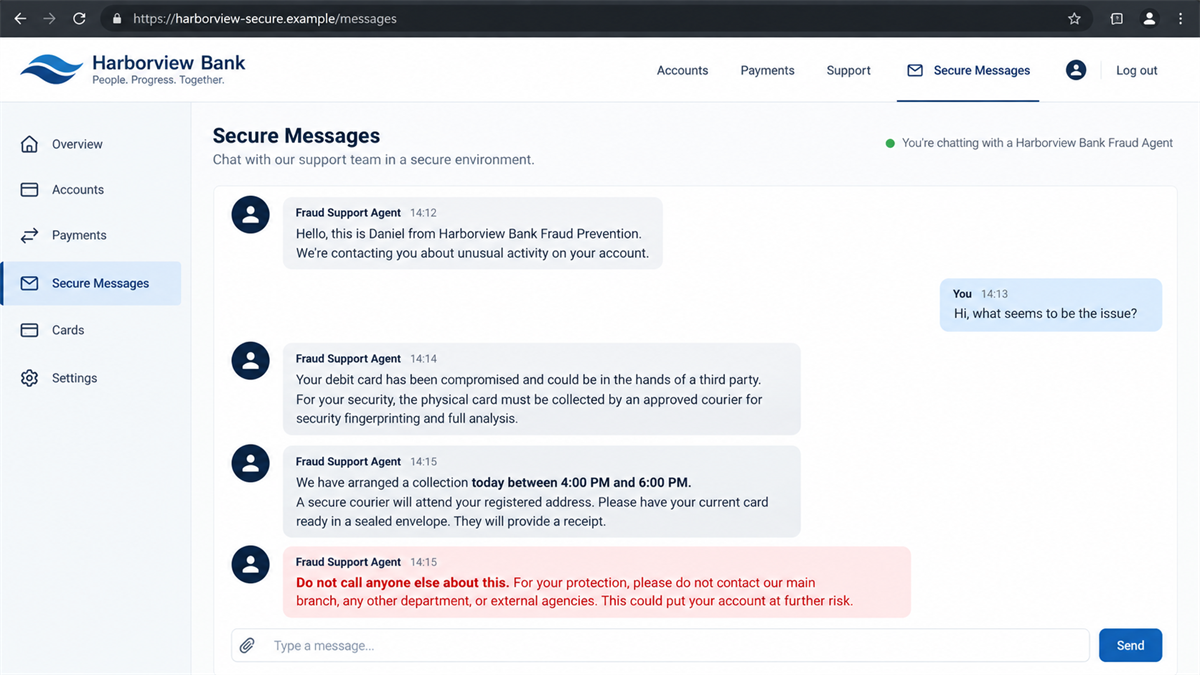
The scam also exploits a natural desire to cooperate. The caller may say the collection will help identify a dishonest employee, trace organized crime, or protect other customers. That turns the victim from someone being warned into someone supposedly helping an investigation.
Some callers use number spoofing so the bank’s name or a familiar number appears on caller ID. Caller ID is not authentication. A criminal can make an incoming call look local or make it resemble a real organization’s number.
If the criminal already knows the address, arranging a courier feels less suspicious. But the address may have come from a breached customer record, an electoral roll, a previous order, or a phishing page. Knowing personal facts is part of the performance, not evidence that the caller works for the bank.
How the Bank Card Fingerprint Scam Works
Step 1: A fake fraud alert creates urgency
The victim receives a message about a payment, cash withdrawal, or transfer that supposedly needs immediate attention. The text includes a phone number or invites a reply. The safest response is not to use either option. Open the official banking app yourself or call the number printed on the back of the card.
Step 2: The fake bank agent takes control
When the victim calls, the fraudster confirms the alarming story and starts an imitation security process. The caller may ask for name, address, recent transactions, or digits from the card. Every answer can be used to complete an account takeover or make the next part of the call more convincing.
Step 3: The card is declared evidence
The caller says the physical card has been cloned, tampered with, or used by an insider. It supposedly needs to be fingerprinted or analyzed. This is the central lie. A genuine bank may tell a customer to cut up a cancelled card, but it will not dispatch a courier to collect it as evidence.
Step 4: A collection is arranged
The fraudster confirms the home address and gives a narrow collection window. The victim may be instructed to seal the card in an envelope, write a case number on it, or hand it only to a courier who knows a password. These details create ceremony around a simple theft.
Step 5: The courier removes the card
A person arrives, often quickly, and takes the envelope. The courier may know very little about the phone conversation. Criminal networks can use local collectors or money mules so the person at the door is separated from the caller who organized the fraud.
Step 6: The card is used before it is blocked
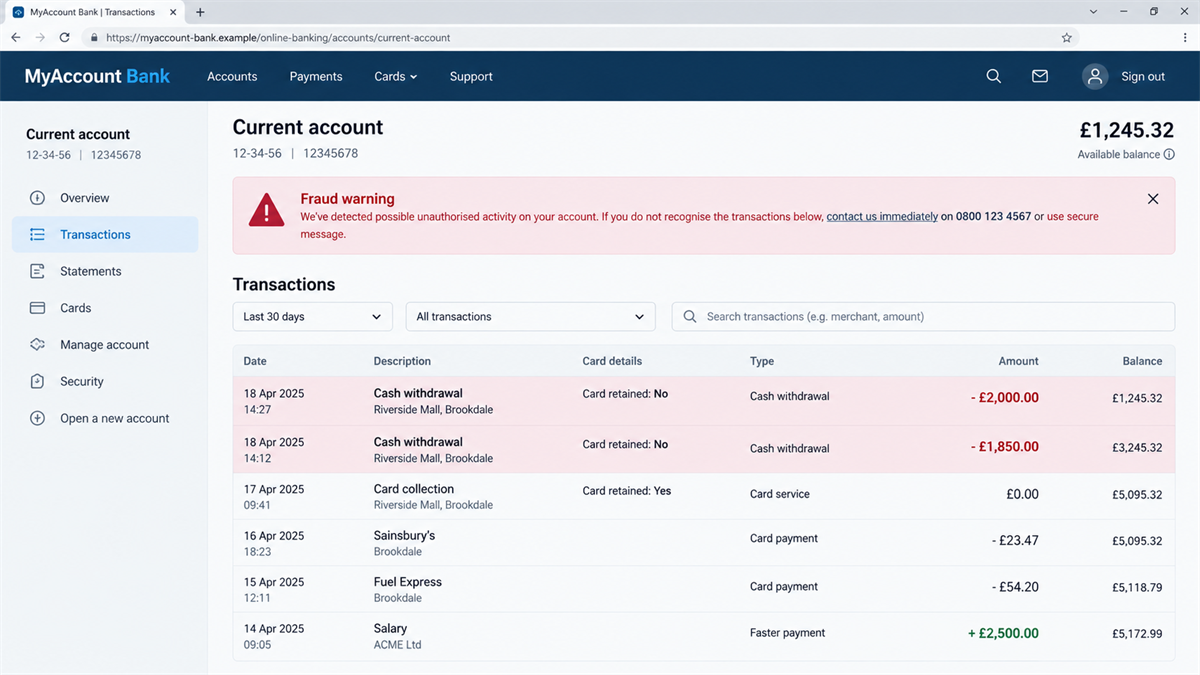
Once the card is in criminal hands, it may be used for cash withdrawals, contactless purchases, online orders, or attempts to reset account access. If the victim also disclosed the PIN or a one-time code, the theft can move even faster.
The Warning Signs You Should Not Ignore
The easiest rule to remember is physical: your bank does not need a courier to take your card, cash, jewelry, or valuables to make your account safe. Police do not use customers’ money as bait, and a fraud team does not test a card by withdrawing cash from it.
Be especially suspicious when an incoming caller gives instructions that prevent independent verification. Fraudsters may say the branch is involved, the police line is compromised, or hanging up will cancel the investigation. A real organization will not object if you end the call and contact it through a published number.
Another warning sign is a request for information the bank tells customers never to reveal. A genuine employee does not need the full PIN, a complete password, or a one-time passcode sent to authorize a payment. If a caller asks for one, the request is enough to end the conversation.
Do not rely on the caller knowing your name, address, bank, or recent purchase. Treat those facts as potentially exposed. The meaningful test is whether the request matches the bank’s real procedures, and card collection for “fingerprinting” does not.
Company and Checkout Checks
Check the bank through a separate channel
Do not press a callback button or dial the number in the alert. Use the official app, type the bank’s address yourself, or call the number printed on the card. If possible, use a different phone because some landline scams try to keep the original connection open.
Check the claimed transaction
Look at pending and completed activity inside the official account. A fraudster may invent a transaction that does not exist. If a real unauthorized charge is present, report it inside the app or through the bank’s published fraud number, not through the contact who alerted you.
Check the collection request
No checkout or security workflow should end with a stranger collecting your active card. Search the bank’s own fraud guidance or ask a branch directly. Do not use links, emails, phone numbers, or case portals supplied by the caller.
Check every payment and code request
Read one-time-code messages in full. They often state what the code will authorize. If the message mentions adding a card, registering a device, changing a password, or approving a payment you did not start, do not share the code with anyone.
What to Do if You Have Fallen Victim to This Scam
- Call the bank immediately. Use the number on its official website or another trusted channel. Say that a card was physically collected through courier fraud and ask for the card, account access, and digital wallet tokens to be blocked.
- Report every unauthorized transaction. Give the bank the times, amounts, merchant names, and cash-machine locations shown in the account. Ask how to open a formal fraud claim and record the reference number.
- Change online banking credentials. Use a clean device, create a new unique password, sign out other sessions, and review trusted devices, payees, contact details, and forwarding settings.
- Contact police or the national fraud reporting service. In the UK, report the incident to local police and Report Fraud. Preserve the original message, phone number, collection time, description of the courier, doorbell footage, and any vehicle details.
- Warn the card issuer about exposed codes or PINs. Be honest about everything disclosed. The bank needs the full picture to stop related attempts and advise whether other accounts should be protected.
- Check the device used during the scam. If you installed an app, opened an attachment, or allowed remote access, disconnect the device from the internet and scan it with a reputable tool such as Malwarebytes before using it for sensitive accounts again.
- Reduce follow-up contact. Block the numbers and consider an ad and tracker blocker such as AdGuard to reduce malicious pages and misleading ads, but remember that no blocker can make a caller or courier trustworthy.
- Watch for recovery scams. Criminals may return claiming they can recover the money for a fee. Your bank, police, or a regulated professional should be contacted through independently verified details.
How to Protect Yourself and Someone You Care About
Courier fraud often targets older people because the criminals expect them to be at home and to respect official-sounding instructions. A short family conversation can be more useful than a long technical lesson: no bank or police officer will collect a card or cash from the doorstep.
Agree on a pause rule. If an unexpected caller mentions fraud, arrest, secrecy, or a courier, hang up and call a trusted person before doing anything. The rule works because it breaks the pressure that the scam depends on.
Turn on instant transaction notifications and set sensible cash-withdrawal limits where the bank offers those controls. Review contact details so security messages go to the correct phone and email. These measures do not prevent every approach, but they can expose unauthorized activity sooner.
It also helps to recognize related bank-impersonation tactics. MalwareTips has examined how a fake discount call can become a one-time-PIN account takeover. The stories differ, but the defensive habit is the same: never approve a security action that began with an unexpected caller.
Frequently Asked Questions
Do banks ever send couriers to collect cards?
A bank may use couriers for some business services, but it will not cold-call a customer and collect an active card, PIN, cash, or valuables to investigate fraud. If you are unsure, end the contact and call the bank through a number you already trust.
Can a bank card really be fingerprinted?
Police can examine physical evidence during a genuine investigation, but that does not make the caller’s story legitimate. A bank fraud department does not arrange doorstep “fingerprinting” of a customer’s card after an unsolicited text.
What if the caller ID showed my bank?
Caller ID can be spoofed. Treat the displayed name or number as a label, not proof. Hang up and start a new call using the number on the card or in the bank’s official app.
What if I cut the card before handing it over?
Cutting a card does not guarantee it is unusable. The chip, magnetic stripe, card details, or linked account access may still be exploitable. Do not give any part of the card to a collector. Block it through the bank.
Should I confront a courier who arrives?
Do not put yourself at risk. Keep the door closed, do not hand over anything, and contact police. If it is safe, preserve doorbell footage or note identifying details without following or confronting the person.
Can the bank recover the stolen money?
Recovery depends on the transactions, timing, jurisdiction, and account terms. Report the fraud immediately and provide accurate information. Fast reporting gives the bank the best chance to block further use and investigate disputed transactions.
The Bottom Line
The bank card fingerprint scam succeeds by wrapping a physical theft in the language of fraud prevention. The alert, case number, security questions, and courier appointment are all there to make handing over a card feel responsible.
It is not. A bank can block a card without taking it from your home. If anyone says your card must be collected for fingerprinting, end the contact, keep the card, and call the bank yourself through an official channel.
The official Leicestershire Police warning documents the exact pattern and the losses that followed. Treat the courier request as the decisive red flag, not as the final step in a real investigation.

Join the discussion
0 commentsShare your experience or ask a question about this article.
Discussion
Start the conversation
Have a question or something useful to share? Add the first comment.