
Bigvita Scalp Serum Review – Does It Really Stop Hair Loss or Just Hype?

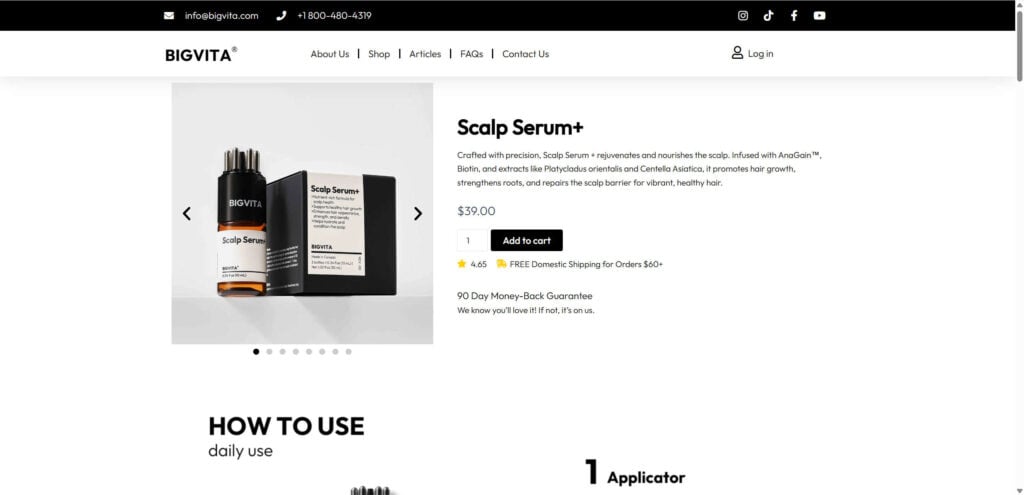
Bigvita Scalp Serum+ has been making waves online, with ads promising everything from stopping hair loss to regrowing thicker, fuller strands. The product claims to hydrate, soothe irritation, and even reactivate dormant hair follicles. But does it really work, or is it just another overpriced serum with exaggerated promises?

In this review, we’ll break down what Bigvita Scalp Serum actually does, what customers are saying, and the red flags you should know before buying.
1 96

What Bigvita Scalp Serum+ Claims to Do

According to the brand, Bigvita Scalp Serum+ is a multi-tasking solution for:

  • Reducing hair shedding
  • Stimulating new hair growth
  • Hydrating dry, itchy scalps
  • Strengthening roots and soothing irritation

It features ingredients like AnaGain™ (pea sprout extract), Biotin, Centella Asiatica, and Biota Orientalis Leaf Extract, all delivered with a unique multi-prong applicator designed to massage the scalp while boosting absorption.

On paper, it sounds like an all-in-one miracle. The sleek packaging, eco-friendly pitch, and promises of thicker hair are very convincing. But does science back it up?

The Science Behind the Ingredients

While some of the ingredients do support scalp health, there’s a catch.

  • Biotin – Can help with hair strength if you’re deficient, but won’t regrow hair on its own.
  • Centella Asiatica & Biota Orientalis Leaf Extract – May soothe inflammation and improve circulation in the scalp.
  • AnaGain™ – Derived from pea sprouts, shown in some small studies to support the hair growth cycle, but far from a cure for baldness.

The bottom line: These ingredients may help improve scalp condition, hydration, and possibly reduce shedding, but there is no scientific evidence that Bigvita can regrow hair once follicles are dead or reverse hereditary baldness.

Red Flags to Watch Out For

Like many heavily marketed wellness products, there are some warning signs:

Exaggerated claims – Marketed like a miracle cure, but no topical serum can bring dead follicles back.
Refund issues – They advertise a 90-day money-back guarantee, yet customers report difficulties actually getting refunds.
Fake-looking reviews – The website features glowing testimonials, but there’s no way to confirm authenticity.
Mixed Amazon reviews – Average rating sits around 3.4 stars. Some users report scalp relief, others say the bottles are tiny and ineffective for hair growth.
Aggressive advertising – Mostly sold via online ads, not trusted retailers or dermatologists’ offices.

What Customers Are Saying

On the official Bigvita site, reviews are overwhelmingly positive. However, when you look at Amazon and independent feedback, the story changes.

Positive comments mention:

  • Cooling, refreshing scalp feel
  • Reduced itchiness and dryness
  • Easy-to-use applicator that doubles as a scalp massager

Negative feedback highlights:

  • Bottles are too small for the price
  • No noticeable results for hair regrowth
  • Disappointment with refund policy

Overall, customers agree it feels nice on the scalp but doesn’t live up to the dramatic “hair regrowth” claims.

Is Bigvita Scalp Serum a Scam?

Calling Bigvita a full-blown scam would be unfair. The serum does have benefits for scalp hydration, soothing irritation, and offering a relaxing massage experience. If that’s all you’re expecting, you may find value in it.

But if you’re hoping for a miracle cure for baldness or significant hair regrowth, you’re likely to be disappointed. It’s overhyped, overpriced, and not backed by strong science.

Final Verdict

Bigvita Scalp Serum+ is not a miracle hair loss solution. At best, it’s a soothing scalp treatment that can help with hydration, mild irritation, and possibly reduce shedding. At worst, it’s an over-marketed product that leaves you with a lighter wallet and no new hair growth.

If your main goal is to refresh your scalp and enjoy a massage-like applicator, it could be worth trying. But if you’re struggling with real hair loss, your best bet is to see a dermatologist and explore proven treatments like minoxidil or prescription therapies.

Bottom line: Bigvita Scalp Serum+ is not a scam, but it is overhyped. It may help your scalp feel better, but don’t expect it to reverse hair loss or regrow hair.


10 Rules to Avoid Online Scams

Here are 10 practical safety rules to help you avoid malware, online shopping scams, crypto scams, and other online fraud. Each tip includes a quick “if you already got hit” action.

  1. Stop and verify before you click, log in, download, or pay.

    warning sign

    Most scams win by creating urgency. Verify using a trusted method: type the website address yourself, use the official app, or call a known number (not the one in the message).

    If you already clicked: close the page, do not enter passwords, and run a malware scan.

  2. Keep your operating system, browser, and apps updated.

    updates guide

    Updates patch security holes used by malware and malicious ads. Turn on automatic updates where possible.

    If you saw a scary “update now” pop-up: close it and update only through your device settings or the official app store.

  3. Use layered protection: antivirus plus an ad blocker.

    shield guide

    Antivirus helps block malware. An ad blocker reduces scam redirects, phishing pages, and malvertising.

    If your browser is acting weird: remove unknown extensions, reset the browser, then run a full scan.

  4. Install apps, software, and extensions only from official sources.

    install guide

    Avoid cracked software, “keygens,” and random downloads. During installs, choose Custom/Advanced and decline bundled offers you do not recognize.

    If you already installed something suspicious: uninstall it, restart, and scan again.

  5. Treat links and attachments as untrusted by default.

    cursor sign

    Phishing often impersonates delivery services, banks, and popular brands. If it is unexpected, do not open attachments or log in through the message.

    If you entered credentials: change the password immediately and enable 2FA.

  6. Shop safely: research the store, then pay with protection.

    trojan horse

    Be cautious with brand-new stores, “closing sale” stories, and prices that make no sense. Prefer credit cards or PayPal for dispute options. Avoid wire transfers, gift cards, and crypto payments.

    If you already paid: contact your card issuer or PayPal quickly to dispute the transaction.

  7. Crypto rule: never pay a “fee” to withdraw or recover money.

    lock sign

    Common patterns include fake profits, then “tax,” “gas,” or “verification” fees. Another is a “recovery agent” who demands upfront crypto.

    If you already sent crypto: stop paying, save evidence (wallet addresses, TXIDs, chats), and report the scam to the platform used.

  8. Secure your accounts with unique passwords and 2FA (start with email).

    lock sign

    Use a password manager and unique passwords for every account. Enable 2FA using an authenticator app when possible.

    If you suspect an account takeover: change passwords, sign out of all devices, and review recent logins and recovery settings.

  9. Back up important files and keep one backup offline.

    backup sign

    Backups protect you from ransomware and device failure. Keep at least one backup on an external drive that is not always connected.

    If you suspect infection: do not connect backup drives until the system is clean.

  10. If you think you are a victim: stop losses, document evidence, and escalate fast.

    warning sign

    Move quickly. Speed matters for disputes, account recovery, and limiting damage.

    • Stop payments and contact: do not send more money or respond to the scammer.
    • Call your bank or card issuer: block transactions, replace the card if needed, and start a dispute or chargeback.
    • Secure your email first: change the email password, enable 2FA, and remove unfamiliar recovery options.
    • Secure other accounts: change passwords, enable 2FA, and log out of all sessions.
    • Scan your device: remove suspicious apps or extensions, then run a full malware scan.
    • Save evidence: screenshots, emails, order pages, tracking pages, wallet addresses, TXIDs, and chat logs.
    • Report it: to the payment provider, marketplace, social platform, exchange, or wallet service involved.

These rules are intentionally simple. Most online losses happen when decisions are rushed. Slow down, verify independently, and use payment methods and account controls that give you recourse.

Comment on this post

Previous

Jesse-London.com Review: Legit Store or Scam? Our Findings

Next

AlphaInfuse Hair Serum Review – Worth It or Waste of Money?





