

A video says a hidden AI button can run an online business while its owner sleeps. The presenter claims access has finally opened to ordinary people.
Famous faces, late-night television, and an exact daily income make the invitation feel unusually specific. That specificity is part of the persuasion.

Overview
Bill Gates did not create an AI Matrix income button
The advertisement falsely depicts Bill Gates explaining software that supposedly earns $1,000 each day after one simple activation.
Some clips place him on a late-night program. Others add Dwayne Johnson, Adam Sandler, Conor McGregor, or television presenters to imply broad confirmation.
No credible announcement connects Gates or those entertainers with AI Matrix, AI Systems, Project Apollo AI, or the advertised automated-income offer.
The names change while the promise remains stable
AI Matrix may appear as a concept rather than a durable company. The checkout can introduce AI Systems, Project Apollo AI, or another software label.
Rotating names keep the story alive after one brand receives warnings. The deepfake narrative and income figure can continue on fresh domains.
This is why the celebrity story matters more than the current product label. Searching only one name provides an incomplete view of the campaign.
The funnel hides different content from different visitors
Investigators may see a harmless business video on desktop while mobile visitors arriving from an advertisement receive the celebrity sales presentation.
This technique, called cloaking, helps questionable campaigns avoid reviewers, brand owners, advertising controls, and researchers.
- The Gates endorsement is fabricated.
- The promised $1,000 daily income is unsupported.
- The program can be renamed without changing its pitch.
- Mobile and desktop visitors may receive different pages.
- Low entry pricing can lead to costly upgrades or renewals.
The campaign is built around an invented shortcut. AI provides the theme, but the actual mechanism is familiar direct-response sales pressure.
What the AI Matrix Presentation Claims
The narrator says Gates developed a secret system after recognizing that artificial intelligence would eliminate traditional work and create new digital fortunes.
One button allegedly finds profitable opportunities, creates content, attracts customers, processes transactions, and sends earnings to the user’s account automatically.
The video claims a beginner needs no technical skill, audience, inventory, advertising budget, or previous business experience.
A location message may say residents of the visitor’s state are first to receive access. The same page can insert a different state for every visitor.
Testimonials describe immediate payments and life-changing income. Their screenshots show numbers without identifying a payment processor, customer, product, or underlying transaction.
The presentation frequently withholds the actual business model until late. Curiosity keeps viewers watching while repeated success stories weaken resistance.
Eventually, a small access price appears beside a money-back guarantee. Buyers may believe the risk is limited because the initial amount seems manageable.
Post-purchase upgrades can change that calculation. Training, traffic packages, coaching, automation tools, or premium licenses may cost far more than entry access.
Why the Celebrity Footage Is Not Proof
Deepfake audio can rewrite an ordinary interview
A scammer does not need to generate an entire broadcast. Authentic video can be paired with cloned speech and carefully selected reaction shots.
Artificial narration may flatten breathing, misplace emphasis, or pronounce names oddly. Mouth movement can drift from consonants when the clip slows.
Subtitles are even easier to falsify. Viewers who watch without sound may accept invented words placed beneath genuine footage.
Celebrity variety is a sign of modular advertising
One page may feature Gates, while another inserts an actor, athlete, or presenter. The system supposedly has a different famous supporter for each audience.
A legitimate product partnership would have consistent disclosures and traceable announcements. A rotating cast indicates reusable creative material rather than independent endorsements.
Verify through official channels and complete interview archives. Search beyond clips uploaded by accounts whose profiles contain only advertisements.
Familiar studio sets manufacture context
A late-night desk or morning-show couch tells the brain that producers, lawyers, and broadcasters approved what follows.
The campaign borrows that institutional trust without using a real episode. Cropped logos and short scenes make the source difficult to identify.
If an extraordinary announcement cannot be found on the broadcaster’s site, the missing original is more important than the polished fragment.
How the Bill Gates AI Matrix Scam Works
Step 1: A sponsored clip presents a forbidden shortcut
The advertisement says powerful interests wanted the interview removed. Viewers are urged to watch before the information disappears.
That warning creates urgency and excuses the clip’s low quality. Missing context becomes evidence of censorship inside the story.
A recognizable face reduces the need for explanation. The viewer supplies credibility from the celebrity’s real achievements.
Step 2: The landing page checks the visitor’s device
Campaign links can inspect screen size, referral source, location, cookies, or browser details before deciding which page to display.
A person arriving from the targeted mobile advertisement sees the aggressive AI Matrix video. A direct desktop visit may receive unrelated content.
This separation frustrates complaints because reviewers cannot reproduce what victims saw using the public address alone.
Step 3: A long video delays the concrete offer
The narrator discusses economic anxiety, lost opportunities, and technological change before naming the program’s function or price.
Each story promises that an explanation is coming. Viewers invest time, making it harder to abandon the presentation near the final reveal.
Income screenshots and emotional testimonials appear between vague technical claims. None identifies a reproducible revenue source.

Step 4: AI language replaces a business model
The system is said to scan billions of data points, activate digital assets, or calibrate a hidden algorithm. Those phrases sound technical without explaining commerce.
A real business must sell something valuable to identifiable customers. Software does not generate endless revenue merely by running.
Ask what product is sold, who pays, why they pay, and what ongoing work is required. The presentation usually avoids direct answers.
Step 5: A low access price opens the upsell sequence
The first payment may purchase little more than videos, a dashboard, or a generic website builder. Important capabilities are reserved for higher levels.
One-click pages offer traffic, templates, coaching, resale rights, and accelerated results. Buyers can approve additional charges faster than they can evaluate them.
Recurring billing may appear in small checkout language. Record whether the amount renews and how cancellation must be submitted.
Step 6: Coaches convert disappointment into another sale
When earnings fail to appear, support may say the customer skipped training, selected the wrong package, or lacks enough traffic.
A sales call then recommends private mentoring, advertising credits, or a premium automated account. The promised effortless system becomes progressively expensive.
Failure is assigned to the buyer rather than the original income claim. That tactic protects the offer from its own results.

Step 7: Domains and program names rotate
One observed campaign used a domain that displayed different video content depending on access conditions. Another domain can replace it without warning.
The same script can sell AI Systems today and Project Apollo AI tomorrow. Testimonials, buttons, and scarcity messages require only minor edits.
This disposable structure makes refunds and accountability difficult. Buyers may find that the page named on their receipt no longer resolves.
How to Evaluate an AI Moneymaking Offer
Demand a plain explanation of the underlying work. Avoid any program that describes income but cannot identify products, customers, costs, and expected effort.
Separate software capability from financial outcome. A tool may automate tasks, yet demand, competition, skill, and expenses still determine whether a business earns money.
Search the celebrity claim through verified accounts and the original broadcaster. Promotional copies do not become independent evidence because many affiliates repost them.
Read the complete checkout terms before entering a card. Look for trials, renewals, coaching calls, mandatory tools, and nonrefundable digital access.
Calculate the likely total after every advertised upgrade. A $27 entry product can become a four-figure commitment through sequential upsells.
Inspect the refund procedure. A guarantee is weak when it requires undocumented tasks, extensive proof, short deadlines, or contacting an unresponsive address.
Search for authentic customer work, not dashboard screenshots. Revenue claims should connect to real transactions and independently verifiable businesses.
Never borrow money or provide retirement-account access for an online opportunity. High-pressure coaches have no right to inspect personal finances.
What a Real AI Business Opportunity Would Explain
The customer and value must be identifiable
Software can assist research, writing, support, design, analysis, or administration. Someone must still value the resulting work enough to pay for it.
A credible offer names the target customer, problem, deliverable, sales channel, typical price, and competition. AI does not remove those commercial fundamentals.
Ask to see an ordinary customer journey from discovery through payment and delivery. A balance counter does not show where revenue originated.
If every participant earns mainly by recruiting another participant, investigate pyramid and referral risks rather than accepting an automation label.
Costs continue after software access
Online businesses may require hosting, advertising, payment processing, subscriptions, refunds, taxes, customer service, and professional advice.
A sales video quoting revenue without expenses creates a distorted picture. Profit is what remains after every necessary cost.
Advertising expenses can exceed sales when campaigns perform poorly. No secret button guarantees profitable acquisition across products and markets.
Request a complete cost schedule, including optional tools likely needed for the advertised result. Hidden dependencies can make cheap access meaningless.
Automation needs supervision and accountability
AI output can contain mistakes, copied claims, unsafe advice, invented citations, or content that violates platform rules.
A responsible operator reviews results, protects customer data, handles complaints, and corrects errors. Those duties do not vanish because a task is automated.
Platforms can suspend accounts for spam, misleading advertising, copyright violations, or prohibited automation. The opportunity should disclose those operational risks.
Buyers need realistic training about quality control. Promising passive income while hiding ongoing supervision is a serious misrepresentation.
Results should be typical, documented, and qualified
Exceptional testimonials do not describe what most purchasers achieve. Ask for the denominator, time period, expenses, experience, and dropout rate.
Income disclosures should explain whether figures represent revenue, profit, hypothetical performance, or selected examples. Those categories are not interchangeable.
Search for independent users who describe unsuccessful attempts as well as successes. A page controlling every testimonial cannot show the full distribution.
Refuse pressure to decide during a webinar or call. A genuine opportunity remains understandable after careful review.
A refund policy cannot repair a false earnings claim
Marketers sometimes present a guarantee as permission to make extreme promises. The original representation still needs evidence.
Digital sellers may argue that opening a lesson consumed the product. Check whether accessing the dashboard immediately eliminates refund rights.
Save the version accepted at checkout because policies can change. Date-stamped screenshots help establish which conditions governed the purchase.
If the seller demands completed assignments, document every requirement but do not provide unnecessary identity or banking records.
Ask whether the advertised examples reflect typical purchasers. Silence or evasive answers matter more than another exceptional success story.
Search company directors and previous program names. Operators sometimes abandon one opportunity while launching an almost identical replacement.
Discuss expensive packages with an accountant, attorney, or experienced business owner who has no financial interest in the sale.
Company, Address, and Fulfillment Checks
The offer may lack a stable legal owner
AI Matrix sounds like a product family, not necessarily a registered company. Identify the entity named in payment terms and privacy notices.
If different pages name different operators, save copies. An unclear contracting party makes the guarantee difficult to enforce.
Digital businesses still need a real contact trail
A virtual product does not excuse a false address, anonymous domain, or unanswered support line. Legitimate sellers disclose who handles billing and disputes.
Search the listed address. A mailbox, formation agent, shared office, or unrelated residence does not prove operational staff are present.
The statement descriptor may reveal another merchant
Buyers sometimes search the glamorous program name while charges appear under an obscure processor or fulfillment company.
Record every descriptor and telephone number. Those details help a card issuer connect later renewals with the original purchase.
No physical parcel means evidence disappears faster
Digital access can be revoked instantly. Download receipts, terms, lesson lists, chat transcripts, and dashboard images before requesting cancellation.
Do not send private documents to prove dissatisfaction. A seller needs transaction details, not a passport, banking password, or tax return.
What to Do if You Have Fallen Victim to This Scam
- Cancel in writing immediately. Identify every product and renewal, request confirmation, and keep the sent message with its timestamp.
- Save the deceptive presentation. Capture the celebrity claims, earnings figures, guarantee, checkout total, upsells, terms, domain, and device-dependent page differences.
- Call the card issuer. Explain the fabricated endorsement and unsupported income promise, then ask about disputes and blocking future merchant charges.
- Review the entire statement. Locate add-ons, duplicate payments, trial conversions, foreign fees, and descriptors that do not match the advertised name.
- Decline coaching pressure. Do not pay for traffic, mentoring, premium automation, business credit, or recovery assistance offered after the original failure.
- Change reused passwords. Secure the associated email first, enable multi-factor authentication, and remove unknown sessions from important accounts.
- Inspect your computer. Use Malwarebytes if the program required downloads, extensions, remote access, or executable installers.
- Reduce repeat targeting. AdGuard can limit malicious advertising and tracking, while platform reporting can remove the exact sponsored account.
- Report the impersonation. Notify the FTC, IC3, payment provider, advertising network, and the impersonated person’s official representatives.
Is Your Device Infected? Run a Free Malware Scan
Slow performance, constant pop-ups, or strange behavior? These are classic signs of a malware infection. The fastest way to find out is to scan your device with Malwarebytes Free — one of the most trusted malware removal tools available.
The free version detects and removes the most common threats, including:
- Adware — the cause of those annoying pop-ups
- Browser hijackers — unwanted redirects and changed homepages
- Trojans and spyware — hidden programs stealing your data
- Potentially unwanted programs (PUPs) — software you never asked for
👉 Select your device below — Windows, Mac, or Android — then follow the simple steps to download Malwarebytes, scan your system, and remove any threats it finds. The scan usually takes 5 to 20 minutes.
Run a Malware Scan with Malwarebytes for Windows
Malwarebytes is one of the most popular and trusted anti-malware tools for Windows — and it’s completely free for removing infections. It catches threats that many antivirus programs miss, including adware, browser hijackers, and trojans. Follow the steps below to scan and clean your PC in just a few minutes.
Download Malwarebytes
Click the button below to download the latest version of Malwarebytes for Windows from the official source. The free version is all you need — it will scan your computer and remove adware, browser hijackers, and other malicious software at no cost.
Download MalwarebytesOfficial installer for Windows 11 and 10. Your download starts right away.Want real-time protection? See Malwarebytes Premium Malwarebytes Free for WindowsScans and removes malware at no cost
-
Install Malwarebytes
When the download finishes, open your Downloads folder and double-click the MBSetup file. If Windows shows a User Account Control pop-up, click “Yes” to allow the installation.
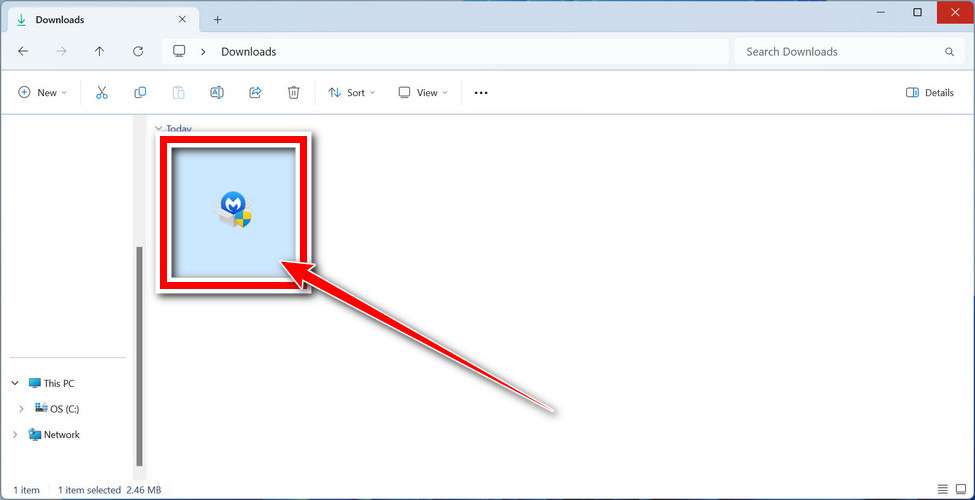
Follow the On-Screen Prompts to Install Malwarebytes
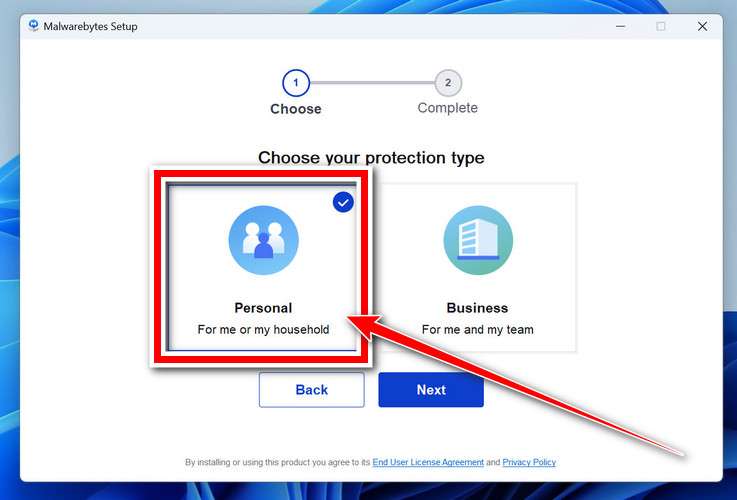
The setup wizard will walk you through a few quick screens:
-
Choose where you’re installing the program — “Personal Computer” or “Work Computer” — then click Next.
-
Malwarebytes will now install on your device. This usually takes under a minute.

-
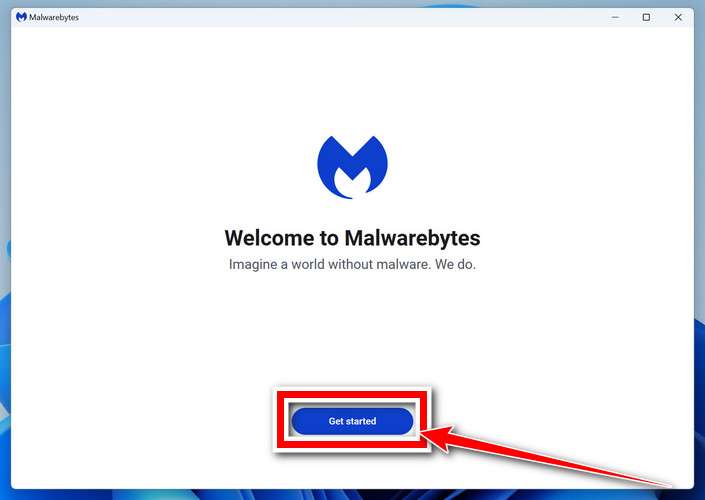
When installation is complete, the “Welcome to Malwarebytes” screen will open automatically.
-
On the final screen, click Open Malwarebytes to launch the program.

-
Enable “Scan for Rootkits”
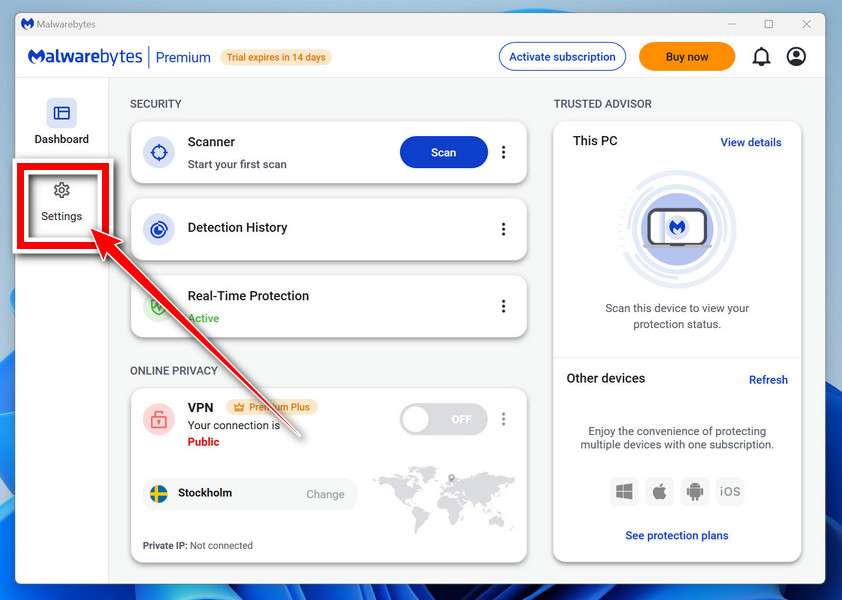
Before scanning, turn on rootkit detection so Malwarebytes can find even the most hidden threats. Click the Settings gear icon on the left side of the screen.
In the settings menu, find “Scan for rootkits” and click the toggle so it turns blue.

Done? Click “Dashboard” in the left pane to return to the main screen.
Start the Scan
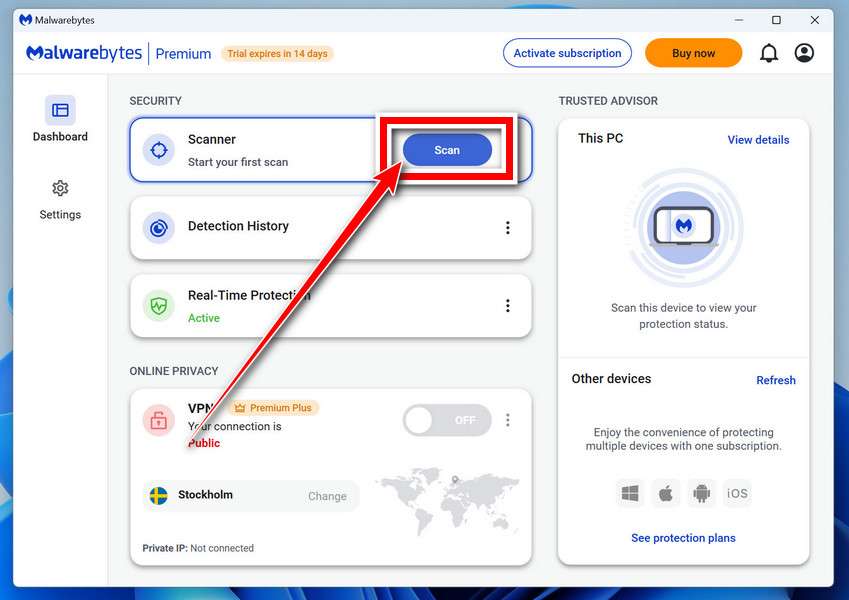
Click the blue Scan button. Malwarebytes will automatically update its virus database and start checking your computer for malware.
-
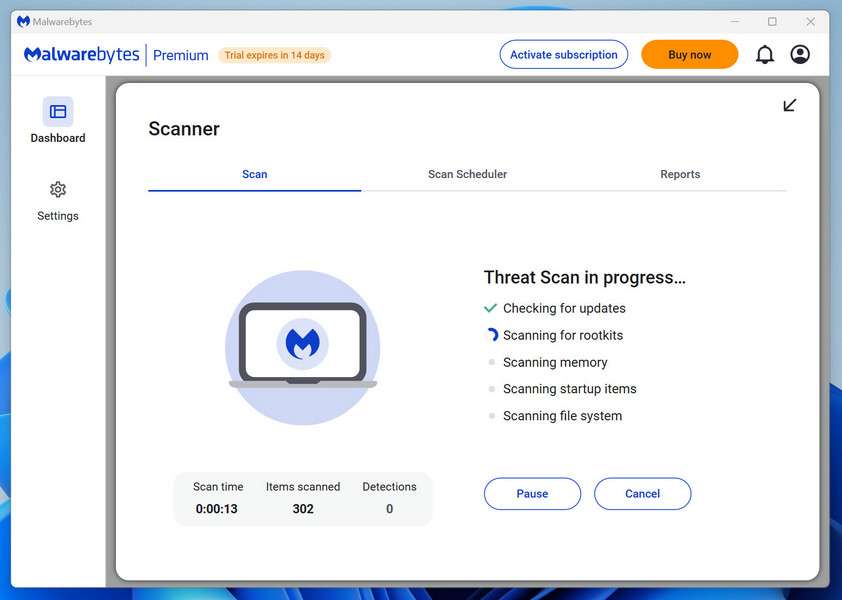
Wait for the Scan to Finish
The scan checks your entire system for browser hijackers and other malicious programs, so it can take 5 to 20 minutes depending on your computer. Feel free to do something else — just check back occasionally to see the progress.
-
Quarantine the Detected Threats
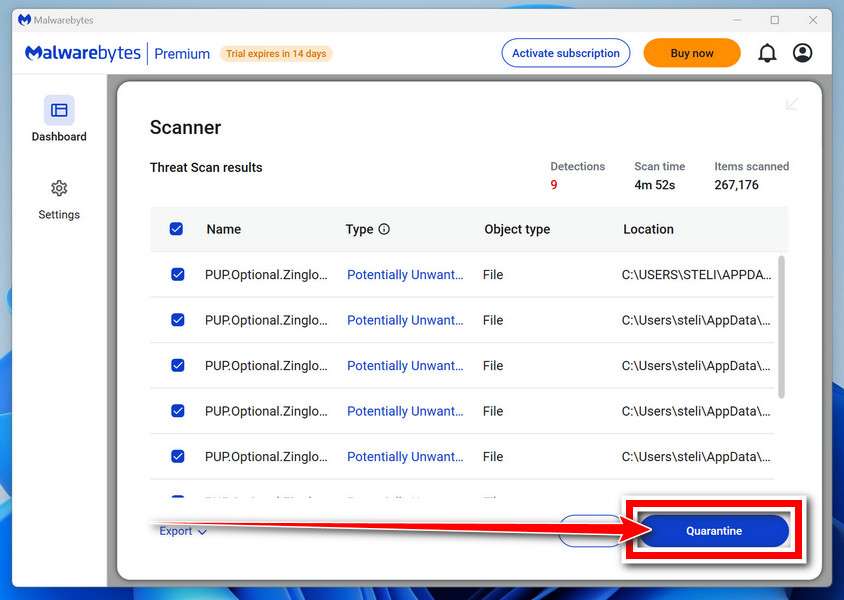
When the scan is done, you’ll see a list of everything Malwarebytes found — malware, adware, and potentially unwanted programs. Click the “Quarantine” button to remove all of them at once.
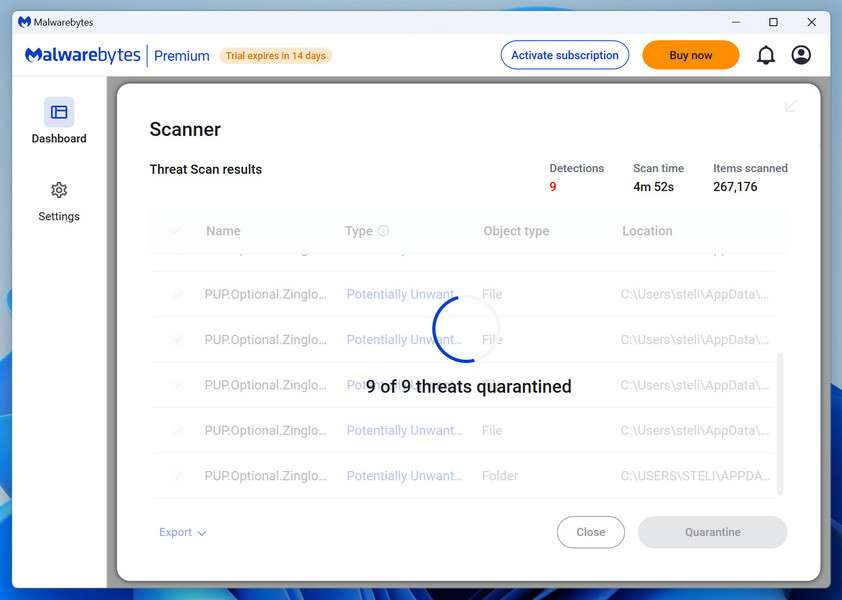
Malwarebytes will now remove the malicious files and registry entries and move them safely into quarantine.
-
Restart Your Computer
Some threats can only be fully removed after a reboot. If Malwarebytes asks you to restart, click Yes. Once you’re logged back in, Malwarebytes has finished removing the threats it found.
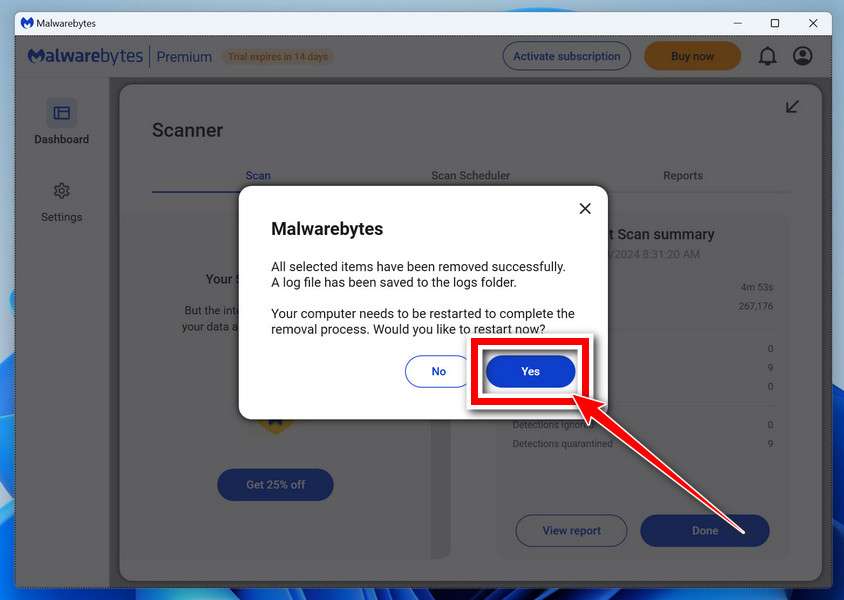
That’s it — your Windows PC is now clean of trojans, adware, and other malware, and should be back to running smoothly.
If you are still having problems with your computer after completing these instructions, then please follow one of the steps:
- Run a computer scan with ESET Online Scanner
- Ask for help in our Windows Malware Removal Help & Support forum.
Run a Malware Scan with Malwarebytes for Mac
Malwarebytes for Mac is a free on-demand scanner that removes the malware other security software tends to miss — adware, browser hijackers, and unwanted programs included. Cleaning an infected Mac with Malwarebytes has always been completely free, and it’s our go-to recommendation. Follow the steps below to scan and clean your Mac in just a few minutes.
-
Download Malwarebytes for Mac
Click the button below to download the latest version of Malwarebytes for Mac.
Download MalwarebytesOfficial installer for macOS. Your download starts right away.Want real-time protection? See Malwarebytes PremiumMalwarebytes Free for MacScans and removes malware at no cost -
Open the Malwarebytes setup file
When the download finishes, open your Downloads folder and double-click the setup file to begin the installation.

-
Follow the On-Screen Prompts to Install Malwarebytes
The Malwarebytes for Mac Installer will guide you through a few quick screens. Click “Continue” and keep following the prompts until the installation completes.



When the installation is complete, Malwarebytes opens to the Welcome to Malwarebytes screen. Click “Get started“.
-
Select “Personal Computer” or “Work Computer”
Malwarebytes will ask what type of computer you’re installing it on. Click either Personal Computer or Work Computer, whichever applies.

-
Start the Scan
Click the “Scan” button. Malwarebytes will automatically update its detection database and begin checking your Mac for malware.

-
Wait for the Scan to Finish
Malwarebytes will scan your Mac for adware, browser hijackers, and other malicious programs. This can take a few minutes, so feel free to do something else — just check back occasionally to see the progress.

-
Quarantine the Detected Threats
When the scan is done, you’ll see a list of everything Malwarebytes found. Click the “Quarantine” button to remove all the threats at once.

-
Restart Your Mac
Malwarebytes will now remove all the malicious files it found. Some threats can only be fully removed after a reboot — if Malwarebytes asks you to restart, allow it. Once you’re logged back in, your Mac is clean.

That’s it — your Mac is now free of adware, rogue browser extensions, and other potentially harmful software.
If you are still experiencing problems while trying to remove a malicious program from your computer, please ask for help in our Mac Malware Removal Help & Support forum.
Run a Malware Scan with Malwarebytes for Android
Malwarebytes for Android automatically detects and removes dangerous threats like malware and ransomware so you don’t have to worry about your most-used device being compromised. Aggressive detection of adware and potentially unwanted programs keeps your Android phone or tablet running smooth.
-
Download Malwarebytes for Android.
You can download Malwarebytes for Android by clicking the link below.
Get Malwarebytes for AndroidOpens Google Play in a new tab.Want real-time protection? See Malwarebytes Premium for AndroidMalwarebytes for AndroidScans your phone and removes malware at no cost -
Install Malwarebytes for Android on your phone.
In the Google Play Store, tap “Install” to install Malwarebytes for Android on your device.

When the installation process has finished, tap “Open” to begin using Malwarebytes for Android. You can also open Malwarebytes by tapping on its icon in your phone menu or home screen.

-
Follow the on-screen prompts to complete the setup process
When Malwarebytes will open, you will see the Malwarebytes Setup Wizard which will guide you through a series of permissions and other setup options.
This is the first of two screens that explain the difference between the Premium and Free versions. Swipe this screen to continue.
Tap on “Got it” to proceed to the next step.
Malwarebytes for Android will now ask for a set of permissions that are required to scan your device and protect it from malware. Tap on “Give permission” to continue.
Tap on “Allow” to permit Malwarebytes to access the files on your phone.
-
Update database and run a scan with Malwarebytes for Android
You will now be prompted to update the Malwarebytes database and run a full system scan.

Click on “Update database” to update the Malwarebytes for Android definitions to the latest version, then click on “Run full scan” to perform a system scan.

-
Wait for the Malwarebytes scan to complete.
Malwarebytes will now start scanning your phone for adware and other malicious apps. This process can take a few minutes, so we suggest you do something else and periodically check on the status of the scan to see when it is finished.

-
Click on “Remove Selected”.
When the scan has been completed, you will be presented with a screen showing the malware infections that Malwarebytes for Android has detected. To remove the malicious apps that Malwarebytes has found, tap on the “Remove Selected” button.

-
Restart your phone.
Malwarebytes for Android will now remove all the malicious apps that it has found. To complete the malware removal process, Malwarebytes may ask you to restart your device.
That’s it — your Android phone is now clean — no more malicious apps, adware, or browser redirects.
If you are still having problems with your phone after completing these instructions, then please follow one of the steps:
- Restore your phone to factory settings by going to Settings > General management > Reset > Factory data reset.
- Ask for help in our Mobile Malware Removal Help & Support forum.
Stay Protected: Block Ads and Malicious Sites
Now that your device is clean, keep it that way. Most infections start with a malicious ad or a fake download button — so blocking them at the source is your best defense.
We recommend AdGuard, which blocks malicious ads, phishing pages, and dangerous redirects before they can reach you.
👉 Download AdGuard and browse safely
Frequently Asked Questions
Did Bill Gates invent the AI Matrix secret button?
No credible source confirms that claim. The advertisements use manipulated media to attach his reputation to an unrelated sales funnel.
Can AI automatically earn $1,000 every day?
No software can guarantee that outcome. Income requires real economic activity, customers, costs, risk, and work that the presentation does not explain.
Why does the page change on another device?
The campaign may use cloaking to show aggressive content only to selected visitors while displaying safer material to investigators and reviewers.
Are AI Systems and Project Apollo AI the same offer?
They can appear as rotating destinations within similar promotions. Compare merchant details, terms, scripts, upsells, and support contacts rather than logos alone.
Is a money-back guarantee enough protection?
No. A guarantee has value only when the responsible company is identifiable, the conditions are reasonable, and support actually processes eligible refunds.
What if I received useful training?
Some generic material may have value, but that does not validate fabricated endorsements or guaranteed earnings used to sell it.
The Bottom Line
The Bill Gates AI Matrix story is a modular moneymaking funnel built from deepfake authority, vague automation, cloaked pages, and escalating sales offers.
Judge any AI opportunity by its real business model, total cost, legal operator, and documented outcomes, never by celebrity footage or an income counter.








