

If you’ve been on TikTok, Instagram, or YouTube lately, you’ve probably seen ads for Botane Hair Removal Cream—sometimes marketed under other names like Lovilds. These ads are everywhere, promising quick, painless hair removal and smooth skin in just 5 minutes.
It sounds ideal. No razors, no waxing, no pain. Just a fast, aloe-infused solution for hair-free skin. But is Botane really the miracle it claims to be—or is it just another online scam designed to lure unsuspecting buyers?
This in-depth review will uncover everything you need to know: how Botane works, the truth behind its marketing, red flags to watch for, and what to do if you’ve already made a purchase.
What Is Botane Hair Removal Cream?
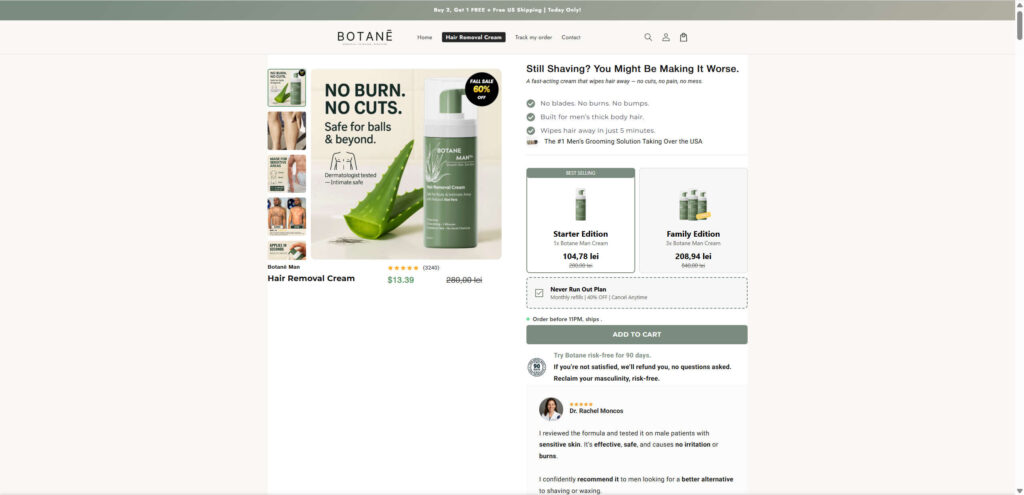
Botane (also appearing under the brand name Lovilds) is advertised as a men’s hair removal cream that eliminates hair quickly without shaving or waxing. Its product page highlights a 5-minute, no-burn, no-cut formula designed specifically for men’s thicker body hair.
The cream claims to deliver:
- Pain-free hair removal
- No razor burns or cuts
- Aloe-powered formula safe for sensitive areas
- Smooth, radiant skin in just minutes
- Slower regrowth compared to shaving
The Promise Behind Botane
The main marketing angle for Botane is convenience and safety. The brand promotes it as a “dermatologist-tested, intimate-safe” product designed for areas like the chest, legs, back, and groin. It emphasizes being gentle yet effective, highlighting that it’s formulated for men’s thicker, coarser hair.
The website also pushes the idea that shaving might be making things worse—suggesting that traditional razors cause irritation, faster regrowth, and even inflammation. By contrast, Botane claims to “wipe hair away” at the root level for smoother, longer-lasting results.
The Formula and Ingredients
According to the official site, Botane’s key active ingredients include:
- Aloe Vera – Soothes the skin and reduces irritation.
- Papaya Enzymes – Claimed to help break down hair proteins at the root.
- Natural Butters and Oils – Supposed to nourish and hydrate the skin barrier.
- Plant-Based Extracts – Marketed as being gentle for sensitive skin.
However, the ingredient list itself is not transparently shown anywhere on the site. This lack of full disclosure raises concern because legitimate cosmetic products must publicly list all ingredients for allergy and safety verification.
Marketing Tactics That Raise Questions
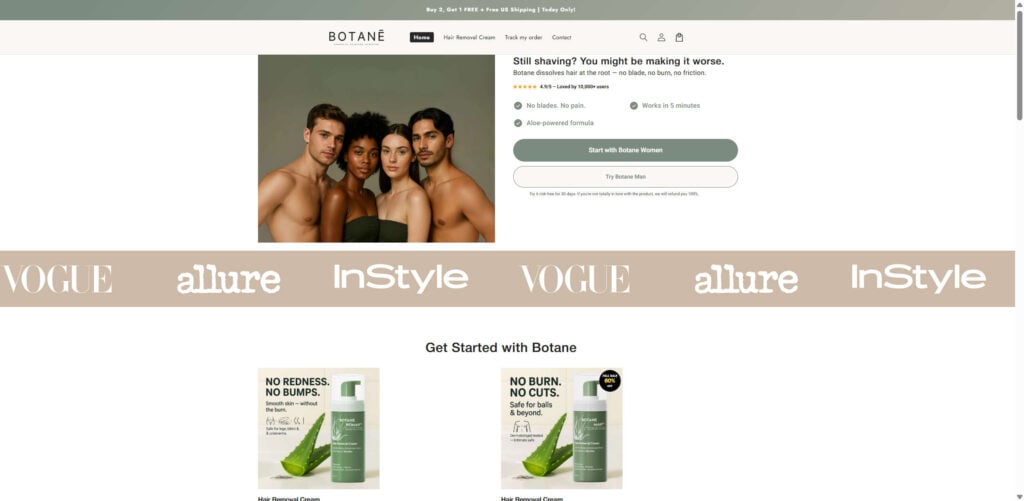
If you visit the Botane website, you’ll notice aggressive sales tactics designed to create urgency. These include:
- “Buy 2, Get 1 Free” offers
- Fake countdown timers claiming “sale ends today”
- Pop-ups showing recent purchases to imply high demand
- “60% Off” flash sales with no expiration details
These are classic signs of psychological marketing pressure, often seen on dropshipping or low-credibility websites. The site also hosts hundreds of five-star reviews—but almost none exist outside their own domain.
The Website and Domain Age
Independent web checks reveal that Botane’s website domain was registered only recently, within the past year. It has no verified business address, no phone number, and only a generic contact form.
In contrast, legitimate brands with dermatologist-approved cosmetic products typically have:
- A registered business address
- A customer service hotline
- Verified social media accounts
- Clear refund or shipping policies
Botane offers none of these in a verifiable way.
Social Media and Reviews
Despite its wide ad presence, Botane has no official, active social media pages with organic engagement. There are no real customer photos or user-generated videos demonstrating genuine results.
Furthermore, while the official site boasts a 4.7-star average rating across thousands of supposed buyers, independent review platforms like Trustpilot or Reddit show zero verified customer feedback.
That’s a serious discrepancy that makes the legitimacy of those on-site testimonials questionable.
Is Botane a Rebranded or “White-Label” Product?
Many experts suspect Botane is part of a white-label marketing strategy. In this model, generic creams are produced in bulk overseas, then rebranded under multiple different names—like Lovilds, Betain, or Botane—to appear as unique products.
These websites often look identical, share the same design, and feature AI-generated before-and-after images. Once one site gains negative attention, a new domain launches to keep sales flowing.
This tactic allows companies to dodge refund requests or complaints, leaving buyers with little recourse once the website disappears.
How the Operation Works
To understand whether Botane Hair Removal Cream is legitimate, it’s helpful to break down exactly how the business and marketing model works—from the first ad you see to the moment your money leaves your account.
Here’s a detailed look at each stage:
Step 1: Aggressive Targeted Advertising
The campaign starts with a flood of video ads across social platforms—TikTok, Facebook, Instagram, and YouTube Shorts. The ads feature attractive models, voiceovers, or testimonials claiming dramatic results after using the product for just five minutes.
Key claims include:
- “No pain. No burn.”
- “Safe for sensitive skin.”
- “Dermatologist tested.”
- “Works on thick male hair.”
Many of these ads use AI-generated visuals or stock video clips with subtitles, making them appear professionally made. The goal is to build trust fast and spark impulse purchases.
Step 2: Clickthrough to Multiple Identical Websites
When you click an ad, you may land on one of several nearly identical websites, all selling the same product under slightly different names.
These domains include variations like:
- BotaneMan.com
- LovildsSkin.com
Each one claims to be the “official” site, but they use identical product descriptions, photos, and testimonials. This is a telltale sign of a rotating domain scam, where the same company operates under multiple names to appear widespread and trustworthy.
Step 3: High-Pressure Checkout Tactics
Once on the site, customers are met with:
- Flashing countdown timers (“Sale ends in 10 minutes”)
- Pop-up notifications (“John from Texas just bought 3 bottles!”)
- “Buy 2, Get 1 Free” bundles
- Claims of “Free shipping if you order today”
These are psychological triggers designed to push you into completing the purchase quickly before you have time to research or think twice.
In most cases, there’s also a “Never Run Out Plan” checkbox already pre-selected—subscribing you to an automatic refill plan without clear consent.
Step 4: Payment and Confirmation
After checkout, buyers receive a generic email confirmation without any company address, phone number, or detailed invoice.
Shipments may take several weeks to arrive, and tracking numbers often come from unfamiliar or untraceable logistics companies.
In some reported cases, buyers never receive their product at all. Others claim that what they received was a small, unbranded bottle with no ingredient label or safety seal.
Step 5: Lack of Support or Refund Options
When customers try to contact support for refunds or cancellations, they often find:
- Emails go unanswered
- Contact forms produce no reply
- No phone support is available
- Refund policies require “proof of unopened product”
Essentially, once you’ve paid, your options are limited.
Step 6: Rebranding and Restart
If too many complaints accumulate or the site gets flagged on social media, the operators often abandon the domain and launch a new one.
This rebranding cycle allows them to continue selling the same formula under a fresh name—avoiding bad press or scam reports.
It’s a classic digital rinse-and-repeat strategy, seen in countless viral “miracle product” scams.
Step 7: The Illusion of Legitimacy
What keeps this operation running is the illusion of legitimacy. Everything from the website design to the customer reviews and “doctor testimonials” is crafted to look authentic.
For example:
- A supposed dermatologist named Dr. Rachel Moncos is quoted on the site praising the formula. However, there’s no verified medical professional by that name in any public medical database.
- Before-and-after images are likely AI-generated or stock photos reused across similar product websites.
- Product images use generic packaging templates with slightly altered labels.
This carefully constructed image helps the site bypass skepticism long enough to secure thousands of quick sales before vanishing or rebranding again.
What To Do If You Have Bought Botane
If you’ve already bought Botane Hair Removal Cream—or suspect you might have fallen for a misleading ad—here’s what you should do immediately.
1. Check Your Transaction Details
Locate the exact charge on your bank or credit card statement. Note:
- The merchant name
- The transaction date
- The amount charged
If the name looks unusual or doesn’t match “Botane” directly, that’s a sign it may be processed through a third-party vendor.
2. Cancel Any Auto-Renewal or Subscription
Some users reported being automatically signed up for a monthly refill plan without clear consent.
To stop further charges:
- Log into your order confirmation email and look for any “Manage Subscription” or “Cancel” link.
- If none exists, contact your bank or credit card provider to block recurring payments.
3. Request a Refund or Dispute the Charge
Contact the seller through their official website contact form. Keep your messages short, polite, and to the point. Example:
“I would like to request a refund for order [Order ID]. The product did not meet my expectations and I do not wish to receive additional shipments.”
If you don’t receive a response within 48 hours, initiate a chargeback through your payment provider. Explain that you suspect deceptive advertising or a non-delivered product.
4. Save All Documentation
Keep screenshots of:
- The website you purchased from
- The order confirmation
- Any ads or videos you saw
- All email correspondence
This documentation is essential for proving your case during a chargeback.
5. Report the Website
To help others avoid falling victim, report the website to:
- FTC (Federal Trade Commission) if in the U.S.
- Action Fraud if in the U.K.
- Your country’s consumer protection agency
You can also report the ad to the platform where you saw it (Facebook, TikTok, etc.) for misleading or deceptive content.
6. Test the Product Safely (If You Received It)
If the product did arrive and you still wish to try it, follow extreme caution:
- Perform a patch test on a small area of skin for 24 hours.
- Avoid using it on sensitive or intimate areas until confirmed safe.
- Stop immediately if redness, burning, or irritation occurs.
Remember, without verified lab testing or FDA approval, there’s no guarantee the formula is safe.
7. Replace It With Verified Alternatives
If your goal is smooth, irritation-free skin, consider switching to well-established brands like:
- Nair for Men Hair Removal Cream
- Veet for Men
- Gillette Intimate Hair Removal Cream
These are tested, widely available, and sold by verified retailers with real customer support.
The Bottom Line: Should You Buy Botane Hair Removal Cream?
After analyzing the marketing, domain records, customer feedback (or lack thereof), and operational red flags, it’s clear that Botane Hair Removal Cream should be approached with extreme caution.
While the product’s promises of pain-free, quick, aloe-based hair removal sound appealing, the lack of transparency and legitimacy indicators makes it highly suspicious.
Here’s a summary of the key takeaways:
- Multiple identical websites under different names (Botane, Lovilds, Betain)
- No verified business address or phone number
- No genuine reviews outside the company website
- AI-generated images and unverified “doctor” testimonials
- Recent domain registration and unclear refund process
If you value your money and your skin’s safety, it’s best to avoid purchasing Botane Hair Removal Cream until there’s solid, independent proof of its authenticity and effectiveness.
Stick with trusted, dermatologist-approved brands that provide clear ingredient lists, verified reviews, and established customer service.

Join the discussion
0 commentsShare your experience or ask a question about this article.
Discussion
Start the conversation
Have a question or something useful to share? Add the first comment.