

It sounds like a dream come true: open your phone, click three times, and start earning hundreds of dollars daily — all from the comfort of your home or your favorite coffee shop. The Cell Phone Profits promises just that, claiming it can help anyone launch a profitable online business using only a phone and a WiFi connection.
But the reality is far less glamorous. The so-called “3-Minute Phone Habit” isn’t a revolutionary business model — it’s a deceptive online scam repackaging free information and false hope into a $67 product. If you’ve come across Cell Phone Profits or similar systems, this in-depth investigation will expose how it really works, what’s behind the curtain, and what to do if you’ve already been tricked.

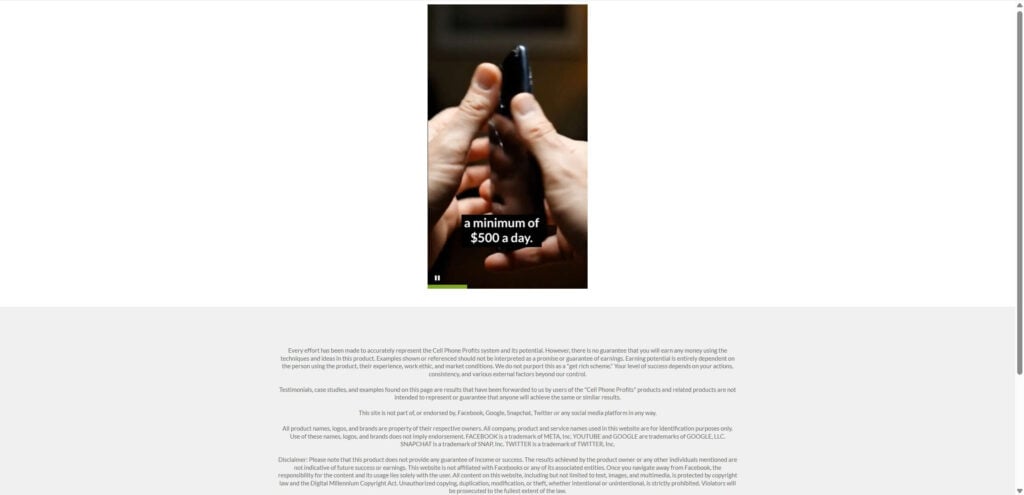
What Is the Cell Phone Profits?
The Cell Phone Profits, marketed at profitwithphone.com, promotes itself as a step-by-step training program that teaches beginners how to launch an online business using nothing more than a WiFi connection. It claims to provide AI-powered tools, pre-designed pages, and “viral” video templates that simplify everything.
The core pitch revolves around ease: no experience needed, no technical knowledge required, and — most alluring of all — no actual work. All you have to do is follow a 3-click process and the money starts rolling in.
Key Claims and Selling Points
- Set up a business with 3 clicks
- AI tools generate content and manage tasks
- Viral video templates create instant traffic
- 100% beginner-friendly
- No inventory, customer service, or sales experience needed
- One-time $67 payment
- 60-day no-questions-asked refund guarantee
These claims are presented with slick marketing, feel-good stories, and vague success testimonials that are impossible to verify.
What’s Actually Being Sold
After watching the promotional video or clicking on one of the many ads floating around TikTok, YouTube, or Instagram, you’ll eventually land on a checkout page. Here, you’re asked to pay $67 for lifetime access to Cell Phone Profits.
What you receive is a basic affiliate marketing starter kit:
- A set of PDF guides or videos explaining how to sign up for affiliate platforms
- Pre-made pages that promote third-party products
- Very basic “AI tools” that either don’t work or simply reuse public content
- Training that suggests using free traffic methods like Reddit, Facebook Groups, or TikTok
There is nothing original or proprietary about the material. Much of it can be found for free with a simple Google search or on YouTube.
Why It’s a Scam
Cell Phone Profits fits all the classic patterns of a digital scam:
- False advertising: There is no system that can generate money with 3 clicks.
- Emotional manipulation: The sales copy is designed to target people struggling financially.
- Fake scarcity: The video implies the opportunity could disappear at any moment.
- No real value: The content is generic, low quality, and not worth $67.
- Disguised upsells: Some users report being pitched additional tools or “premium” content shortly after purchase.
- No transparent creators: There’s no real information about who runs Cell Phone Profits. The names and photos used in the video are stock or entirely fabricated.
Like many online get-rich-quick schemes, Cell Phone Profits relies on hype, not substance.
This scam has first been investigated by Jordan Liles on his YouTube channel, where he offers a detailed video on the subject. We recommend watching his content for a comprehensive understanding of the scam.
Next, let’s break down exactly how scammers carry out this scam from start to finish.
How the Scam Works
Step 1: Eye-Catching Ads
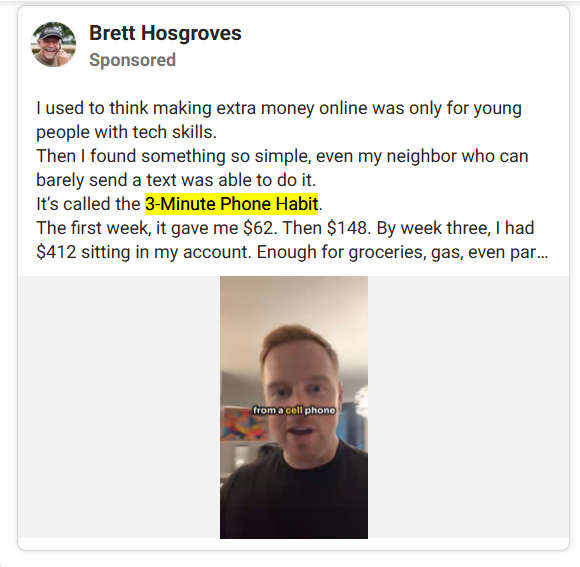
It begins with an ad on TikTok, Instagram, or YouTube. You might see:
- Someone receiving multiple payment notifications on their phone
- A story of a single mom or laid-off worker who discovered the “3 clicks process”
- A dramatic statement like “I was broke… now I make $500 a day using WiFi”
These ads use emotional appeals and visual hooks to lure you in.
Step 2: Landing Page With Big Promises
Clicking the ad takes you to a landing page on Cell Phone Profits. The page claims you’ll learn how to build a “hands-free” online business using your phone, tablet, or laptop. You’re told it’s:
- Effortless
- Fast
- Risk-free
You’re then prompted to watch a “limited-time” video. These videos are filled with buzzwords, dramatic music, and promises of AI tools and automation — but no real details on how it actually works.
Step 3: The Long Sales Video
The video is vague and drawn out. It follows a familiar structure:
- Introduce a relatable narrator (usually unnamed or fictitious)
- Share a backstory of hardship followed by sudden success
- Mention “AI,” “automation,” and “secret tools”
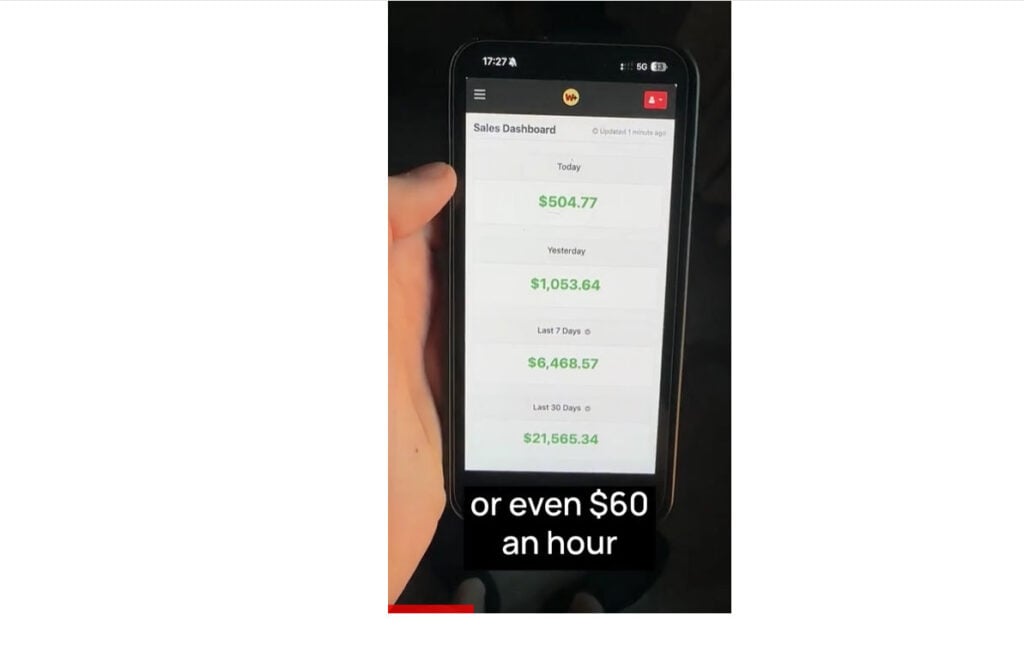
- Show screenshots of income, none of which are verifiable
Eventually, you’re prompted to “Act now” and buy the Cell Phone Profits for $67.

Step 4: Payment via Digistore24
The payment is processed through Digistore24, a platform often used by shady internet marketers. While Digistore24 is a legitimate payment processor, they don’t verify the quality or legitimacy of the products sold.
Step 5: Access to Useless Content
Once you pay, you’re given access to:
- Low-quality PDF guides or video tutorials
- An “AI assistant” that’s either non-functional or just a repurposed chatbot
- Templates for landing pages that require more tools to actually use
There’s no step-by-step system that matches what was promised. Instead, you get a set of outdated affiliate marketing basics.
Step 6: Upsells and Abandonment
Some users are presented with upsells immediately after purchasing. These can include “advanced tools,” “traffic hacks,” or coaching packages — all of which are just more low-value content.
Support is either unresponsive or refers you to a generic helpdesk email, which often ignores refund requests.
Recycled Scams: From Dumb Money to Cell Phone Profits
One clear sign that the 3-Minute Phone Habit Scam is fake is that it’s not new. The same scammers have been running identical schemes under different names for years. Their latest version is being promoted through ProfitWithPhone.com, also called Cell Phone Profits — a rebranded copy of older scams like Dumb Money System, WiFi Profits App, and Automatic Cash Machine.
Each version follows the same pattern: a slick video promising that you can earn hundreds of dollars a day from your phone, no skills or selling required. The video uses emotional stories, fake testimonials, and fabricated “success screenshots” to make the scam seem credible. Once you pay the small “activation fee,” you receive nothing but a useless PDF or generic marketing guide you could find for free.
The websites change names every few months — from DumbMoneyWorks.com to WiFiProfitsApp.com to ProfitWithPhone.com — but the message, layout, and payment funnel remain identical. The goal is always the same: trick people into paying for an illusion of effortless income.
If you’ve seen ProfitWithPhone.com or any site claiming a “3-minute phone habit” or “WiFi trick” that makes automatic money, it’s just another recycled scam with a new coat of paint.
What To Do If You’ve Been Scammed by Cell Phone Profits
If you’ve fallen for the Cell Phone Profits, here’s a clear, step-by-step guide to protect yourself and possibly recover your money:
1. Request a Refund via Digistore24
- Visit https://www.digistore24.com/en/home/support
- Locate your purchase receipt (from your email)
- File a refund request with a clear message stating you were misled
- Reference the 60-day money-back guarantee
2. Dispute the Charge with Your Bank
- Contact your credit card company or payment provider
- Report the transaction as fraudulent or misleading
- Ask for a chargeback and include proof (screenshots, ad claims, purchase receipt)
3. Report the Scam
- FTC (U.S.): https://reportfraud.ftc.gov
- Better Business Bureau: https://www.bbb.org
- Internet Crime Complaint Center (IC3): https://www.ic3.gov
- Reddit forums: Warn others in subreddits like r/scams or r/antimlm
4. Post Honest Reviews
- Leave a review on Trustpilot or ScamAdviser
- Mention specifics: misleading claims, poor content, ignored refunds
- Use keywords like “Cell Phone Profits Scam” to improve visibility
5. Protect Your Devices and Accounts
- Run antivirus and anti-malware scans
- Change passwords used during signup
- Monitor for suspicious activity on associated accounts
6. Learn From the Experience
- Always research before buying online products
- Look for independent reviews (not testimonials on the sales page)
- Avoid offers that promise fast money with little or no effort
Frequently Asked Questions About the Cell Phone Profits Scam
What is the Cell Phone Profits System?
The Cell Phone Profits System is a deceptive online product marketed as a way to make money using just your phone or laptop and a WiFi connection. It claims users can earn income by following a simple “3-minute phone habit,” but in reality, it delivers generic affiliate marketing advice already available for free.
Is the “3-minute phone habit” real?
No, the so-called “3-minute phone habit” is a marketing gimmick. There is no legitimate income-generating system that can be set up in three clicks. This phrase is used to make the product sound simple and appealing while hiding the lack of real value.
What do you actually get after purchasing Cell Phone Profits?
After paying $67, users typically receive access to basic training videos, downloadable PDFs, and some pre-made promotional templates. These materials provide outdated or freely available information and do not include any automation, AI functionality, or guaranteed results.
Who is behind the Cell Phone Profits System?
The creators hide behind fake names and generic personas. There is no verifiable information about the individuals running the system, and the lack of transparency is a major red flag.
Is Cell Phone Profits affiliated with any real companies?
No. Although the system references AI tools and marketing strategies, it is not affiliated with OpenAI, Google, or any credible affiliate networks. It is a standalone operation using deceptive marketing tactics.
Can you get a refund for Cell Phone Profits?
In theory, the sales page offers a 60-day money-back guarantee. In practice, many users report difficulty reaching support or receiving a response. Refunds must be requested through Digistore24, the payment processor.
How do I request a refund?
Go to Digistore24’s support page at https://www.digistore24.com/en/home/support and submit a request with your transaction ID. Explain that the product did not match the advertising claims and request a full refund.
Are there legal risks if I used my credit card?
There are no legal risks for you as a victim, but you should monitor your statements for unauthorized charges and dispute any suspicious activity with your bank.
What should I do if I’ve been scammed?
Request a refund from Digistore24, file a chargeback with your bank, report the scam to the FTC or your local consumer protection agency, and leave honest reviews to warn others. Also, secure your device and change any passwords you used during the transaction.
The Bottom Line
Cell Phone Profits isn’t the path to financial freedom — it’s a well-designed scam built on flashy marketing and empty promises. It uses emotional hooks, fake urgency, and buzzwords like “AI” and “3 clicks” to get your money, only to deliver subpar content and non-functional tools.
This scam is part of a broader trend of rebranded digital fraud. Whether it’s called Cell Phone Profits, Dumb Money, Mobile Paydays, or something else, it’s always the same model: overpromise, underdeliver, disappear.
If you’ve already paid, act fast to request a refund and report the scam. And most importantly, protect others by sharing your experience.
The internet can be a powerful tool for income — but only when used with caution, critical thinking, and thorough research. There are no shortcuts to real success.

Join the discussion
6 commentsShare your experience or ask a question about this article.
Discussion
I just got scammed by those Creep balls. Took my $67 and all. Now I have to find a way to get my money back, it’s really crazy I can’t believe it. I should have known better like, how am I going to get money like that everyday with just pushing the button? This is really disappointing because I didn’t have 67 dollars to jerk off like that. I thought I was getting a profit by buying the stupid app to make money that I know that’s impossible because if that was the case everybody on this planet would be rich.. how can I be so stupid?
In reply to MESWAYLA LAWRENCE
Hi, I’m really sorry this happened to you.
Please don’t blame yourself. These scams are designed to sound easy, urgent, and believable enough to catch people when they are hoping for a real opportunity. The important thing now is to act fast: contact your bank or card issuer, explain that you were misled, and ask to dispute the $67 charge. Also ask them to block any future charges from the same merchant in case they try billing you again.
If you still have the email receipt, checkout page, or any messages from the seller, save screenshots of all of it. That evidence can help with the dispute.
I go by if ” it sounds too good to be true it probably is”, there is no such thing as free money. I see their video on YouTube, watched it to the end, the $30 off hook at the end and so many minutes till I lose my spot. Dead giveaway, if it was real there would not be a time limit. Googled your Malware Add too reassure myself. Glad I did, thank you.
In reply to Gary Olejniczak
Thanks for sharing that. The fake urgency timers and “limited spots” scripts are classic pressure tactics. Glad you checked before spending money.
Thank you Thomas Orsolya for all the hard and long time research work that you have done and still continue to do, to help people from being scammed. Thank you again for your time and patience, support, understanding, care, compassion for the regular every day hard working citizens like myself.
In reply to Ranarda Briscoe
Thank you, Ranarda. We appreciate you taking the time to say this. Helping people avoid scams and recover from them is exactly why we publish these investigations.