

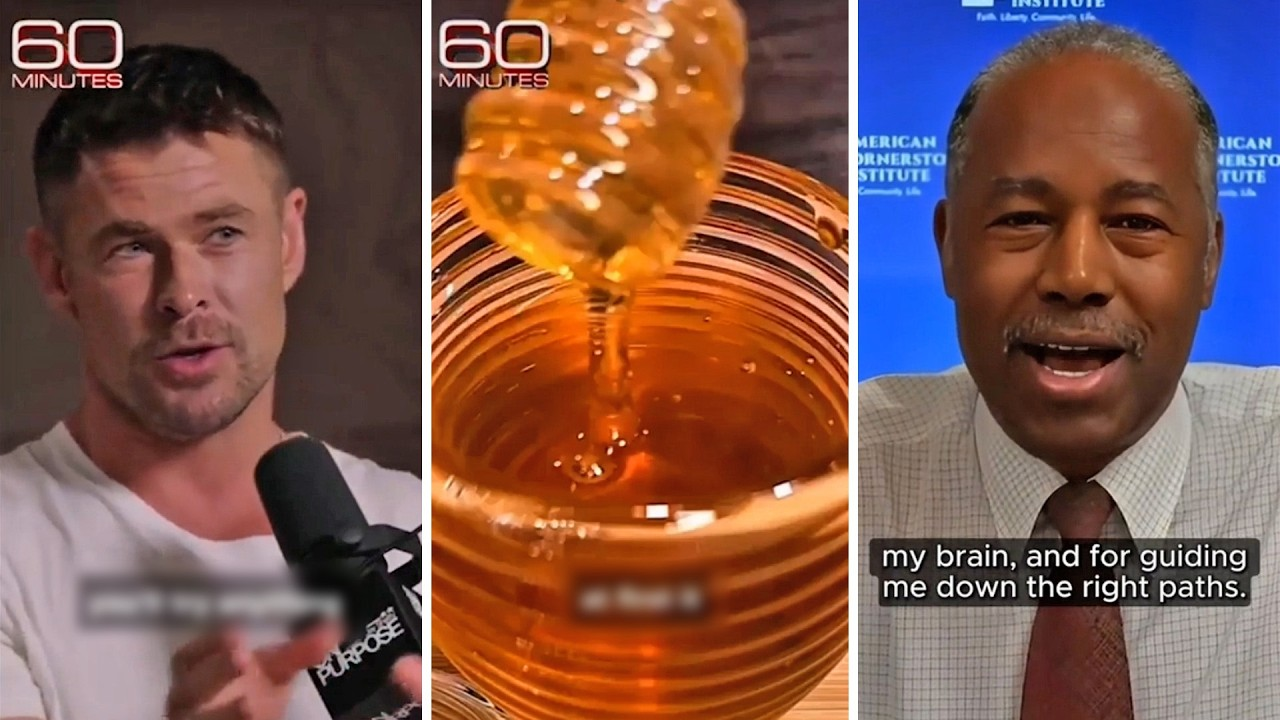
Chris Hemsworth speaks with unusual seriousness, a famous television logo fills the corner, and a doctor appears to explain a startling memory breakthrough.
The clip borrows details from a real health story, then blends them with claims that deserve much closer examination before anyone trusts the apparent interview.
Overview
The advertisement exploits a real genetic-risk disclosure
Chris Hemsworth publicly learned that he carries two copies of the APOE4 gene variant. That can increase Alzheimer’s risk, but it is not an Alzheimer’s diagnosis.
The scam strips away that distinction. It turns a nuanced conversation about risk, family history, and prevention into a dramatic story about a secret cure.
Because the first detail is real, the invented material that follows can feel plausible. This truth-first construction is common in sophisticated impersonation campaigns.
The “60 Minutes” report was fabricated
The video uses a “60 Minutes” style frame and apparent interview footage. It presents a honey protocol as though journalists, doctors, and celebrities independently confirmed it.
No credible broadcast record supports the segment shown in the advertisement. A real network investigation would appear on the network’s website, verified accounts, and program archive.
Scammers do not need to copy an entire episode. Short clips, logos, synthetic voices, subtitles, and unrelated footage can manufacture a convincing social-media excerpt.
The story can sell several interchangeable supplements
The pitch has been linked with names such as MemoTril, Memo Genesis, and Memo Master. Those labels are secondary to the reusable celebrity narrative.
After one product attracts warnings, a different bottle can replace it without changing the supposed interview, honey imagery, medical conspiracy, or emotional promise.
- Chris Hemsworth is used as the personal witness.
- “60 Minutes” supplies borrowed journalistic authority.
- A doctor or institution provides apparent medical approval.
- Honey makes the discovery feel natural and accessible.
- A rotating supplement becomes the paid solution.
What Chris Hemsworth Actually Disclosed
Hemsworth’s genetic testing became public through legitimate media coverage connected with his documentary work. The finding concerned elevated statistical risk associated with APOE4.
Risk is not certainty. Genes can influence probability without establishing that a person currently has dementia or will inevitably develop it.
The fake advertisement collapses those distinctions. It may imply Hemsworth, his father, or another family member faced a confirmed disease that a honey protocol could have prevented.
That emotional rewrite supplies the story with stakes. Viewers who recognize the real headline may not notice when the narrative crosses into fiction.
Nothing about a celebrity’s genetic result validates a supplement. Product evidence must come from transparent trials involving the exact formula, dose, population, and measurable outcomes.
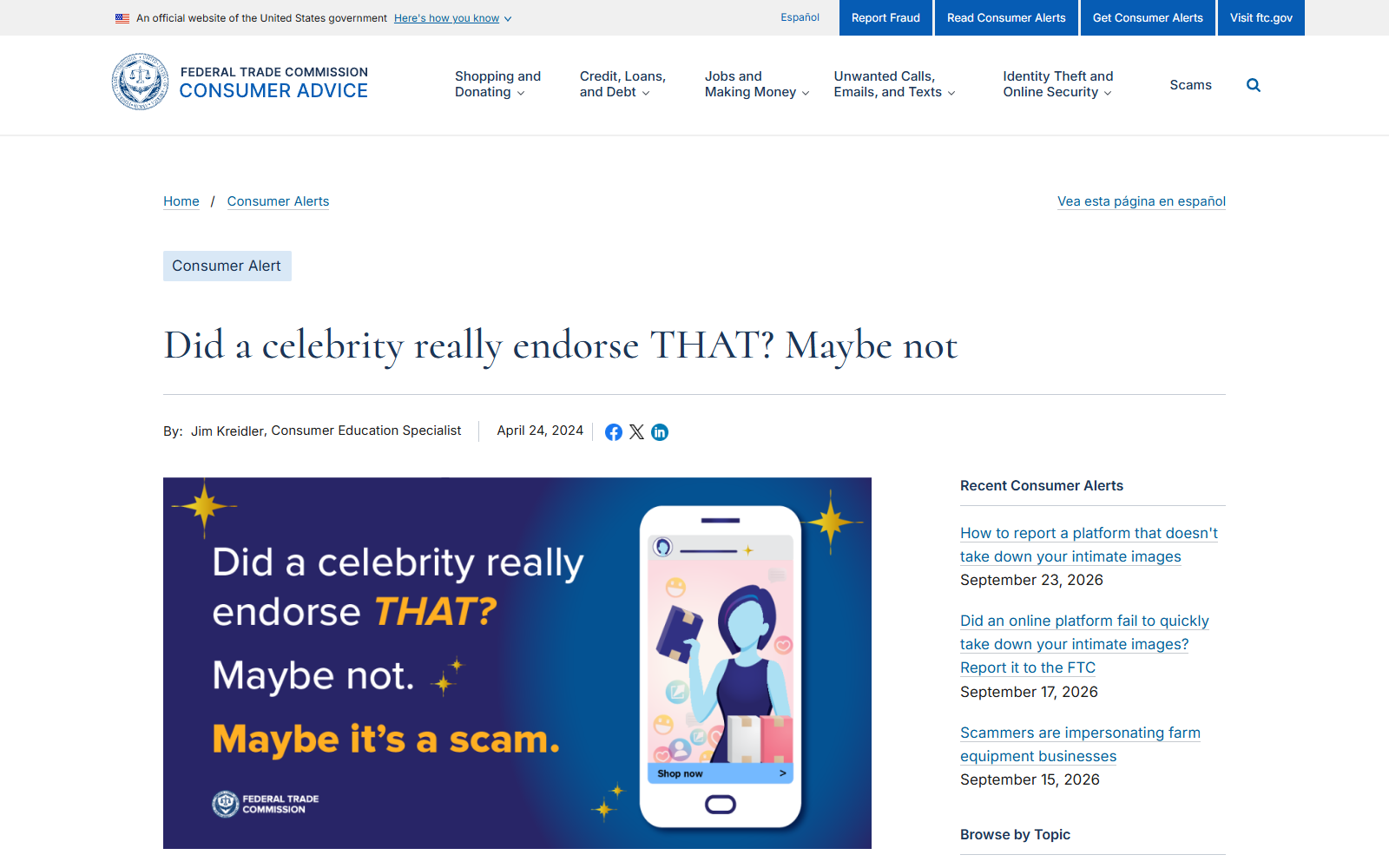
The FTC warns consumers that scammers use doctored audio and video to create endorsements that look and sound genuine. Independent verification is now essential.
Search the celebrity’s verified channels, the broadcaster’s archive, and the named institution. If all roads lead back to the same sales funnel, the authority is manufactured.
Do not let a familiar face replace evidence. Celebrities are not responsible for diagnosing viewers, testing the bottle, or resolving an order dispute.
The “Asian Honey Protocol” Does Not Add Up
The advertisement describes an Asian honey protocol, gold trick, detoxification method, or ingredient that supposedly removes harmful material from the brain.
Some versions claim the method performs better than donepezil or restores memory within three weeks. Others invoke Stanford, a hidden study, or a censored discovery.
Those are extraordinary disease-treatment claims. They require extraordinary clinical evidence, not a video montage, animated brain scan, celebrity voice, or testimonial carousel.
The FDA states that no cure has been shown to stop or reverse Alzheimer’s progression. Approved medicines may help symptoms or slow progression in certain patients.
A dietary supplement advertised to cure or reverse a disease is not transformed into an approved treatment by calling its ingredients natural.
The promised home recipe is also slippery. Viewers wait for exact ingredients, yet the explanation usually pivots toward a proprietary bottle that cannot be reproduced at home.
How the Chris Hemsworth Alzheimer’s Scam Works
Step 1: A real interview provides authentic raw material
Scammers begin with genuine clips of Hemsworth discussing health, family, genetics, or aging. Familiar footage lowers suspicion because viewers may remember seeing related headlines.
They can crop out the original context, replace the audio, and add subtitles describing an entirely different conversation.
The finished clip retains authentic lighting, facial movement, and camera work. Only the meaning has been changed.
Step 2: “60 Minutes” branding turns a clip into a report
A logo, countdown motif, presenter introduction, and newsroom graphics make the material appear editorial. The viewer assumes producers checked the claims before broadcast.
The page may use a generic domain unrelated to CBS. Navigation can be decorative, and the video may lack ordinary controls that permit easy skipping.
Borrowed branding does the verification work that the seller cannot. Once viewers believe the network investigated the story, the product receives unearned credibility.
Step 3: AI invents a conversation between trusted people
A synthetic Hemsworth voice describes a frightening discovery. A doctor appears to explain the cause, while captions ensure viewers absorb the intended claim.
Ben Carson, Sanjay Gupta, or other recognized figures may appear in variations. Their presence does not prove consent, participation, or endorsement.
Separate clips can be assembled to resemble one continuous interview. Reaction shots hide transitions where the audio or speaker changes.
Step 4: The story offers hope through a simple ritual
Honey is visually comforting and familiar. Calling the method ancient, Asian, biblical, or forgotten makes it sound both safe and unfairly overlooked.
The narrator contrasts the ritual with prescription treatment, sometimes suggesting pharmaceutical interests concealed the discovery.
This conspiracy framing discourages outside verification. Any criticism can be dismissed as part of the alleged suppression.
Step 5: The ritual becomes a proprietary supplement
After a long delay, the narrator explains that ordinary honey lacks the correct concentration, purity, or companion ingredient. The free solution now requires a purchase.
The product can be MemoTril today and another label tomorrow. Its sales page may use restrained “cognitive support” language that contradicts the video’s cure claims.
That separation is useful to advertisers. The most extreme promises appear upstream, while the checkout presents a conventional supplement and disclaimer.
Step 6: Bundle pricing and upsells increase the loss
Buyers may see a low per-bottle price attached to a six-bottle package. The visual emphasis can obscure the much larger total transaction.
Post-purchase screens may offer activators, companion products, or extra supplies. Each acceptance can create a separate charge or shipment.
Do not assume a back button reverses an order. Read confirmations and contact the merchant immediately when the quantity or total is wrong.
Step 7: The funnel rotates when scrutiny arrives
Social accounts, domains, doctors, and bottle labels can change quickly. The campaign survives because the celebrity and miracle-story framework is modular.
That is why a story-focused warning remains useful. Consumers can recognize the mechanism even after the current product disappears.
The lasting rule is simple: no AI celebrity clip can prove a disease cure, a clinical result, or a seller’s honesty.
Company, Address, and Fulfillment Checks
The advertisement is not the merchant
The social-media account running the clip may be an affiliate. The landing page, supplement seller, checkout processor, and fulfillment company can be separate businesses.
Record each name and domain. Responsibility cannot be assessed accurately if every participant is treated as one company.
Product names are intentionally unstable
MemoTril and similar labels have appeared inside this narrative, but a name alone does not establish a shared manufacturer or legal entity.
Compare the bottle label, checkout footer, receipt, privacy policy, return instructions, and statement descriptor. Differences should be resolved before the product is used.
Contact details may lead only to outsourced support
A toll-free number can service many products through scripted agents. Ask who legally accepted the payment and who is responsible for adverse events.
Test the email before ordering. Request the return address, bottle-count rules, cancellation procedure, and written confirmation that the purchase is one-time.
A fulfillment center does not verify the formula
Packages may ship from a domestic warehouse even when the advertiser, manufacturer, and payment processor operate elsewhere. Shipping origin does not establish product origin.
Look for a complete Supplement Facts panel, lot code, manufacturer or distributor, warnings, and traceable quality information. Missing accountability can turn a refund issue into a health issue.
How to Verify a Celebrity Health Video
- Search the exact quote outside the advertisement.
- Check the celebrity’s verified website and social accounts.
- Find the segment in the broadcaster’s official archive.
- Confirm the doctor’s identity and professional affiliation.
- Search the claimed study in a recognized research database.
- Compare the video claim with the checkout disclaimer.
- Inspect the domain instead of trusting copied branding.
- Ask a clinician before changing treatment or taking a supplement.
Deepfake detection tools can provide clues, but they are not perfect. Independent source confirmation is stronger than any automated score.
Why Genetic-Risk Stories Are Powerful Scam Material
Genetic information sounds precise because it comes from laboratory testing. Yet a risk variant does not behave like a countdown clock or guaranteed diagnosis.
APOE4 is associated with Alzheimer’s risk, but genes interact with age, health, environment, and other factors. Individual outcomes cannot be predicted by a sales video.
Scammers exploit the gap between statistical risk and everyday understanding. “Higher likelihood” quietly becomes “disease is coming” before the supposed solution appears.
The story then offers emotional control. A frightening possibility is paired with a simple action, allowing the viewer to feel that disaster can be prevented immediately.
Celebrity involvement magnifies that effect. If someone wealthy and famous supposedly found the answer, viewers may assume the method had access to elite doctors and research.
That assumption is manufactured. Wealth, fame, and a recognizable face do not establish clinical effectiveness for an unnamed formula.
The advertisement may also blur prevention, symptom support, treatment, and cure. These are different claims requiring different evidence.
A supplement might contain ingredients studied for general nutrition without proving that the finished product prevents dementia or changes Alzheimer’s progression.
People with family history deserve careful counseling, not panic. A clinician can explain what a result means, whether further evaluation is appropriate, and which actions are evidence-based.
Before sharing genetic data with any commercial funnel, read its privacy policy. Health-related information can be unusually sensitive and valuable for targeted marketing.
A fake documentary does not provide privacy safeguards, informed consent, or clinical follow-up. Its purpose is to move attention toward a transaction.
What to Do if You Have Fallen Victim to This Scam
- Preserve the video and destination. Save the ad, account name, domain, checkout, product label, receipt, shipping label, and all messages.
- Separate every charge. Identify the original order, upsells, shipping, and later renewals. Note the exact statement descriptor for each transaction.
- Request cancellation in writing. State the quantity expected, amount authorized, misleading claims, and resolution requested. Ask for a return authorization before shipping.
- Contact the card issuer. Explain unauthorized or materially misrepresented charges. Ask whether future payments from the same merchant can be blocked.
- Do not begin an uncertain supplement. Ask a pharmacist or clinician to review the ingredients, especially when prescriptions or chronic conditions are involved.
- Seek care for symptoms. Report serious adverse reactions through FDA MedWatch and retain the bottle, lot number, and remaining capsules.
- Protect the email account. Change reused passwords, enable multifactor authentication, and watch for fake refund or delivery messages.
- Inspect the device. Use Malwarebytes after suspicious downloads, notification prompts, or extensions. Remove unfamiliar applications and browser permissions.
- Block repeat advertising. AdGuard can reduce malicious ads and tracking, but continue checking identities and domains manually.
- Report every impersonated party. Notify the platform, FTC, FDA, broadcaster, and celebrity’s official representatives where reporting channels exist.
Approach anyone offering guaranteed recovery with suspicion. A second scammer may already know the product name, amount, phone number, or email from shared lead data.
A real refund does not require remote access, an advance payment, gift cards, or cryptocurrency. Work through the card issuer and documented merchant channels.
Frequently Asked Questions
Does Chris Hemsworth have Alzheimer’s disease?
Public reporting says he learned about an elevated genetic risk involving APOE4. That is not the same as a current Alzheimer’s diagnosis.
Did Chris Hemsworth endorse a honey dementia cure?
No verified endorsement supports the advertisement. The footage was repurposed or manipulated to create a sales narrative he did not authentically deliver.
Did 60 Minutes broadcast this Alzheimer’s report?
No credible program archive supports the segment shown in the scam. The campaign borrowed the show’s visual identity to appear independently verified.
Can honey reverse Alzheimer’s disease?
No reliable evidence establishes a honey ritual as an Alzheimer’s cure. The FDA warns consumers about unapproved products making reversal and treatment claims.
Which supplement does the scam sell?
Versions have promoted MemoTril and other names. The label can change, which is why the fake celebrity story matters more than one current bottle.
Are all memory supplements scams?
No. However, any supplement promoted through fake news, stolen identities, fabricated endorsements, or Alzheimer’s reversal claims should be avoided and reported.
The Bottom Line
The Chris Hemsworth Alzheimer’s advertisement weaponizes a real genetic-risk story. AI then supplies a fake confession, counterfeit broadcast, miracle honey protocol, and supplement sale.
Hemsworth’s face is not medical evidence, and “60 Minutes” styling is not journalism. Verify the original speaker, broadcast, science, seller, and checkout before believing the video.

Join the discussion
0 commentsShare your experience or ask a question about this article.
Discussion
Start the conversation
Have a question or something useful to share? Add the first comment.