


A trading bot handles the hard work, and a lawyer supposedly holds enough Bitcoin to protect your money if anything goes wrong.
That combination made the Circle Society investment pitch sound unusually reassuring. The guarantee deserves a much closer look than the technology used to sell it.
Overview
The bot promised profits while the lawyer supplied reassurance
Circle Society was part of a cryptocurrency investment case involving promises of high returns and automated trading. Investors were told their principal enjoyed extraordinary protection.
The reassurance included Bitcoin supposedly held in escrow by attorney David Kagel. Letters on his firm’s letterhead helped make the claim feel independently checked.
For someone weighing an unfamiliar cryptocurrency program, that combination could answer two fears at once: missing an opportunity and losing their savings.
The fake protection is established beyond a complaint
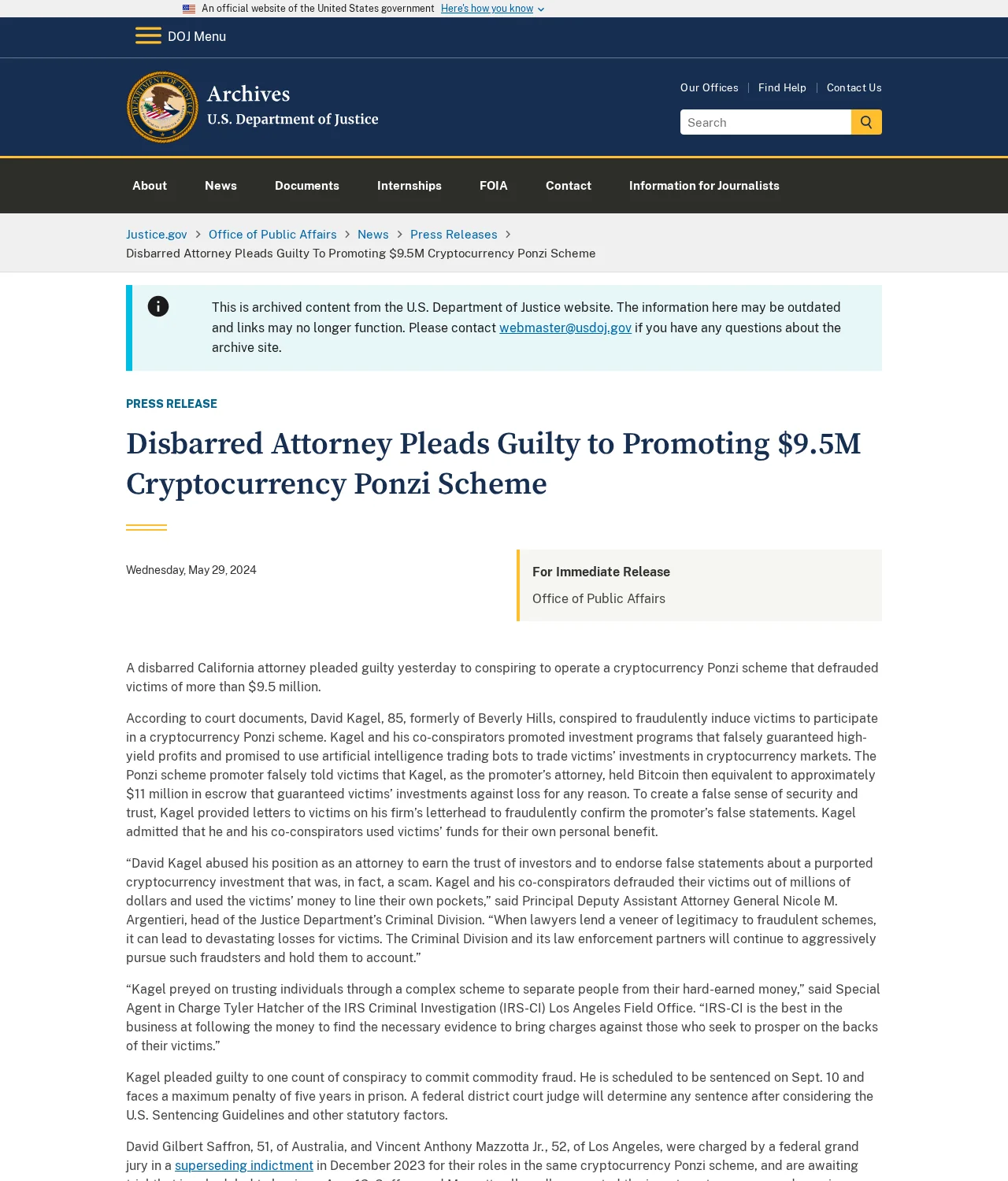
Kagel pleaded guilty to conspiracy to commit commodity fraud in 2024. He admitted helping promote false investment assurances and using victims’ money for personal benefit.
A separate civil judgment against Circle Society and David Gilbert Saffron followed a hearing on the merits in 2021. The judgment addressed fraud and investor-fund misappropriation.
The Circle Society judgment is civil, while Saffron’s separate criminal prosecution remains pending. His guilt in that criminal case has not been decided.
Investors should follow the case rather than another guarantee
- Preserve letters promising escrow protection and guaranteed investment returns.
- Keep the exact program name attached to each payment.
- Use the Justice Department’s published victim-assistance contact directly.
- Refuse a fresh fee supposedly required to recover lost cryptocurrency.
The official case page also lists other program names. A claimed connection to this case should be checked against those records and your original documents.
The Letterhead Was Part of the Investment Pitch
The Justice Department’s account of Kagel’s guilty plea describes the central lie: Bitcoin worth approximately $11 million supposedly protected investors against losses for any reason.
Kagel provided letters fraudulently confirming the promoter’s assurances. The protection was therefore part of the deception, rather than an independent safeguard that happened to fail.
The distinction matters because the investor was encouraged to rely on someone presented as separate from the person asking for money.
A lawyer’s professional identity can make an investment seem to have passed an additional check. In this case, that apparent check reinforced the false story.
Escrow normally means that an asset is held under defined conditions. Simply using the word does not establish ownership, available funds or an enforceable protection arrangement.
Even a real holding would require answers about who controlled it, who benefited and when it could be released. Here, the assurance itself was fraudulent.
Investors should not have needed to uncover that dishonesty themselves. Kagel’s admission establishes why reliance on those assurances led people into a financial trap.
How the Circle Society Scam Works
Step 1: Make automated trading sound like dependable income
The programs offered high-yield profits supposedly produced by artificial-intelligence trading bots. Automation supplied a convincing explanation for returns that investors were not generating themselves.
A bot can sound faster and less emotional than a human trader. Neither characteristic establishes that the advertised system exists or that customer money reaches it.
The issue in this case was the false investment story and misuse of funds. Calling the trading method artificial intelligence did not change those underlying facts.
For readers comparing another offer, the first question is where actual money is held and traded. A technical description cannot substitute for that evidence.
Step 2: Remove the fear of loss with an escrow claim
Potential investors were told that an attorney held a substantial Bitcoin reserve that guaranteed their investments. The promise reached beyond ordinary trading risk management.
It suggested that even a bad result would not threaten the principal. That could make someone comfortable transferring money they would otherwise keep out of speculation.
A guarantee is only as useful as the assets, obligations and people behind it. The size of the number does not establish any of those protections.
In Kagel’s case, the purported reserve was used to create a false sense of security. It was not a verified safety net for investors.
Step 3: Reinforce the promise through professional-looking letters
Kagel’s firm letterhead gave the assurance a form that recipients could save, forward and show to relatives questioning the investment.
That format helped turn the promoter’s claim into something that appeared confirmed. The person lending professional credibility was actually supporting the false statements.
A document’s appearance can be checked without proving its substance. A genuine sender can still make a false statement about assets or contractual protection.
The useful evidence now is the original letter, including its date and how it arrived. Keep accompanying emails rather than retaining only a cropped image.
Step 4: Divert entrusted money instead of earning the promised returns
The CFTC’s Circle Society judgment announcement describes funds held in Saffron’s personal cryptocurrency wallet and payments made with other participants’ money.
That is the Ponzi mechanism beneath the trading language. New deposits can create apparent success for some people without generating the income everyone was promised.
An early recipient may sincerely believe the system works. Their experience does not reveal whether the money came from trading, another deposit or the remaining principal.
Kagel separately admitted the personal use of victims’ funds. His guilty plea provides direct confirmation that this was more than an investment strategy performing badly.
Step 5: Leave investors chasing protection that was never real
When an investor needs their principal returned, the difference between a letter and available money becomes painfully clear. A guarantee cannot repay funds that are missing.
People may keep searching for the attorney, reserve account or trading balance because those were the promised escape routes from a bad outcome.
The practical route is now the official case process. Keep every document that shows why you believed your money was protected, including later explanations or repayment promises.
Do not send another deposit merely because someone claims they can finally activate the original guarantee. Verify any new request independently before responding.
Circle Society, the Program Names and the People Involved
One case contains several investment labels
The DOJ case page identifies Circle Society, Bitcoin Wealth Management, Omicron Trust, Mind Capital and Cloud9Capital among names cited in the criminal allegations.
Use those labels to locate your records, while checking the people and transaction details. A similar business name alone does not establish involvement.
Kagel’s admitted conduct supplied false professional reassurance
The attorney’s role was material because his letters supported the supposed Bitcoin protection. His plea concerned conspiracy to commit commodity fraud.
The current case page records five years’ probation and approximately $13.95 million in restitution following his October 2024 sentencing. Restitution is an obligation, not a payment guarantee.
Other proceedings have their own legal status
Vincent Anthony Mazzotta Jr. pleaded guilty in July 2025 to obstruction conspiracy and money laundering. His plea covered those offenses without resolving Saffron’s separate criminal prosecution.
The DOJ case page lists Saffron’s criminal trial for September 2027. That schedule can change, and his pending criminal allegations remain unproved.
The victim-assistance unit is separate from the investment operation
The published DOJ route accepts questions and victim-impact information. It is not a trading desk, an escrow agent or a service selling guaranteed recovery.
The indictment also alleges a fictitious Federal Crypto Reserve recovery scheme. Any request using that name should be checked directly with the DOJ unit.
Three Questions a Genuine Protection Arrangement Must Answer
Circle Society illustrates why a safety claim needs to be tested separately from the advertised investment. Different promises require different kinds of evidence.
Who actually controls the protected assets? A promoter’s screenshot is not independent custody evidence, and knowing a wallet address does not prove legal control.
What legally connects those assets to your investment? A large reserve belonging to someone else would not automatically give you an enforceable right to payment.
What happens when a loss occurs? Conditions, exclusions and the party responsible for paying matter more than an assurance that everything is covered.
These questions are useful for assessing future offers, but they are not instructions to negotiate another deal with the Circle Society promoters.
The established fraud gives investors a reason to stop paying and document the loss. More persuasive explanations from the same operation do not reverse that conclusion.
Nor should people be expected to prove a complex financial crime before seeking help. Original payment records and the promises used to obtain them are enough to start reporting.
Keep the investment promise and the escrow promise as separate entries in your timeline. One explains the expected income, while the other explains your sense of protection.
If someone forwarded a letter rather than sending it directly, preserve that forwarding message. It shows how the reassurance actually reached you.
A later conversation cannot reliably recreate every condition stated in the original document. Save the attachment itself, including pages that initially seemed unimportant.
Likewise, distinguish a promoter’s description of the attorney’s role from words the attorney personally supplied. Both can matter, but they show different communications.
What to Do if You Have Fallen Victim to This Scam
-
Preserve the evidence of the supposed guarantee. Save the original attorney letters, attached documents, emails and messages that described the Bitcoin reserve.
Keep the version you received, including dates and sender details. A later rewritten summary cannot show precisely what persuaded you to invest.
Add your payment receipts and withdrawals to a simple timeline. Separate actual deposits from account balances or promised returns that never reached you.
-
Contact the case’s published victim-assistance unit. Open the DOJ case page linked above and scroll to its victim-impact and contact information.
The page publishes VictimAssistance.fraud@usdoj.gov and the toll-free assistance line, (888) 549-3945. Confirm those details on justice.gov before using them.
Identify the Circle Society or related program, explain your connection and ask how to provide transaction records securely. Keep your initial message focused on the case.
Save your sent message and any acknowledgment. If no response arrives, follow up through the same published channel rather than a person who contacts you privately.
-
Prepare a victim-impact statement if appropriate. The case page links the official form and provides email, fax and mailing options for submitting it.
Describe financial consequences and practical harm accurately, using your own experience. Include identifying case information so the unit can connect the statement with your records.
Retain a copy and proof of transmission. A statement explains impact; it does not replace financial evidence or automatically approve a restitution amount.
-
Flag any recent transfer to your payment provider. Contact your bank or exchange through an app, statement or website you already know.
Explain that an investment or recovery request led to the payment. Provide the date, recipient, transaction reference and any wallet address involved.
Ask what action is possible and request a reference number. Do not describe a payment you authorized as an account takeover unless that actually happened.
-
Verify every recovery approach through the original case page. A person claiming to investigate lost crypto does not become official by using a federal-sounding name.
Do not pay an advance release fee or reveal a wallet recovery phrase. Send suspicious approaches to the published case contact with their identifying details.
Keep an unsolicited message intact before blocking the sender. A copied agency logo, legal document or familiar investor name cannot authenticate the request.
-
Let affected relatives or fellow investors report privately. Share the official DOJ page and explain what records you preserved, without circulating everyone’s financial documents.
Each person’s deposits, withdrawals and impact can differ. A group spreadsheet should never replace individual evidence or expose private identities in a public discussion.
If you also shared an account password, change it through the genuine service and review recent activity. Report unfamiliar logins through that service’s established support channel.
Frequently Asked Questions
Is the Circle Society scam confirmed?
Yes, the civil judgment and Kagel’s guilty plea establish deceptive conduct. Saffron’s separate criminal prosecution remains pending and should be described with that distinction.
Was the Bitcoin escrow guarantee genuine?
Kagel admitted supporting false statements that Bitcoin in escrow protected investors. His letters were part of the deception, rather than independent proof that principal was safe.
Did artificial intelligence make the investment safe?
No, automation does not establish custody, real trading or protection from loss. The case concerns false investment promises and the misuse of entrusted funds.
Are Mind Capital and Cloud9Capital mentioned in the case?
Yes, DOJ identifies them among program names in the criminal allegations. Match the actual people and payments rather than assuming every similarly named business is involved.
Does the restitution order mean everyone will recover their money?
No, an order creates a repayment obligation. Actual recovery depends on available assets and the applicable process, so avoid anyone promising a certain payout.
Where should I send information about my investment?
Use the victim-assistance details published on the DOJ case page. Ask how to provide sensitive records securely, and keep copies of your communications.
The Bottom Line
Do not fund this trading offer or pay to activate its promised protection. The false Bitcoin escrow assurance helped a confirmed scheme obtain investors’ trust.
If you lost money, preserve the guarantee letters and actual transactions, then contact the DOJ victim-assistance unit. Verify recovery claims through that independent route before responding.

Join the discussion
0 commentsShare your experience or ask a question about this article.
Community experiences
Did this happen to you?
Your experience could help someone recognize the same scam. Submit a private report for our team to review.
I experienced this tooReports are reviewed before publication. Sharing publicly is always your choice.
Discussion
Start the conversation
Have a question or something useful to share? Add the first comment.