


Gold reserves and famous paintings gave Meta-1 Coin a story that reached well beyond ordinary cryptocurrency speculation. The pitch suggested something valuable stood behind every coin.
Investors were shown another layer of reassurance through documents and the project’s own exchange. Those details are where the story becomes especially revealing.
Overview
A digital coin came with an extraordinary asset story
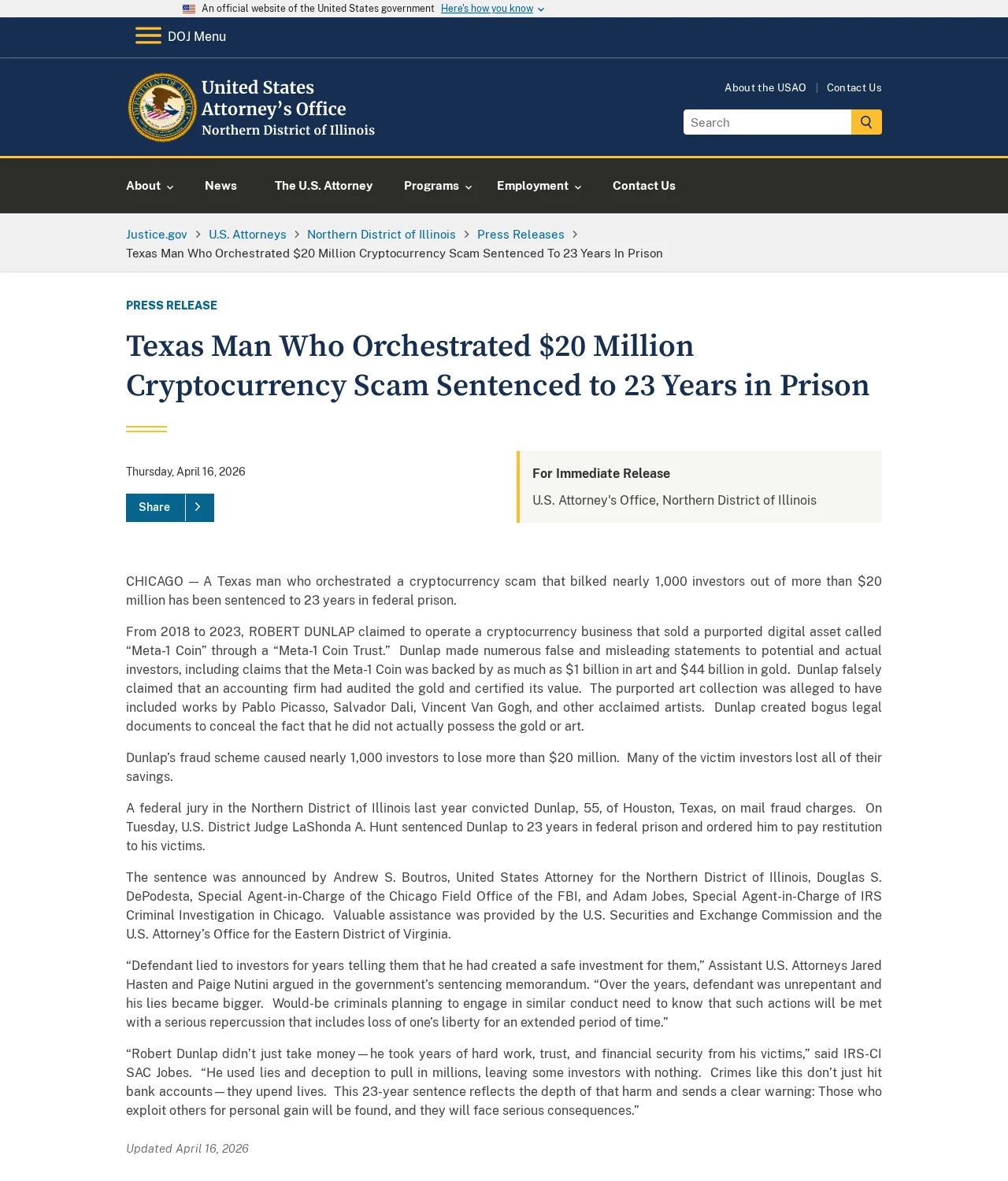
Robert Dunlap promoted Meta-1 Coin through Meta-1 Coin Trust between 2018 and 2023. He claimed the cryptocurrency had enormous backing in gold and artwork.
The pitch included supposed holdings associated with famous artists and an accounting firm’s alleged verification of the gold. Those assurances made a speculative purchase sound protected.
The project also had its own Meta Exchange. A price displayed inside that environment could look like independent market approval of the asset story.
A jury conviction established the fraud
Dunlap was convicted of mail fraud in November 2025. The Justice Department announced his 23-year prison sentence and restitution order in April 2026.
The sentencing announcement says he did not possess the claimed gold or art. Bogus documents concealed that central fact from investors.
Nearly 1,000 investors lost more than $20 million, according to the later sentencing account. This is confirmed deception, rather than a disagreement about cryptocurrency valuation.
The reserve claim and exchange price need separate scrutiny
- Claimed assets were not actually held as investors were told.
- Supposed professional verification gave false comfort about the gold.
- Automated trading inflated price and volume on Dunlap’s exchange.
- A restitution order does not itself make a coin redeemable.
If you purchased Meta-1 Coin, retain the original promotion and transaction evidence. Do not buy more because someone repeats the old backing claim.
The Gold and Art Were the Reason to Trust the Coin
Many cryptocurrency offers emphasize future adoption or technical features. Meta-1 Coin also invited people to believe that recognizable assets already supported its value.
That changes the question an investor thinks they are answering. Instead of relying entirely on future demand, they may imagine an existing pool of valuable property.
The claimed backing reached as high as $44 billion in gold and $1 billion in art. The enormous figures helped make the token appear substantial.
But an asset’s impressive description does not connect it to a purchaser. Ownership, control, valuation and the buyer’s legal rights all need to fit together.
In this case, the most basic part failed: Dunlap did not possess the gold or art. More elaborate explanations could not repair that missing foundation.
References to Pablo Picasso, Salvador Dali or Vincent Van Gogh added familiarity and prestige. They did not establish that the trust owned any particular work.
Investors were entitled to truthful information about the property used to sell the coin. The failure was the fraudulent representation, rather than a buyer misunderstanding an obscure market.
How the Meta-1 Coin Scam Works
Step 1: Present a cryptocurrency as backed by valuable property
Meta-1 Coin’s promotion tied a digital purchase to supposedly vast reserves. The gold and artwork story offered a reason to regard the coin as unusually secure.
That promise could appeal to someone who distrusted an unsupported token but remained interested in cryptocurrency. Familiar physical assets appeared to bridge the gap.
However, gold somewhere in the world cannot protect an investment merely because a promoter mentions it. The project must actually control the claimed backing.
Dunlap sold the reassurance without possessing those assets. The connection that made the offer sound safer was itself part of the fraud.
Step 2: Make the claimed reserves appear professionally verified
Investors were told that an accounting firm had audited the gold and certified its value. That claim suggested an independent professional had already done the checking.
A purchaser might reasonably find that more persuasive than a promoter’s unsupported estimate. The apparent outside confirmation reduced the need to question the reserve story.
The claim was false, according to the sentencing announcement. Invoking professional work did not mean that the advertised verification had actually occurred.
When evaluating another asset-backed offer, the professional’s name and actual report matter. A sentence about an audit is not the same thing as an authentic audit.
Step 3: Supply paperwork that conceals the missing assets
Dunlap created bogus legal documents to disguise the lack of gold and art. The conviction announcement also describes legal and insurance paperwork used to conceal that fact.
Paperwork can make a false story more difficult to challenge because it gives the investor something that resembles a completed due-diligence file.
The relevant question remains what each document actually proves. A signature, seal or insurance reference cannot create ownership of property that the project does not possess.
For affected buyers, those documents now show the representations used to obtain their money. Keep the original versions even when their claims have been disproved.
Step 4: Manufacture activity on the project’s own exchange
The jury-conviction announcement describes automated trading bots that inflated Meta-1 Coin’s market price and trading volume on the Meta Exchange website.
A rising quote can reinforce the reserve story: buyers see apparent demand and assume other market participants have accepted the same valuation.
Artificial trading activity defeats that reassuring inference. A screen showing trades is not independent price discovery when the operator manufactures the activity that creates the impression.
It also separates a quoted balance from money someone can actually obtain. A displayed valuation is not equivalent to cash available from an independent buyer.
Step 5: Draw real savings into a fabricated investment story
Investors supplied actual money in exchange for the opportunity Dunlap described. The combination of claimed reserves, supposed verification and exchange activity helped sustain the deception.
The sentencing account reports losses exceeding $20 million across nearly 1,000 people. Some lost their savings, making the supposed safety especially consequential.
The November 2025 conviction announcement used a lower loss figure of at least $14 million. Those accounts describe different stages of the same prosecution.
Do not add those figures together or treat the difference as a second scheme. The later sentencing announcement supplies the more recent reported loss amount.
Meta-1 Coin Trust, Dunlap and the Exchange
The trust name was part of the offer
A trust label can suggest that property is held for a defined purpose. It does not establish that the property exists or belongs to that trust.
The case concerns the Meta-1 Coin business promoted by Robert Dunlap. Keep that identity attached to records rather than confusing it with unrelated businesses using Meta.
The claimed backing required actual ownership
The advertised gold and artwork were material because they supplied the investment’s reassurance. Dunlap’s lack of possession defeated that assurance at its source.
An elaborate valuation discussion would not answer the ownership problem. Before debating what an asset might be worth, establish that the issuer actually holds it.
The exchange was controlled within the same story
Meta Exchange was a website created by Dunlap, according to the conviction announcement. Its trading display therefore needed scrutiny separate from its appearance as a marketplace.
The established bot activity shows why a project’s own quoted price can be misleading. It cannot be treated as independent confirmation of reserve value.
Different enforcement records address different parts of the case
The SEC previously pursued civil proceedings, while the federal criminal prosecution resulted in Dunlap’s conviction and sentence. The SEC-hosted judgment identifies the civil defendants.
Dunlap’s prison sentence comes from his criminal case. The civil judgment covers additional defendants and should not be mistaken for a criminal verdict against them.
What an Asset-Backed Claim Would Need to Show
Meta-1 Coin exposes several distinct questions hidden inside the simple word backed. Separating them makes another offer easier to assess without relying on its sales language.
Existence and possession come before valuation. An issuer needs genuine assets under its control, not an unrelated collection, proposed acquisition or document suggesting future access.
Independent verification must match the advertised claim. A limited review of one account cannot establish ownership of every reserve described in a promotion.
Investor rights need a clear connection to those assets. Even property genuinely owned by a company does not automatically give token holders a redemption right.
A trading price needs real counterparties. Artificial transactions can create a convincing chart without showing what an independent buyer would pay for your holding.
These distinctions are not a reason to keep negotiating with Meta-1 Coin. The confirmed fraud already gives buyers a reason to stop sending money.
They explain why the offer’s persuasive details failed together. The backing story, paperwork and price display were not three independent safeguards against the same risk.
One part of a promotion should not authenticate another part merely because both look professional. The evidence needs to come from outside the promoter’s control.
For example, a token dashboard quoting a higher price cannot demonstrate that a gold reserve grew. The dashboard and the reserve require different evidence.
Similarly, an artwork’s familiar title would not establish its location, ownership history or availability to repay token holders. A recognizable artist can distract from those missing connections.
When saving evidence, keep these claims in their original context. A promotional paragraph may combine several assurances that were never independently established.
What to Do if You Have Fallen Victim to This Scam
-
Keep the documents that persuaded you to buy. Preserve reserve descriptions, supposed audit material, insurance documents, purchase agreements and messages from the people promoting Meta-1 Coin.
Save any Meta Exchange account history and displayed balances separately from payment records. Include dates so a reviewer can see which representations preceded each purchase.
Keep original files intact and make a separate working copy. Avoid discarding a document simply because you now know that its claims were false.
-
Record actual transfers rather than the exchange’s advertised value. List the money or cryptocurrency paid, the receiving destination and anything actually returned.
Preserve original currency units and transaction references. A claimed token value belongs in the evidence file, rather than automatically becoming the amount of your loss.
If a receipt is missing, request the relevant history from your bank or exchange through your existing account. Mark unresolved gaps instead of filling them with guesses.
-
Verify the criminal-case contact through an independent route. Start with the DOJ sentencing announcement and use the Northern District of Illinois office’s own contact page.
Call the Chicago office at (312) 353-5300 and ask for the Victim Witness Unit handling Robert Dunlap’s Meta-1 Coin case.
Explain whether you have previously been identified as an investor. Have your own transaction summary ready, while keeping wallet secrets and passwords private.
Ask how to submit missing information and keep contact details current. The office’s victim guidance explains why evidence of financial loss matters.
Retain any instructions and reference details. If someone contacts you first, reconnect through the independently published office number before sharing sensitive records.
-
Ask about restitution without assuming an immediate distribution. Tell the verified case contact what you invested, what came back and what evidence remains available.
Follow any actual request for documentation or updated details. Do not treat a sentence announced in the news as a personal payment notice.
If you receive a purported claim form, verify its origin with the case contact. An authentic process should match the court matter and its published administration.
-
Report a recent related transfer to the service that handled it. Use your bank’s established support channel or the exchange account through which you sent funds.
Provide the recipient and reference, explain the false investment representation and ask what intervention is still possible. Keep the provider’s response with your timeline.
A completed cryptocurrency transfer may not be reversible. That limitation is a reason to act promptly, rather than buy another service promising certainty.
-
Refuse a new deposit to restore the old investment. Claims that the gold can finally be accessed or that coins need a paid conversion require independent verification.
Do not share private keys, seed phrases or remote access to an account with someone offering recovery. Preserve the approach as a separate incident.
If you encouraged others to buy, share the official conviction and sentencing information. Let them provide their financial details privately through authenticated channels.
Frequently Asked Questions
Is Meta-1 Coin a confirmed scam?
Yes, Dunlap was convicted of mail fraud and sentenced to 23 years in prison. The case established false asset-backing claims used to obtain investors’ money.
Did Dunlap possess the gold and famous artwork?
The sentencing announcement says he did not possess the claimed assets. Bogus documents were used to conceal that fact from potential and actual investors.
Was the claimed gold audit genuine?
Dunlap falsely claimed that an accounting firm had audited and certified the gold’s value. That supposed outside verification was part of the misleading investment story.
Why was the Meta Exchange price misleading?
The conviction announcement describes bots inflating price and trading volume on Dunlap’s website. That activity created an appearance of market demand without providing independent confirmation.
Why do reports mention both $14 million and $20 million?
The conviction announcement reported at least $14 million, while the later sentencing account reported more than $20 million. They are not amounts to combine.
Does restitution make my tokens redeemable now?
No, a restitution order does not create a functioning redemption service. Verify your position and any requested documents through the prosecutor’s authenticated victim-assistance route.
The Bottom Line
Do not buy Meta-1 Coin or pay to revive its reserve promise. The claimed gold and art backing concealed a confirmed fraud, not a dependable investment safeguard.
Existing buyers should preserve promotional documents, reconstruct actual payments and contact the verified case office about their information. Treat any guaranteed recovery offer as another request to scrutinize.

Join the discussion
0 commentsShare your experience or ask a question about this article.
Community experiences
Did this happen to you?
Your experience could help someone recognize the same scam. Submit a private report for our team to review.
I experienced this tooReports are reviewed before publication. Sharing publicly is always your choice.
Discussion
Start the conversation
Have a question or something useful to share? Add the first comment.