

In the age of viral Facebook ads and sleek Instagram reels, it’s easy to fall for products that promise life-changing benefits with just a click. One such product is the CoreCare Posture Corrector—a wearable brace that claims to fix back pain, boost confidence, and realign your spine. However, behind the polished marketing lies a dropshipping scam that has fooled thousands of unsuspecting customers.
In this in-depth article, we uncover how this dropshing operation works, what makes it deceptive, and what to do if you’ve already been tricked.
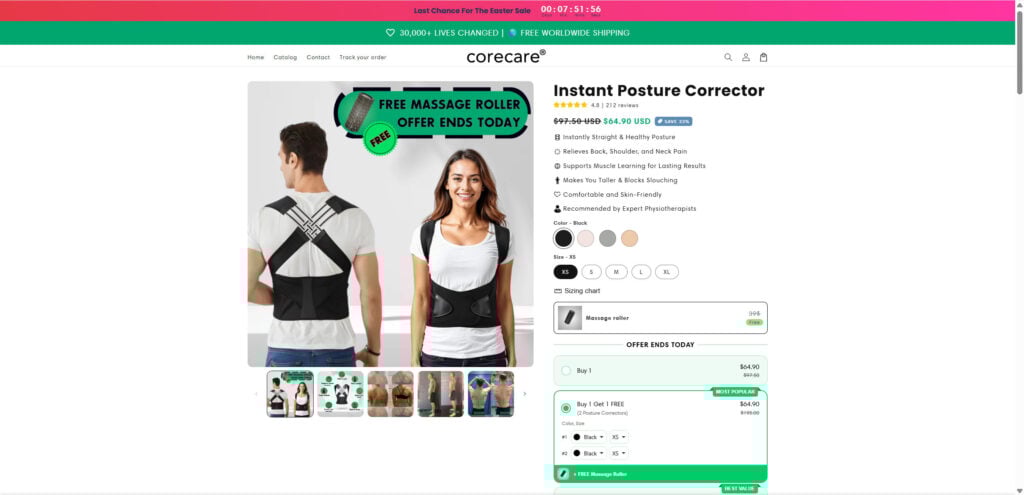
Scam Overview: The Illusion of Instant Relief
At first glance, the CoreCare Posture Corrector seems like a revolutionary health device. Marketed as a medically endorsed back brace, the product boasts features such as:
- Muscle memory activation
- Spinal realignment
- Relief from chronic back pain
- Improved posture in 60 days or less
- Endorsements from major outlets like Forbes, CNN, and GQ
But here’s the problem: almost everything is fake.
The Price vs. Reality Gap
The product is heavily marked up. It is sold on the CoreCare website for $64.90 (after a “33% discount”) and sometimes offered as a “Buy 1 Get 1 Free” deal. In reality, this same item can be found on Alibaba or other wholesale platforms for $1.80 to $3.28 per unit. It is a generic back brace with zero medical credentials.
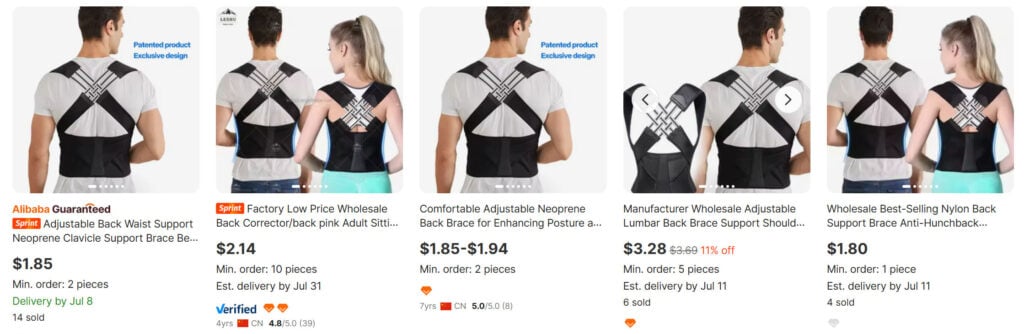
Misleading Visuals
The ads often show slim, athletic models wearing the posture corrector with visible “before-and-after” results. In reality, these photos are either digitally edited or completely fabricated. Some even use stock images.
False Credibility
Logos of CNN, Men’s Health, and Forbes are prominently displayed to imply endorsement. However, a reverse search or inspection of those sites reveals no articles, mentions, or features about the CoreCare brand.
How the CoreCare Posture Corrector Dropshiping Operation Works
The scam follows a typical dropshipping funnel with deceptive tactics layered in. Here’s a breakdown:
Step 1: Aggressive Social Media Advertising
Ads are shown across Facebook, Instagram, YouTube, and TikTok, often accompanied by:
- A “limited-time” timer
- “Only 4 left in stock” claims
- Testimonials that mimic Facebook comments
- “Doctor-recommended” badges
These elements are used to create urgency and simulate social proof.
Step 2: High-Converting Landing Pages
The landing page is filled with persuasive copy such as:
- “Clinically recommended”
- “Relieves back and neck pain instantly”
- “Thousands of lives changed”
- “Seen on CNN, GQ, Forbes, Healthline”
It includes fake statistics (like “95% reported improvement in 7 days”) and fake reviews that are written in a conversational style but are not verifiable.
Step 3: Checkout Traps
Once on the site, users are offered upsells like:
- Add a massage roller for “free” (allegedly worth $39)
- Buy one, get one free
But the checkout experience is designed to lock in the payment fast, often without adequate time to reconsider.
Step 4: Delayed or Low-Quality Delivery
Once the order is placed:
- The item ships from China and can take 2–5 weeks to arrive
- The packaging is generic and has no CoreCare branding
- The product is flimsy, non-adjustable, and frequently arrives damaged
Customers realize immediately that the product does not match the photos or claims.
Step 5: Return and Refund Blockade
Victims who try to request a refund are met with:
- A “return to China” address (which costs more than the product)
- An offer for 15% to 30% refund instead of a full refund
- Long email wait times, often with no reply
In most cases, refunds are never honored unless a credit card chargeback is initiated.
What To Do If You’ve Been Scammed by CoreCare
If you’ve already fallen victim, don’t panic. You still have options to try to recover your money.
1. Document Everything
- Take screenshots of the ad, product page, and your order confirmation
- Photograph the product when it arrives (especially if it’s defective or not as described)
2. Request a Refund Immediately
Email CoreCare’s support or contact them via their contact form. Keep communication professional and factual. However, don’t expect cooperation.
3. Initiate a Chargeback
If you paid via credit card or PayPal:
- Contact your card issuer and file a chargeback for goods not as described
- Provide evidence of the misleading advertising and product issues
- Include all screenshots and emails in your case
Most banks will side with the customer in such situations, especially if the company is clearly deceptive.
4. Report the Scam
You can help prevent others from becoming victims by reporting CoreCare to the following agencies:
- Better Business Bureau (BBB) (for U.S. victims)
- Federal Trade Commission (FTC)
- Internet Crime Complaint Center (IC3)
- Trustpilot or Sitejabber
5. Leave Honest Reviews
Post a review on Google, Reddit, and scam-reporting websites. Use keywords like “CoreCare scam” or “CoreCare dropshipping review” so others can find your experience.
FAQ – CoreCare Posture Corrector
Is the CoreCare Posture Corrector a scam?
The product is heavily misrepresented through fake endorsements, exaggerated benefits, and altered images. Customers receive a cheap, unbranded item that does not perform as advertised.
Where is the CoreCare Posture Corrector actually made?
Despite being marketed as a premium health product, the posture corrector is dropshipped from China. It is available on wholesale sites like Alibaba for less than $3 per unit.
Is the CoreCare brace medically approved?
No. There is no evidence that the brace is medically endorsed or clinically recommended. Claims about muscle memory activation and spinal realignment are not backed by real medical professionals.
What do I do if I received a defective or poor-quality product?
Contact the seller to request a refund, but be prepared for resistance. Many customers are only offered partial refunds (15% to 30%) or asked to return the item to China at their own expense.
Can I get a refund from CoreCare?
In most cases, customers face difficulty getting a full refund. The best way to recover your money is to file a chargeback with your bank or payment provider, especially if the product was not as described.
Why do the reviews on the CoreCare site look fake?
Most reviews on the site are unverifiable and appear to be fabricated. Many use generic names and photos, with overly positive and scripted feedback.
What should I do if I fell for the scam?
Immediately contact your bank or PayPal to dispute the charge. Document everything, including screenshots, product photos, and correspondence. Also report the scam to consumer protection agencies.
How can I avoid similar scams in the future?
Always research unfamiliar brands. Look for independent reviews, reverse search product images, and avoid sites that use countdown timers or “only 3 left” urgency tricks.
Is CoreCare the only company selling this product?
No. The same posture corrector is sold under many different names through other dropshipping sites using similar tactics. Avoid any product that looks identical and makes extreme medical claims.
Is there a better alternative to posture correctors like CoreCare?
Yes. Consult a physical therapist or orthopedic specialist. Real posture correction involves tailored exercises, ergonomic changes, and sometimes medical-grade supports prescribed by professionals.
The Bottom Line
The CoreCare Posture Corrector is not the revolutionary device it claims to be. It is a classic dropshipping scam wrapped in modern marketing and psychological manipulation. The product is cheaply manufactured, falsely advertised, and extremely difficult to return.
If you’re looking to fix posture, speak to a physical therapist or doctor for genuine solutions—not a $2 product rebranded with medical lies.

Join the discussion
0 commentsShare your experience or ask a question about this article.
Discussion
Start the conversation
Have a question or something useful to share? Add the first comment.