

A full roll of U.S. stamps appears in a social feed at nearly half the price you would expect to pay. The listing looks ordinary: photos, a checkout button, maybe even a promise of fast shipping.
Buying in bulk can save money on plenty of things. Postage has different economics, and that price deserves a second look.
The counterfeit postage scam is not limited to one website. It follows buyers across marketplaces, third-party sellers, and standalone stores, often using the same “limited discount” story.
Overview
The discount is the product’s biggest warning
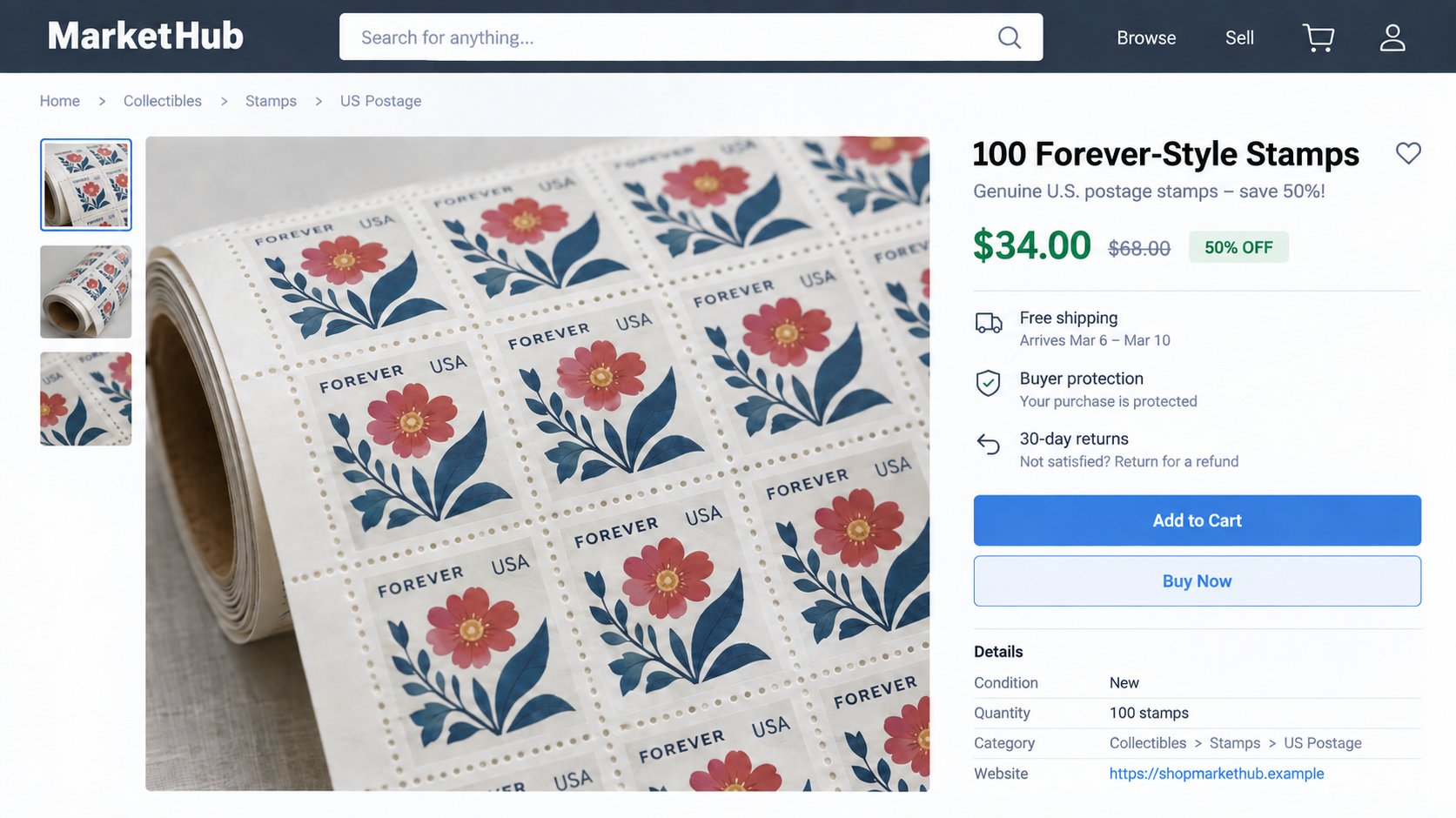
The U.S. Postal Inspection Service (USPIS) warns that counterfeit stamps are sold online through social media marketplaces, third-party e-commerce sellers, and independent websites. Offers commonly advertise bulk quantities at 20% to 50% below face value.
That is not a routine wholesale deal. USPS does not sell stamps below face value. Some approved retailers can offer very small discounts under legitimate resale arrangements, but a dramatic markdown on current postage is the telltale pattern postal inspectors describe.
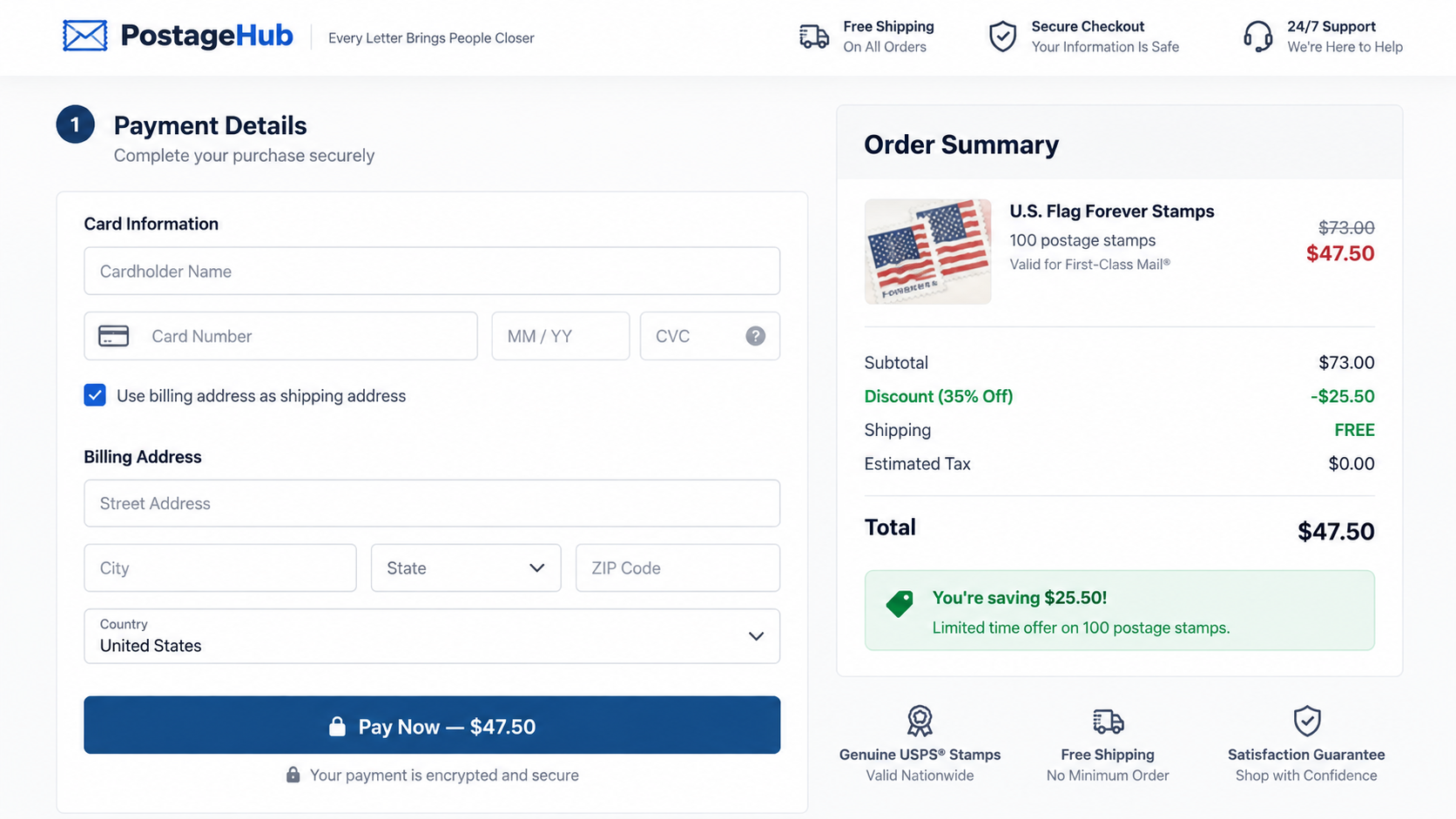
The illustrations in this article are fictional screen reconstructions. They show the sort of listing and checkout a buyer might encounter, not a captured page from a named seller. No specific merchant is accused solely because its design resembles these examples.
A convincing listing cannot authenticate a stamp
Product photos can be copied from USPS, other retailers, or collectors. A seller can display a tracking estimate, buyer-protection badge, and generous return promise without proving what will arrive. The stamp’s appearance may be close enough to fool a casual buyer.
USPIS says the number of counterfeit stamps offered through online platforms has escalated. The agency cautions that buyers cannot reliably verify genuineness when purchasing from an unknown third-party wholesaler or website.
- The discount is far larger than a normal authorized retailer would offer.
- The seller operates through a social post, marketplace account, or unfamiliar store.
- Stamps are sold in bulk with urgency or a “warehouse clearance” story.
- The listing claims USPS approval without a verifiable reseller relationship.
- The payment recipient and business identity are hard to check.
- The seller treats a polished photograph as proof of authenticity.
The loss can continue after checkout
A buyer may lose the purchase price if nothing is delivered or if the stamps are counterfeit. There is another practical problem: under current postal rules, mail bearing counterfeit postage can be treated as abandoned and may be opened or disposed of at USPS discretion. That can disrupt a business shipment or a personal letter.
USPIS also notes that purchasing or using counterfeit postage is illegal. An honest buyer who discovers the problem should stop using the stamps, preserve the purchase evidence, and seek guidance from postal inspectors instead of quietly mailing them.
Not every unusually cheap listing is proven counterfeit from the price alone. The precise finding requires examination of the stamps or seller. The point of the warning is that a 20% to 50% discount makes the offer too risky to treat as normal retail without independent verification.
Why “Wholesale Forever Stamps” Sounds Plausible
We have reviewed a specific online stamp seller before. This report looks at the broader counterfeit-postage warning from postal inspectors, so no one store should be treated as the whole problem.
Postage is a familiar product but not one most people buy every week. A buyer may know that retailers discount office supplies and assume the same inventory logic applies to stamps. Sellers exploit that assumption by using terms such as bulk, surplus, liquidation, and reseller stock.
A roll of stamps also looks simple. It is not a complex gadget that needs a warranty or a regulated investment that obviously requires licensing. The low price may seem like a lucky find rather than the central clue.
The “Forever” label adds another appeal. Buyers expect those stamps to remain useful when postal rates rise. A counterfeit seller can make a roll feel like a small investment: buy now, use later, and avoid higher costs.
That story only works if the postage is authentic. A counterfeit stamp has no valid mailing value, regardless of how carefully it was printed or packaged. The promised future savings vanish if the mail is rejected.
Social marketplaces add borrowed trust. A listing may appear beside legitimate secondhand goods and normal merchant ads. The surrounding platform has a familiar interface, but it does not guarantee that each seller’s stamps are genuine.
Standalone stores can create the same impression with a USPS-style color scheme, a shipping policy, and reviews on the page. None of those elements is an authentication service. The stronger check is whether the seller is USPS itself or an approved postal provider you can verify independently.
The Price Math Behind the Trap
A legitimate seller has to acquire valid postage somehow. USPS does not offer a 50% wholesale price to strangers on social media. Selling large quantities of current stamps at half face value would normally mean losing money before payment-processing and shipping costs.
A scammer does not face that math if the printed pieces are counterfeits or if no goods will ship. The display price becomes bait rather than a sustainable retail offer.
That does not mean every discount has the same explanation. A collector might sell old stamps, a retailer might offer a tiny promotion, and a marketplace might apply a coupon funded by the platform. The issue is an ongoing supply of modern stamps at a steep below-face price from a seller with no clear authorization.
Check the exact face value and quantity. Some listings use a low total price because they contain fewer stamps than the headline suggests. Others show a dramatically reduced “original” price invented by the seller. Neither trick should be mistaken for independent proof of a bargain.
A purchase page may also emphasize secure encryption. Encryption protects the connection to the website; it says nothing about whether the site sells genuine postage. A card processor can accept a transaction for a dishonest merchant just as it can for a legitimate one.
How the Counterfeit Postage Scam Works
Step 1: A steep deal appears where buyers already shop
The offer may be a sponsored social post, a marketplace listing, a third-party seller on a larger site, or a standalone store. The title focuses on bulk savings, not the seller’s business identity.
USPIS describes these channels generally; it does not say every listing on them is fraudulent. The warning applies to the unusually cheap stamp offers that cannot be verified as authorized supply.
Step 2: Familiar design substitutes for proof
High-resolution photos, product reviews, and badges help the listing look ready for ordinary checkout. A seller may describe the stamps as genuine, valid nationwide, or sourced from an approved wholesaler.
Those are claims made by the seller. If you cannot identify the authorized provider and confirm the connection outside the listing, the words on the page do not answer the authenticity question.
Step 3: The buyer calculates a tempting saving
When a roll appears to cost 20% to 50% less, the buyer may purchase several. That increases the loss if the stamps are fake and creates more mail that could be affected later.
The scam does not require a mysterious subscription or hidden medical claim. Its appeal is simple: a familiar everyday expense seems dramatically cheaper for a short time.
Step 4: Checkout collects money and contact details
The buyer enters an address and payment information. A genuine-looking card form does not prove the stamp source. Some victims may receive nothing; others may receive physical items that look close to authentic postage.
The USPIS advisory does not establish that every counterfeit-postage seller steals card details or enrolls buyers in recurring billing. Those are separate risks to check in a particular checkout, not claims we can make about every listing.
Step 5: The problem appears when the stamps are used
A package or letter may be delayed, rejected, or handled under counterfeit-postage rules. The buyer may only realize the problem after printing labels, sending invitations, or mailing orders to customers.
At that point, the seller may have vanished or changed storefronts. Save the listing and order records early so you can explain exactly where the stamps came from.
Seller, Address, Support, and Postage Checks
Who is actually selling the stamps?
Write down the legal business name from the checkout, invoice, and card statement. Compare it with the marketplace account and any claimed USPS affiliation. A seller name that changes between those places deserves an explanation.
Do not label a legitimate retailer a scam merely because it appears in an ad. Confirm whether that exact seller is an approved provider and whether the particular listing belongs to its verified account.
Where does the seller operate?
A postal address in a footer may be a warehouse, mailbox, returns depot, or an unrelated location. Check it independently. An address by itself does not establish that the seller obtained valid stamps from USPS.
USPIS has not identified one universal headquarters for counterfeit-stamp sales. These offers appear through multiple online channels, so each merchant must be evaluated on its own records.
Can you reach support after paying?
Look for a working phone number, a support email tied to the legal business, and a clear refund procedure. Test them before placing a large order. A contact form that merely sends a thank-you screen is not a reliable return route.
If the seller disappears after a counterfeit-postage complaint, preserve your attempts to contact it. Those messages can help your card issuer and postal inspectors understand the transaction.
Can the postage be traced to an approved source?
For an online purchase, the easiest reliable path is USPS or an approved provider. A seller’s statement that it purchased inventory in bulk is not a chain of custody. Ask for proof if the offer depends on an extraordinary discount.
Do not try to authenticate stamps solely from a photo of perforations or ink. Counterfeits can be visually convincing, and a product image may not show what the seller actually ships.
What to Do if You Have Fallen Victim to This Scam
- Stop using the stamps. Put the remaining rolls aside and avoid placing more questionable postage on mail while you verify the purchase.
- Keep the evidence. Save the listing, seller profile, order confirmation, payment receipt, shipping label, packaging, and the physical stamps. Do not discard a rejected envelope.
- Contact your payment provider. Explain if the merchandise was counterfeit or never arrived. Ask about a dispute, chargeback, or card replacement where appropriate.
- Contact USPS about affected mail. If letters or packages were sent, provide tracking and mailing details so you can understand the status and any next steps.
- Report the seller to postal inspectors. USPIS provides a Counterfeit Postage Reporting System. Include the seller’s URL, marketplace account, order details, and photos of the received items.
- Report the marketplace listing. Use the platform’s counterfeit-goods process so the account and advertisement can be reviewed. Do not rely on the seller’s own promise to remove it.
- Monitor the card and email used at checkout. If a suspicious page asked for more than a normal purchase requires, change exposed passwords and review transactions. Scan with Malwarebytes if you installed a file or browser extension at its request; simply viewing a listing is not proof of infection.
- Reduce repeat exposure. AdGuard can block some known scam sites and deceptive ads, but it cannot certify that a discounted roll is genuine. Use the approved-provider check for that.
- Ignore refund impostors. A stranger who contacts you after a complaint and demands another fee to release a refund may be running a second scam.
Frequently Asked Questions
Are all discounted stamps fake?
No. Legitimate approved retailers may offer small discounts. USPIS flags substantial reductions, especially 20% to 50% below face value, as a strong counterfeit warning.
Can a marketplace guarantee the stamps are genuine?
A familiar marketplace interface does not authenticate every seller’s inventory. Verify the exact merchant and its relationship to USPS or an approved provider.
What happens if I mail with counterfeit postage?
USPIS says mail with counterfeit postage can be treated as abandoned and may be opened or disposed of under applicable rules. Contact USPS promptly about mail already sent.
Does a real tracking number prove the stamps are valid?
No. Tracking can show that something shipped to you. It does not establish that the contents are genuine postage.
Should I send suspicious stamps back to the seller?
Preserve the items and evidence first. Ask your card issuer and USPIS how to document or handle the merchandise before following a return instruction from an unverified seller.
Where can I buy stamps safely online?
Use the official USPS website or an approved postal provider you have verified independently. A copied USPS image is not a substitute.
The safest check is mundane: compare the promised price with face value and the seller with an authorized source. A beautiful storefront, a holiday deadline, or glowing reviews cannot change how postage is issued. If the offer depends on a huge discount that USPS itself does not provide, walk away before entering payment information.
People sometimes discover the problem only after addressing dozens of envelopes. If that happens, stop using the remaining stamps, keep the packaging and receipt, and ask USPS how to handle the affected mail. Do not assume the letters will move normally simply because a stamp physically sticks to an envelope.
The Bottom Line
The counterfeit postage scam makes a basic purchase look like an easy saving. The unusually large discount is precisely why the offer deserves skepticism.
Buy from USPS or a verified provider. If you already bought suspect stamps, stop using them, protect the purchase record, and report the seller before more mail is affected.

Join the discussion
0 commentsShare your experience or ask a question about this article.
Discussion
Start the conversation
Have a question or something useful to share? Add the first comment.