

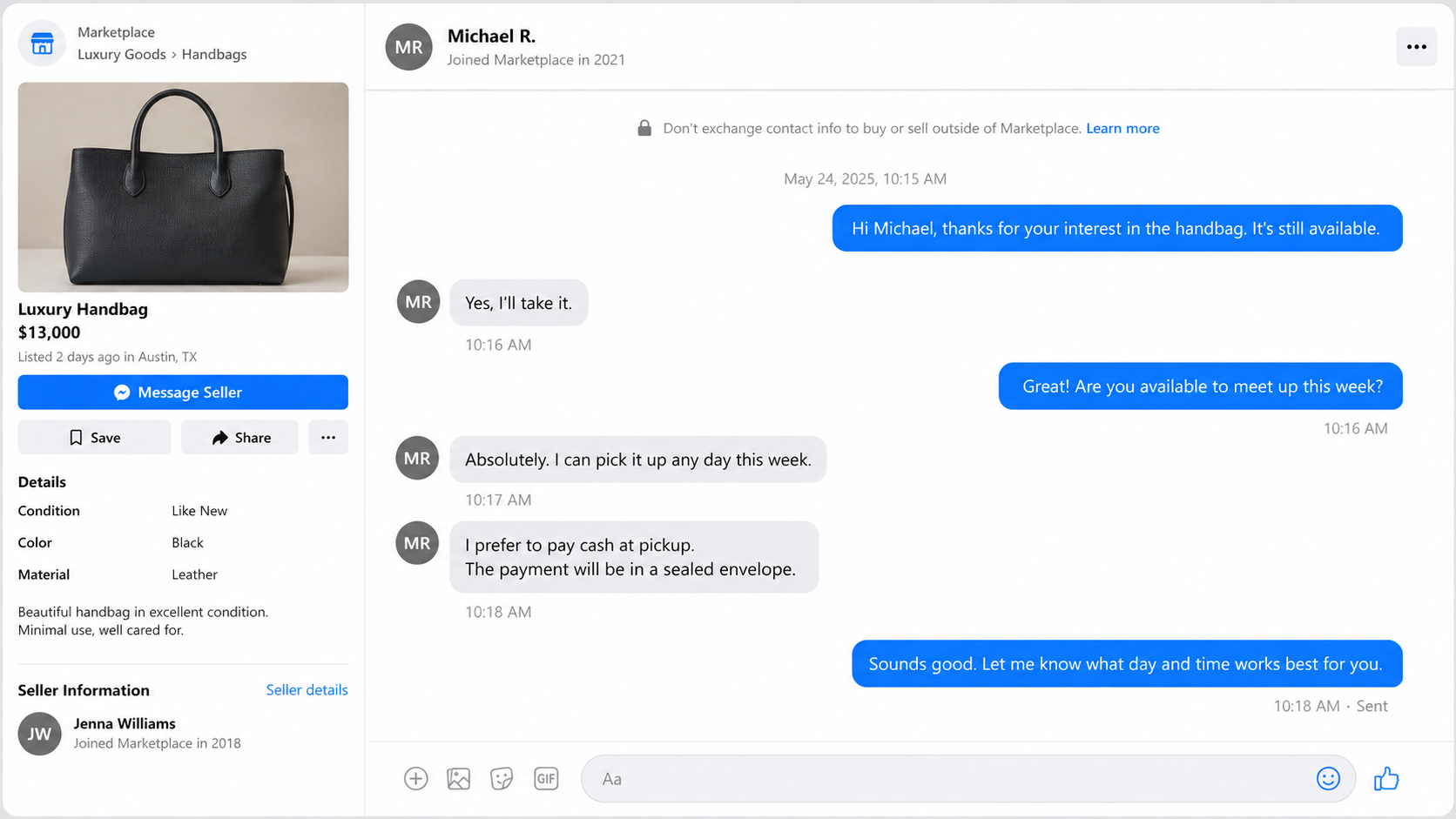
The buyer does not haggle over the price. They are ready to meet, ready to pay cash, and happy to complete a high-value sale without the usual delays.
A counterfeit cash scam can make that simplicity feel safer than an online transfer. The seller sees an envelope full of notes, hands over the item, and discovers the payment is worthless only after the buyer has gone.
The danger is not confined to a suspicious payment link. Sometimes the fake part is the cash in your hand.
Overview
Online listings give criminals a menu of valuable targets
Marketplace sellers advertise the exact item, asking price, general location, and preferred handoff. A criminal looking to pass counterfeit notes can concentrate on electronics, luxury bags, jewelry, collectibles, and other goods that are portable and easy to resell.
The buyer may accept a $5,000 or $13,000 price immediately. That lack of negotiation can feel like relief, especially after weeks of unserious messages. In reality, the cost does not matter when the payment was never genuine.
This is not a theoretical edge case. In May 2026, the New Brunswick RCMP warned about an increase in reports involving counterfeit cash used during in-person transactions arranged through online marketplaces.
The handoff is designed to feel final
Cash normally avoids chargebacks, fake transfer screenshots, and payment-app reversals. That reputation becomes part of the trap. The seller may lower their guard because the buyer is physically present and the money can be counted.
Counterfeit notes may be mixed with genuine ones, stacked inside a sealed envelope, folded to hide security features, or passed during a rushed exchange. An accomplice, conversation, or last-minute change can keep attention on the item instead of the payment.
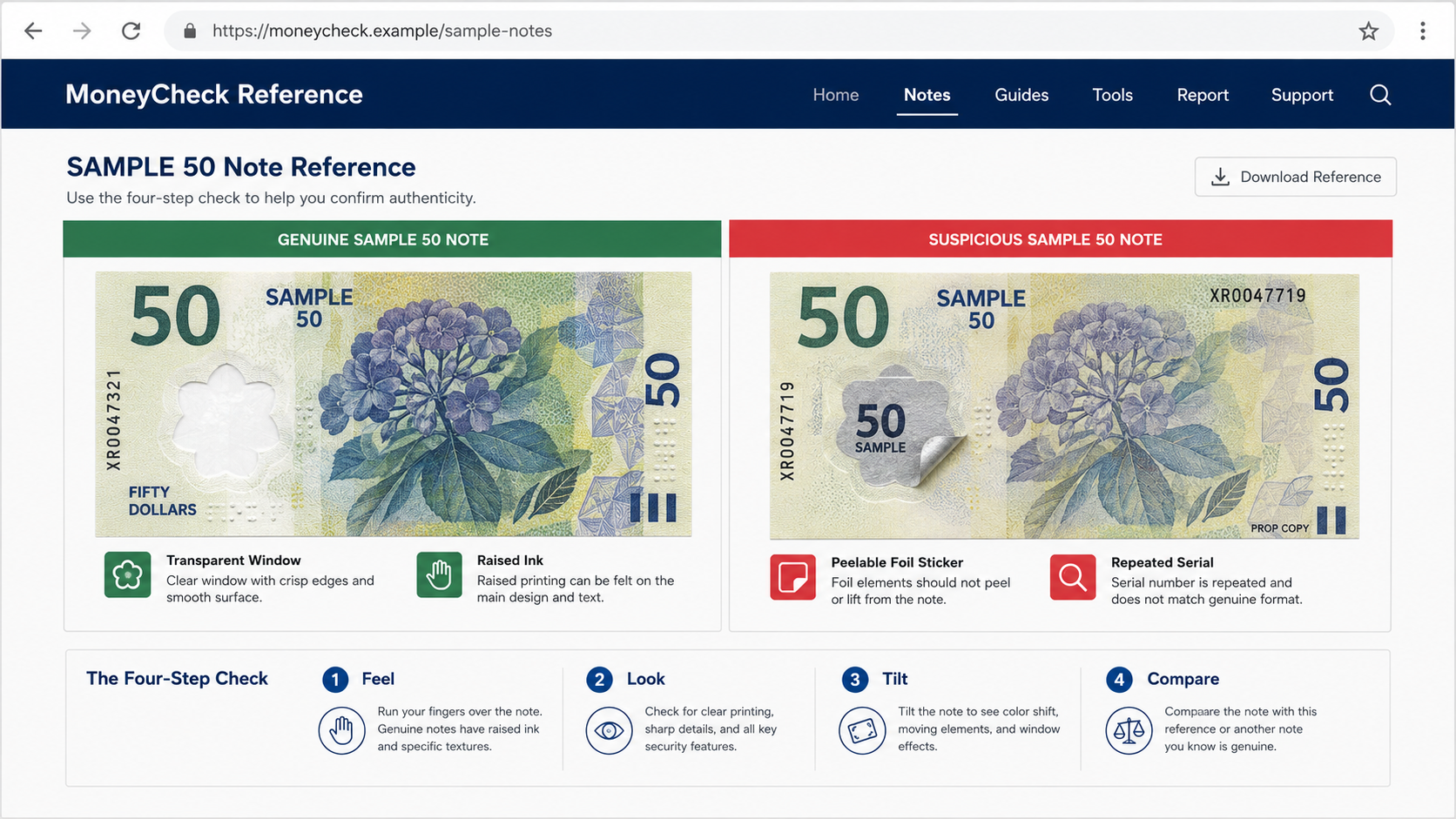
In an April 2026 warning, Mission RCMP described counterfeit $50 notes used to buy a laptop and tablet through an online marketplace. Police noted the bills shared the same serial number and had reflective pieces that were not properly attached.
The loss often appears after both item and buyer vanish
A seller may notice something wrong while recounting the cash, trying to deposit it, or comparing one note with another. By then, the buyer profile may be deleted, the telephone number may be disposable, and the item may already be listed elsewhere.
The seller loses the merchandise and receives no value for it. Knowingly passing the suspicious notes to someone else is not a recovery method and may be a crime. The notes need to be reported to police according to local guidance.
Warning signs include:
- The buyer accepts a high asking price without normal questions.
- A new or sparse account wants an immediate meeting.
- Cash is insisted on even when another verified method was agreed.
- The buyer arrives with the payment in a sealed envelope.
- The notes are bundled, folded, or positioned to discourage inspection.
- An accomplice creates distractions while the money is counted.
- The buyer objects to meeting at a police exchange zone or bank.
- Several notes have the same serial number.
- Foil, windows, texture, or raised elements look applied rather than embedded.
- Small text says prop, copy, replica, or motion picture use.
- The buyer tries to leave before the seller completes the check.
How the Counterfeit Cash Scam Works
Step 1: The scammer searches for high-value local listings
The ideal target is valuable enough to justify the effort but easy to carry away. Phones, laptops, cameras, watches, designer goods, game systems, and collectibles can be resold quickly through another account.
The listing also reveals whether the seller is inexperienced, eager, or willing to meet at home. Public profile information can supply a name and other details that make the buyer’s approach feel less anonymous.
Step 2: A decisive buyer lowers the seller’s defenses
The criminal agrees to the listed price, avoids complicated payment apps, and offers a convenient meeting time. The conversation may be polite and brief. Nothing sounds like the familiar script about couriers, overpayments, or verification codes.
That contrast is deliberate. The seller thinks they have avoided online fraud by choosing cash. The risk has simply moved from a digital confirmation to the physical notes.
Step 3: The meeting is arranged away from careful verification
A parking lot, lobby, coffee shop, or curbside pickup may provide enough activity to rush the exchange. The buyer can say they are double-parked, late for work, or waiting for a ride.
If the seller suggests a bank or police exchange zone, the buyer may change the time, claim the location is inconvenient, or disappear. A genuine buyer making a large cash purchase should understand why verification protects both parties.
Step 4: The cash is presented to control what gets inspected
The notes may arrive in an envelope that appears organized and pre-counted. The buyer can fan a few genuine notes at the top, then hand over a stack containing counterfeits. Another possibility is a switch after the seller counts a real bundle.
Do not assume a thick envelope is complete or that one checked note represents the rest. Each note needs attention, and the payment should remain in view from the first count until the exchange ends.
Step 5: Distraction shortens the inspection
The buyer asks about accessories, tests the item, makes a telephone call, changes the pickup vehicle, or introduces another person. Attention moves back and forth while the money and merchandise change hands.
A seller may also feel uncomfortable inspecting cash closely in front of a stranger. The criminal relies on that social pressure. A legitimate buyer will allow reasonable time for a high-value payment to be verified.
Step 6: The item leaves before the notes are recognized
Once the buyer has the item, they depart quickly. The profile can be abandoned and the number disconnected. A vehicle description or license plate may be incomplete if the meeting was arranged in a busy place.
The counterfeit may become obvious only under better light or at a bank. Repeated serial numbers, peelable metallic elements, flat printing, unusual material, and copy text can expose it.
Step 7: The stolen item returns to the market
The item may be resold through another marketplace account, pawned, or moved to an accomplice. Original boxes, receipts, serial numbers, and accessories make it easier for the criminal to present it as legitimately owned.
The victim may then receive fake recovery messages from people claiming to be investigators or specialists. Real authorities do not require gift cards, cryptocurrency, or advance fees to accept a report.
How to Check Cash Without Turning the Meeting Into a Gamble
Learn the security features of the currency in your country from its central bank or issuing authority before accepting a large cash payment. Do not rely on a social post or a single detection method. Modern counterfeits can imitate one feature while failing several others.
Compare suspect notes with a note you obtained from a bank. Look at texture, transparent areas, raised ink, color-changing features, print sharpness, and serial numbers. Check every note in a large stack rather than examining only the top bill.
The Canadian Anti-Fraud Centre warns that novelty notes may resemble real currency while lacking built-in security features. Some carry small labels such as “Prop Money” or “For Motion Picture Use.”
A detection pen is not a universal answer. Different currencies use different materials, and a counterfeit can be made from altered genuine paper. Use the official multi-feature method for the notes you are accepting.
For a very large sale, meeting inside the buyer’s bank can be safer than counting an envelope elsewhere. The buyer can withdraw funds in view, or both parties can arrange a verified payment with the institution. Ask the bank what it can and cannot authenticate before relying on that process.
Safer Handoffs for Expensive Marketplace Items
Choose a monitored public exchange zone, preferably one designated by local police. Bring another adult and tell someone where the meeting is taking place. Do not invite an unknown buyer into your home merely because the item is valuable.
Keep communication on the platform. Save the listing, profile, full conversation, agreed price, and meeting details. Do not publish the buyer’s alleged identity after a problem; give the evidence to the platform and police.
Record the item’s serial number and retain proof of ownership before the handoff. Do not include the full serial in a public listing. If the item is stolen, those records can help identify it without teaching a criminal which details to copy.
Do not let urgency change the safety plan. A buyer who refuses a bank lobby, police exchange zone, adequate inspection, or another reasonable method is choosing convenience over your protection. You can cancel the sale.
Digital payment is not automatically safer. Verify it inside the official app or bank account, understand reversal and purchase-protection rules, and do not trust screenshots or emails. The goal is verifiable value, not a specific payment format.
Buyer, Location, and Payment Checks
The buyer profile should support the story
Review account age, marketplace history, name changes, and how the person discusses the item. A sparse profile is not proof of crime, but it should not receive more trust than the payment can independently earn.
The meeting place should allow a calm inspection
Use a well-lit, monitored location where neither party has to rush. A police exchange zone or agreed bank branch is preferable for a high-value transfer. Do not follow the buyer to a second location.
The payment must remain under your control
Count and inspect every note without allowing the bundle to be handled again. If the buyer creates pressure or distraction, pause the transaction. Do not release the item until verification is complete.
The item should stay traceable after the exchange
Save the serial number, photographs, receipt, and distinguishing marks. Keep the platform conversation and meeting information. Those details matter if police need to identify a resold item.
What to Do if You Have Fallen Victim to This Scam
- Move to safety first. Do not chase, confront, or try to detain the buyer. If there is an immediate threat, call emergency services.
- Contact local police promptly. Explain that an item was obtained with suspected counterfeit currency. Provide the marketplace account, messages, time, location, item serial, and suspect or vehicle description.
- Do not spend or return the notes. Follow police instructions for handling and surrendering suspected counterfeit currency. Passing it onward can create another victim and legal risk.
- Preserve nearby evidence. Ask the business or exchange-zone operator to retain surveillance footage. Do not demand a copy yourself if police should make the request.
- Report the marketplace account. Save the conversation and listing first, then report the profile and transaction through the platform’s fraud tools.
- Flag the item as stolen. Give police the serial number and proof of ownership. Notify an appropriate manufacturer registry, insurer, or marketplace only through official channels.
- Secure exposed accounts. If the buyer sent links or obtained email, payment, or login information, change reused passwords and enable strong multifactor authentication.
- Check the device if files or links were involved. Run a complete Malwarebytes scan if you opened an unusual attachment, installed an app, or followed a suspicious page during the deal.
- Reduce malicious follow-ups. AdGuard can block many known phishing pages and malicious ads, but it cannot authenticate cash or recover the item.
- Notify your insurer when applicable. Provide the police report and ownership records. Do not alter the facts to fit a coverage category.
- Reject private recovery offers. People who promise to locate the buyer or retrieve the item for an advance fee may be running a second scam.
Frequently Asked Questions
Can counterfeit notes look and feel convincing?
Yes. Some imitate multiple visual and tactile features. Compare several official security features and examine every note in a high-value transaction.
Is cash always safer than a payment app?
No. Cash avoids some digital fraud but introduces counterfeit and robbery risks. The safest method is one you can verify independently before releasing the item.
What if several notes share one serial number?
That is a serious warning sign. Stop the exchange if it is still safe, do not pass the notes onward, and contact police for instructions.
Should I return a suspicious note to the buyer?
Prioritize personal safety and follow local law-enforcement guidance. Do not knowingly circulate the note or confront someone in a way that could escalate the situation.
Can a seller recover the value of counterfeit cash?
Authorities generally do not reimburse the face value of counterfeit notes. Police, insurance, or asset recovery may help in some cases, but there is no guaranteed repayment.
Where should an expensive marketplace exchange happen?
Use a monitored public exchange zone or a verified financial institution appropriate to the payment method. Bring another person and do not let the buyer rush the inspection.
The Bottom Line
A counterfeit cash scam uses the physical meeting to create confidence, then hides the fraud inside a payment people assume is final. An eager buyer, sealed envelope, and rushed handoff can turn an expensive item into an unrecoverable loss.
Choose a safe location, inspect every note using official guidance, and cancel when the buyer resists verification. Cash is useful only when it is genuine.

Join the discussion
0 commentsShare your experience or ask a question about this article.
Discussion
Start the conversation
Have a question or something useful to share? Add the first comment.