


Crucial Markets offers several ways to make a deposit look bigger. The page puts a trading bonus alongside boosted accounts and a managed gold strategy.
Those offers sound related, but they don’t give you the same balance or the same rights. The difference matters before you send cryptocurrency to fund an account.

Overview
What the 400% bonus actually adds
The Crucial Markets homepage advertises a 400% first-deposit bonus with a maximum of $40,000 in credit on a $10,000 deposit. It describes the bonus itself as non-withdrawable.
The site calls it credit for trading. It is not a promise that the broker will return your deposit plus the bonus when you close the account.
When you compare an offer with your statement, keep three amounts separate. A balance that looks impressive on the screen may include more than money you own and can withdraw.
- Money transferred in: What actually left your account, measured using the provider’s receipt rather than what the promotion promised to display.
- Bonus credit: Trading credit the site says you cannot withdraw in its own right, even if it increases the total you see.
- Cash available to withdraw: What the provider allows you to take out after applicable fees, positions, conditions and the status of the transfer.
The site describes more than one way to trade
Crucial Markets offers live accounts, managed allocations and copy trading. The separate AI Trader page offers a managed strategy as well as signals customers can use for their own trades.
The public pages use different minimums for different routes. The Standard account advertises a $10 minimum deposit, while the AI Trader page says its live route starts at $250.
Those minimums apply to different offers. A $10 minimum for a Standard account does not mean you can join the managed fund for $10.
An automated signal, a managed allocation and a broker account each put someone in a different position to make decisions about your money. Check which service you were actually offered.
Company incorporation is not a broker license
The site identifies Crucial Markets Ltd as a Saint Lucia company, lists company number 2025-00676 and says its incorporation does not make it financially regulated or licensed.
That disclosure is more important than the national name next to it. A company can exist on a corporate register without permission to offer the service in your jurisdiction.
The public pages do not establish a verifiable license for the offer in your country. That gap is a reason to keep your money out.
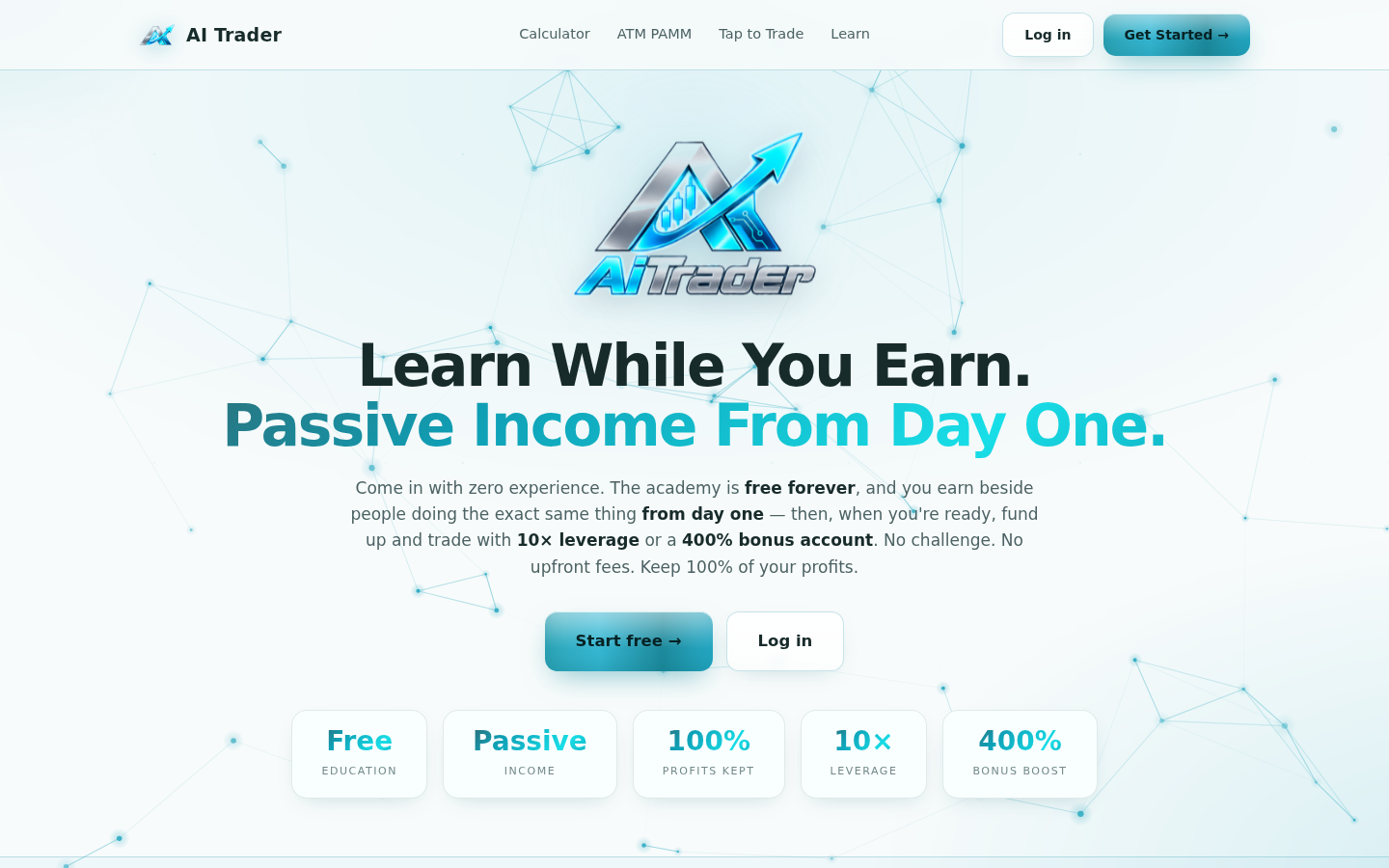
How the Crucial Markets Offers Differ When You Put Money In
Step 1: Pick the deal before comparing the price
If someone sent you to an AI Trader offer, write down which button they wanted you to use. The amount to start depends on which service it opens.
The managed route describes a pooled trading strategy. The signals route offers entries and other trade parameters to use yourself or through automation, according to the page.
The homepage also promotes a 10X Funded offer. Do not combine its leverage language with the 400% first-deposit line as if they were one contract.
If a promoter says you can move between all the options, ask what changes when you do. The name of the receiving product should appear in the actual account paperwork.
Step 2: The credit can make the account look larger
Using the advertised percentage, a $100 deposit would imply $400 in bonus credit before considering any fee, eligibility rule or exclusion. The $400 would not be withdrawable as bonus credit.
That example illustrates the arithmetic, not what any particular account would show. The promotion says conditions apply, and the public page is not a transaction receipt.
The distinction also matters when you close an account. Ask what happens to the bonus and to any open trades before assuming you can remove your full cash balance.
If the person inviting you calls a balance free cash, compare that with the actual eligibility text. The provider’s own non-withdrawable language contradicts that interpretation.
Step 3: Trading exposure can rise faster than the deposit
A contract for difference lets you gain or lose money on price changes without buying the underlying asset. A gold CFD is not the same as owning gold.
Leverage lets a trader take a larger position with less initial cash. Price changes then count against that larger position, not just against the smaller amount used to open it.
The Standard account page advertises leverage of up to 1:500. That is the stated maximum for that account tier, not the ratio for every trade.
The UK regulator’s rules for retail CFDs limit leverage and prohibit trading inducements where those rules apply. Offshore accounts may not offer the same protections.
Step 4: Funding and withdrawals are separate parts of the deal
The company describes crypto funding and email verification for withdrawals. Its public November 2026 terms list a 2.5% processing fee for cryptocurrency deposits.
Before you send anything, ask which amount becomes usable after that fee. Also ask what can be withdrawn, in which currency, and whether taking money out affects the bonus.
The terms also list a $20 monthly inactivity fee on live accounts after 90 consecutive days without trading. Demo accounts are exempt from that fee.
If you already stopped trading, check the fee and your options for closing the account. Do not place another trade just to keep the balance from shrinking.
A completed deposit does not tell you how withdrawals work. The crypto receipt shows that you sent money, not that the provider can return it.
No deposit, position, withdrawal or identity submission was made to test the offer. Do not send money merely to discover whether the public promises match your account.
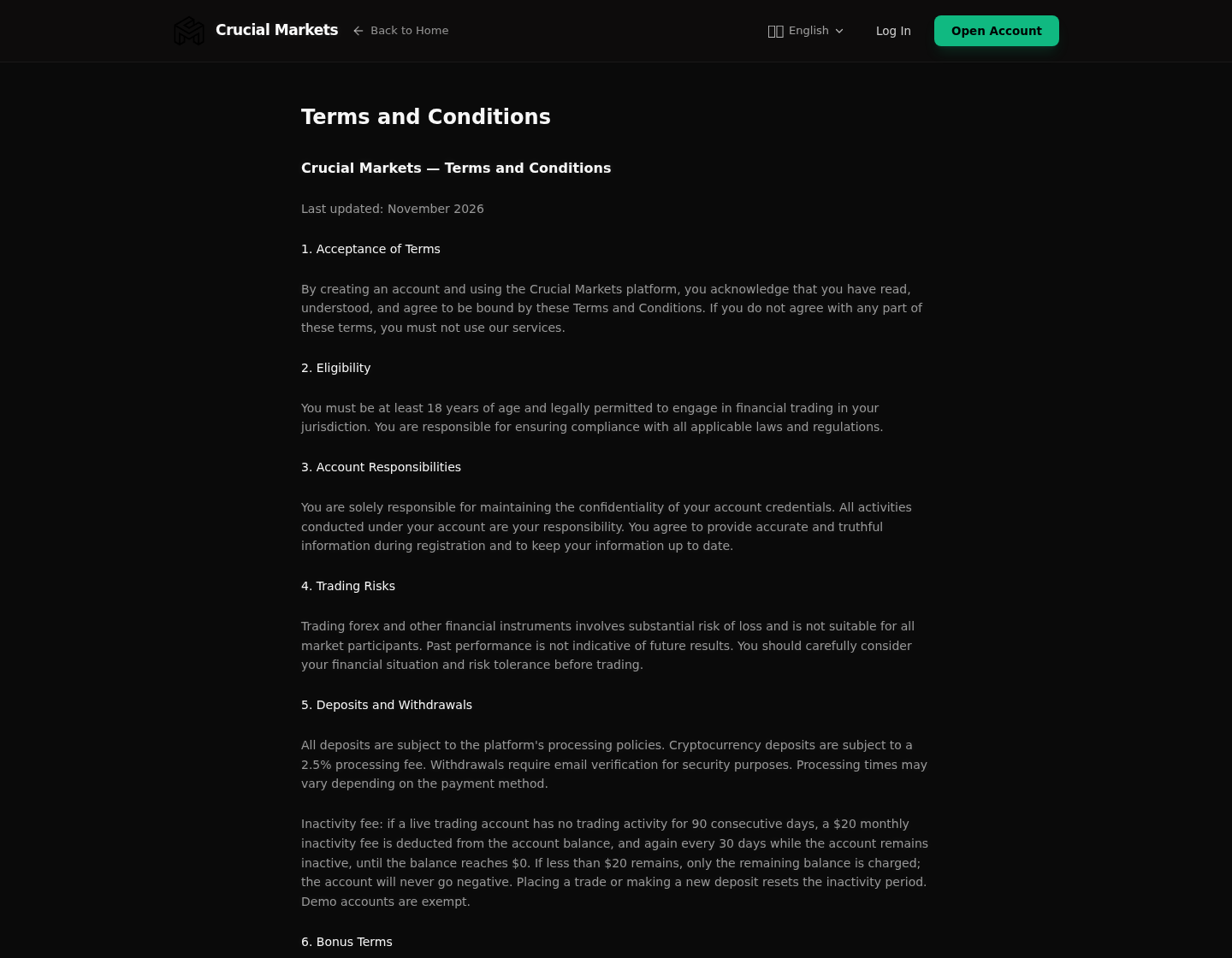
Who Runs the Account, Takes the Money and Pays Referrals?
The broker name on the contract matters more than the app logo
Look for the party that agrees to provide your account, not merely the trading software. A platform name on a screen does not tell you who took the deposit.
If a promoter mentions TradeLocker, ask for the broker and regulator separately. The ability to display trades in software does not verify who executes them or holds your money.
For a dispute, keep both the account agreement and the transfer details. The person you need to contact is the one responsible for the service, not whoever introduced it.
The corporate address is a point to check, not a safety guarantee
The footer gives a registered office in Rodney Bay, Saint Lucia. Treat it as the company’s declared office rather than proof that your money is held at that address.
Verify the full entity and claimed permission with the regulator for your location. If a register finds a matching address but lists a different activity, keep checking.
In the United States, the CFTC’s registration-check guidance explains how to check a firm’s background. The site says it does not solicit citizens of the United States.
Confirm the account contact before sharing documents
The public onboarding description asks for identity documents and proof of address. Those are sensitive even when requesting them would be routine for a properly authorized financial business.
Before submitting anything, verify the company, how it protects the documents and who can access them. Do not send an ID through a recruiter’s personal conversation.
If you already sent documents and now receive a follow-up, find the account provider through the verified route you used. Do not open a new link to repeat the submission.
Per-lot commissions give a promoter a different reason to recommend it
The website advertises referral commissions based on other people’s trading volume. It describes three levels for trading and additional participation in referral payments tied to managed or copied trading.
A person can benefit when their referrals place more trades, independently of whether those customers end up making money. Ask whether your contact receives that kind of compensation.
If you are pitched a managed strategy rather than a brokerage account, also ask for the manager’s name, mandate, track record and which party can initiate trades or withdrawals.
What to Do If You Already Funded a Crucial Markets Account
- Pause new deposits while you check what is actually yours. Save the original offer, deposit receipt, transaction ID and the terms shown when you joined.
- Download or record separate account figures where available. Distinguish your cash, credited bonus, open positions and any figure labeled available for withdrawal.
- Ask for a written withdrawal breakdown. Give the account reference without sending a password. Request the amount available and any bonus, position or fee condition affecting it.
- Keep screenshots if your instructions are rejected or delayed. Note the date, requested amount and message shown. Do not make an extra deposit to clear a supposed hold.
- Contact the exchange or payment provider you used. Open its official app or website and report the transfer. Have the transaction reference and recipient details ready.
- Report a suspicious offer to the relevant regulator or fraud authority. Use the country where you were solicited, and include the exact legal name and offer you received.
The Managed Offer Needs Its Own Evidence
The calculator and the performance display are different claims
The AI Trader page sets its calculator to a $1,000 starting balance, 10% monthly growth and twelve months. It shows roughly $3,138 with profits reinvested.
You can get that result with a calculator and the assumed growth rate. The page labels it as an illustration, so it does not establish that anyone earned it.
The same page separately displays 20.24% as average monthly performance and 31.94% as the best month. Those are promoter-published figures, not independent account statements.
To understand a performance display, ask which months it includes, whether losses are shown and whether the numbers are before or after the fees you would pay.
Ask how it treats deposits and withdrawals. An account value can rise because somebody added money, which is not a trading return on the original balance.
If results are reported for a pool, ask how the pool’s performance is allocated to an individual. Dates, fees and unsettled positions can affect the result for that account.
What does having an account in your name protect?
The managed offer says the balance stays in the customer’s own account. That claim is about the account setup, not a guarantee against inaccessible funds or trading losses.
Before signing up, find out who can trade, how you can end the arrangement, and what happens to open positions if you stop the manager.
The page talks about withdrawing settled profits. Check when a profit settles and whether money committed to an active position or allocation is treated differently from settled cash.
Keep any reported delay separate from a refusal. A recorded transfer request, its status and the exact response tell you more than an edited image of the final balance.
Check claims in the order that can save you time
First write down the entity from the agreement and the activity you are being sold. Managed investments and access to trading software are not the same thing.
Next find the register for your location independently and search the full entity name. Compare the permissions and contact details to the account paperwork.
If you cannot find a match, contact the regulator through its own site and ask about the precise service before proceeding. A referral’s personal assurance does not resolve the gap.
If you already moved cryptocurrency, save the network, transaction ID and recipient address as listed by the exchange. Don’t send a fresh transfer to check if the address works.
Separate money sent to start an account from any payment made later for help. A request from a new contact deserves its own record and its own verification.
When you ask about a position still open, find out what changing it would do. Do not let an unsolicited support contact move it or sign in for you.
Frequently Asked Questions
Can you withdraw the Crucial Markets 400% bonus?
The public promotion says the bonus credit itself is non-withdrawable. Check which parts of your own balance represent money you deposited, settled profits and credit.
Is 10X Funded the same offer as the deposit bonus?
The site presents them as different options. Read the conditions for the account you were offered rather than adding the headline numbers together.
Does the Saint Lucia company number mean the broker is licensed?
The site itself says the incorporation does not constitute regulation or licensing. Check for permission covering the exact company, product and location before sending funds.
Do published results for the AI Trader fund prove what I will earn?
Results published by the promoter do not establish what you will earn. Read the strategy’s risks and ask what verifies the results independently.
Do I need to deposit to find out what a withdrawal costs?
Ask for written conditions before opening or funding an account. Do not spend money to test if a provider will give it back.
Should I send an extra transfer if someone says it frees my balance?
Do not send a second transfer based on a private demand. Save the message and check with the exchange or payment provider you originally used.
The Bottom Line
Do not fund Crucial Markets based on the deposit bonus or a recruiter’s trading claims. Non-withdrawable credit and an incorporation number do not give you a protected balance.
If you already paid, stop adding money and separate your deposit from the displayed credit. Ask for the account terms in writing and contact the institution that sent the funds.

Join the discussion
0 commentsShare your experience or ask a question about this article.
Community experiences
Did this happen to you?
Your experience could help someone recognize the same scam. Submit a private report for our team to review.
I experienced this tooReports are reviewed before publication. Sharing publicly is always your choice.
Discussion
Start the conversation
Have a question or something useful to share? Add the first comment.