


Your investment statement shows growth, and the person explaining it sounds confident on video. A friend may even have introduced you to the opportunity.
Before adding more money, there’s another question to answer: do those numbers reflect real trading, and who actually controls the account behind them?
Overview
Crypto-Pal offered returns that didn’t come from genuine trading
The Crypto-Pal investment scam involved Daniel Chartraw and companies including Crypto-Pal LLC and TDA Global LLC, which were used to obtain investor funds through deception.
A federal jury convicted Chartraw on June 18, 2026. The DOJ’s trial announcement describes nearly $1 million in losses across the schemes.
Investors were told their money would be traded and that high returns could be achieved without risk. The money wasn’t invested as represented.
Statements and familiar contacts helped sustain the story
Prosecutors described fabricated account statements, assurances of growth, and referrals through friends or family. Communication included calls, messages, email, and virtual meetings.
Chartraw also used names including Leonard or Leon while directing operations. The public trial account links those aliases with an effort to conceal his identity.
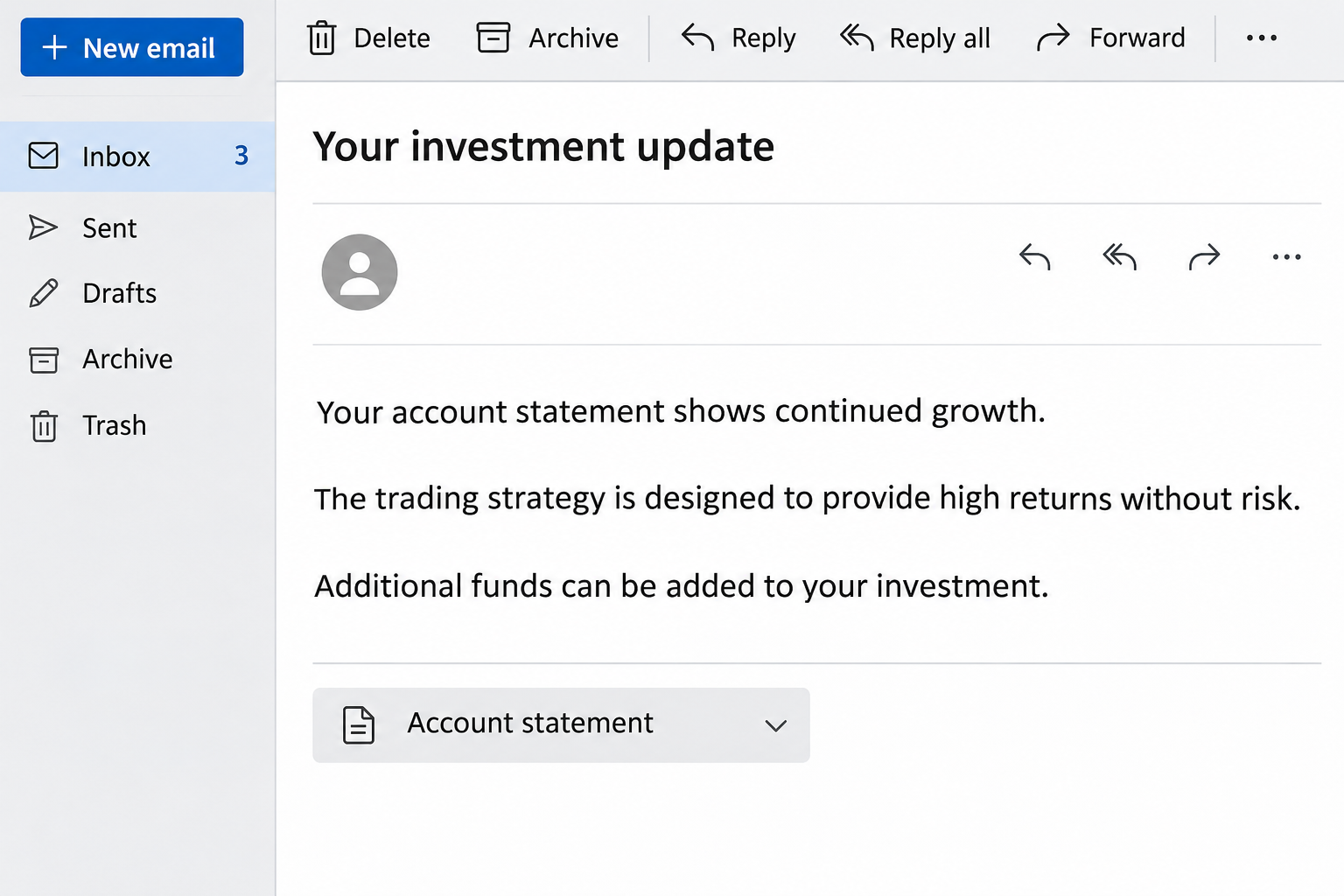
The lead image reconstructs a reassuring investment email with a statement attachment. It isn’t recovered Crypto-Pal correspondence or evidence of any particular investor’s balance.
The real payment trail matters more than the promised balance
- A statement showing gains doesn’t establish that trades occurred.
- A video meeting doesn’t authenticate an investment operator’s identity.
- A friend’s introduction doesn’t establish where money will be held.
- Withdrawal problems require action rather than another deposit to demonstrate trust.
The schemes described at trial operated between March 2021 and February 2022. Nearly $1 million was lost while investors relied on the business stories and assurances.
What a Convincing Statement Can Hide
An investment statement normally helps explain what happened to your money. That familiar format becomes dangerous when the person controlling the money also invents the record.
The result can look orderly while telling you little about custody or trading. A balance, return percentage, or reassuring update isn’t independent confirmation.
Consider what would happen if you asked the actual institution holding the assets for records. If the operator controls every answer, you haven’t obtained another source.
The distinction is especially important before reinvesting. You may think you’re adding to a profitable account when the original transaction hasn’t been independently explained.
A referral can make that gap harder to notice. Someone you trust may repeat the same representations without having verified the underlying activity themselves.
Treat their introduction as information about how you met the promoter, rather than evidence that the investment works. Preserve it without accusing the referring person of knowing participation.
The Chartraw case shows why the combination can be persuasive: personal connections supplied trust, while fabricated financial records supplied apparent performance.
The useful response connects both parts to actual payments. Identify what persuaded you, what you sent, who received it, and what you can independently confirm afterward.
How the Crypto-Pal Investment Scam Worked
Step 1: A trading business promised exceptional results without risk
According to the trial evidence, Crypto-Pal was presented as a web-based cryptocurrency trading company. Investors were offered high returns with no risk.
Those claims changed an uncertain trading activity into an apparently dependable opportunity. The promise deserved scrutiny before any transfer, regardless of the technology named.
An investment operator needs more than a confident explanation of an algorithm. You need to understand who holds the assets, what activity generates returns, and how records are verified.
If an explanation becomes less specific when you ask those questions, don’t treat additional complexity as expertise. Pause until the underlying transaction makes sense.
For Crypto-Pal investors, the promise of safety concealed the first problem: funds weren’t being invested as represented. No trading strategy could justify that misuse of their money.
Step 2: Relationships and virtual conversations supplied reassurance
Chartraw communicated through ordinary channels, including Microsoft Teams and Zoom. The use of real communication services didn’t make the financial representations genuine.
A polished meeting can answer whether someone can speak convincingly, while leaving their identity and authority unresolved. Evaluate the operator’s identity and authority separately.
When an introduction comes through relatives or professional contacts, ask what they independently verified. Another person’s confidence may come from the same fabricated statement you received.
Keep records of who introduced whom and what was represented. That chronology can help distinguish a mistaken referral from the operator’s own promises.
You don’t need to challenge a friend publicly to decline an investment. Refusing an unexplained payment is a financial decision, rather than a judgment about your relationship.
Step 3: False names obscured the person directing operations
The trial announcement describes Chartraw using Leonard or Leon while controlling the businesses. Associates were told he wanted to conceal a prior fraud conviction.
For an investor, that discrepancy changes who you’re evaluating. Researching a nickname won’t necessarily reveal the person directing the accounts or making the promises.
Ask for the legal identity connected with contracts and accounts before transferring funds. Don’t accept a new name as a minor administrative correction after payment.
If you already have several names, preserve each version and where it appeared. Avoid silently replacing the original introduction with the identity you discovered later.
Identity verification shouldn’t require you to send more sensitive documents to the promoter. Their need to establish legitimacy doesn’t entitle them to unnecessary access to your information.
Step 4: Fabricated gains encouraged further investment
The DOJ describes false account statements and assurances of growth used to persuade people to provide additional funds. The apparent progress kept the story moving.
That can make a withdrawal request feel premature: the operator may encourage you to focus on future profits instead of the missing explanation for existing funds.
Don’t let a new projected return answer an old question about custody or trading. Those are different issues, and another deposit doesn’t resolve either one.
Save every version of a statement or balance you received. Changes in dates, terminology, or amounts may be relevant when compared with your actual payments.
Record displayed gains separately from money you truly received. A claimed account balance isn’t the same as a withdrawal arriving in your own bank or wallet.
Step 5: Investor money was diverted instead of invested as promised
Although Chartraw wasn’t a signatory on the Crypto-Pal bank account, prosecutors described him accessing it to withdraw, spend, and transfer investor funds.
That detail shows why a formal account title may not explain practical control. The person using the money can differ from the person whose name appears on paperwork.
When investors questioned delays or sought their money, the trial account describes excuses, deflection, or communication ending. The promised investment hadn’t produced the represented result.
Don’t keep sending funds to solve withdrawal problems introduced by the same operator. First contact the institution or service involved in your original payment.
You don’t need to identify every later transfer before reporting. Preserve the first recipient and transaction details so the payment trail can be examined properly.
Crypto-Pal, TDA Global and the Person Behind the Names
The companies were presented with different business stories
The trial account identifies Crypto-Pal as a purported trading business. TDA Global was variously presented as supplying airline jet fuel or operating a cryptocurrency platform.
Different business explanations require different supporting records. A claim about fuel supply doesn’t authenticate a trading account, and a trading presentation doesn’t establish a fuel transaction.
Compare the purpose stated when you paid with the purpose described afterward. Preserve any change rather than accepting a new explanation as if it had always applied.
The operator’s real identity matters more than a reassuring alias
Leonard and Leon weren’t independent endorsements from another professional. In the documented case, those names were connected with Chartraw’s own communications.
If several people appear involved, record their roles rather than assuming they are separate sources of verification. Ask who controls the money and who issues the records.
An introduction, account representative, or meeting host isn’t automatically an independent custodian. Their relationship with the operator needs its own explanation.
Control of funds can extend beyond the visible signatory
An account document may show a formal owner while another person directs activity. The confirmed case describes that gap between signatory status and actual access.
Keep beneficiary names, account details, wallet addresses, and instructions as separate records. They may help connect the apparent operator with the movement of funds.
Don’t publish those records in an attempt to recruit internet investigators. Preserve them privately for the institutions and authorities handling your report.
The trial verdict concerns specific conduct and losses
Use the full company names and Chartraw’s identities when checking your records. A statement, bank beneficiary, and meeting invitation may use different parts of that information.
Likewise, the nearly $1 million figure isn’t a guarantee of funds available for reimbursement. A criminal finding and financial recovery require different follow-up.
When discussing your loss, identify actual contributions, genuine repayments, and fictional gains separately. That makes your own position clearer than repeating the promoter’s final balance.
What to Check Before Trusting an Investment Statement
Look for records that can be confirmed outside the promoter’s own system. Ask which financial institution or custodian can independently identify the assets attributed to you.
Compare statement dates with transfers you actually made. A record that doesn’t correspond with deposits or withdrawals needs explanation before you contribute anything further.
Check the operator’s full identity and the legal entity named in the agreement. Don’t limit research to an alias used during messages or meetings.
Be wary when every request for documentation produces another sales conversation. A discussion about future returns shouldn’t replace an answer about existing assets.
Never supply a wallet recovery phrase or private key to establish ownership for a stranger. Those secrets can provide control of cryptocurrency, rather than merely identify you.
If an operator requests another transfer to make a withdrawal possible, stop and investigate that request separately. Don’t let money already committed determine the next decision.
The SEC’s investor guidance highlights guaranteed returns, secretive strategies, paperwork problems, and payment difficulties as warning signs in investment fraud.
Those general checks help evaluate a new approach without assuming it belongs to the Chartraw operation. Keep conclusions attached to the evidence you actually have.
What to Do if You Have Fallen Victim to This Scam
-
Stop additional contributions and preserve the current account records. Don’t send another payment because a representative says it will release your balance.
Save statements, promotional messages, contracts, profile details, and meeting invitations already in your possession. Include the names used by each person involved.
If you still have access to a displayed account, record the balance without entering new personal or financial information. Don’t install software offered as a recovery tool.
-
Identify the service used for each payment and contact it through its genuine app or established support channel. Explain how fraudulent investment representations induced the payment.
For a bank transfer, ask the bank about recall and receiving-institution notification. For cryptocurrency, supply the exchange with the transaction identifier and destination address.
Ask what preservation or recovery steps are available and retain the case number. A blockchain transaction record doesn’t itself provide a way to reverse the transfer.
-
Prepare a timeline connecting promises, deposits, statement updates, and withdrawal requests. Keep actual payments separate from displayed gains.
List real repayments only when they arrived in an account you control. Don’t count a reduced balance or an email acknowledgment as money returned.
If another person referred you, record the introduction accurately. Avoid assuming they knew about the fraud unless you have separate evidence of that knowledge.
-
Open IC3.gov and select File A Complaint. Read the terms, select Accept when ready, and enter your contact, payment, and incident details.
Include Crypto-Pal, TDA Global, Chartraw, or relevant aliases only where your records establish a connection. Preserve the confirmation provided after your report.
A report doesn’t guarantee an individual response or reimbursement. Continue communicating with your payment provider rather than waiting before requesting time-sensitive assistance.
-
If you shared a password reused elsewhere, change it through the genuine service affected and enable available multifactor authentication. Protect the accounts that actually received those credentials.
If you disclosed wallet secrets, use the genuine wallet provider’s support resources or qualified independent help promptly. Don’t share the secrets again with a supposed investigator.
Keep identity misuse and financial loss as separate concerns in your records. Seeing a fictional balance doesn’t establish that every unrelated account was accessed.
-
Warn people you personally introduced to the offer, using the verified facts and official case source. Avoid forwarding their private financial information to others.
Reject unsolicited recovery services promising guaranteed reimbursement for an advance fee. A stranger knowing the company name doesn’t establish authority over the case.
Keep your original records even after making a complaint. They may remain useful if a bank, investigator, or legitimate victim-assistance contact requests supporting details.
Frequently Asked Questions
Was Crypto-Pal’s operator found guilty?
A federal jury convicted Daniel Chartraw on June 18, 2026. The DOJ described fraudulent investment conduct involving Crypto-Pal and TDA Global.
This article relies on that verdict rather than treating an unresolved consumer complaint as proof of fraud.
Did a rising account balance prove successful trading?
The trial account describes fabricated statements used to encourage more investment. A displayed gain didn’t establish that funds were invested as promised.
Compare the statement with independently verifiable custody and actual payments, rather than relying only on the operator’s records.
Were Leonard and Leon separate investment professionals?
The DOJ identifies those names as aliases used by Chartraw. They shouldn’t be treated as independent sources confirming the operation’s legitimacy.
Preserve every identity supplied in your own messages, including where and when you first encountered it.
Does a Zoom or Teams meeting make an offer safe?
A real communication service doesn’t authenticate the person presenting an investment. The documented operation used ordinary virtual meetings alongside other contact methods.
Evaluate the operator, asset custody, and payment instructions independently of the platform hosting the conversation.
Can another deposit unlock my missing investment?
Don’t send more money to resolve a withdrawal problem introduced by the same operator. Contact the original payment service through its established channel.
Preserve the additional demand as evidence, including the stated reason and destination, without testing it through another transfer.
Should my loss include the profits shown on screen?
Keep fictional or unverified gains separate from money you actually contributed and received. Your payment records provide the starting point for an accurate loss account.
Give authorities both the real transactions and the displayed statements, clearly labeled so the two aren’t confused.
The Bottom Line
Don’t invest through the documented Crypto-Pal or TDA Global operation. Its trading promises and account statements concealed a confirmed fraud rather than genuine investment performance.
If you paid, stop further transfers, preserve the communications and transaction trail, and contact your payment provider promptly. Report the actual funds involved without relying on fictional gains.

Join the discussion
0 commentsShare your experience or ask a question about this article.
Community experiences
Did this happen to you?
Your experience could help someone recognize the same scam. Submit a private report for our team to review.
I experienced this tooReports are reviewed before publication. Sharing publicly is always your choice.
Discussion
Start the conversation
Have a question or something useful to share? Add the first comment.