


A phone number can stop working while the phone itself is perfectly fine. For someone with money on a crypto exchange, that distinction can quickly become expensive.
A Polish police case shows why. Investigators looked beyond the phones and found evidence pointing to companies that worked with telecom operators.
Overview
Four arrests put the focus on telecom suppliers
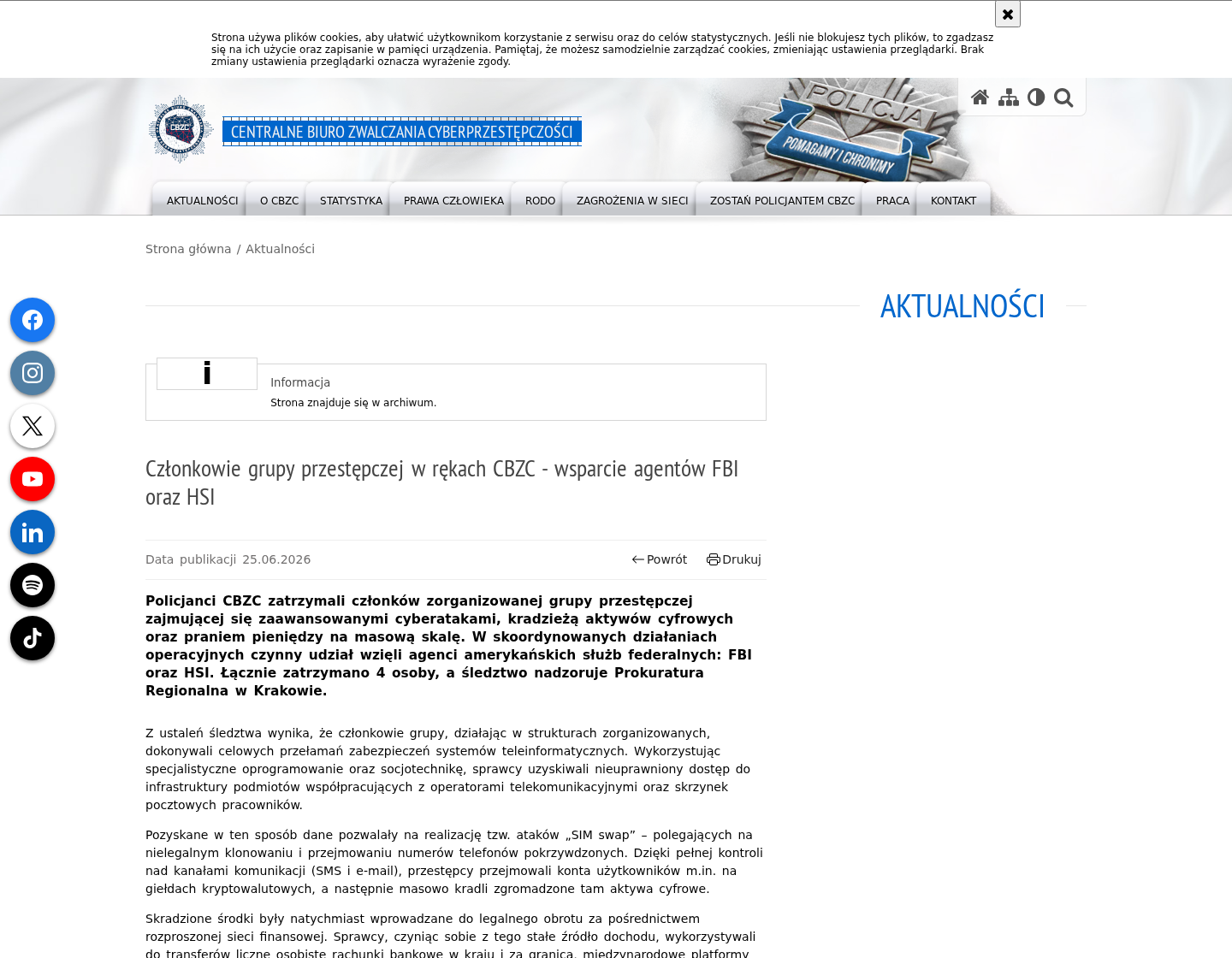
Poland’s Central Bureau for Combating Cybercrime, known as CBZC, announced four arrests on June 25, 2026. Agents from the FBI and Homeland Security Investigations took part in the operation.
Police said the group had gained unauthorized access to systems at businesses working with telecom carriers. Investigators also identified compromised employee mailboxes in those businesses.
The CBZC announcement describes the charge and detention decisions at that point. It does not name the affected suppliers, carriers, exchanges, or account holders.
The phone was not necessarily the first thing compromised
Investigators said the group used information obtained through the supplier breaches to take control of phone numbers. That gave the attackers access to SMS communications.
The police also identified control over email communications. Together, those channels let the group take over online accounts, including accounts holding digital assets on crypto exchanges.
Someone can lose control of their number without downloading anything. An antivirus result on the handset cannot show whether the carrier moved the number or changed its provisioning.
The amount police cited was not a refund fund
Investigators estimated the value of the funds laundered in the scheme in the tens of millions of Polish zlotys. That was not an amount made available to customers.
The announcement describes several charges, including organized crime, theft involving computer intrusion, and money laundering. A court ordered pretrial detention for the four people arrested.
- June 25 is the date of the police announcement, not the date on which every affected phone number was taken.
- A prosecutor’s estimate of laundered funds does not show what any exchange has frozen or what individual victims can recover.
- Your own carrier and exchange records are more useful than guesses about whether a particular outage belongs to this case.
Why the Telecom Supplier Connection Matters
Consumer warnings often show someone calling a carrier and pretending to be the account holder. The Polish case points to a different starting place: systems already inside the supplier relationship.
Carriers depend on other companies for some services. A consumer normally has no way to see which firms support their account or whether an employee mailbox there was accessed.
Police did not disclose the supplier roles or the precise changes made to each line. Treat any online post naming a particular company as a separate claim that needs evidence.
If an exchange sends codes to your number and your email recovers through it, the same number can put both accounts at risk.
Two different login pages can depend on one recovery channel. A separate sign-in factor helps most when the backup choices do not silently fall back to the same line.
For a parallel example with different defendants and a court outcome, see the Bennett SIM swap case. Its loss figure and sentences do not belong to the Polish investigation.
How the Polish SIM Swap Scam Worked
Step 1: The group reached systems connected to telecom providers
According to police, the group gained unauthorized access to infrastructure and employee email at companies that cooperated with operators. That is the first stage officials describe.
The announcement does not say that customers clicked a link, handed over a carrier PIN, or installed a fake update. Those explanations should not be attached to this case.
Step 2: Victims lost control of their numbers
Investigators said the stolen information supported SIM swaps. In practical terms, the number’s incoming calls and texts may go to someone else while the original phone loses service.
A legitimate move to a new SIM or eSIM can produce a similar service interruption. The difference is whether the subscriber authorized the change and knows where the line went.
Step 3: The attackers got past account checks
Police connected the loss of control over phone and email communications to exchange account takeovers. The release does not reveal the exact login or recovery prompt each exchange used.
A password is still valuable, but its value drops if a provider accepts a code from the stolen number as enough evidence to reset it.
Step 4: Stolen assets moved out of victim accounts
Police described stolen assets moving through bank accounts, payment platforms, and crypto wallets. An exchange balance can change before the rightful customer has regained mobile service.
Getting the number back lets you receive future calls and texts. It does not automatically end exchange sessions, cancel a pending withdrawal, or return assets already sent.
How to Tell a SIM Swap From an Ordinary Outage
Start by asking whether the problem affects only your line. If several people on the same network lost service nearby, a carrier outage becomes a more plausible explanation.
An outage does not explain every warning. An unexpected SIM activation email, a password reset you did not request, or a withdrawal notice makes checking the account more urgent.
If an app still works over Wi-Fi, the phone has an internet connection. That does not mean cellular calls and verification texts still reach your SIM.
Use a trusted second phone or computer to find your carrier’s official support page. Ask about a SIM or eSIM replacement and a transfer to another carrier as separate events.
Give the approximate start time, your affected line and the wording of alerts. Ask the agent which activity they can confirm for that line and request an incident reference.
For a family plan, the primary account holder may have to speak with the carrier. Brief them on the situation without texting secrets to the number you no longer control.
A spoofed caller ID simply makes a call display a chosen number. It does not establish that the caller can receive messages meant for the subscriber.
A replacement SIM can move the number to another device without changing providers. A port-out moves the number between providers, so the right protections are not always the same.
Do not delete your eSIM or reset the phone as a diagnostic shortcut. Either step can make it harder to restore a legitimate line without answering what the provider changed.
Protect the Recovery Channels Before You Need Them
Start with the mailbox connected to financial accounts. Open its security settings and locate both the sign-in methods and the methods used when you cannot sign in.
Choose a passkey, a security key, or an authenticator app where available. Prefer a phishing-resistant option when you have a supported device and a recovery plan.
Add a second independent way back in before removing an older method. Use the service’s recovery-code option if offered and keep those codes offline or in separately protected storage.
Try a normal sign-in from a trusted device without logging your only working session out first. Confirm the stronger method works and you know how to recover it.
Repeat that check for your exchange. If it has separate settings for login, new devices, and withdrawals, review all three rather than assuming your login setting controls the others.
Check whether an exchange offers a delay or approval step for adding new withdrawal addresses. Record the rules before you depend on them, because the options differ by exchange.
The FTC guide to two-factor authentication explains why an authenticator does not depend on receiving a text. It does not eliminate the need to guard recovery methods.
Ask the carrier what its lock actually covers
Some providers protect number transfers and SIM replacement through different controls. Ask your own provider whether its protection covers both and how to confirm the settings are active.
AT&T describes Wireless Account Lock for eligible accounts. To enable it, open the AT&T app on a device active on the account and sign in.
Tap the person icon, scroll to Wireless account lock, and select the relevant account if prompted. Swipe to lock and watch for the carrier’s confirmation.
AT&T says lock changes trigger an email to the account holder and a text to each active line. Ask the carrier about an unexpected notice.
If the feature is missing or the line is already down, contact the provider through known support details. Do not turn off a lock at an unsolicited caller’s request.
A consumer lock is worth using, but the Polish announcement did not identify which safeguards its suspects encountered. Nothing in that announcement shows that any specific carrier lock failed.
Keep a Short Outage Timeline for Support
Start with the last incoming text or call you know actually reached your phone. Add the time the line went dead and the first carrier or exchange warning you noticed.
Keep time zones with screenshots and exports. Some exchanges show transaction times in UTC, while your phone and a carrier’s case notes may show local time.
Separate entries you observed from changes the provider confirmed. A reset email tells you a request happened, while the provider may be able to confirm whether it succeeded.
Ask an exchange to preserve its login and withdrawal records. An email timestamp is useful, but it does not show which account action came first on the exchange’s system.
Save another copy somewhere you control independently of the affected email. You may need the timeline later when different support teams ask you to reconstruct events.
What to Do if You Have Fallen Victim to This Scam
-
Use a second trusted device right away. Keep the affected phone available for alerts and evidence. Do not depend on it as your working number.
-
Call the carrier’s fraud or security team. Say when the line stopped working and request review of replacement SIMs, eSIM activations, and port-out activity.
Ask whether a change is pending or complete, how to stop or reverse it, and how the provider will verify you without texting the affected number.
-
Contact the exchange’s security team without waiting for the line restore. Ask it to lock withdrawals or freeze the account if that option is available.
Use the exchange’s official recovery route when locked out. Explain that the linked email or number may be compromised so the agent does not rely on it blindly.
-
Check the email recovery settings from a trusted device. Change the password, remove unfamiliar sessions, review forwarding rules, and look for a recovery address someone added.
Keep at least one safe way back into the account before disabling a factor. Save suspicious reset messages without forwarding secrets or verification codes.
-
Review financial accounts for changes, not only missing balances. Check new payees, approved devices, recovery contacts, API access you did not create, and withdrawal destinations.
Tell providers which activity you did not authorize and ask what is still pending. Keep the case reference each team gives you and record what was restricted.
-
Document transfers and report the incident. Save the asset and amount, network, timestamps, destination address, transaction hash, and exchange withdrawal references you can obtain safely.
Report to local police or your national cybercrime service. In the United States, the FBI’s reporting guide explains the transaction details most useful to investigators.
After the carrier restores your line, test an incoming call and a normal text from someone you know. Then repeat the account checks for activity that happened during the outage.
Your reporting receipt does not approve a refund or authorize a recovery agent. If someone contacts you claiming to represent investigators, verify them through the agency you originally contacted.
Frequently Asked Questions
Did Polish police announce a conviction?
No, the June announcement described four arrests, criminal charges, and pretrial detention orders. Those steps are not findings of guilt or sentences.
Does a dead phone line prove someone stole my number?
No, an outage or a service problem can look similar. Check with the carrier promptly when the failure coincides with a SIM change, reset, or withdrawal alert.
Does a SIM swap give someone my authenticator codes?
It does not by itself transfer secrets stored in an authenticator app. Review whether the service can fall back to a text or to a compromised email account.
Is a PIN on my physical SIM the same as a carrier lock?
A SIM PIN protects use of that physical SIM. Carrier protections concern changes to an account or line, including transfers where the provider supports that control.
Will restoring my number reverse a crypto withdrawal?
No, line restoration and financial recovery are separate. Ask the exchange whether it can stop pending activity and preserve records for any completed transaction.
Should I factory reset my phone after a SIM swap?
A number takeover alone does not justify a reset. Work with the carrier and secure your accounts first, then investigate any separate signs of device compromise.
The Bottom Line
The Polish case shows why account recovery should not depend on one phone number. Keep an independent sign-in factor for email and financial services before something goes wrong.
If you lose service alongside an account or withdrawal alert, get the carrier and exchange involved immediately from another trusted device. Restoring the line is only one step.

Join the discussion
0 commentsShare your experience or ask a question about this article.
Community experiences
Did this happen to you?
Your experience could help someone recognize the same scam. Submit a private report for our team to review.
I experienced this tooReports are reviewed before publication. Sharing publicly is always your choice.
Discussion
Start the conversation
Have a question or something useful to share? Add the first comment.