


Gold mines, impressive returns and insurance sounded like a reassuring combination to people offered a DFRF Enterprises membership. The presentation gave them several reasons to believe.
Years later, investors face a different challenge: understanding what happened to their payments and separating the real distribution process from another promise of getting everything back.
Overview
The membership that supposedly opened the door to gold profits
DFRF Enterprises sold memberships using a story about lucrative gold mines, financial backing and investment protection. The SEC’s case concerned more than 1,400 investors worldwide.
The attraction was bigger than a single promised return. Mining activity supposedly supplied earnings, while banking and insurance claims made sending money appear less risky.
Those supposed protections mattered because they gave people an answer to the question they should have been asking: what would happen if something went wrong?
Final civil judgments followed a fundamentally false business story
The SEC’s case summary describes nonexistent mines and other false assurances, with investor money used for Ponzi payments and personal benefit.
Final judgments were entered against the defendants, including default judgments. This article concerns that civil fraud case and its distribution process, rather than an asserted criminal conviction.
The later fund administers money actually collected. It is separate from DFRF’s original membership offer and does not make the advertised investment legitimate.
The current claims position investors need to understand
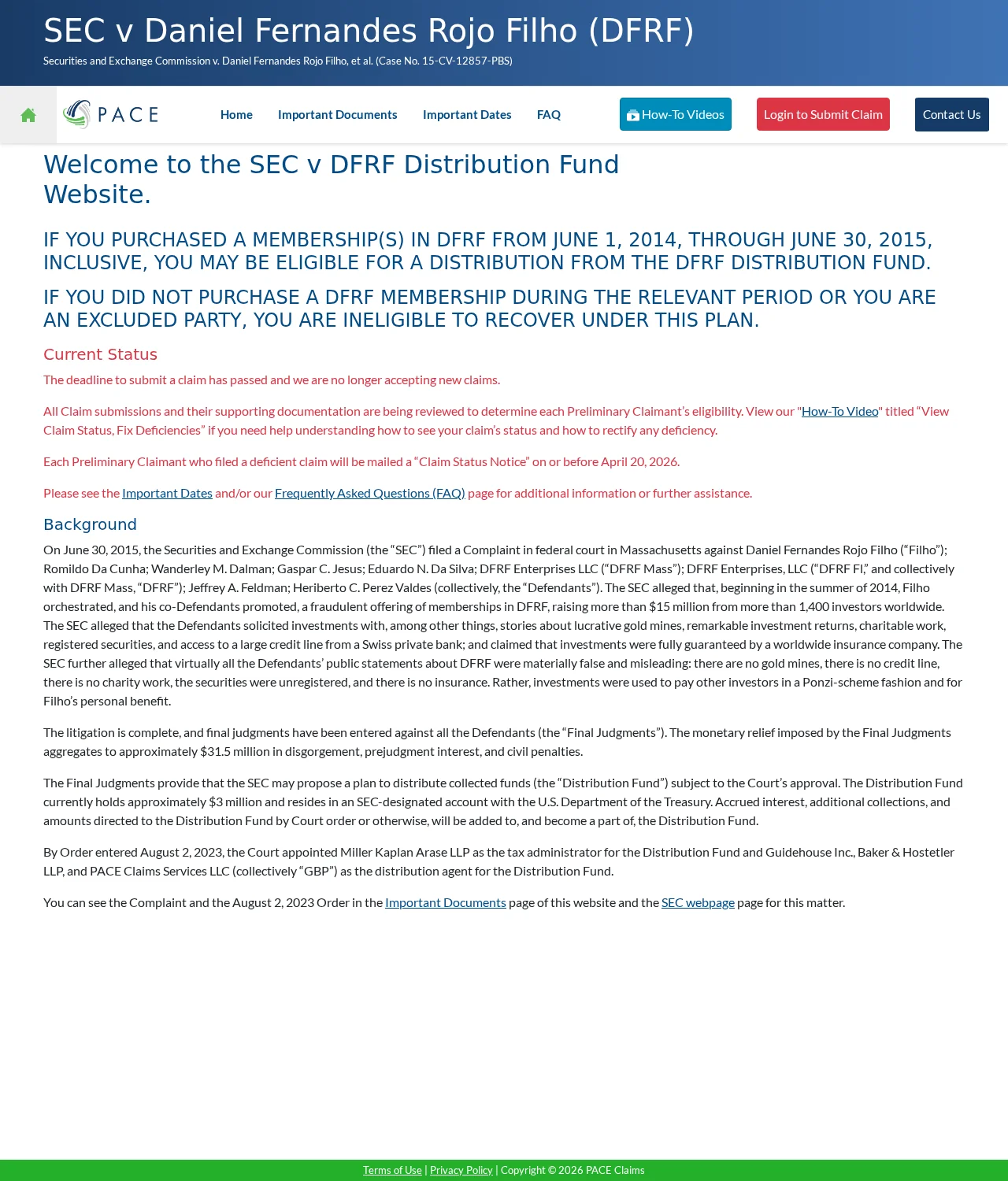
A real distribution website exists, but its original filing window has closed. Someone promising easy new access should not be mistaken for the appointed administrator.
- The relevant memberships were purchased between June 1, 2014, and June 30, 2015, subject to the plan’s eligibility rules.
- The published deadline for new claims was February 17, 2026, and the administrator now states that new claims are not accepted.
- Existing claimants should use their own notices and the appointed distribution agent for status questions or disputed calculations.
- The listed fourth-quarter 2026 payment schedule is a timetable, rather than confirmation that your payment has already been issued.
How Gold Mines, a Swiss Bank and Insurance Worked Together
The mining claim supplied the engine of the pitch: a business capable of producing unusually attractive investment earnings. Without that engine, the return had no explanation.
The claimed Swiss private-bank credit line added another layer of authority. A connection to established finance could make an unfamiliar membership program appear more credible.
Insurance then addressed the fear of losing money. When an investment seems both profitable and protected, someone may feel less need to investigate its finances.
Charitable activity supplied a different kind of reassurance, suggesting that the operation was successful enough to help others and respectable enough to deserve trust.
According to the SEC’s case, those central assurances were materially false. They were selling reasons to trust an investment that the underlying business did not support.
That is why DFRF belongs in a fraud discussion rather than an ordinary complaint about disappointing returns. The problem began with what investors were told existed.
An investment can lose money despite honest disclosures and genuine activity. DFRF’s case instead concerned fabricated foundations for the decision to invest.
The distinction also helps when reviewing a replacement offer. Another impressive explanation cannot fix the original loss unless identifiable funds are actually available for distribution.
How the DFRF Enterprises Scam Works
Step 1: Sell membership as access to an exceptional business
Investors were offered membership in DFRF rather than a straightforward purchase of a familiar financial product. The membership supposedly connected them to the business and its returns.
That wording can distract from the economic question. If you send money expecting someone else’s business to generate profits, the business activity still needs to be genuine.
A membership certificate or account record can establish participation. It cannot demonstrate that mines were operating or that earnings came from the advertised source.
Keep those documents because they help identify your purchase. Just separate their value as evidence of payment from their original role as marketing reassurance.
Step 2: Stack financial assurances around the promised returns
The offer combined mining, banking, insurance and charity claims. Each element made the others easier to accept, even though none supplied independent verification of the whole arrangement.
Someone reassured by the insurance claim might stop asking about mining revenue. Someone impressed by the bank connection might assume the insurance had already been checked.
The court-approved distribution plan recounts the false claims behind the original SEC action, including the missing business activities and safeguards.
A credible financial story needs confirmation from the named institution itself. Repeating an insurer’s or bank’s name in a presentation does not create that relationship.
Step 3: Bring investor funds into the operation
The SEC described more than $15 million raised from investors around the world. The money entering the operation was real, regardless of the membership language.
For an investor, the purchase record may be scattered across several places: a bank statement, receipt, email confirmation or conversation with the person who introduced DFRF.
Those records become particularly important years later. A promoter’s remembered promise is harder to evaluate without the corresponding amount, date and recipient.
Build the history from original documents wherever possible. Leave gaps marked as missing rather than filling them with an account balance you cannot independently reconcile.
Step 4: Use new money where business earnings should have been
The SEC described incoming funds being used to pay other investors in Ponzi fashion and for Daniel Fernandes Rojo Filho’s personal benefit.
A payment received during that period could make the offer appear successful. It would not answer whether an actual gold-mining business had earned the money.
For a participant deciding whether to invest more, that difference is crucial. Money can arrive in your account while the operation remains dependent on further deposits.
When rebuilding your loss history, record any payments received separately. They are relevant to the calculation even when they did not represent genuine investment profits.
Step 5: Leave recovery dependent on collections and a court-approved plan
Once the fraudulent operation ends, advertised balances do not automatically turn into recoverable assets. Courts can enter judgments without collecting the full amount owed.
The DFRF distribution process concerns collected funds, administrative rules and eligible claims. Its purpose differs from enforcing the original promise of exceptional returns.
That gap creates an opportunity for misleading recovery offers. A supposed fixer may point to the real court case while inventing their own authority to release money.
Check the actual administrator and the status of your own claim. Do not let the existence of a legitimate fund authenticate an unrelated message.
DFRF Companies, Promoters and the Distribution Agent
The Massachusetts and Florida entities belong to this case
The plan identifies DFRF Enterprises LLC in Massachusetts and DFRF Enterprises, LLC in Florida. It uses the shorthand DFRF Mass and DFRF FL.
Compare the company name on your purchase records with those entities. A similar acronym elsewhere should not be treated as proof that another business participated.
Filho’s role is different from the administrator’s role
The SEC identified Daniel Fernandes Rojo Filho as the person who orchestrated the membership offering. Other named defendants were associated with its promotion and financial arrangements.
The distribution agent acts under court authority after the enforcement case. It does not operate as an extension of the original membership program.
The court-appointed agent is identified in the plan
The approved plan identifies Guidehouse, Baker & Hostetler and PACE Claims Services collectively as GBP, the distribution agent responsible for administering claims.
That plan also specifies DFRFDistributionFund.com and 1-833-373-3535. These details provide an independent connection between the court documents and the administrator’s website.
A judgment amount is different from money available to claimants
The final judgments contain obligations imposed on different defendants. Adding headline figures does not establish the amount any particular investor will receive.
The plan’s allocation rules, eligible losses and collected funds determine distributions. Use your determination notice rather than dividing a judgment total by the number of investors.
What the Closed Claims Window Means Now
The administrator’s Important Dates page lists February 17, 2026, as the claims deadline. The homepage explicitly says new claims are no longer accepted.
Some older explanatory text still describes submitting forms. Read it alongside the current closure notice, rather than treating those instructions as a newly opened filing period.
If you submitted a claim, the next question is its status. You may have received a deficiency notice or a final determination requiring attention.
The published FAQ describes a 30-day period from a relevant notice for curing deficiencies or disputing a determination. Your actual notice controls the individual response.
Someone who finds an old message late should contact the administrator promptly and explain the circumstances. Do not assume that an expired deadline has automatically restarted.
The timetable also lists payments for the fourth quarter of 2026. A listed schedule is not evidence that a specific check has been mailed.
If you missed the original filing window, ask the agent about your situation honestly. An outside company cannot promise to reopen your eligibility by collecting a fee.
The approved plan allows certain deadline decisions through the SEC process. That narrow authority belongs to the official process, rather than a promoter or paid intermediary.
Use the same name and claim identifier in each inquiry. That helps the agent connect your question to an existing record rather than another household member.
For a deceased investor or jointly purchased membership, the administrator may need documents establishing who can act. Explain that situation before sending personal records.
When posting requested documents, use the address listed by the agent and keep copies. Retain delivery tracking alongside the notice you are answering.
A mailed response should identify the claim and explain which question it addresses. An unexplained bundle of statements may leave the underlying deficiency unresolved.
What to Do if You Have Fallen Victim to This Scam
-
Identify whether you already submitted a claim. Search your email and saved documents for DFRF, PACE, your claim confirmation and any determination notice.
Record the submission date and claim identifier together. If you cannot find a confirmation, tell the administrator what you have instead of assuming acceptance.
-
Start from the independently identified fund website. Type DFRFDistributionFund.com into your browser, then open Important Dates and FAQ before responding to a payment message.
Confirm the case number, 15-CV-12857-PBS, against your notice. Stop if a message points to a different domain or asks for a new investment.
-
Use Contact Us for your individual status question. Prepare your claim identifier, current contact information and the date of any notice you received.
The website lists Support@DFRFDistributionFund.com and 1-833-373-3535. Ask whether your claim was received, whether action remains necessary and how to provide documents securely.
Keep the response with your claim file. If the answer conflicts with your notice, request clarification of the specific deadline before sending sensitive information.
-
Respond to an actual deficiency or determination notice. Read its reason, required evidence, response route and stated deadline. Gather copies that address the missing transaction or disputed amount.
Submit through the route specified by the administrator and retain confirmation. If the deadline has passed, explain when you received the notice and request guidance.
-
Check your mailing and payment details through the agent. If you moved after filing, ask how to update your records and what verification is required.
Do not send bank details to a newly introduced contact just because they mention DFRF. Verify their role through the established administrator before proceeding.
-
Keep suspicious recovery demands separate from your real claim. Save messages promising guaranteed repayment or special access, including sender details and any requested payment destination.
Ask the administrator whether the communication belongs to its process. A supposed tax, activation deposit or fresh membership payment should never substitute for that verification.
Frequently Asked Questions
Was DFRF simply a gold investment that performed badly?
No, the SEC case concerned false claims about mines, insurance and financial backing, followed by final civil judgments. The problem went beyond disappointing investment performance.
Is DFRFDistributionFund.com connected to the court-approved process?
Yes, the approved plan names that domain and the administrator’s phone number. The real distribution process is separate from the original DFRF membership offering.
Can I still file a new DFRF claim?
The administrator states that new claims are closed, with a February 17, 2026 deadline. Contact the agent about individual circumstances rather than assuming an exception.
Does an approved claim mean I will recover my entire investment?
No, payments depend on eligibility, recognized losses and funds available under the allocation plan. Your determination notice provides information specific to your claim.
Does the fourth-quarter 2026 timetable mean my check is already coming?
No, a published schedule does not confirm your individual payment status. Ask the administrator about your claim and whether your contact information is current.
Should I pay a company to reopen my claim?
Do not pay based on a guaranteed reopening promise. Check directly with the court-appointed administrator, because an outside company cannot grant eligibility under the plan.
The Bottom Line
Do not buy another DFRF opportunity or pay a recovery fee based on its old promises. The real route concerns collected funds and court-approved claims.
If you already filed, locate your notices and contact the appointed agent about your status. If you never filed, acknowledge the closed window when requesting guidance.

Join the discussion
0 commentsShare your experience or ask a question about this article.
Community experiences
Did this happen to you?
Your experience could help someone recognize the same scam. Submit a private report for our team to review.
I experienced this tooReports are reviewed before publication. Sharing publicly is always your choice.
Discussion
Start the conversation
Have a question or something useful to share? Add the first comment.