

The “Pink Gelatin Trick” ads are back, and they are louder than ever.
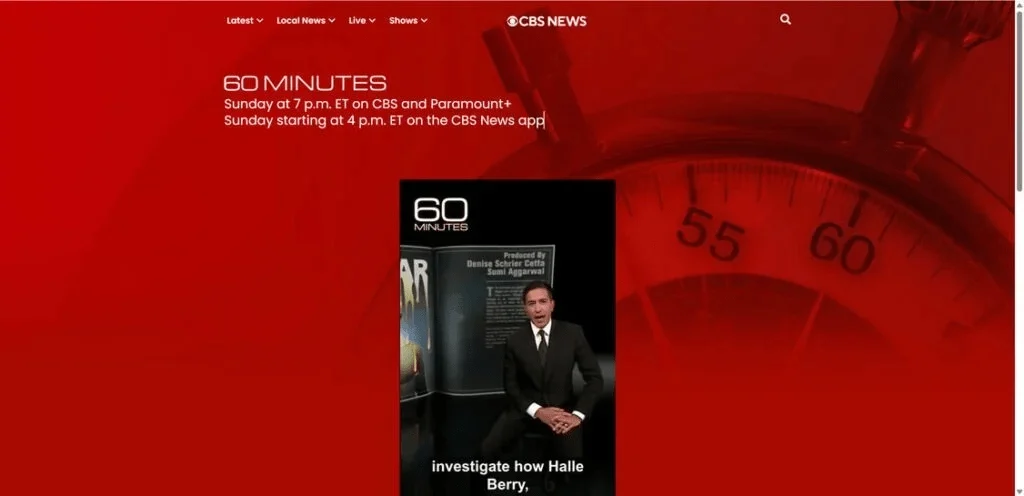
They promise a simple recipe, a shocking secret, and rapid weight loss that supposedly takes seconds. To make it feel believable, many versions borrow the names and images of public figures like Dr. Oz and Oprah, sometimes through convincing AI-style video and “news report” layouts.
What follows is rarely a helpful recipe.
It is usually a high-pressure supplement funnel designed to push you into expensive bundles, confusing upsells, and in some cases unwanted refill subscriptions.
This article explains the scam pattern behind the Dr. Oz and Oprah pink gelatin trick campaigns, how the funnel works step by step, and what to do if you already paid.
Scam Overview
What the “Pink Gelatin Trick” scam actually is
Despite the confident tone of the ads, the Pink Gelatin Trick is usually not a legitimate weight loss method.
It is a marketing template.
The template starts with something that feels harmless and familiar. Gelatin. A recipe. A “kitchen trick.” A bedtime ritual. Then it builds suspense and urgency until the page pivots into selling a supplement, usually drops, gummies, or capsules.
The product name changes often.
The funnel stays the same because it is engineered to convert.
If you have ever felt like these ads are all the same, just with new labels, that instinct is accurate.
Why scammers use Dr. Oz and Oprah in the pink gelatin trick ads
Scammers use famous names because they function like trust shortcuts.
When people see a familiar public figure, their brain naturally relaxes. They assume someone checked the claims, or that the product must be “real” because a celebrity is connected to it.
That is the trap.
Oprah has warned publicly about scams using her name and image for weight loss gummies, telling people not to buy those products. (Instagram)
Dr. Oz has also warned that ads using his name or likeness are scams, encouraging people to report them. (Facebook)
In other words, when the pink gelatin trick campaign leans on these names, it often signals the opposite of legitimacy.
It is a red flag that someone is borrowing credibility without consent.
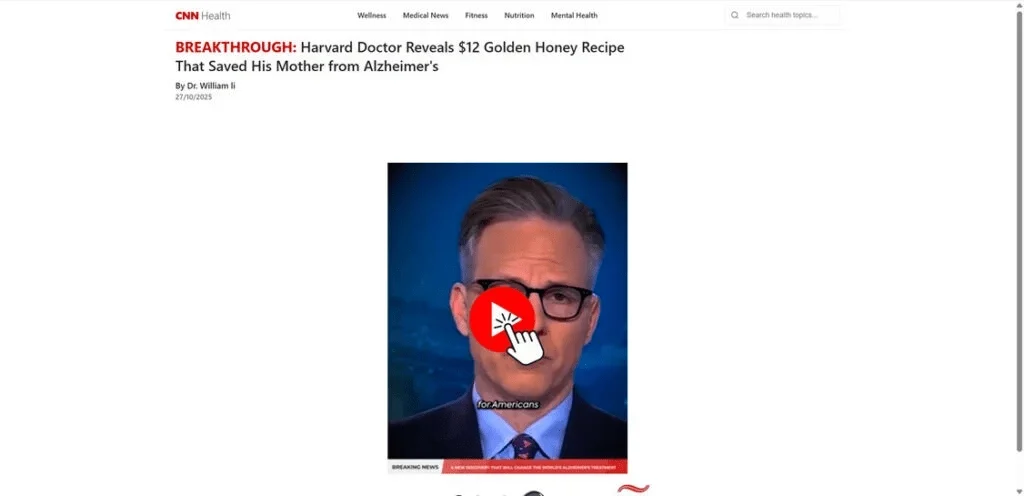
The deepfake factor makes these scams feel more “real” than older versions
Years ago, scam ads often relied on stolen photos and fake quotes.
Now many versions use AI-generated voiceovers, edited clips, and endorsement-style videos that look authentic on a small phone screen. That shift is one reason people get pulled in even when they are normally cautious.
The Federal Trade Commission has warned directly that scammers are using fake celebrity and influencer endorsements, including doctored video and audio that can seem real, to generate profits.
The FCC has also warned that deepfake audio and video links are making scams harder to spot, especially when scammers imitate celebrities or trusted public figures.
So if you watched a clip and thought, “I saw them say it,” that is no longer reliable evidence.
Fake news pages are part of the credibility costume
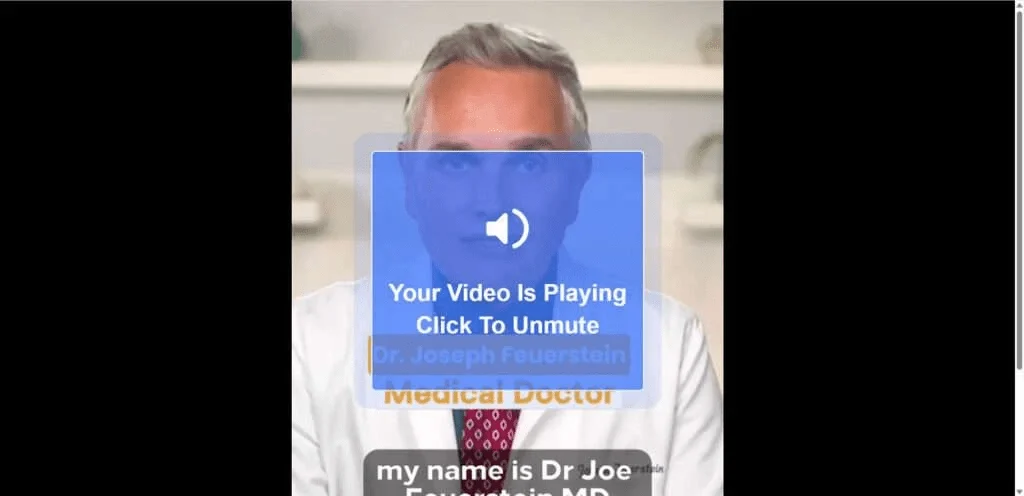
A hallmark of the pink gelatin trick scam is the advertorial.
That is a sales page disguised as a news story.
It often includes:
- A headline written like breaking news
- A date stamp to look current
- A byline that is vague or untraceable
- “As seen on” logos with no real coverage links
- A layout that resembles a real media outlet
- A big video block that demands your attention
The FTC warns consumers that scammers place false stories online through fake news websites, blogs, banner ads, and social media to sell weight loss products.
That warning fits the pink gelatin trick pages perfectly.
They are designed to look like reporting, but they behave like a checkout machine.
The “recipe” is bait that is often delayed on purpose
If the pink gelatin trick were truly about a recipe, it would be delivered clearly:
- Ingredients
- Measurements
- Steps
- Realistic expectations
- Safety notes and limitations
Instead, scam versions do the opposite:
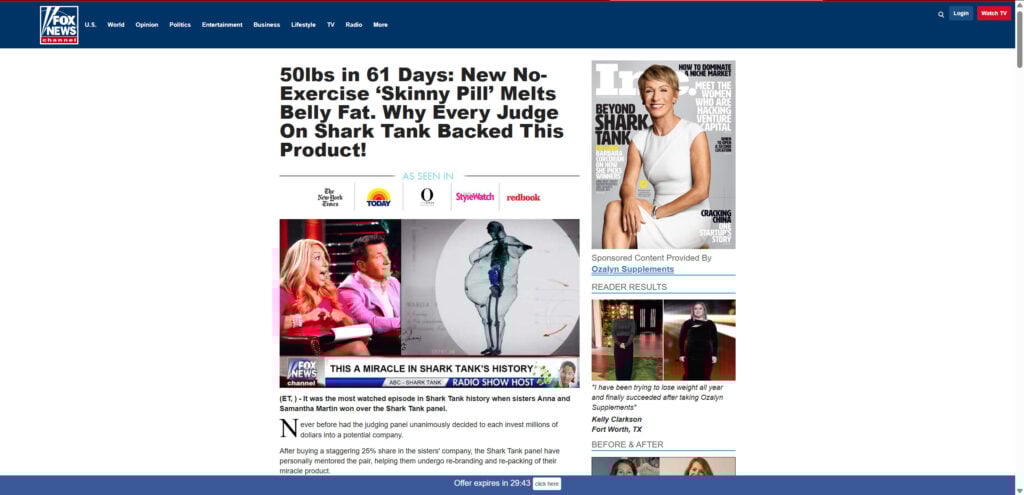
- They tease the recipe repeatedly
- They delay the instructions with a long video
- They claim the secret is being suppressed
- They push “watch until the end” pressure
- They pivot to a supplement as the real solution
This is a classic bait-and-switch.
The bait is the recipe.
The switch is the bottle.
Why the claims are so extreme
The pink gelatin trick scam is designed for one goal: conversions.
And in the supplement world, extreme claims convert better than cautious claims.
So the pages often imply outcomes like:
- Rapid weight loss with minimal effort
- A metabolism “reset”
- Fat loss without meaningful lifestyle change
- “Works for everyone” results
- A secret that doctors “hide”
The FTC has long warned that promises of effortless, dramatic weight loss are a major red flag, and that no product can safely guarantee big results for everyone.
When a page promises a universal shortcut, it is usually selling hope, not evidence.
The supplement category itself adds real risk
Even if you ignore the celebrity deception, there is another layer: product safety.
The FDA has warned that many products marketed for weight loss are likely to contain dangerous hidden ingredients, and it publishes public notifications for products found to contain undisclosed drugs.
This matters because many pink gelatin trick funnels try to lower your fear with phrases like:
- “All natural”
- “Gentle but powerful”
- “Doctor formulated”
- “Made in the USA”
None of those phrases guarantee what is in the bottle.
None of them guarantee safety.
The biggest damage often comes from billing and “refill” traps
A lot of victims say the worst part was not the product.
It was the billing.
Common complaint patterns in these funnels include:
- Ordering one bottle and being charged for multiple bottles
- Upsells that look like required checkout steps
- Confusing “free bottle” language that increases the total
- Merchant names on statements that do not match the product name
- Unwanted refill subscriptions or continuity billing
- Refund processes that feel slow, vague, or impossible
The FTC specifically warns that many weight loss offers use deceptive billing structures, including recurring shipments people did not intend to sign up for.
And this style of deceptive health marketing is not new. Reuters reported in 2009 that Oprah and Dr. Oz sued businesses over alleged false claims that they endorsed dietary supplements and other products.
That history matters because it shows how long scammers have been trying to profit from borrowed celebrity trust.
Why the product names keep changing
If you search one product name today, it may vanish next month.
That does not mean the scam stopped.
It usually means the operators rotated the campaign.
They can swap:
- The domain name
- The product label
- The color scheme
- The video voiceover
- The “secret trick” story
Then they relaunch the same funnel again.
Once you recognize the structure, the name on the bottle stops mattering.
How The Scam Works
Below is the typical step-by-step flow behind the Dr. Oz and Oprah pink gelatin trick recipe scam supplements. The visuals and product names vary, but the mechanics are remarkably consistent.
Step 1: A scroll-stopping ad triggers urgency and emotion
Most people see the scam through social media ads.
The ad targets emotional pressure points:
- Frustration with stubborn weight
- Shame about body changes
- Fear of aging
- Hope for a shortcut
- Curiosity about a “secret”
The ad often uses language like:
- “Watch before it’s removed”
- “Breaking report”
- “Doctors are stunned”
- “It only takes seconds”
This is not medical framing.
It is conversion framing.
The goal is to make you click before you think.
Step 2: A celebrity name is used as the trust lever
The ad then adds a credibility shortcut:
- Dr. Oz “reveals” the trick
- Oprah “supports” the method
- A fake clip suggests endorsement
- A headline implies a public figure is connected
This works because celebrity familiarity reduces skepticism quickly.
But again, Oprah has warned people not to buy weight loss gummies using her name or image.
And the FTC warns about fake celebrity endorsements using doctored video and audio.
So the endorsement itself can be part of the scam.
Step 3: You land on a fake report page designed to keep you watching
After clicking, you often land on a page that looks like a news story.
Common signs:
- “Special report” language
- A date stamp
- A byline that is hard to verify
- Minimal navigation
- A big embedded video with “tap to listen” prompts
The goal is to create the feeling of journalism.
But the page is built for one purpose: keep you engaged until the product offer appears.
Step 4: The video opens with suspense, not clear proof
Instead of giving the recipe immediately, the video usually starts with suspense:
- “Stay until the end”
- “This is being suppressed”
- “Doctors won’t tell you”
- “This explains why nothing worked”
This is a retention tactic.
The longer you watch, the more invested you become.
Step 5: The “pink gelatin trick” is teased but kept vague
Now the funnel dangles the recipe.
But it rarely provides a clean recipe card with clear steps.
Instead, it offers:
- Hints about a “pink” mixture
- Claims about a metabolic “switch”
- Vague timing rules
- “Bariatric” language to sound medical
The scam needs the recipe to stay slightly out of reach.
If you got the recipe clearly, you might leave.
Step 6: A “hidden cause” story reframes your weight struggle
Next, the script introduces a root cause narrative.
Common themes include:
- Metabolism sabotage
- Hormone disruption
- Gut imbalance
- Toxins
- Inflammation
- “Blocked pathways”
Some of these words resemble real topics, but the scam move is turning complex biology into a single simple lever, then claiming a recipe flips that lever fast.
Step 7: The bait-and-switch happens
This is the turning point.
Instead of delivering a practical recipe, the funnel pivots to the product.
It says something like:
- “The real power is in the concentrated formula.”
- “This bottle contains the key compounds.”
- “This is what the recipe was pointing to.”
Now the supplement appears.
Often drops.
Sometimes gummies.
Sometimes capsules.
The recipe becomes a story device.
The bottle becomes the sale.
Step 8: Badges and official language are stacked near the buy button
Now the page adds credibility theater:
- “Clinically proven”
- “Doctor recommended”
- “Lab tested”
- “GMP certified”
- “FDA registered facility”
These are designed to reassure you quickly.
But official-sounding words are not proof of effectiveness, and the FDA warns about hidden ingredients in weight loss products.
Step 9: Urgency tools push you to buy fast
Now the pressure ramps up:
- Countdown timers
- “Limited stock” warnings
- “Today only” discounts
- “People watching now” counters
- Popups showing “recent purchases”
These tools are not evidence.
They are conversion devices designed to stop you from researching.
Step 10: Bundle pricing pushes a higher spend
The offer usually comes in tiers:
- 1 bottle at a high per-bottle price
- 3 bottles as “recommended”
- 6 bottles as “best value”
This structure nudges people into spending more before they can evaluate anything.
Step 11: Checkout confusion leads to extra charges or unwanted refills
Many victims report that the billing is where they got burned.
Common traps include:
- Pre-selected quantities
- Upsells that look like mandatory confirmation steps
- Add-ons that inflate totals
- Fine print that introduces continuity billing
- A refill subscription that is not obvious on mobile
The FTC warns that weight loss promotions commonly involve deceptive billing and recurring shipments consumers did not intend.
Step 12: Refund friction kicks in after payment
After purchase, some buyers experience:
- Slow email-only support
- Scripted replies
- Vague return instructions
- Partial refunds offered instead of cancellation
- Stalling that drags past dispute windows
That is why so many people describe returns as “impossible.”
The friction is often built into the model.
Step 13: The funnel resets under a new name
When complaints rise, operators can rotate quickly.
New domain.
New product name.
Same pink gelatin trick storyline.
Same urgency.
Same billing risks.
What To Do If You Have Fallen Victim to This Scam
If you bought through a Dr. Oz and Oprah pink gelatin trick funnel, here is a calm, practical checklist.
- Save evidence immediately
Screenshot the ad, landing page, offer page, checkout totals, and any terms you can still access. Save confirmation emails and receipts. - Check your statement for extra charges
Look for split charges, higher totals than expected, shipping fees, or small “test” charges. - Look for subscription or autoship language
Search your emails for: autoship, membership, monthly, continuity, refill, next shipment. - Email the seller to cancel in writing
Include your name, the email used for purchase, your order number, and a direct instruction: cancel any subscription and do not charge me again. Request written confirmation. - Contact your card issuer quickly if billing looks wrong
Ask about disputing charges, blocking future charges from the merchant, and whether card replacement is recommended if rebilling continues. - Monitor transactions for at least 60 days
Many victims see delayed rebills. Set a reminder to check weekly. - Stop using the product if you feel unwell
If you experience side effects, stop and seek medical guidance. Weight loss supplements can be contaminated with hidden ingredients, as FDA warnings show. - Report the ad on the platform where you saw it
If it used fake endorsements or edited video, mention that specifically. - Report fake endorsement scams
The FTC warns that doctored celebrity endorsements are being used to scam people and encourages consumers to verify and report. - Tighten security if you shared personal information
Change reused passwords, enable 2-factor authentication on your email, and be cautious with follow-up “support” emails.
The Bottom Line
The Dr. Oz and Oprah pink gelatin trick recipe scam is usually not a real weight loss discovery.
It is a repeatable supplement funnel that uses a sticky recipe hook, borrowed celebrity credibility, fake news-style pages, and urgency pressure to push expensive products, often with billing surprises and hard-to-cancel refills.
If you see Oprah or Dr. Oz presented as proof, slow down and verify. Both have warned about scams using their names, and regulators warn that fake celebrity endorsements can be convincing, especially with AI-generated media.
If you already bought, focus on protection: document everything, watch for rebills, cancel in writing, and escalate through your card issuer if anything looks deceptive.

Join the discussion
0 commentsShare your experience or ask a question about this article.
Discussion
Start the conversation
Have a question or something useful to share? Add the first comment.