

If you have seen ads promising a “Korean bariatric gelatin trick” that melts fat fast, resets your metabolism, and works even if nothing else has, you are looking at a familiar scam pattern dressed up with medical-sounding language.
The hook is always the same. A simple kitchen “recipe” is teased like a secret you can do tonight. But after you click, the promised trick stays just out of reach, the page piles on urgency, and the real goal shows up: an expensive supplement checkout.
This article breaks down how the Korean bariatric gelatin trick scam works, why the claims are unreliable, and what to do if you already ordered and now feel uneasy.
Scam Overview
What the “Korean bariatric gelatin trick” scam is really selling
Despite how these ads frame it, the Korean bariatric gelatin trick is usually not a verified medical method.
It is a marketing funnel.
The funnel uses three powerful trust triggers:
- “Bariatric” to borrow medical authority from weight loss surgery.
- “Korean” to create an exotic “breakthrough overseas” vibe.
- “Gelatin recipe” to make the offer feel harmless, cheap, and safe.
Then it uses those trust triggers to push you toward supplements.
The product name changes constantly, but the structure stays almost identical because it converts.
Why “bariatric gelatin” sounds convincing
The word “bariatric” has weight.
It is associated with serious medical care, surgeon supervision, and life-changing results.
Scam ads exploit that association by implying something like:
- “Bariatric surgeons recommend this gelatin hack.”
- “Korean bariatric clinics use this nightly recipe.”
- “This is what patients do to stay thin.”
It sounds believable because it sounds clinical.
But there is a big difference between gelatin being allowed in certain medical diet phases and gelatin being a fat-melting trick.
Gelatin is often used as a clear liquid option around medical procedures, including post-surgery recovery, because it is easy to digest and fits a clear liquid diet.
That does not mean gelatin causes rapid fat loss.
It means gelatin is sometimes used as a low-residue, easy-to-tolerate food during short-term diet stages.
The scam plays a clever word game
The funnel takes a true concept:
- Gelatin can be part of a clear liquid diet.
Then it jumps to an unproven conclusion:
- Therefore, gelatin “resets metabolism” and “melts fat.”
That leap is where the deception lives.
If these ads were honest, they would say:
“This is a low-calorie snack that may help you stay within a calorie target.”
Instead, they sell fantasy outcomes:
- rapid fat loss
- no exercise required
- no diet changes needed
- “works for everyone”
The FTC warns that dishonest weight loss advertising often relies on these exact types of false promises, including claims like “lose weight without diet or exercise” and “works for everyone.”
Why the “Korean” angle is used
The “Korean” label is not there for nutrition.
It is there for psychology.
It creates a feeling of:
- hidden knowledge
- advanced clinics
- a method Americans “have not discovered yet”
- a cultural secret that feels more trustworthy because it is unfamiliar
You will see the same tactic in other scam funnels using “Japanese trick,” “Mediterranean ritual,” or “European doctor method.”
The origin story changes. The playbook stays the same.
The recipe is usually bait, not the solution
In a legitimate article, a recipe would be delivered clearly:
- ingredients
- measurements
- steps
- realistic expectations
- safety notes
In these funnels, the recipe is teased but rarely given in a practical way.
Instead you get:
- “watch this before you try it”
- “stay until the end”
- “this is being suppressed”
- “doctors don’t want you to know”
- “limited access”
That is not education.
That is a retention script designed to keep you watching until you are emotionally invested.
Why these funnels lean so hard on fake authority
Most people do not want to gamble with their health.
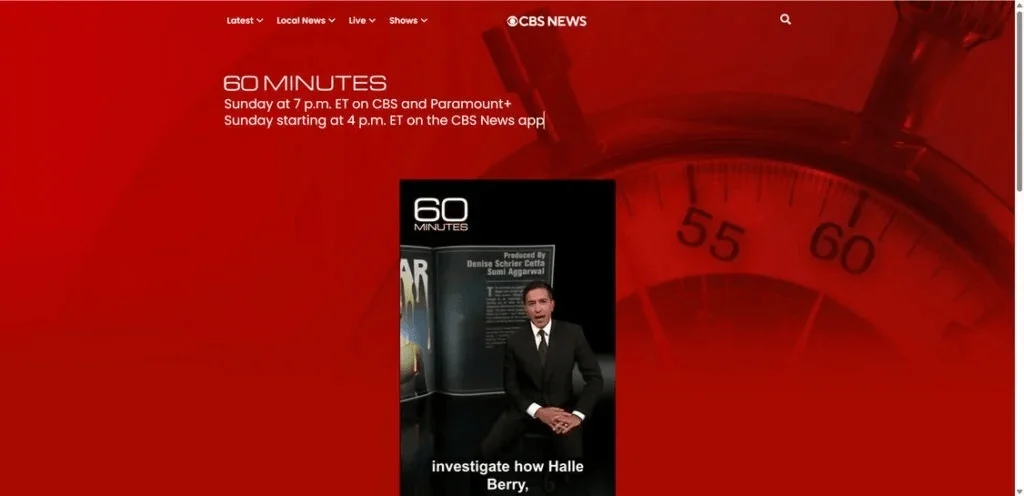
So the funnel manufactures credibility with “credibility theater,” meaning the page looks official without giving you proof.
Common signs include:
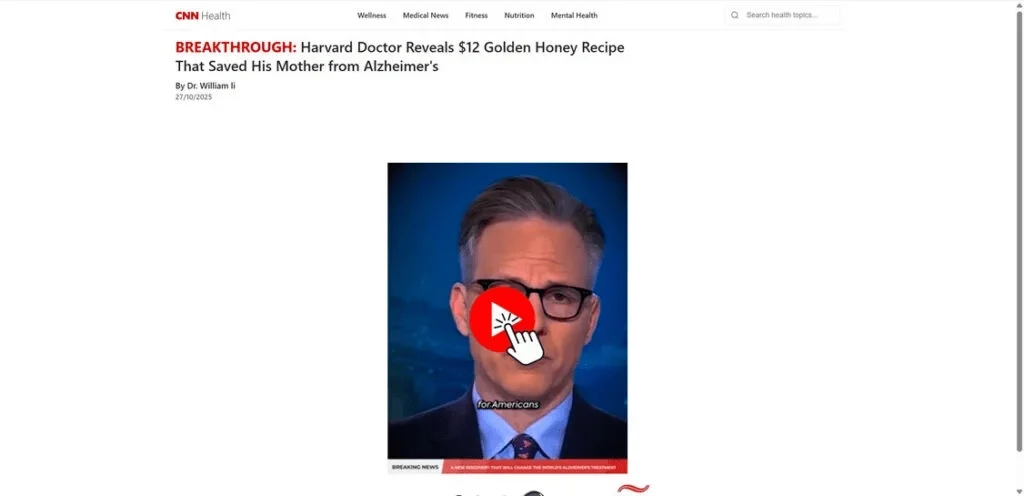
- fake news-style layouts
- “as seen on” logos without real coverage
- references to universities with no citations
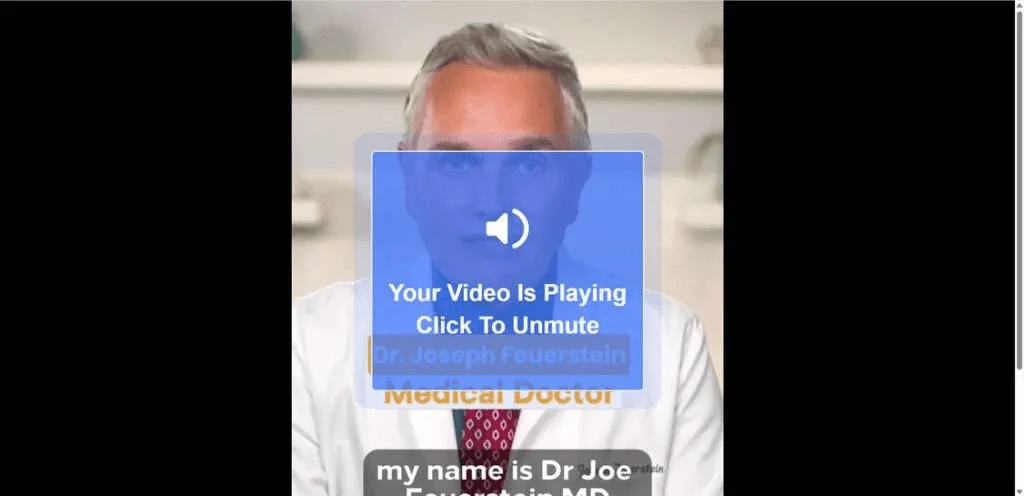
- doctor photos that are stock images
- “clinical” graphs with no sources
- badges like “FDA approved,” “lab tested,” “GMP certified”
The FTC explicitly warns that scammers place false stories online through fake news sites, blogs, banner ads, and social media to sell weight loss products.
If the story looks like news but ends in a checkout button, treat it like an ad, not reporting.
The supplement category adds a second layer of risk
Even if you ignore the marketing deception, there is another concern: supplement safety.
The FDA warns that many products marketed for weight loss are likely contaminated with dangerous hidden ingredients and that these products are a type of medication health fraud.
The FDA has also issued specific public notifications where lab analysis confirmed hidden drug ingredients not listed on labels in weight loss products.
That is why “natural” language should not be treated as a safety guarantee.
The biggest damage often comes from billing, not the bottle
A lot of victims say the same thing:
“I didn’t just waste money. I got trapped.”
Common complaint patterns in these funnel-style supplement scams include:
- being charged for more bottles than selected
- upsells that look like required checkout steps
- “today only” pricing pressure that hides the real terms
- unwanted “refill” subscriptions or monthly autoship
- refunds that become slow, confusing, or impossible
The FTC has repeatedly warned about deceptive weight loss promotions using fake stories and pressure tactics, and has taken action in cases involving deceptively formatted ads and unauthorized charges.
The key takeaway
The Korean bariatric gelatin trick scam is not built around a recipe.
It is built around persuasion.
The “recipe” is the hook. The supplement is the monetization.
Once you see that, it becomes easier to spot the next version, even when the product name and story change.
How The Scam Works
Below is the most common step-by-step flow behind the Korean bariatric gelatin trick campaigns.
Step 1: A scroll-stopping ad triggers urgency and insecurity
Most people encounter this through social ads.
The message targets emotional pressure points:
- stubborn belly fat
- frustration after dieting
- fear of aging
- shame about weight regain
- desperation for a shortcut
The ad often includes urgency phrases like:
- “watch before it’s removed”
- “do this tonight”
- “doctors are stunned”
- “this is the bariatric secret”
This urgency is designed to stop you from researching.
Step 2: The ad borrows medical credibility with the word “bariatric”
“Bariatric” is used like a stamp of legitimacy.
It implies professional oversight, even when there is none.
In reality, gelatin can simply be a clear-liquid friendly item in certain medical diet contexts.
That does not transform it into a weight loss hack.
Step 3: You land on a fake report page disguised as health content
After clicking, you often land on an advertorial that looks like news.
Common signs:
- dramatic headline
- date stamp
- “as seen on” logos
- vague author name
- big embedded video
- “tap to listen” prompts
The FTC warns that scammers create fake stories online to sell weight loss products, including fake “news” reports about an ingredient discovery.
Step 4: The “recipe” is teased, delayed, and kept vague
You came for a recipe.
Instead, you get suspense.
The page repeatedly implies the trick is about to be revealed, but keeps pushing you to watch longer.
This is intentional.
The longer you stay, the more invested you feel.
Step 5: A pseudo-science story reframes your body as “sabotaged”
Now the script often introduces a “hidden cause,” like:
- a metabolism switch being off
- hormones being blocked
- gut bacteria “forcing fat storage”
- toxins “trapping” fat
Some of these topics resemble real concepts, but the scam move is turning complex biology into a single simple lever.
Then it claims the gelatin trick flips that lever.
Step 6: The bait-and-switch happens
This is the turning point.
Instead of giving a clear recipe, the funnel pivots:
“The real power is in the concentrated formula.”
Now the supplement appears.
Often drops, gummies, or capsules.
The recipe becomes a story device, not a real solution.
Step 7: Badges and official-sounding phrases get stacked near the buy button
You may see claims like:
- “clinically proven”
- “FDA approved”
- “lab tested”
- “GMP certified”
- “made in the USA”
The FDA warns consumers to be cautious with products marketed as being made in an “FDA-approved” facility, because FDA does not approve facilities, and products claiming to help health issues are not reviewed by the FDA before sale.
Step 8: Pressure tactics prevent research
The page ramps up pressure with:
- countdown timers
- “limited stock” warnings
- “today only” pricing
- popups showing “recent buyers”
- “people watching now” counters
These are conversion tools, not proof.
Step 9: Bundle pricing pushes you to spend more upfront
Most funnels present:
- 1 bottle, highest price
- 3 bottles, “recommended”
- 6 bottles, “best value”
This is designed to maximize spend before you can evaluate anything.
Step 10: Checkout traps and continuity billing create repeat charges
This is where many victims get burned.
Common issues:
- pre-selected quantities
- upsells disguised as confirmation steps
- fine print that introduces monthly autoship
- merchant names on the statement that do not match the product
If you see unexpected “refill” charges later, that is a common pattern in these scam-style funnels.
What To Do If You Have Fallen Victim to This Scam
If you bought through a Korean bariatric gelatin trick funnel, here is a calm checklist.
- Save evidence immediately
Screenshot the ad, landing page, offer page, checkout totals, and any terms. Save confirmation emails and receipts. - Check your bank or card statement for extra charges
Look for multiple charges, higher totals than expected, or small test charges. - Look for subscription or autoship language
Search your emails for: autoship, membership, monthly, continuity, refill, next shipment. - Email the seller to cancel in writing
Include your name, the purchase email, order number, and a clear request: cancel any subscription and do not charge me again. - Contact your card issuer quickly if billing looks wrong
Ask about disputing charges, blocking future charges from the merchant, and whether card replacement is recommended if repeat billing occurs. - Monitor statements for at least 60 days
Many rebills happen later. Set a reminder to check weekly. - Stop using the product if you feel unwell
Weight loss products can contain hidden drug ingredients, and “natural” is not a guarantee. The FDA warns about hidden ingredients in weight loss products. - Report the ad
Report it on the platform where you saw it. Include reasons like misleading claims, fake news layout, or scam behavior. - Tighten your security
If you reused passwords, change them, and enable 2-factor authentication on your email.
The Bottom Line
The Korean bariatric gelatin trick recipe scam is a recycled funnel that uses medical-sounding words, a “secret recipe” hook, and high-pressure sales tactics to push supplements.
Gelatin can be part of certain clear liquid diet contexts, including around medical procedures, but that is not proof of a metabolism-resetting trick.
If you already bought, focus on protection: document everything, watch for subscription billing, cancel in writing, and escalate through your card issuer if charges look deceptive.
FAQ
What is the Korean bariatric gelatin trick scam?
It’s a repeatable weight loss ad funnel that teases a “bariatric” gelatin recipe as a secret hack, then pivots into selling supplements through urgency, fake authority, and confusing checkout tactics.
Is there a real “bariatric gelatin recipe” that guarantees rapid weight loss?
No. Gelatin can be used in some medical diet contexts, but that does not make it a proven fat-loss trick. Claims of fast, guaranteed results are a major red flag.
Why do these ads use the words “Korean” and “bariatric”?
Because they borrow credibility. “Korean” creates a “hidden overseas breakthrough” vibe, and “bariatric” borrows medical authority to make the claim sound clinical.
Why do the pages tease the recipe but never explain it clearly?
That’s intentional. The recipe is bait to keep you watching. The funnel delays the “secret” so the supplement becomes the real solution.
What are the biggest red flags on these pages?
Fake news-style layouts, “watch before it’s removed” messaging, countdown timers, “limited stock,” huge promises, and “clinically proven” claims with no verifiable studies.
Why do people end up with more bottles than they intended to buy?
Checkout flows may include pre-selected quantities, bundle nudges, and upsells that look like required steps. On mobile it’s easy to miss the final total.
How do unwanted refill subscriptions happen?
Continuity terms are often buried in fine print or presented in confusing steps, leading to recurring charges and monthly shipments buyers didn’t realize they agreed to.
Are “FDA registered” or “GMP certified” badges proof the product works?
No. Those phrases are often used as credibility theater and do not prove effectiveness or safety for weight loss.
What should I do if I was charged again or charged more than expected?
Save screenshots and receipts, email the seller to cancel in writing, and contact your card issuer to dispute unauthorized charges and block future billing if needed.
Where can I report these ads?
Report them on the platform where you saw them (Facebook, Instagram, TikTok, YouTube) and consider reporting deceptive billing or fake endorsements to consumer protection agencies in your country.

Join the discussion
0 commentsShare your experience or ask a question about this article.
Discussion
Start the conversation
Have a question or something useful to share? Add the first comment.