

The “Dr. Oz Pink Salt Trick” is being pushed through weight loss ads that promise a simple recipe, fast results, and a natural shortcut that sounds easy to try at home.
The pitch usually looks harmless at first: pink salt, a kitchen “hack,” and a familiar doctor’s name used to build instant trust.
But after you click, the pattern often changes. The recipe gets delayed, the urgency ramps up, and the page pushes you toward supplement bottles, bundle offers, and checkout pages that may include confusing terms or unwanted refills.
This article breaks down how the Dr. Oz Pink Salt Trick scam works, the red flags to watch for, and what to do if you already ordered.
Scam Overview
The Pink Salt Trick is usually a hook, not a real solution
The Dr. Oz Pink Salt Trick scam works because it starts with something familiar.
Pink Himalayan salt is widely sold in grocery stores and health shops. It looks natural, premium, and more “special” than regular table salt. That makes it useful in a weight loss scam because it feels like a home remedy instead of a product pitch.
The ad may suggest that a pink salt recipe can:
- melt belly fat
- reset metabolism
- reduce cravings
- activate a fat-burning switch
- work without diet or exercise
- deliver visible results in days or weeks
Those claims should immediately raise concern.
Why Dr. Oz’s name is used
Dr. Oz’s name is used because it gives the pitch instant authority.
A person scrolling quickly may think, “If Dr. Oz revealed this, maybe it’s real.” That moment of trust is exactly what the ad needs.
But Dr. Oz has publicly warned that fake ads use his name and likeness, and a post from his official Facebook page says that if an ad uses his name or likeness, it is fake.
That does not mean every ad with his name is automatically connected to him. In many scam-style funnels, the celebrity or doctor name is not proof. It is bait.
AI and deepfake-style ads make the scam harder to spot
Older scams used stolen photos and fake quotes.
Newer versions often use AI-generated clips, edited audio, or video layouts that make it look like a public figure is speaking directly about the product.
The FTC warns that scammers use fake celebrity and influencer endorsements, including doctored video and audio that can seem real, to generate buzz and profits.
That advice applies directly to Dr. Oz Pink Salt Trick ads.
A video can look convincing and still be fake.
The “recipe” is often delayed on purpose
A legitimate recipe page would be clear.
It would give you:
- ingredients
- measurements
- preparation steps
- realistic expectations
- safety notes
- reasons it may not be suitable for some people
Scam-style pages do something different.
They tease the “pink salt trick” but keep it just out of reach. They push you into a long video. They claim you must “watch until the end.” They frame the information as urgent or hidden.
This delay is not accidental.
It keeps you engaged long enough for the page to move you from curiosity to buying intent.
The bait-and-switch usually leads to supplements
At some point, the page stops being about pink salt.
The story pivots to a supplement.
It may be:
- drops
- capsules
- gummies
- a “metabolism support” formula
- a “natural GLP-1” product
- a “fat-burning” blend
The funnel may claim the product contains the “concentrated” version of the trick, or that the pink salt recipe works best when combined with the supplement.
That is the bait-and-switch.
You clicked for a recipe.
You are now being sold bottles.
Fake news-style pages are common
Many of these campaigns do not send you directly to a normal store.
They send you to a page that looks like an article, a health report, or a news segment.
Common features include:
- a “breaking news” headline
- a date stamp
- a fake or vague author name
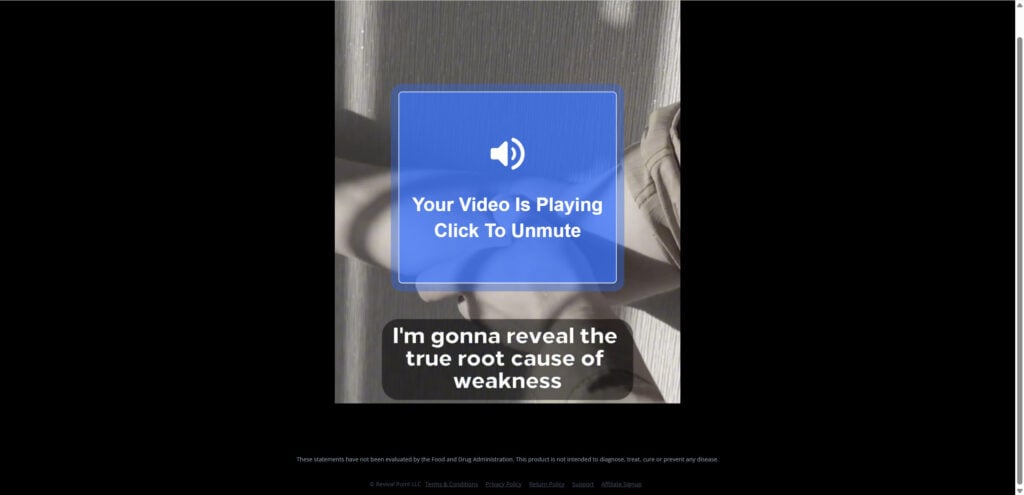
- a video player with “tap to listen”
- “as seen on” logos
- comments that look staged
- links that all lead to checkout
So if a page looks like journalism but behaves like a sales funnel, treat it as advertising.
Official-looking badges do not prove the product works
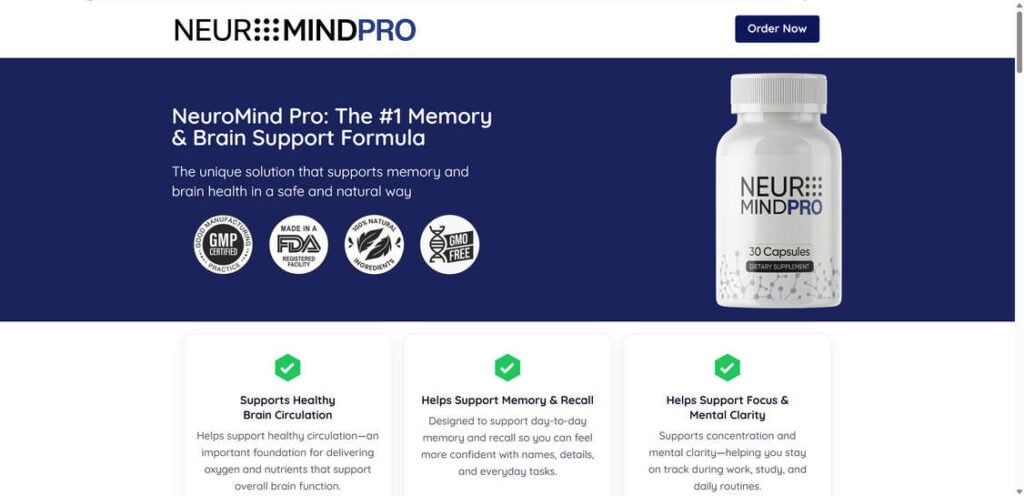
The supplement page may display badges like:
- “FDA registered facility”
- “GMP certified”
- “lab tested”
- “doctor approved”
- “clinically proven”
- “made in the USA”
These phrases are designed to lower suspicion.
But they do not prove that the product produces the advertised weight loss results.
The FDA warns that many products claiming to help with weight loss, including diet pills, fat-burning pills, supplements, and teas, are likely to be contaminated with dangerous hidden ingredients. The FDA also says these contaminated products are a form of medication health fraud and are often falsely advertised as dietary supplements or all-natural treatments.
That matters because many buyers assume “natural” means safe.
It does not.
The checkout is often where the real damage happens
Many people who report problems with these offers describe billing issues, not just disappointment with the product.
Common complaints include:
- ordering one bottle but being charged for several
- upsells that look like required checkout steps
- “free bottle” language that increases the total
- hidden refill or autoship terms
- recurring monthly charges
- vague merchant names on the card statement
- customer support that is slow or hard to reach
The FTC has taken action in cases involving fake news-style supplement promotions, phony celebrity endorsements, false claims, and unauthorized charges.
That history is important because the same structure keeps showing up in modern supplement funnels.
Why the product name changes so often
The Dr. Oz Pink Salt Trick is not usually tied to one stable product.
The same funnel can promote different bottles under different names.
When complaints rise or ads get flagged, operators can quickly change:
- the domain
- the product name
- the bottle label
- the voiceover
- the “doctor reveal” angle
- the checkout page
That is why learning the pattern matters more than memorizing one product name.
The scam is the funnel.
The bottle is replaceable.
How The Scam Works
Step 1: You see a scroll-stopping ad
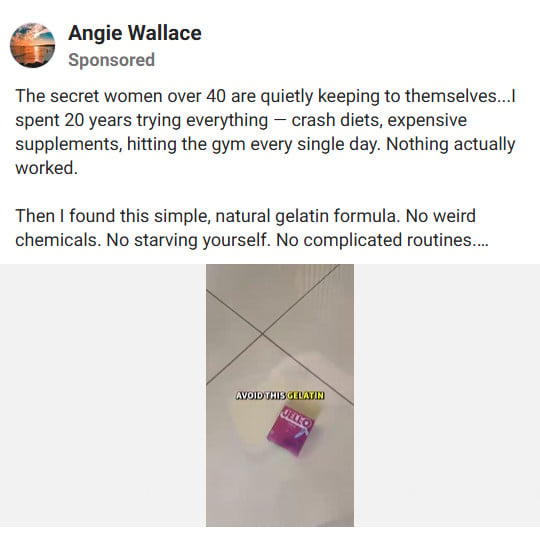
The scam usually starts with a short video ad on social media or an ad network.
The ad may show:
- a glass of pink liquid
- Himalayan pink salt
- a kitchen counter
- a doctor-style clip
- a dramatic before-and-after image
- a caption mentioning Dr. Oz
- a “watch before removed” warning
The goal is to make you stop scrolling.
The ad does not need to prove anything yet. It only needs to make you curious.
Step 2: The ad borrows Dr. Oz’s credibility
The ad may imply that Dr. Oz:
- revealed the trick
- discussed the recipe
- endorsed the product
- discovered a natural weight loss shortcut
- exposed a hidden method
This is the trust trigger.
Because Dr. Oz is associated with health content, the ad uses his name to make the claim feel safer.
But a celebrity or doctor name in an ad is not evidence. The FTC specifically warns that fake celebrity endorsements can use doctored video and audio that seems real.
Step 3: The click leads to an advertorial
After clicking, you may not land on a normal product page.
Instead, you may land on a page designed to look like a report.
This page may include:
- a fake news-style headline
- a recent date
- official-looking logos
- a large embedded video
- a “tap to listen” message
- staged comments
- repeated buttons leading to the order page
This is designed to make you feel like you are learning something important rather than being sold something.
Step 4: The pink salt recipe is teased but not clearly given
At this stage, the funnel promises a recipe.
But instead of giving clear instructions, it delays.
You may see lines like:
- “Watch this first”
- “You need to understand why this works”
- “This video could be taken down”
- “Stay until the end”
- “Doctors are shocked”
That delay is intentional.
If the page gave you a basic recipe immediately, you might leave. The funnel needs you to stay until the supplement appears.
Step 5: The video creates a “hidden cause” story
The video usually explains weight gain through a dramatic hidden-cause narrative.
It may mention:
- metabolism shutdown
- toxins
- gut bacteria
- hormone imbalance
- GLP-1
- inflammation
- cravings
- stubborn belly fat
Some of those words are connected to real health topics.
The scam move is turning complex biology into a simple story where one trick or one bottle fixes everything.
That kind of promise should be treated with caution.
Step 6: The supplement becomes the real “solution”
Now the product appears.
The page may claim the supplement:
- supports fat burning
- activates metabolism
- reduces appetite
- works with the pink salt trick
- contains the key ingredient in a stronger form
- helps you lose weight without changing habits
This is where the bait-and-switch becomes clear.
The ad started with a recipe.
The page ends with a product order.
Step 7: Trust badges are stacked near the offer
The order section usually tries to make the purchase feel safe.
It may show:
- “secure checkout”
- “made in USA”
- “GMP certified”
- “FDA registered facility”
- “natural ingredients”
- “lab tested”
But the FDA warns consumers to be careful with products claiming to help health issues because many are not reviewed before sale and may contain hidden ingredients.
A badge is not proof.
A seal is not a clinical study.
Step 8: Urgency tools push you toward checkout
As you scroll, the pressure increases.
You may see:
- countdown timers
- “limited supply” warnings
- “today only” pricing
- popups showing recent purchases
- “people watching now” counters
These are conversion tools.
Their purpose is to stop you from slowing down, researching, or comparing sources.
Step 9: Bundle pricing pushes a larger order
The funnel usually offers multiple packages:
- 1 bottle at a high price
- 3 bottles as the “popular” choice
- 6 bottles as the “best value”
The design makes the largest package feel like the smartest option.
That means people may spend more before they have any proof the product works or that the seller is legitimate.
Step 10: Checkout terms may create unwanted charges
This is where many buyers get trapped.
The checkout may include:
- pre-selected quantities
- extra products added after the first step
- upsells disguised as confirmation pages
- fine print about refill programs
- subscription terms that are easy to miss on mobile
- merchant names that do not match the product name
A buyer may think they placed a one-time order, then later discover a second charge or monthly refill.
Step 11: Refunds become difficult
After purchase, support may become slow or evasive.
Common problems include:
- no phone support
- delayed email replies
- unclear return addresses
- strict return windows
- partial refund offers
- cancellation requests that are not confirmed
This is why many people describe these supplement offers as impossible to return or cancel.
The purchase path is fast.
The refund path is slow.
Step 12: The same campaign relaunches under a new name
Once complaints build up, the campaign can disappear and come back with a new label.
The hook stays familiar:
- Dr. Oz
- pink salt
- weight loss recipe
- natural trick
- limited offer
- supplement bottle
That is the pattern to remember.
What To Do If You Bought From This Scam
If you already ordered after seeing a Dr. Oz Pink Salt Trick ad, take these steps quickly.
1) Save all evidence
Screenshot:
- the ad
- the landing page
- the video page
- the offer section
- the checkout total
- the terms and conditions
- your confirmation email
- your bank or card transaction
Scam pages can disappear quickly.
2) Check the total you were charged
Compare your confirmation email with your bank statement.
Look for:
- higher totals than expected
- separate charges
- extra shipping fees
- small test charges
- unfamiliar merchant names
3) Search for subscription language
Check emails and terms for words like:
- autoship
- subscription
- membership
- continuity
- monthly
- refill
- next shipment
If you see any of these, act quickly.
4) Email the seller to cancel in writing
Send a short email with:
- your full name
- the email used for purchase
- your order number
- a clear request to cancel any subscription
- a clear request to stop all future charges
- a request for written confirmation
Keep the email as evidence.
5) Contact your card issuer if charges look wrong
Call your bank or credit card provider.
Ask about:
- disputing the charge
- blocking future charges from the merchant
- replacing the card if rebilling continues
- documenting the transaction as deceptive
Do this quickly if you see unauthorized charges.
6) Monitor statements for at least 60 days
Do not assume one charge is the end.
Watch for:
- repeat billing
- monthly refills
- unfamiliar descriptors
- small recurring fees
- shipping charges
7) Stop using the product if you feel unwell
If you took the supplement and felt side effects, stop using it and seek medical guidance.
This is especially important if you take medications or have a medical condition.
The FDA warns that weight loss products sold as supplements may contain hidden drug ingredients and can pose serious health risks.
8) Report the ad
Report the ad on the platform where you saw it.
Use categories like:
- scam
- fake endorsement
- misleading health claim
- impersonation
- deceptive product
9) Report fake celebrity endorsement scams
The FTC recommends checking celebrity endorsements independently and resisting pressure to buy quickly when ads claim a celebrity is involved. (Consumer Advice)
If the ad used Dr. Oz’s name or likeness, mention that in your report.
10) Tighten your account security
If you created an account or reused a password, change it.
Enable 2-factor authentication on your email.
Be cautious with follow-up emails pretending to be “support” or “refund assistance.”
The Bottom Line
The Dr. Oz Pink Salt Trick Recipe supplement scam is not a trustworthy weight loss breakthrough.
It is usually a repeatable funnel that uses a familiar doctor’s name, a natural kitchen ingredient, fake urgency, and supplement checkout tactics to push expensive bottles and possible refill subscriptions.
If a page claims Dr. Oz revealed a pink salt weight loss trick, slow down and verify. Dr. Oz has publicly warned that ads using his name and likeness are fake, and the FTC warns that scammers use fake celebrity endorsements with doctored video and audio. (Facebook)
If you already bought, focus on protection: save evidence, cancel in writing, monitor your card statement, and contact your bank quickly if charges look deceptive.








