

Cryptocurrency scams have become increasingly sophisticated, often leveraging prominent public figures to add credibility. The latest example, the “Emdoge.com Elon Musk Official BTC Giveaway” scam, has duped numerous unsuspecting individuals into losing their valuable crypto holdings. This detailed guide will unpack everything you need to know about this scam, how it operates, and crucial steps to take if you’ve already fallen victim.

Scam Overview
The Emdoge.com scam disguises itself cleverly by using Elon Musk’s name, reputation, and branding of Tesla, SpaceX, and X.com. It promises a substantial cryptocurrency giveaway, claiming that Elon Musk and associated companies want to support crypto enthusiasts amid market volatility. Users are enticed by seemingly generous offers such as doubling their Bitcoin (BTC), Ethereum (ETH), or Dogecoin (DOGE).
Initially, victims are directed to a professionally designed website that closely resembles legitimate platforms, often hosted on domains cleverly named to sound authentic, like “Emdoge.com” or similar variants. The website usually contains logos and imagery directly associated with Musk’s legitimate ventures, enhancing perceived authenticity.
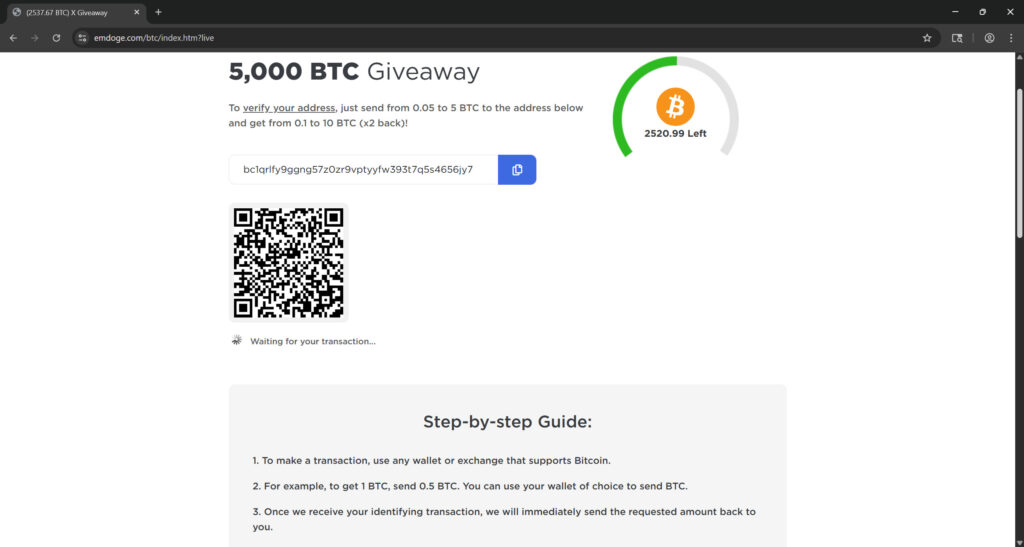
The core appeal revolves around the supposed giveaway, where the victims are promised double or triple returns on their initial crypto investments within minutes. Such claims are backed by fake testimonials, fabricated transaction histories, and live transaction feeds that create a false sense of urgency and legitimacy.
What makes this scam particularly compelling is its aggressive social media promotion, employing bots and hacked accounts to circulate the links widely. Platforms like Twitter, Reddit, Telegram, Facebook, and YouTube are inundated with seemingly legitimate posts that appear endorsed by Musk himself. Even ads are placed strategically, leveraging SEO techniques and targeted social media advertising to capture the attention of crypto enthusiasts quickly.
Victims are instructed to send crypto from their wallets to an address specified on the scam website, which is often accompanied by QR codes for convenience. Once funds are transferred, the scammers quickly move the cryptocurrency through various wallets, making tracing challenging. The victim never receives the promised return, and in most cases, their funds are permanently lost.
Experts estimate that millions of dollars have already been lost to the Emdoge.com scam, highlighting its effectiveness and dangerous proliferation across digital platforms. The scam continues to evolve, regularly updating its tactics to evade detection and take advantage of new cryptocurrency enthusiasts entering the market.
How the Scam Works
Understanding the scam step-by-step can significantly help individuals recognize warning signs and avoid falling prey:
Step 1: Initial Contact
The scam starts with a seemingly legitimate promotional post on social media or email claiming Elon Musk is holding an exclusive crypto giveaway. This promotional post usually includes an eye-catching announcement offering huge returns on crypto investments.
Step 2: Redirection to Scam Site
Upon clicking the provided link, users are redirected to a well-crafted, professional-looking website that mimics an official platform. This site prominently displays Elon Musk’s name and logos associated with Tesla, SpaceX, or X.com to instill trust.
Step 3: Promises of High Returns
Once on the site, victims are shown flashy graphics, fake testimonials, and purported “live” transaction feeds. They are then promised enormous returns—typically doubling their cryptocurrency if they send a specified minimum amount.
Step 4: Sending Cryptocurrency
Victims are instructed clearly and simply: to verify participation, they must send a minimum amount of BTC, ETH, or DOGE to the provided wallet address. Scammers facilitate this process by providing QR codes and step-by-step guides to simplify the transaction.
Step 5: Immediate Loss of Funds
As soon as the cryptocurrency is transferred, the scammers quickly redistribute it across multiple wallets, making recovery nearly impossible. Victims waiting for the doubled return quickly realize the promised funds will never appear.
Step 6: Reinforcement and Special Bonuses
To extract even more from victims, scammers may offer additional “special bonuses,” claiming extra incentives if larger amounts are sent. This additional layer of fraud further deepens losses.
Step 7: Fake Customer Support
Victims who attempt to contact customer support for assistance receive either automated responses or no response at all. In some cases, scammers may use fake support to extract additional personal or financial information.
What to Do if You Have Fallen Victim to This Scam
If you have become a victim of the Emdoge.com BTC giveaway scam, immediately take the following steps to limit your losses and potentially aid recovery:
- Report the Scam: Notify your local law enforcement and financial regulatory authorities. In the U.S., file a report with the FBI’s Internet Crime Complaint Center (IC3).
- Contact Your Wallet Provider: Inform your crypto wallet provider immediately. Though recovery is rare, they can offer assistance and potentially freeze suspicious activities.
- Gather Evidence: Screenshot the scam website, transaction details, and any correspondence. This evidence is crucial for investigations and potentially recouping lost funds.
- Warn Others: Post warnings about the scam on social media, forums, and community groups to prevent further victimization.
- Check Your Devices: Ensure no malware or spyware has infected your devices. Consider using reputable antivirus software to thoroughly scan your systems.
- Educate Yourself: Engage in educational resources about cryptocurrency security and scam prevention to avoid future victimization.
FAQ About the Emdoge.com Scam
What is the Emdoge.com BTC Giveaway Scam?
The Emdoge.com scam falsely claims to offer a crypto giveaway endorsed by Elon Musk, promising users unrealistic returns on cryptocurrency investments.
How can I identify this scam?
Look for red flags like requests to send crypto directly, unrealistic returns (double or triple your investment), and websites using Elon Musk’s name without official verification.
Is Elon Musk really involved in crypto giveaways?
No. Elon Musk does not publicly endorse cryptocurrency giveaways or ask users to send funds directly to him or any website.
What should I do if I sent cryptocurrency to scammers?
Immediately report the incident to authorities, inform your crypto wallet provider, gather evidence, and monitor your accounts closely.
Can I recover my lost cryptocurrency?
Recovering stolen crypto is challenging and rare, but you should still report the crime. Law enforcement or your wallet provider might offer limited help.
How can I protect myself from crypto scams?
Always verify through official channels, avoid unrealistic promises, keep your crypto secured in trusted wallets, and regularly educate yourself on new scams.
The Bottom Line
The Emdoge.com Elon Musk Official BTC Giveaway scam is an advanced crypto fraud leveraging trusted public figures and professional web designs. Always verify claims through official channels and never send crypto funds to unknown sources promising unrealistic returns. Stay vigilant, report suspicious activity, and actively educate yourself and others to help combat crypto scams effectively. Your awareness and caution are your best defenses.

Reviews & discussion
0 commentsShare a firsthand experience, or ask a question.
Community reviews
emdoge.com
Moderated reader experiences, not an editorial verdict.
Start the conversation
Have a question or something useful to share? Add the first comment.