

It looks like a normal Facebook reward. A quick “Facebook Experience Survey,” a shiny prize, and a button that says you are only a minute away from claiming it.
You click, answer a few easy questions, and suddenly the page tells you what you want to hear: congratulations, you have been selected.
It feels harmless. Almost lucky. But there is a reason these survey pages keep popping up under strange web addresses, pushed by brand-new accounts, and wrapped in urgent countdown timers.
Because the prize is not the real point. And the moment you try to “claim” it is when things quietly shift into something else entirely.
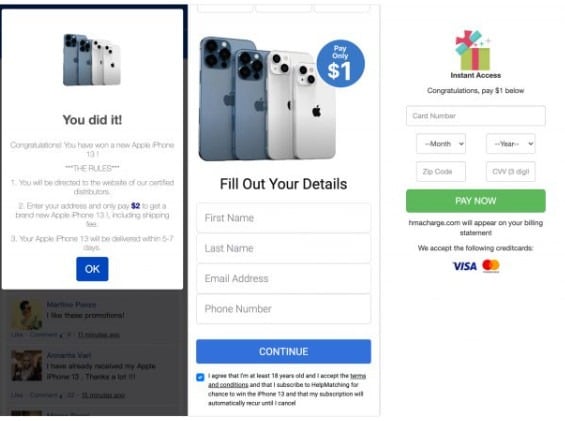
Scam Overview
Facebook survey scam sites are built to exploit something very human: curiosity, hope, and the feeling of getting a deal.
They pretend to be connected to Facebook or Meta by using familiar branding and language like “Facebook customer,” “Meta rewards,” “exclusive opportunity,” or “limited time offer.” The page may look like a clean corporate campaign, but it is a funnel designed for one purpose: turning visitors into recurring billing victims.
What the scam typically promises
The prize changes constantly, because scammers test what converts best. You will see offers like:
- Meta Wayfarer AI Glasses “giveaway”
- “Free” iPhone or high-end smartphone offers
- Gift cards for major retailers
- Laptops, tablets, or gaming gear
- Beauty products, supplements, or household gadgets
The pitch is almost always the same: take a short survey to claim a reward.
They often frame it as an exclusive event, such as:
- “Facebook Experience Survey”
- “Congratulations, you have been selected”
- “Limited-time opportunity to access exclusive rewards”
- “Your account has been chosen for a free gift”
The pattern: 4 easy questions, then the prize game
A very common version uses a predictable flow:
- You answer around 4 simple questions.
- You are told you qualify.
- You are shown a game screen with gift boxes, scratch cards, or spin wheels.
- You “win” after one or two clicks.
The questions are intentionally effortless. They are not collecting market research. They are keeping you moving forward.
You might be asked:
- Do you use Facebook daily?
- Are you satisfied with your experience?
- Would you recommend Facebook to a friend?
- Are you over a certain age?
None of it matters. Your answers do not change the result.
The “game” is not random either. The outcome is pre-scripted so most visitors “win,” because that is what pushes them into the payment step.
The real goal: your data and your card
Once you “win,” the page shifts from excitement to logistics.
It asks for:
- Full name
- Home address
- Phone number
- Email address
Then it introduces the hook: a small shipping charge. Often something like $9.96.
This is where the scam becomes a subscription trap.
The site claims you only pay the shipping fee, but the fine print (or hidden terms) reveal you are agreeing to recurring charges. Sometimes it is billed as a “membership,” “discount club,” “benefits program,” or “priority shipping plan.”
Victims report the same outcome again and again:
- They pay the shipping fee.
- They never receive the prize.
- Their card is charged again days later or within a month.
- Charges repeat monthly, often at a high price.
- Canceling is difficult or intentionally confusing.
Why it spreads so fast
These scams spread because they are designed for scale, speed, and constant replacement.
Scammers use a mix of traffic sources:
- Social media ads and sponsored posts
- Fake “giveaway” pages
- YouTube videos with AI voiceovers
- TikTok clips showing “proof”
- Email campaigns posing as Facebook notifications
Many campaigns also use:
- AI-generated videos of celebrities
- AI voice cloning to create convincing narration
- Fake reviews and comments that look like real users
- Screenshots of “successful winners” that are fabricated
A major strength of this scam model is that it does not depend on one domain. The scammers rotate domains constantly, including strange, low-trust extensions and random-looking addresses. If one gets reported and blocked, they move to the next within hours.
The branding tricks that make it feel real
The scam pages borrow trust from Facebook without actually being Facebook.
Common tactics include:
- Using the Facebook logo or Meta references
- Copying the layout style of real Facebook pages
- Using corporate-sounding phrases like “customer survey” and “rewards”
- Adding a date and location flag icon to feel official
- Displaying a countdown timer to pressure quick action
- Showing “limited stock” messages, like “only 3 left”
They also rely on a psychological push: if you believe you already won, you are more likely to pay a small fee to “finalize” it.
Key red flags that separate real promotions from scam survey sites
Real promotions from major companies do exist, but they do not behave like this.
Here are strong warning signs that you are dealing with a scam:
- The domain name is unrelated to facebook.com or meta.com
- The page URL looks random or uses an unusual extension
- You “win” every time, no matter what you do
- The survey is extremely short and generic
- The page uses urgency: countdowns, “expires today,” “limited stock”
- It asks for a credit card to claim a “free” prize
- The shipping fee is suspiciously specific, like $9.96
- The terms are hidden, tiny, or hard to find
- There is no clear company contact info, address, or support
One of the biggest tells is the domain itself. Many victims notice that the URL is something completely unrelated to Facebook. That is not an accident. Scammers use disposable domains because they expect to get reported.
Why victims do not receive anything
In many cases, the “prize” does not exist at all. It is simply bait.
Sometimes scammers may ship a cheap item to create confusion or delay chargebacks, but with “Meta Wayfarer AI Glasses” style claims, victims often report receiving nothing.
The revenue comes from the billing relationship, not from shipping products.
That is why this is so often called a subscription scam: the initial small payment is just the entry ticket into recurring charges.
What happens after you enter your details
Even if you do not enter your credit card, giving away your name, address, phone number, and email can still create problems.
That data can be used for:
- Spam calls and robocalls
- Targeted phishing emails
- Smishing texts that pretend to be delivery updates
- More scams tailored to your location and personal info
- Reselling your data to other scam networks
If you did enter your card, the risk increases significantly because recurring charges can hit quickly and repeatedly.
The “shipping fee” is the bait, not the cost
The reason the shipping fee is kept low, such as $9.96, is because it feels safe.
Many people think:
“It is under $10. Worst case, I lose a little money.”
But the scam is structured around what happens next. The subscription is where the profit is.
Charges may appear under unfamiliar company names, generic merchant descriptors, or multiple different billing entities. That makes it harder for victims to recognize the connection and stop it quickly.
Why the scam keeps evolving
Facebook and security researchers do work to remove these campaigns, but scammers adapt fast.
They adjust:
- The prize offered
- The wording and branding
- The layout of the survey flow
- The payment page design
- The domains used
- The traffic sources used to recruit new victims
This is why you might see the same scam promoted by brand-new accounts on YouTube, TikTok, and Facebook. Once an account is banned or a domain is blocked, they replace it and continue.
How The Scam Works
This section walks through the scam step by step, from the first click to the recurring charges, with the exact psychological triggers scammers rely on.
Step 1: The bait appears in your feed or inbox
Victims commonly encounter the scam in one of two places:
- Social media: a post, ad, or video claiming you can win by taking a survey
- Email: a message that looks like it is from Facebook, announcing you can “claim your free gift”
The email version often uses bold subject lines like:
- “Claim Your Free Meta Wayfarer AI Glasses”
- “Congratulations, claim your FREE gift”
- “Facebook Experience Survey”
The sender address may look suspicious or unrelated to Facebook, sometimes coming from random domains that have nothing to do with Meta.
The purpose of the first message is simple: get you to click.
Step 2: The landing page impersonates Facebook
After clicking, you land on a “survey” page that uses Facebook branding.
Typical features:
- The word “facebook” prominently displayed
- A friendly greeting like “Dear Facebook Customer”
- A date shown at the top to create legitimacy
- A prize image, like the Meta Wayfarer AI Glasses
- A large “Start Survey” button
The page may also include a banner line like “Limited-Time Opportunity to Access Exclusive Rewards,” which is designed to trigger urgency before you think too carefully.
Step 3: You answer simple questions that do not matter
You are shown around 4 easy questions.
They are designed to be:
- Quick
- Non-threatening
- Easy to answer without thinking
- Framed as a normal customer experience survey
This keeps your momentum high. Every click forward increases commitment, even though nothing is real.
Step 4: The timer and urgency messaging kicks in
Many versions include time pressure elements:
- “Offer expires today”
- “Rewards are limited”
- “Only a few left”
- A countdown timer ticking down
This is not there to inform you. It is there to rush you past caution.
When people feel time pressure, they are less likely to inspect the URL, read the terms, or think about whether a real company would operate this way.
Step 5: The “you won” moment is engineered
Next comes the interactive element: pick a box, open a gift, scratch a card, spin a wheel.
This is the dopamine moment.
The game is designed to:
- Feel interactive, like you earned something
- Make the prize feel personal and real
- Create a mini celebration, like “Congratulations!”
In many cases, you “fail” once, then win on the second attempt. That pattern feels believable, but it is still scripted.
Step 6: The site collects your personal details
After you “win,” the page shifts to fulfillment language:
- “Enter your information to ship your prize”
- “Confirm your details”
- “We need your address for delivery”
This is where victims are asked for:
- Name
- Address
- Phone number
These details are valuable on their own, even before payment enters the picture.
Step 7: The “small shipping fee” is introduced
Now the scam presents the payment step.
It frames the $9.96 charge as:
- Shipping and handling
- Processing fee
- Verification fee
- Priority shipping upgrade
The message is carefully written to make it feel normal:
“You won for free, you just cover shipping.”
This is where many victims proceed, because it still feels low risk.
Step 8: The fine print hides the subscription enrollment
This is the core of the scam.
Somewhere on the page, usually in tiny text, behind a small link, or buried at the bottom, the terms may reveal something like:
- You are enrolling in a membership program
- You will be billed monthly after a short trial
- You agree to recurring charges unless you cancel
Sometimes it is disguised as:
- “Discount program”
- “Rewards membership”
- “Partner offer”
- “Subscription benefits”
- “VIP club”
The language may be intentionally vague. The goal is not clarity. The goal is legal cover.
Step 9: Your card gets billed again, and again
After paying the $9.96 shipping fee, victims report:
- No prize delivered
- New charges appearing later
- Monthly fees that are much higher than the original charge
- Multiple charges from different merchant names
This can happen because some scam networks route payments through different processors and merchant accounts.
So even if you search the merchant name, you may not immediately connect it to the “survey” page you visited.
Step 10: The cancellation maze begins
When victims try to cancel, they often face:
- No real support contact information
- Fake phone numbers that never connect
- Email addresses that bounce or ignore requests
- “Cancel” pages that require logins you never created
- Delays that push you into another billing cycle
This is deliberate friction.
The scam makes money when people give up, forget, or do not notice the charges quickly.
Step 11: The scam scales through AI content and fake proof
To keep the funnel full, scammers promote it aggressively using modern content tricks.
AI-generated celebrity videos and voice
One of the most effective methods is AI-generated clips that look like a celebrity endorsing the offer.
These videos often use:
- A face that looks real
- A voice that sounds believable
- Scripted lines encouraging you to “claim your reward”
- Quick cuts and captions designed for TikTok or YouTube Shorts
The goal is borrowed authority. If a familiar face appears to promote it, people drop their guard.
Fake reviews and comments
Scam posts often have comment sections filled with:
- “I got mine today!”
- “It really works, thank you!”
- “Just paid shipping, arrived fast!”
These are not genuine. They are planted to create social proof.
Sometimes scammers also use fake review pages, fake screenshots of orders, or staged unboxing clips.
Brand-new social accounts
You will also see newly created accounts pushing these giveaways:
- Fresh TikTok accounts with few followers
- New YouTube channels with AI narration
- Facebook pages with minimal history
They exist only to run the promotion until they are reported. Then they vanish and get replaced.
What To Do If You Have Fallen Victim to This Scam
If you entered your details or paid the shipping fee, do not panic.
You can still limit the damage, and in many cases, you can stop the charges before they pile up.
Follow the steps below in order. Even doing the first few can make a big difference.
1) Stop the recurring charges immediately
If you entered your credit card, assume it may be enrolled in a subscription.
Do this right away:
- Check your card transactions for any new charges after the $9.96 payment
- Look for unfamiliar merchant names or small “test” charges
- If you see recurring billing, contact your bank or card issuer and ask to block future charges from that merchant
Many card issuers can:
- Cancel the subscription billing relationship
- Block specific merchant descriptors
- Issue a replacement card if needed
If you are unsure whether more charges will happen, ask your issuer directly:
“Can you confirm if this merchant is set up for recurring billing, and can you stop future charges?”
2) Consider freezing or replacing the card
If the payment page looked suspicious or you cannot identify the merchant clearly, replacement is often the safest move.
A new card number prevents further billing attempts.
Even if the scammers try again, the old card will no longer work.
3) Dispute the charges
If you were billed beyond the initial shipping fee, file a dispute.
When disputing, describe it clearly:
- You were promised a free prize in exchange for a survey
- You were charged a shipping fee like $9.96
- You did not receive the promised item
- Additional subscription charges appeared without clear consent
Ask your issuer about chargeback timelines and what evidence helps. Screenshots of the page, confirmation emails, or transaction records can strengthen your case.
4) Cancel any “membership” if a cancellation route exists
Sometimes the payment confirmation includes a link or reference to a membership.
If you can find a cancellation method:
- Use it, but do not rely on it alone
- Still block charges through your card issuer
Scammers may ignore cancellation requests or make cancellation intentionally ineffective. Your bank’s block is the stronger safeguard.
5) Monitor your bank and card statements closely for 60 days
Subscription scams often bill on a delay.
Set a reminder to review your transactions regularly for at least two full billing cycles.
Also watch for:
- Multiple small charges
- Charges from different merchant names
- International processing fees
If you see anything you do not recognize, report it immediately.
6) Watch for follow-up scams using your personal info
If you entered your name, address, phone number, or email, you may get targeted.
Common follow-ups include:
- Delivery text messages with fake tracking links
- “Your package is held” phishing emails
- Fake support calls offering “refunds”
- Emails claiming your subscription must be confirmed
Do not click links in unexpected delivery messages. Instead, go directly to the official carrier website if you need to check a tracking number.
7) Secure your email and social accounts
Even if the scam did not ask for your Facebook password, securing your accounts is still smart.
Do the following:
- Change your email password if it is reused elsewhere
- Enable 2-factor authentication on your email and Facebook
- Check your Facebook login activity for unknown devices
- Be cautious with any messages claiming to be from Facebook support
Scammers often use your email address for more phishing attempts.
8) Scan your device if you installed anything
Most Facebook survey scam sites do not require software installation, but some campaigns push “apps” or “verification tools.”
If you downloaded anything:
- Uninstall unknown programs
- Run a reputable security scan
- Check browser extensions and remove anything suspicious
If your browser suddenly shows new pop-ups, redirects, or strange homepages, that is a sign something else may have been added.
9) Report the page and the ad
Reporting helps reduce the spread, even if it does not stop scammers instantly.
You can report:
- The Facebook post or ad that led you there
- The page hosting the scam
- The email as phishing in your email client
Also consider reporting the transaction to your card issuer as fraud if the charges are continuing.
10) If you shared your address, consider basic delivery safety
In most cases, scammers are after billing, not physical visits.
Still, if you shared your address and phone number:
- Be cautious with unexpected packages
- Do not call numbers printed on suspicious shipping slips
- Avoid scanning QR codes from unknown parcels
If something arrives that you did not order, document it with photos before disposing of it.
Is Your Device Infected? Run a Free Malware Scan
Slow performance, constant pop-ups, or strange behavior? These are classic signs of a malware infection. The fastest way to find out is to scan your device with Malwarebytes Free — one of the most trusted malware removal tools available.
The free version detects and removes the most common threats, including:
- Adware — the cause of those annoying pop-ups
- Browser hijackers — unwanted redirects and changed homepages
- Trojans and spyware — hidden programs stealing your data
- Potentially unwanted programs (PUPs) — software you never asked for
👉 Select your device below — Windows, Mac, or Android — then follow the simple steps to download Malwarebytes, scan your system, and remove any threats it finds. The scan usually takes 5 to 20 minutes.
Run a Malware Scan with Malwarebytes for Windows
Malwarebytes is one of the most popular and trusted anti-malware tools for Windows — and it’s completely free for removing infections. It catches threats that many antivirus programs miss, including adware, browser hijackers, and trojans. Follow the steps below to scan and clean your PC in just a few minutes.
Download Malwarebytes
Click the button below to download the latest version of Malwarebytes for Windows from the official source. The free version is all you need — it will scan your computer and remove adware, browser hijackers, and other malicious software at no cost.
Download MalwarebytesOfficial installer for Windows 11 and 10. Your download starts right away.Want real-time protection? See Malwarebytes Premium Malwarebytes Free for WindowsScans and removes malware at no cost
-
Install Malwarebytes
When the download finishes, open your Downloads folder and double-click the MBSetup file. If Windows shows a User Account Control pop-up, click “Yes” to allow the installation.
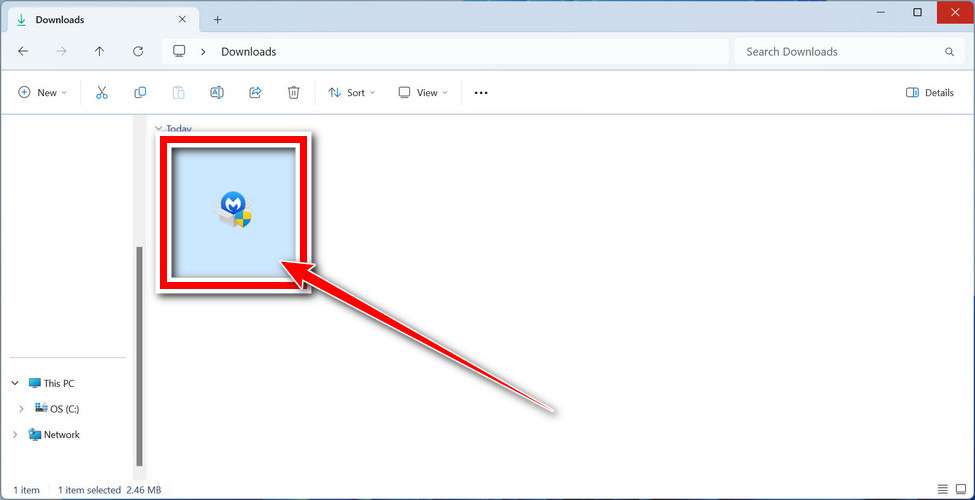
Follow the On-Screen Prompts to Install Malwarebytes
The setup wizard will walk you through a few quick screens:
-
Choose where you’re installing the program — “Personal Computer” or “Work Computer” — then click Next.
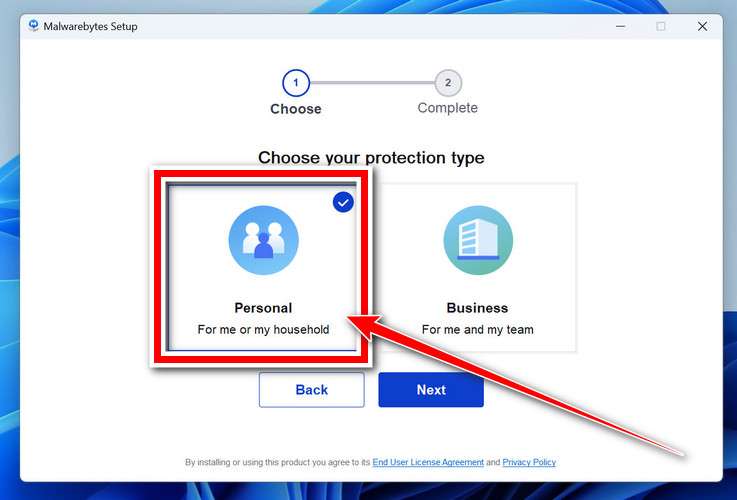
-
Malwarebytes will now install on your device. This usually takes under a minute.

-
When installation is complete, the “Welcome to Malwarebytes” screen will open automatically.
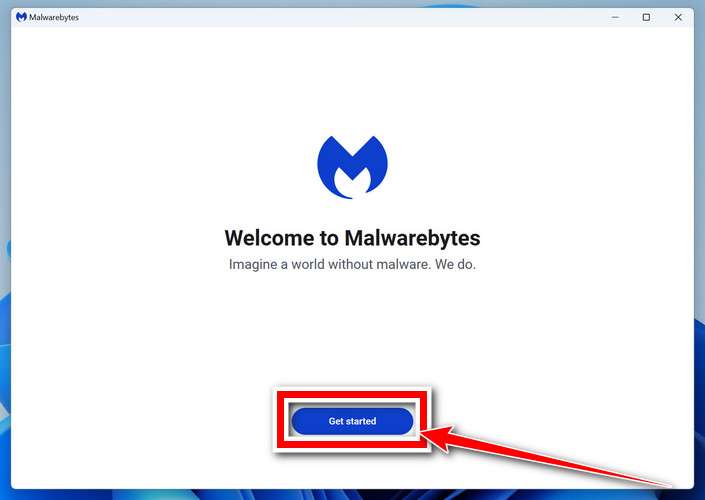
-
On the final screen, click Open Malwarebytes to launch the program.

-
Enable “Scan for Rootkits”
Before scanning, turn on rootkit detection so Malwarebytes can find even the most hidden threats. Click the Settings gear icon on the left side of the screen.
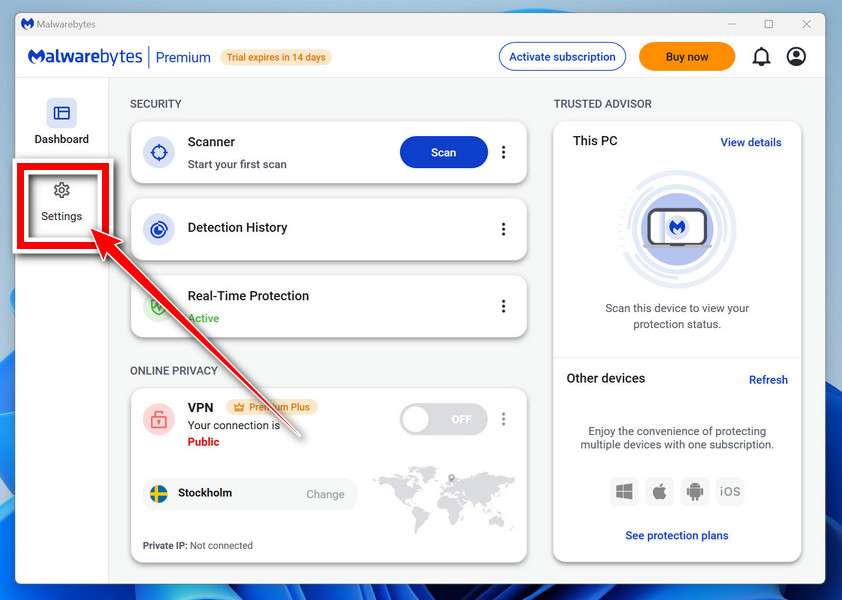
In the settings menu, find “Scan for rootkits” and click the toggle so it turns blue.

Done? Click “Dashboard” in the left pane to return to the main screen.
Start the Scan
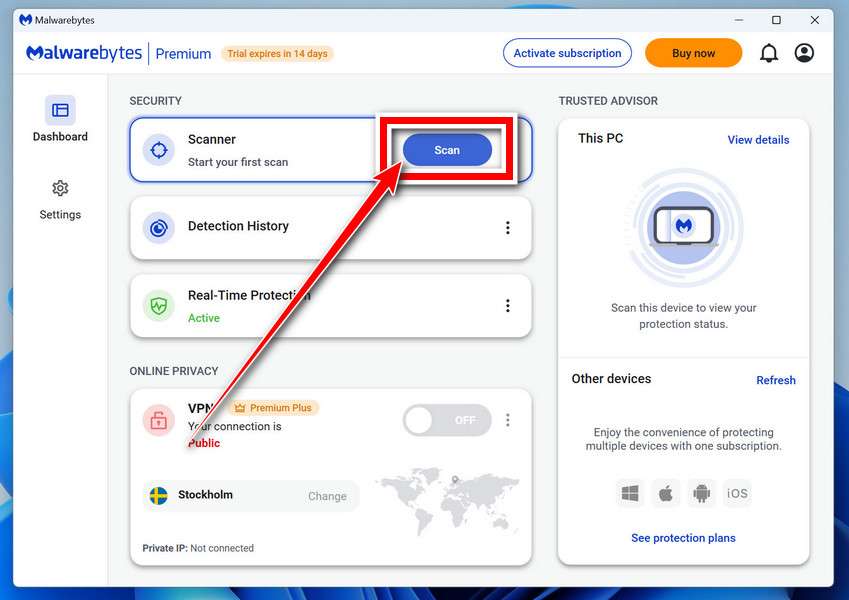
Click the blue Scan button. Malwarebytes will automatically update its virus database and start checking your computer for malware.
-
Wait for the Scan to Finish
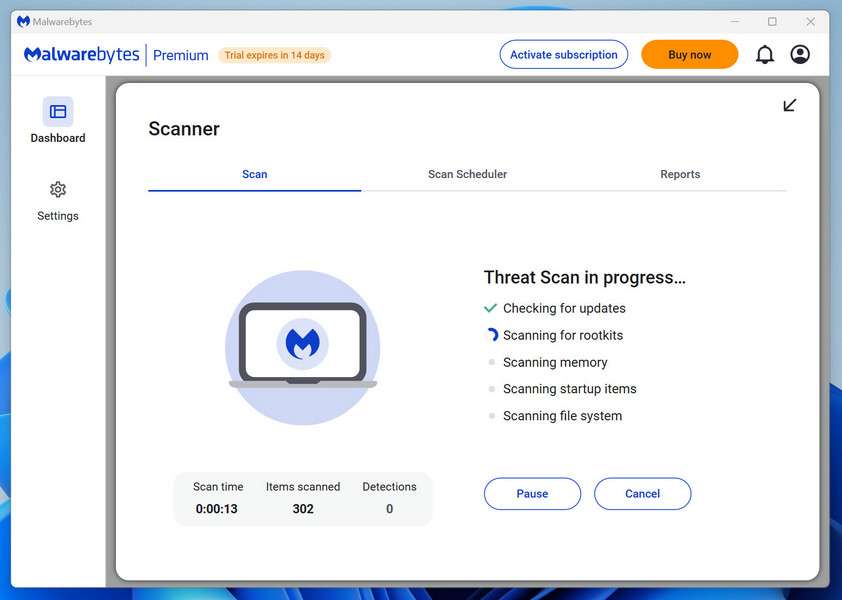
The scan checks your entire system for browser hijackers and other malicious programs, so it can take 5 to 20 minutes depending on your computer. Feel free to do something else — just check back occasionally to see the progress.
-
Quarantine the Detected Threats
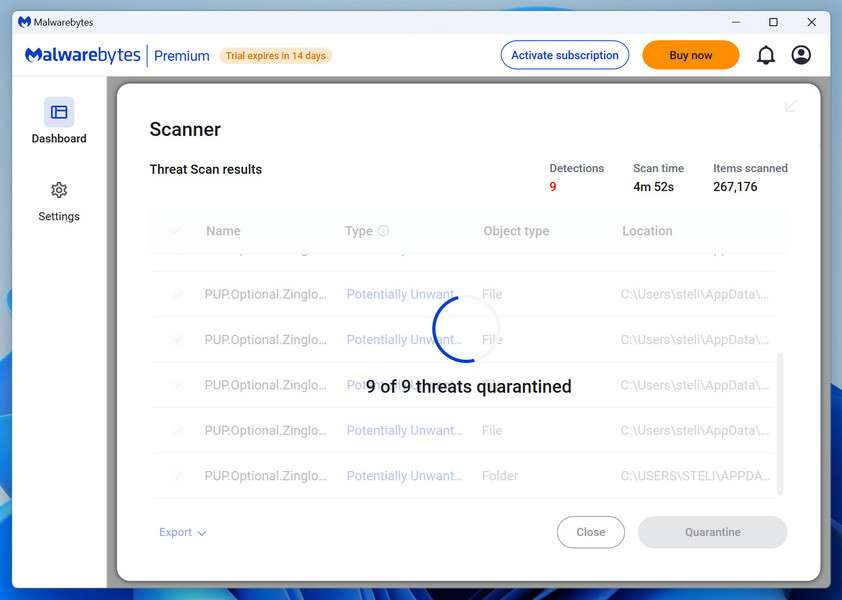
When the scan is done, you’ll see a list of everything Malwarebytes found — malware, adware, and potentially unwanted programs. Click the “Quarantine” button to remove all of them at once.
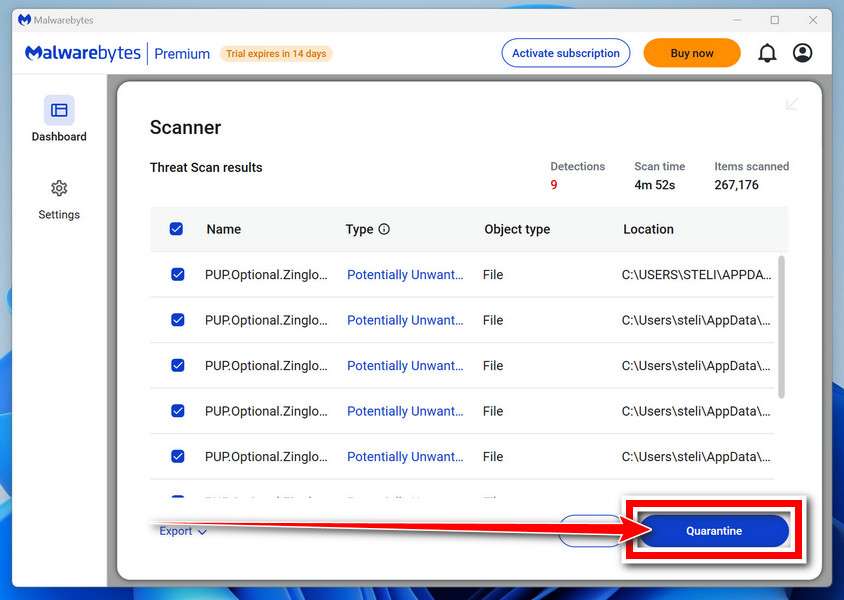
Malwarebytes will now remove the malicious files and registry entries and move them safely into quarantine.
-
Restart Your Computer
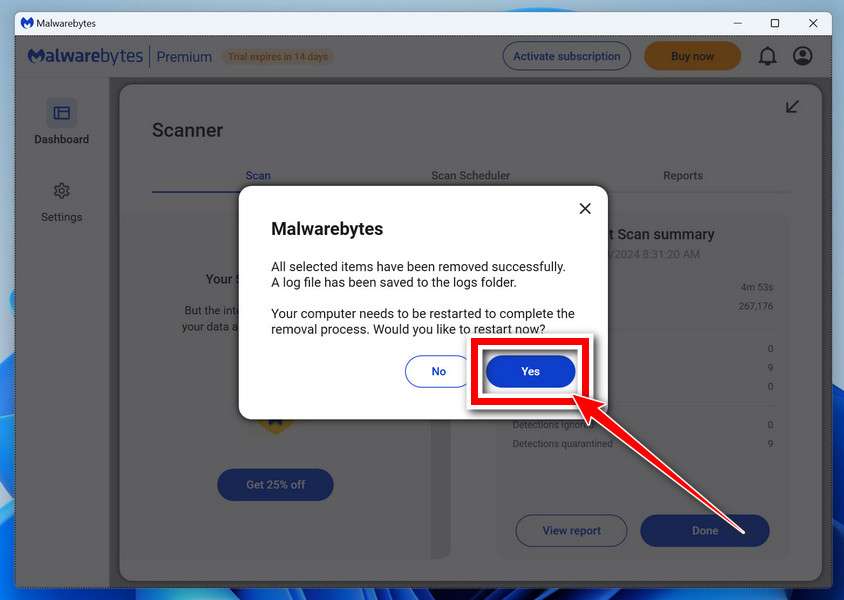
Some threats can only be fully removed after a reboot. If Malwarebytes asks you to restart, click Yes. Once you’re logged back in, Malwarebytes has finished removing the threats it found.
That’s it — your Windows PC is now clean of trojans, adware, and other malware, and should be back to running smoothly.
If you are still having problems with your computer after completing these instructions, then please follow one of the steps:
- Run a computer scan with ESET Online Scanner
- Ask for help in our Windows Malware Removal Help & Support forum.
Run a Malware Scan with Malwarebytes for Mac
Malwarebytes for Mac is a free on-demand scanner that removes the malware other security software tends to miss — adware, browser hijackers, and unwanted programs included. Cleaning an infected Mac with Malwarebytes has always been completely free, and it’s our go-to recommendation. Follow the steps below to scan and clean your Mac in just a few minutes.
-
Download Malwarebytes for Mac
Click the button below to download the latest version of Malwarebytes for Mac.
Download MalwarebytesOfficial installer for macOS. Your download starts right away.Want real-time protection? See Malwarebytes PremiumMalwarebytes Free for MacScans and removes malware at no cost -
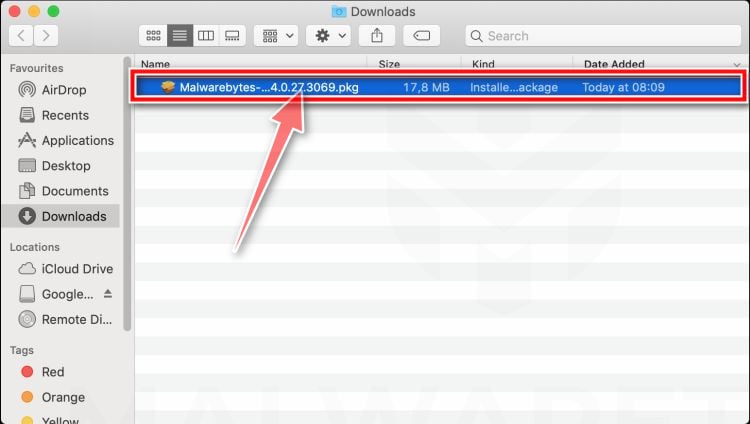
Open the Malwarebytes setup file
When the download finishes, open your Downloads folder and double-click the setup file to begin the installation.
-
Follow the On-Screen Prompts to Install Malwarebytes
The Malwarebytes for Mac Installer will guide you through a few quick screens. Click “Continue” and keep following the prompts until the installation completes.
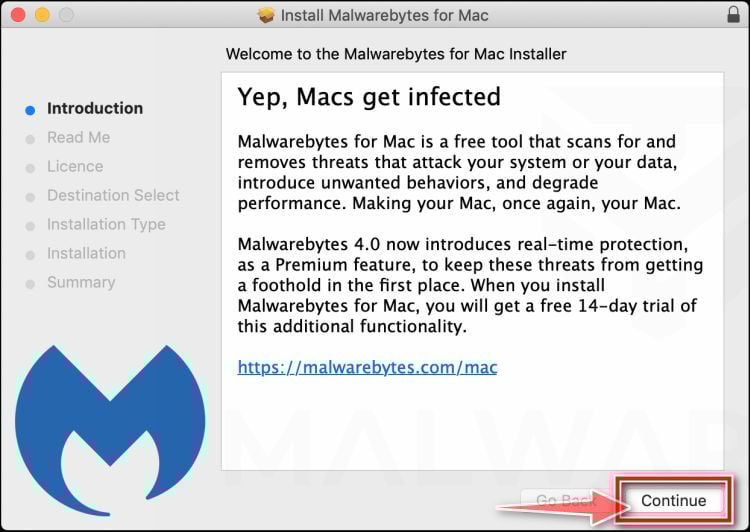
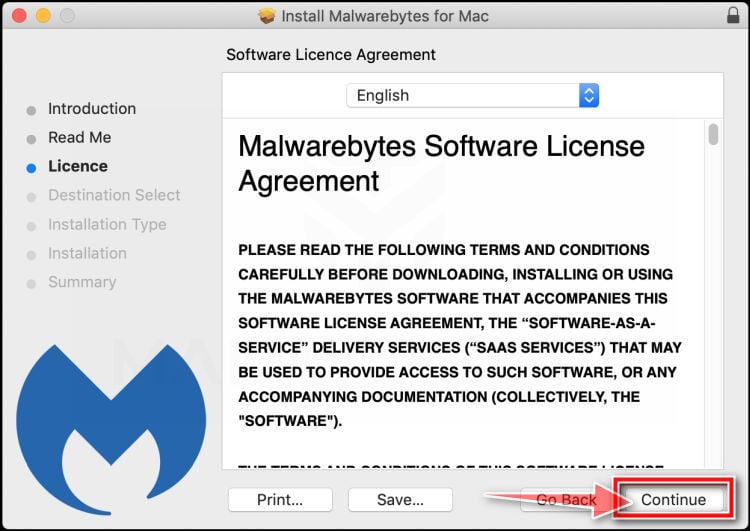
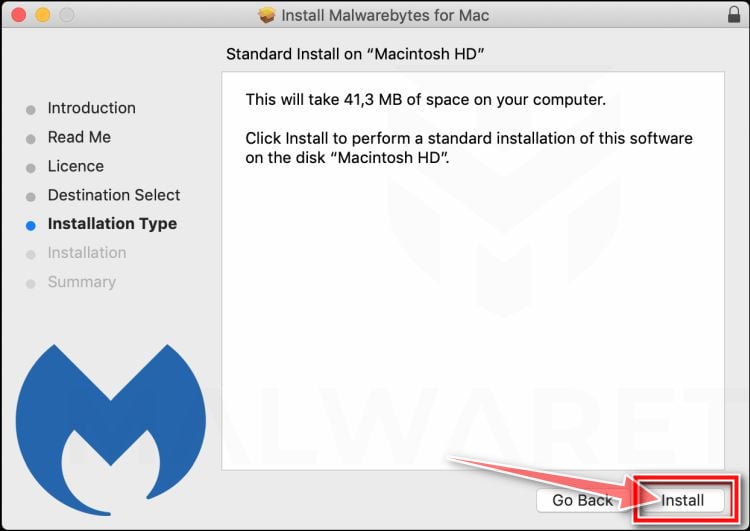
When the installation is complete, Malwarebytes opens to the Welcome to Malwarebytes screen. Click “Get started“.
-
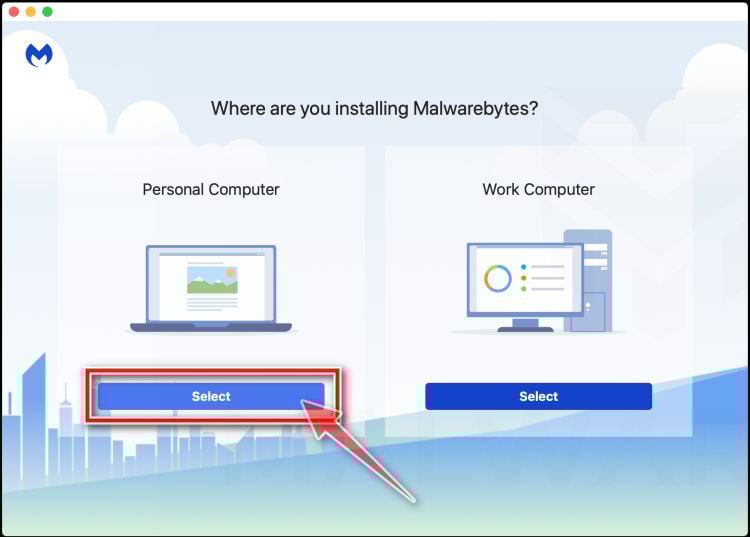
Select “Personal Computer” or “Work Computer”
Malwarebytes will ask what type of computer you’re installing it on. Click either Personal Computer or Work Computer, whichever applies.
-
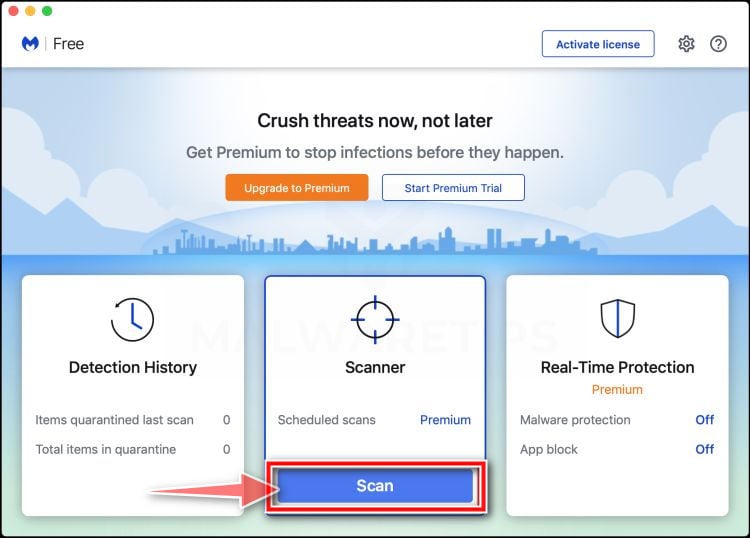
Start the Scan
Click the “Scan” button. Malwarebytes will automatically update its detection database and begin checking your Mac for malware.
-
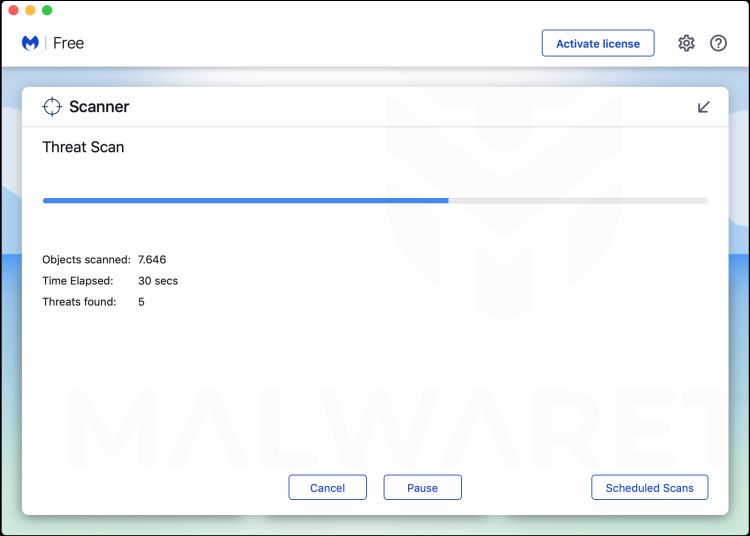
Wait for the Scan to Finish
Malwarebytes will scan your Mac for adware, browser hijackers, and other malicious programs. This can take a few minutes, so feel free to do something else — just check back occasionally to see the progress.
-
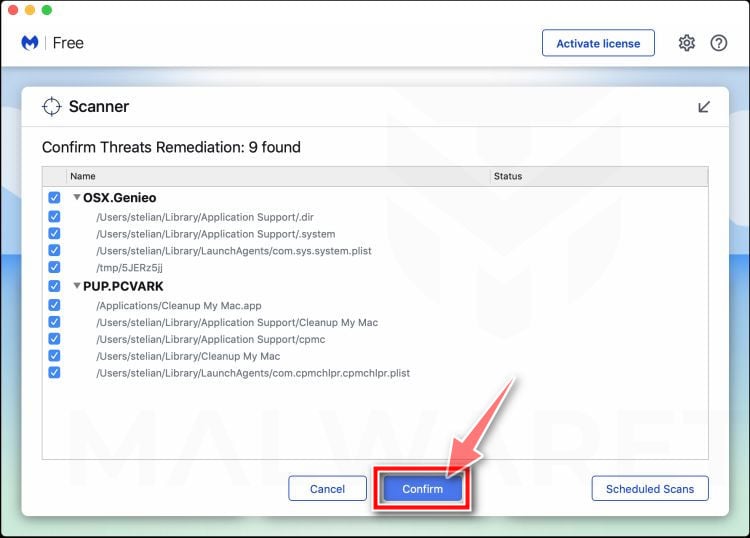
Quarantine the Detected Threats
When the scan is done, you’ll see a list of everything Malwarebytes found. Click the “Quarantine” button to remove all the threats at once.
-
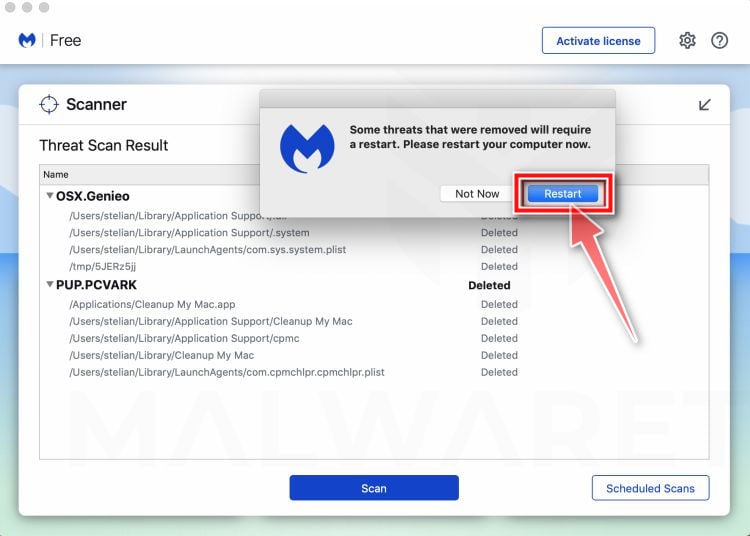
Restart Your Mac
Malwarebytes will now remove all the malicious files it found. Some threats can only be fully removed after a reboot — if Malwarebytes asks you to restart, allow it. Once you’re logged back in, your Mac is clean.
That’s it — your Mac is now free of adware, rogue browser extensions, and other potentially harmful software.
If you are still experiencing problems while trying to remove a malicious program from your computer, please ask for help in our Mac Malware Removal Help & Support forum.
Run a Malware Scan with Malwarebytes for Android
Malwarebytes for Android automatically detects and removes dangerous threats like malware and ransomware so you don’t have to worry about your most-used device being compromised. Aggressive detection of adware and potentially unwanted programs keeps your Android phone or tablet running smooth.
-
Download Malwarebytes for Android.
You can download Malwarebytes for Android by clicking the link below.
Get Malwarebytes for AndroidOpens Google Play in a new tab.Want real-time protection? See Malwarebytes Premium for AndroidMalwarebytes for AndroidScans your phone and removes malware at no cost -
Install Malwarebytes for Android on your phone.
In the Google Play Store, tap “Install” to install Malwarebytes for Android on your device.

When the installation process has finished, tap “Open” to begin using Malwarebytes for Android. You can also open Malwarebytes by tapping on its icon in your phone menu or home screen.

-
Follow the on-screen prompts to complete the setup process
When Malwarebytes will open, you will see the Malwarebytes Setup Wizard which will guide you through a series of permissions and other setup options.
This is the first of two screens that explain the difference between the Premium and Free versions. Swipe this screen to continue.
Tap on “Got it” to proceed to the next step.
Malwarebytes for Android will now ask for a set of permissions that are required to scan your device and protect it from malware. Tap on “Give permission” to continue.
Tap on “Allow” to permit Malwarebytes to access the files on your phone.
-
Update database and run a scan with Malwarebytes for Android
You will now be prompted to update the Malwarebytes database and run a full system scan.

Click on “Update database” to update the Malwarebytes for Android definitions to the latest version, then click on “Run full scan” to perform a system scan.

-
Wait for the Malwarebytes scan to complete.
Malwarebytes will now start scanning your phone for adware and other malicious apps. This process can take a few minutes, so we suggest you do something else and periodically check on the status of the scan to see when it is finished.

-
Click on “Remove Selected”.
When the scan has been completed, you will be presented with a screen showing the malware infections that Malwarebytes for Android has detected. To remove the malicious apps that Malwarebytes has found, tap on the “Remove Selected” button.

-
Restart your phone.
Malwarebytes for Android will now remove all the malicious apps that it has found. To complete the malware removal process, Malwarebytes may ask you to restart your device.
That’s it — your Android phone is now clean — no more malicious apps, adware, or browser redirects.
If you are still having problems with your phone after completing these instructions, then please follow one of the steps:
- Restore your phone to factory settings by going to Settings > General management > Reset > Factory data reset.
- Ask for help in our Mobile Malware Removal Help & Support forum.
Stay Protected: Block Ads and Malicious Sites
Now that your device is clean, keep it that way. Most infections start with a malicious ad or a fake download button — so blocking them at the source is your best defense.
We recommend AdGuard, which blocks malicious ads, phishing pages, and dangerous redirects before they can reach you.
👉 Download AdGuard and browse safely
The Bottom Line
Facebook survey scam sites are not harmless quizzes. They are carefully engineered subscription traps.
They lure victims with a “free” reward, push them through a few easy questions, then use a fake “you won” moment to make paying a small shipping fee like $9.96 feel reasonable. After that payment, the real damage starts: recurring charges, confusing merchant names, and a cancellation process designed to wear you down.
If you already entered your information, you are not alone, and you are not stuck. The fastest way out is to stop the billing through your card issuer, monitor your statements, and treat any follow-up messages as suspicious.
And going forward, remember the simplest rule: a real company does not need your credit card to give you a free prize for answering four questions on a random website.
FAQ
What are “Facebook survey” scam sites?
They are fake giveaway pages that pretend to be connected to Facebook or Meta. They push you through a short survey, then claim you “won” a prize, and finally ask for a small shipping fee like $9.96. The real goal is to enroll your card into expensive monthly subscriptions.
Is Facebook or Meta actually giving away prizes through these surveys?
In most cases, no. Real Meta promotions do not send you to random third-party domains and do not require a credit card for a “free” prize. If it is not on an official facebook.com or meta.com domain, treat it as suspicious.
Why do I always “win” after answering a few questions?
Because the outcome is scripted. The “pick a box” or “spin to win” step is designed to make nearly everyone a winner so they feel committed and proceed to payment.
What happens after I pay the $9.96 shipping fee?
Usually you do not receive anything. Instead, your card may be charged again later as part of a recurring membership or subscription. The monthly charges can be much higher than the original shipping fee and may appear under unfamiliar merchant names.
Why does the charge show a weird company name on my bank statement?
Scammers often process payments through third-party merchant accounts and rotate billing descriptors. That makes it harder to recognize the scam and harder to cancel without contacting your bank.
How can I tell if I got enrolled in a subscription?
Check for:
- A second charge days later or within a month
- Repeating monthly charges
- A “membership” mention in the tiny terms on the payment page
- Emails labeled “receipt,” “trial,” “membership,” or “subscription confirmation”
What should I do immediately if I entered my card details?
- Call your bank or card issuer and ask them to block recurring charges from that merchant.
- Request a replacement card if you cannot confirm the subscription is stopped.
- Dispute any extra charges beyond the initial payment.
- Monitor statements closely for at least 60 days.
Can I cancel the subscription directly with the website?
Sometimes there is a cancellation link, but it is often unreliable or intentionally difficult. Even if you cancel through the site, still ask your card issuer to stop future billing, because that is the safest way to prevent new charges.
What if I only entered my name, address, and phone number, but did not pay?
Your risk is lower, but your data can be used for spam, phishing, and follow-up scams. Expect more emails and calls. Be cautious with delivery texts, “refund” calls, and messages claiming you must confirm shipping.
Do these scams use AI celebrity videos and fake reviews?
Yes, many campaigns use AI-generated voiceovers, AI “celebrity” clips, and fake comment sections to create trust. They also use brand-new TikTok, YouTube, and Facebook accounts to promote the offer until they get banned.
Can this scam install malware on my computer?
Most versions are focused on payment and subscriptions, not malware. Still, if the site pushed you to install an app, browser extension, or “verification” tool, you should uninstall it and run a reputable security scan.
How do I report a Facebook survey scam?
You can:
- Report the Facebook ad or post as a scam
- Report the page or account posting it
- Mark the email as phishing in your email client
- Report unauthorized charges to your bank
How can I avoid these scams in the future?
- Do not trust giveaways that require a credit card for “shipping”
- Check the domain carefully before entering any details
- Avoid offers that use countdown timers and “limited stock” pressure
- Ignore “you have been selected” messages from random email addresses
- When in doubt, search for the promotion on Meta’s official sites instead of clicking the ad








