


A message arrives offering remote work through Manpower. The name is familiar, the recruiter seems friendly, and another person is ready to explain the position.
Before that promising conversation becomes your next application, look closely at where the recruiter wants to take it.
Overview
The company is real, but the claimed connection needs checking
Manpower is a legitimate recruitment brand. Scammers borrow that identity to make unsolicited messages sound like genuine opportunities, sometimes moving applicants between supposed recruiters and hiring managers.
ManpowerGroup has confirmed impersonation messages on WhatsApp and Telegram, including fake job advertisements seeking personal information or money.
The warning concerns people pretending to represent the organization. It does not mean Manpower’s genuine vacancies, employees, or recruitment services are fraudulent.
A recognizable company name answers only one question: whether that company exists. You still need to establish whether this particular person actually represents it.
A conversation can look professional before the dangerous request appears
The opening may involve routine questions about availability, experience, or interest in remote work. Those questions can make the next request feel like normal onboarding.
Problems emerge when the contact wants sensitive records before verification, a payment to secure employment, or money transfers unrelated to the position.
A separate task-scam route promises commissions for simple online activities, then demands deposits to continue or withdraw earnings. That route should not be assumed in every recruitment message.
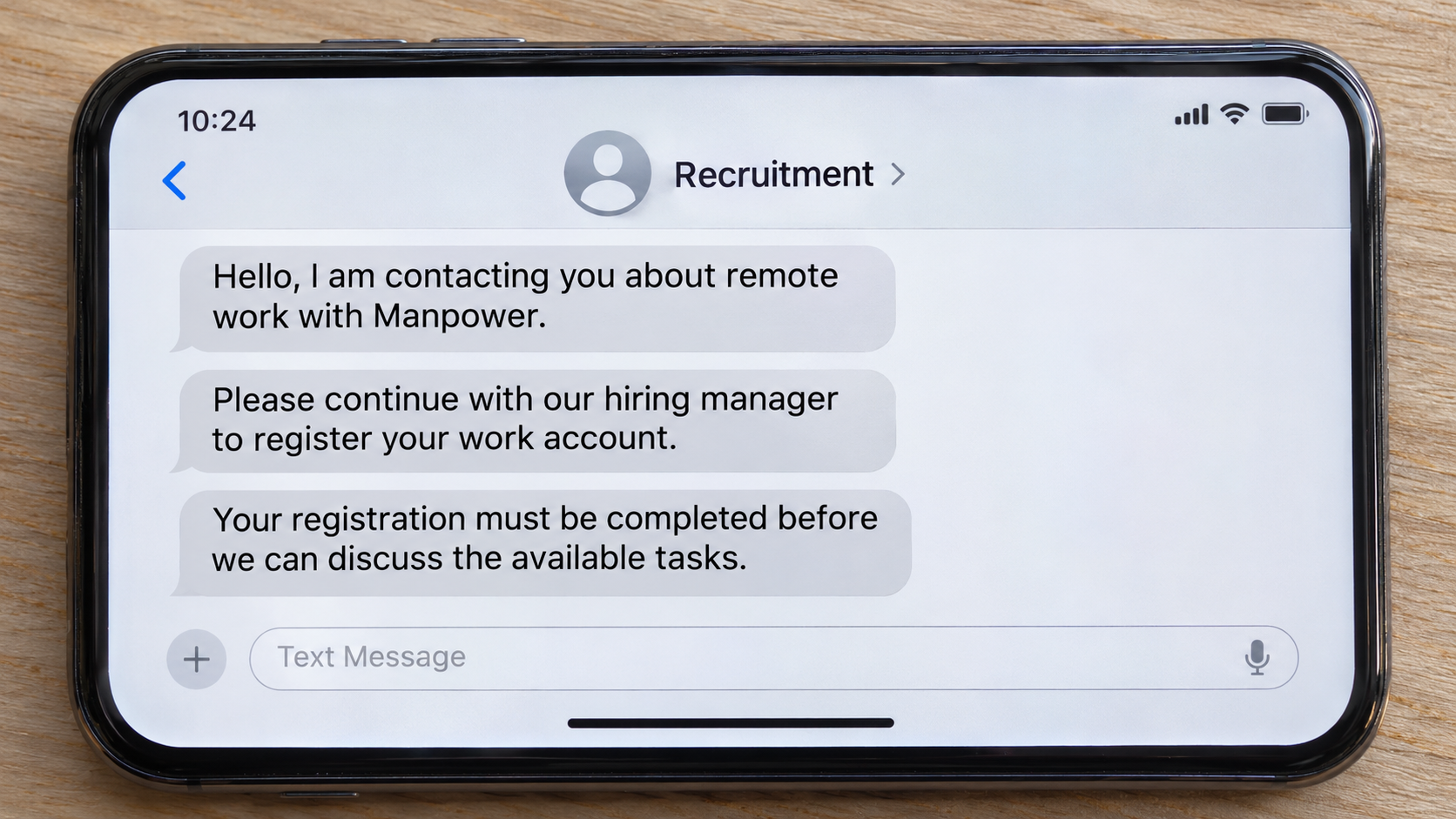
The message exchange pictured above is an invented reconstruction. It illustrates the handoff between contacts and contains no genuine applicant’s messages or working registration destination.
The safest checkpoint comes before registration or payment
Pause before following the supplied account link. Verify the recruiter and vacancy through contact details you locate independently on the appropriate Manpower website.
- The recruiter should identify the actual position and hiring organization.
- A second contact does not independently authenticate the first contact.
- Company logos and copied job descriptions cannot establish employment authority.
- Paying a deposit to obtain work is a serious warning.
- Your banking password has no place in a recruitment conversation.
If you already responded, your next steps depend on what you shared. A brief reply, an identity document, and a completed payment create different problems.
Why the Manpower Name Makes the Message Convincing
Job seekers routinely deal with intermediaries. The person introducing a vacancy may genuinely work for an agency rather than the employer listed in the job description.
That arrangement gives an impersonator a plausible explanation for introducing another person, another company name, or a separate registration page.
The handoff can therefore feel reassuring: someone else is available, the process seems organized, and your application appears to be moving forward.
But both contacts may belong to the same unverified conversation. Their agreement does not provide confirmation from the organization whose name they are using.
Imagine receiving an introduction, followed by a hiring manager who says your account must be activated immediately. Nothing has independently connected either person to the advertised employer.
The useful question is whether you can leave that conversation, reach the real organization yourself, and have it confirm the specific opportunity.
An authentic recruitment process can include messaging apps. Manpower Malaysia explicitly acknowledges that distinction while warning about impersonators using those channels.
Judge the identity and request together. An unfamiliar number deserves verification, but an area code or messaging platform alone cannot establish that somebody committed fraud.
How the Fake Manpower Recruiter Scam Works
Step 1: A familiar recruitment identity opens the conversation
The contact presents themselves as a recruiter and introduces work that sounds accessible. Remote arrangements and flexible hours can make the offer especially relevant during a difficult search.
You may have applied for many positions already, making it hard to remember every agency involved. The scammer benefits if that uncertainty substitutes for verification.
Ask which application prompted the contact and which vacancy they are discussing. An answer should be specific enough to check outside the conversation.
A legitimate agency’s public website may be included as reassurance. Anyone can send that link, so its presence does not establish who controls the chat.
Step 2: Routine questions create the feeling of an interview
The conversation may begin with harmless information: your preferred schedule, general experience, or whether you have internet access. Those exchanges make the process feel personalized.
Answering an ordinary question does not oblige you to complete the next form. Permission to discuss a role is not permission to collect every identity record.
Watch for a sudden jump from general interest to sensitive information, especially when nobody has explained the employer, duties, or purpose of the collection.
Length is also a poor test of authenticity. An extended exchange can still consist entirely of information supplied by the same unverified contact.
Step 3: Another manager or account becomes the next requirement
You are told to continue with another person, register on a separate website, or complete onboarding before receiving clearer details about the work.
This is a useful stopping point because your exposure may still be limited. You can verify the offer without creating an account on the supplied destination.
If the new contact names a different employer, check that relationship too. The first person’s claimed agency connection does not authenticate the second company’s involvement.
Keep any registration request as evidence. Avoid entering a reused password, uploading identification, or supplying financial information while the recruitment relationship remains unconfirmed.
Step 4: Employment becomes a reason to collect money or records
One route demands a registration, training, activation, or processing payment. Another asks for identity documents under the cover of arranging the job.
ManpowerGroup India’s published warning says candidates are not charged at any recruitment stage and identifies payment requests made by impostors.
If a recruiter claims to represent the Indian operation, a hiring fee directly conflicts with its published policy. Verify the offer through that operation.
Genuine employment paperwork can require personal information later. The danger is submitting it through a process whose recruiter, employer, and collection channel you have never authenticated.
Step 5: Some versions turn simple tasks into escalating deposits
A task-based version may display commissions for reviewing or boosting products. An early payout can encourage confidence before the platform asks you to contribute money.
The Canadian Anti-Fraud Centre describes this employment-fraud pattern, including visible balances that victims cannot withdraw.
A number on a work dashboard does not establish that the money is available to you. It may simply be a figure controlled by the platform.
Do not treat another deposit as a solution to the first blocked withdrawal. The request would put additional real money at risk to pursue an unverified balance.
Step 6: Pressure makes leaving feel like losing an opportunity
Once you have invested time, completed forms, or paid something, stopping can feel harder. The contact may insist that one remaining action will finish the process.
A hiring deadline does not answer the unanswered identity questions. Neither does a promise that your deposit will be returned after your first payment.
If the contact discourages independent verification, end their involvement in the decision. You can keep looking for legitimate work without following their instructions.
The demand can change from one impersonator to another. You should not wait for every warning sign before refusing a payment or stopping an unverified application.
How to Check the Recruiter Without Following Their Route
Confirm the person and vacancy through a separate channel
Find the relevant Manpower operation yourself, using its established website. Look for its contact information and job search rather than a link pasted into the message.
Give the organization the recruiter’s claimed name, position, and vacancy reference. Ask whether the person and opportunity are actually connected to that office.
Keep the question narrow enough to answer. Confirming that Manpower recruits for remote jobs generally would not authenticate a specific account or registration website.
If an agency introduces a client employer, ask what role each organization plays. A genuine relationship should not depend entirely on the first contact’s explanation.
Compare the request with the job itself
A customer-service vacancy should come with understandable duties and an identifiable employer. A sudden request to fund transactions needs an explanation beyond a promised commission.
The FTC’s job-scam guidance warns about fake hiring offers that turn applicants into payers, including supposed equipment purchases funded by bad checks.
If someone sends a check and tells you to pay a designated supplier, explain the entire arrangement to your bank before doing anything with it.
Buying equipment from the contact’s chosen recipient is a separate outgoing transaction. A reassuring message about the incoming check does not protect that payment.
Keep normal employment paperwork in its proper place
Once you have independently confirmed genuine employment, payroll may need account details. That does not give anyone a reason to request your password or login code.
Verification does not mean refusing every future payroll form. It means establishing who is hiring you before sending sensitive information through a particular channel.
Ask why each document is needed, who receives it, and which official system handles it. Do not let urgency replace those basic answers.
If the explanation changes after you hesitate, save both versions. The original request can help the real organization or payment provider understand what happened.
What to Do if You Have Fallen Victim to This Scam
-
Stop the hiring transaction and preserve the conversation. Save the initial approach, claimed names, account links, registration requests, and payment instructions before blocking the contact.
Keep private copies rather than posting identity documents publicly. A stolen employee name or photo may belong to another person whose identity is being abused.
-
Contact the actual organization through its established website. Report the impersonation and ask whether the vacancy or recruiter can be confirmed.
You do not need to keep talking to the suspected impersonator while waiting. The real organization’s response should arrive through the channel you independently selected.
-
If money left your account, contact the payment provider immediately. Describe the fake job offer and identify the recipient, transaction reference, amount, and time.
Ask whether the transfer can be stopped or recalled. The FTC’s recovery guidance explains that options depend on the payment method and circumstances.
Be accurate about payments you authorized under deception. Calling every transaction unauthorized can obscure what the provider actually needs to investigate.
-
If you deposited a check, notify your bank about the recruitment story. Do not spend the apparent proceeds or send a separate refund to the contact.
Include any instructions about equipment purchases or forwarding funds. The bank needs that context, rather than only a question about whether your balance increased.
-
If you shared passwords or security codes, secure the affected accounts. Start with email when it can be used to reset access elsewhere.
Replace reused credentials, review recovery details, and check unfamiliar sessions through the genuine provider. Tell its support team which approvals or codes you supplied.
-
If you sent identification, make a private inventory of the exposed records. A resume, passport image, and banking login require different follow-up.
For U.S. identity misuse, use IdentityTheft.gov and consider appropriate credit protections. A credit freeze helps with new credit accounts; it cannot reverse an earlier payment.
-
Report the account and job advertisement through the relevant platform. Include evidence of the impersonation and requests, rather than only the company name being copied.
Canadian readers can also report employment fraud through the Canadian Anti-Fraud Centre. Elsewhere, use the appropriate national reporting service and local police where relevant.
-
Reject another payment presented as the final fix. Someone promising to recover your deposit or unlock wages for an additional fee is creating another exposure.
A chat alone does not establish device infection. If you installed software or granted remote access, tell a trusted technician exactly what was installed or approved.
Frequently Asked Questions
Is Manpower itself operating this recruitment scam?
No, the confirmed warning concerns impersonators using a legitimate recruitment identity. It does not turn the real company or its genuine hiring activity into the scammer.
Does a WhatsApp message automatically mean fraud?
No, messaging platforms can support legitimate recruitment conversations. Independently verify the person and vacancy, and scrutinize any request for money or sensitive account access.
Can a genuine company website authenticate the recruiter?
No, anyone can share a public website. Contact the organization separately and ask about the specific person, vacancy, and registration destination presented to you.
Does receiving a small commission prove the job works?
No, task scams may use an initial payment to encourage larger deposits. Do not fund further tasks or a withdrawal fee because one payment arrived.
What if I only replied to the first message?
A reply alone does not establish financial loss or a compromised device. Stop the conversation, preserve useful details, and avoid escalating into registration, document sharing, or payment.
Should I pay a refundable deposit before starting?
Do not send a deposit to an unverified recruiter. Check the opportunity independently; a promise of reimbursement does not authenticate the person or protect your money.
The Bottom Line
Do not pay or submit sensitive records through an unverified Manpower recruitment message. The brand has confirmed impersonation, and copied company information cannot establish hiring authority.
Verify the specific recruiter and vacancy through the real organization. If you already transferred money or shared account access, contact the relevant provider immediately.

Join the discussion
0 commentsShare your experience or ask a question about this article.
Community experiences
Did this happen to you?
Your experience could help someone recognize the same scam. Submit a private report for our team to review.
I experienced this tooReports are reviewed before publication. Sharing publicly is always your choice.
Discussion
Start the conversation
Have a question or something useful to share? Add the first comment.