


It starts with someone who knows your book. They can discuss the setting, remember a character, and say exactly what would make it work on screen.
Then the conversation changes from the story you wrote to the money or rights you’re asked to hand over. That is where the offer deserves a second look.
Overview
The Editor Who Said a Book Was Headed for Netflix
In The Guardian’s investigation into literary scams, novelist M L Stark describes paying roughly $100,000 for a range of author services.
She received some of the work but not everything she had been promised.
The account says the person she knew as her editor later presented a supposed Netflix adaptation. She traveled to Thailand to meet him and look at potential locations.
According to Stark, the man ultimately admitted that the operation was a scam. That is her account of their meeting, not a court finding or a statement from Netflix.
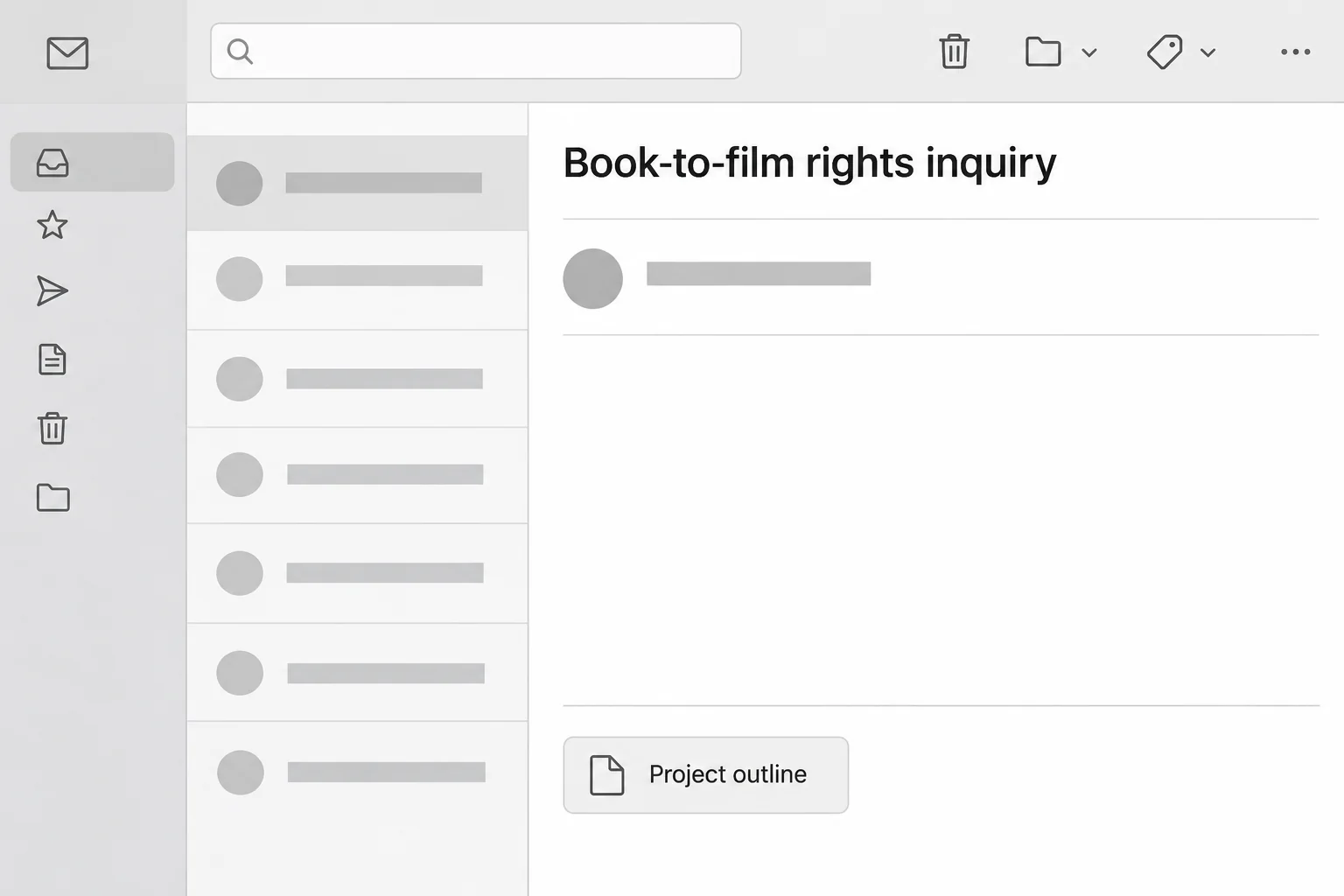
The total concerned a series of publishing and promotion services. It was not a $100,000 Netflix fee. The image above illustrates the kind of proposal, not anything Stark received.
Why a Service You Actually Received Can Make This Harder to Spot
Stark’s account is useful because not everything was invented. The people she dealt with helped make titles available through established publishing platforms.
That sort of delivery can leave a writer with a fair question: If the last job was real, why wouldn’t the next one be real too?
A listing proves that a title was listed. It doesn’t prove that the people behind it work for the retailer, represent a studio, or can secure a deal.
So assess each promise on its own. A book distribution receipt and an offer to option film rights should not be filed under the same decision.
What to Ask Before You Send Anything Else
- Get the legal name of the company making the offer, not just the name in an email signature.
- Ask who would sign the agreement, who would pay you, and what rights they would acquire.
- Find the producer or agency through contact information that did not come from the pitch.
- Separate any ordered editorial work from a purchase of rights or an agreement to represent you.
- Pause the process if independent review would supposedly make the deal disappear.
Those questions aren’t a demand for a producer to disclose a confidential development slate. They are the minimum you need before paying or letting someone act for you.
How the Fake Netflix Adaptation Scam Works
Step 1: The Relationship Starts With Ordinary Publishing Work
The promise that comes first may be small. Someone can offer editing, cover work, a book launch, or help publishing a manuscript that is already finished.
There’s nothing inherently suspicious about hiring someone for those tasks. A self-published writer may pay independent professionals without having a traditional publishing contract.
What matters is whether the invoice identifies the actual service. An edit should specify the manuscript, scope, expected delivery, and who is responsible for revisions.
If a vendor talks about insider access, separate that claim from the written scope of work. Ask them to put any commitment you’re relying on in writing.
Step 2: A Visible Result Makes the Next Promise Easier to Believe
A real listing or piece of promotion can be worth something. It can also be much narrower than the relationship the person selling it claims to have.
Stark described some work going live despite a wider history of unfulfilled promises. She saw those isolated deliveries differently once she understood what had happened.
If you ordered several services, track them separately. Record what you were billed for and mark what you actually received, including who supplied it.
A live page is evidence of a limited result. If it wasn’t the agreed deliverable, preserve the page rather than treating it as settlement of everything else.
Stark told the reporter she paid $10,000 for a Times Square billboard. A photograph can show that a billboard ran without saying anything about a future film.
When you review the invoice, put the work you can verify next to the unconfirmed promise. Keep the two separate even if the same person sold both.
Step 3: The Conversation Moves From Services to Screen Rights
At this point the question is no longer whether someone can edit a novel. It’s whether they are authorized to negotiate with a producer or acquire rights.
For Stark, the proposed filming location fit a real part of her story. A well-chosen detail can feel like evidence that development is already underway.
That detail still tells you nothing about whether there is a production company behind the pitch. It could come from reading your book or discussing it with you.
Ask whether this is a meeting, a preliminary expression of interest, or a formal offer. The answers imply very different obligations, and none should be inferred from enthusiasm.
Step 4: The Writer Is Asked to Commit Without Independent Confirmation
An apparent offer can come bundled with a paid service, a travel commitment, or a document that gives someone power to approach producers on your behalf.
Those are separate costs and decisions. You can decline to travel or buy work without giving anyone permission to take your book rights elsewhere.
The Guardian reported that Stark confronted the man in person. You don’t need to repeat that experience, and meeting somebody is not a reliable way to establish their authority.
Stop if you can’t verify the parties independently. Avoid sending further material while a name, company, payment recipient, or promise remains unexplained.
How to Verify a Film Offer Without Using the Sender’s Contacts
Find the Company and Contact It Separately
Start with the name on the proposed agreement. Look for the company’s own website or a professional directory that lists its office and staff.
A registered company record can help match the legal entity. It doesn’t tell you whether the person emailing you works there or whether the project is real.
Use the independently found office to ask whether the person, project, and contact details belong to it. Don’t send a full manuscript or personal ID just to ask.
If someone claims to represent you, ask what relationship you have agreed to establish. A real company name is not enough if the person is using it without permission.
Separate the Pitch Route From the Claimed Deal
Netflix’s own guidance says it doesn’t accept unsolicited material. It describes working through a qualified industry intermediary that already has a relationship with the company.
That doesn’t mean every independent producer who mentions Netflix is lying. It does mean a producer’s intention to pitch is not the same as Netflix making an offer.
Confirm who is actually prepared to sign. Ask what is being proposed now and whether anyone has produced written confirmation from the entity whose participation they’re claiming.
A producer may not be able to share every private detail. If you can’t confirm enough to evaluate the offer, waiting costs less than paying to find out.
Know Which Terms Change What You Can Do With Your Book
An option typically gives a producer an exclusive chance to acquire defined rights for a period. It isn’t a promise that a film will be made.
Look for the duration, extensions, scope of the rights, compensation, and the conditions under which the rights return. These details belong in a proposed agreement.
Compare that agreement to your earlier publishing contract. Find clauses about dramatic rights, representation, exclusivity, and notices before agreeing to anything that might overlap with existing commitments.
An entertainment attorney or writers’ organization can help you interpret the terms. The Society of Authors and Writers’ Guild guidance recommends checking suspicious approaches with an independent adviser.
Don’t Let a New Offer Take Over Your Old Accounts
Check who can change the book listing, upload a revised manuscript, or redirect any royalties. A vendor who helped set up distribution might still have a role on the account.
Ask the platform which controls belong to you and what it needs to restore access if you’ve lost it. Don’t rely on the vendor to tell you which controls exist.
Save your sales records before requesting changes. They can help distinguish royalties generated by books that actually sold from a separate promise of future earnings.
What to Do if You Have Fallen Victim to This Scam
Pause payments and cancel any planned trips you can still change.
Don’t send an additional fee because a previous payment is supposedly about to be lost. Retain confirmations for bookings and payments that already went through.
Check the cancellation terms directly with the actual travel provider. Keep that conversation separate from any dispute about the book.
Give your payment provider a precise list of charges.
List the amount, date, recipient, and method for each payment. Explain what you thought you were buying and whether you received all, some, or none of it.
Ask the provider what fraud, dispute, or recall process applies. Be clear about payments you authorized so it can assess the correct route.
Preserve the agreements and the work you actually received.
Save signed and unsigned offers, invoices, delivery records, email headers, and copies of the manuscript versions involved. Keep the originals and create a timeline for review.
If a paid service was delivered, record that too.
A partial result is not an answer to a separate charge, but leaving it out can make the dispute harder to understand.
Check who has access to your publishing accounts.
Sign in through the provider’s official website. Update any passwords you shared, enable available two-step verification, and check the account’s email, access permissions, and payment destination.
If a vendor created the account or controls the recovery address, contact the platform directly. Ask what proof it needs before transferring or restricting access.
Have any rights grant or signed agreement reviewed.
Send the complete contract to an independent entertainment lawyer or your writers’ organization. Point out any clause allowing someone else to represent you, license the work, or extend a deadline.
Ask what to do before sending a cancellation letter or accepting a refund linked to a release of claims. Keep the result of the review in writing.
Report the false approach through the appropriate channels.
Notify the brand that was used, the service where the contact occurred, and your local fraud authority.
Share message identifiers and transaction records, rather than posting your manuscript or banking details.
If you are in the United States, start with the FTC reporting site. Keep the confirmation so you can add information without starting the record over.
Frequently Asked Questions
Is an Unexpected Film Inquiry Always Fake?
No, a legitimate producer can discover a published book and make contact. An unexpected inquiry deserves verification, especially if it asks for money, documents, or rights.
Confirm the individual through a company contact you found independently. A real person and an actual proposal should stand up to ordinary questions about what happens next.
Does a Listing on Amazon Show the Publisher Is Affiliated With Amazon?
A book being available through Amazon does not prove that Amazon owns, endorses, or employs the company that helped list it. Distribution and corporate affiliation are different claims.
Use the listing only as evidence of what was delivered. Check any claimed partnership separately before assigning more work or paying for access.
Should I Pay Someone to Adapt My Book Into a Screenplay?
You can commission your own screenplay as a separate service. That’s different from an unsolicited claim that a studio will buy your book if you pay a particular writer.
If you want to hire a writer, compare providers, scope, and rights before choosing one yourself. Don’t treat a fee as confirmation from a producer or studio.
What If They Say They Can’t Provide Proof Because of a Nondisclosure Agreement?
There may be real limits on sharing a script or business terms. You can still ask who would sign, and seek your own legal advice.
Walk away if you cannot check who’s making the offer. Do not pay for access to a claimed approval or sign away rights in exchange for a name.
Can I Still Raise a Dispute If Some Work Was Done?
Explain exactly which items arrived and which were never delivered. Include the agreed scope, invoice dates, evidence of partial delivery, and any later representations that changed the deal.
The payment provider will determine which rules apply. Avoid filling in gaps with assumptions about intent or promising yourself that every payment can be reversed.
What If They Already Have My Unpublished Manuscript?
Save the version you sent and any access history you can see. Revoke shared links you control, and check whether the manuscript is still available in shared folders.
If you see unauthorized publication or get a new demand about the work, preserve the evidence. Ask your adviser what to do before signing a proposed settlement or sending money.
The Bottom Line
Don’t pay or sign away rights based on a claimed Netflix deal. Verify who is offering the agreement and what they can actually commit to.
If you’ve already paid, call the payment provider and document each charge. Have any agreement reviewed separately so you know what happened to your rights, not just your money.

Join the discussion
0 commentsShare your experience or ask a question about this article.
Community experiences
Did this happen to you?
Your experience could help someone recognize the same scam. Submit a private report for our team to review.
I experienced this tooReports are reviewed before publication. Sharing publicly is always your choice.
Discussion
Start the conversation
Have a question or something useful to share? Add the first comment.