

The WeTransfer Received Transfer Expired scam is one of the latest phishing campaigns targeting professionals, freelancers, and businesses that regularly exchange files online. The message looks nearly identical to a legitimate WeTransfer notification and claims that a file you were expecting has “expired” but can still be recovered. This creates a sense of urgency that pushes victims to click.
What happens next is far more dangerous than losing a file. Attackers use these fake recovery pages to steal email logins, business credentials, and in some cases deploy malware. If you’ve received one of these messages, you’re not alone. This guide breaks down exactly what this scam is, how it works, and what to do if you interacted with it.

Scam Overview
The WeTransfer Received Transfer Expired scam is a phishing operation designed to mimic WeTransfer’s email style and branding. The scam’s purpose is to steal login credentials by tricking users into thinking they are restoring an expired file transfer. Because WeTransfer is widely used in creative industries, marketing agencies, corporate environments, and personal file sharing, this scam can spread quickly and cause significant harm.
What the Fake Email Looks Like
The phishing message typically includes:
- A subject line such as “The transfer you received expired, but you can still recover it!”
- The WeTransfer logo at the top
- A short paragraph claiming that the transfer has expired
- A button labeled “Recover Your Transfer Now”
- A generic greeting such as “Dear user” or a blurred-out name
- A threatening line such as “Recover it now or it will be permanently deleted”
Everything is crafted to look extremely similar to WeTransfer’s normal style. Attackers use identical colors, spacing, and even copy WeTransfer’s wording. Most victims never notice that something is wrong until after they click.
Why This Scam Is Effective
The attackers rely on psychology:
- Urgency: Users think they only have a limited amount of time.
- Expectation: Many people are regularly waiting for files.
- Familiar branding: The email copy looks professional.
- Curiosity: Even if you were not expecting a file, you may wonder who tried to send you something.
Scam emails that imitate well-known services (Dropbox, Google Drive, Microsoft OneDrive, DocuSign) have a high success rate. Adding the “expired file” angle increases the chance that victims will click without thinking.
What Happens When You Click
The button in the email does not lead to WeTransfer. Instead, it leads to:
- A forged WeTransfer login page hosted on a random domain.
- A compromised website that attackers are using as a redirect.
- A page that loads malware automatically.
Once credentials are entered, the victim is quietly redirected to a harmless WeTransfer page or to an error message. This makes it appear as though nothing suspicious happened. Meanwhile, the attackers now have the victim’s login information.
What Attackers Do With the Stolen Credentials
Cybercriminals may:
- Access your email inbox
- Steal sensitive attachments
- Forward phishing emails to your contacts
- Log into cloud storage accounts
- Reset passwords for banking or financial services
- Commit identity theft
- Sell the credentials on dark web markets
Because the scam often targets corporate accounts, attackers can sometimes access internal systems, shared drives, or HR documents. That makes this phishing campaign particularly harmful for businesses.
Additional Red Flags in These Messages
Although the scam looks convincing, there are clues:
- The sender email is never a genuine @wetransfer.com address
- The greeting is generic or uses your email address instead of your name
- The email includes unusual spacing or odd punctuation
- The button URL does not belong to WeTransfer
- The message claims you can “recover” an expired file (WeTransfer does not offer this feature)
WeTransfer does not provide recovery options for expired transfers. Once a file expires, the sender must re-upload and resend it. Any message that claims otherwise is automatically fraudulent.
How the Scam Works
Understanding the full sequence helps you recognize similar scams and prevent future attacks. This section goes through the entire operation from start to finish.
Step 1: Attackers Send a Fake Expired Transfer Notification
The attack begins with a phishing email sent to thousands of recipients. The scammer:
- Spoofs the display name to look like WeTransfer
- Injects WeTransfer’s logo and formatting
- Uses text that resembles real email notifications
Because WeTransfer is a common service, most recipients will assume the message is legitimate.
Step 2: The Recipient Sees a High-Urgency Message
The scam email emphasizes urgency. Phrases like:
- “Recover it now before it is permanently deleted”
- “You are running out of time”
- “Immediate action required”
Victims believe they will lose important files unless they click quickly.
Step 3: The Victim Clicks “Recover Your Transfer Now”
Users click the button expecting to restore a file. The URL they are taken to is usually:
- A hacked WordPress site
- A newly registered domain
- A domain with random characters
- A site hosted on shared hosting providers
It is rarely an official WeTransfer domain.
Step 4: The Fake WeTransfer Login Page Loads
The victim sees a login page that looks identical to the real one. The scammers:
- Copy WeTransfer’s design
- Steal the exact fonts and spacing
- Use the same blue color scheme
- Add a fake login box that sends data to the attacker’s server
Some pages even include fake cookie banners or privacy notices.
Step 5: Victims Enter Their Email Address and Password
Once the victim submits credentials, the attackers immediately receive them. Many victims assume everything is normal because the fake site then does one of the following:
- Redirects to the real WeTransfer homepage
- Shows a simple “Transfer cannot be recovered” message
- Shows a loading spinner
- Produces a fake generic error
This is done deliberately. It prevents suspicion and keeps the victim from realizing their data was stolen.
Step 6: Attackers Access the Victim’s Email Account
With the login credentials:
- They enter the victim’s inbox
- They search for financial documents, invoices, and personal information
- They forward more phishing messages to the victim’s contacts
- They set up email forwarding rules to hide their activity
Forwarding rules are used to capture future password reset messages.
Step 7: Attackers Pivot to Other Accounts
Once scammers gain access to your email, they can attempt:
- Cloud storage login
- Social network access
- Banking account password resets
- Business system access
- PayPal or payment platform resets
- E-commerce account takeovers
This is why email account security is critical. A compromised email often leads to multiple compromised accounts.
Step 8: Stolen Credentials Are Sold or Used in Cybercrime
The stolen login information may be:
- Sold on forums on the dark web
- Used to commit identity theft
- Used for BEC (Business Email Compromise) attacks
- Used to steal money from victims
- Added to massive credential-stuffing databases
Some attackers immediately lock victims out by changing passwords. Others stay hidden and monitor the inbox silently.
Step 9: Victims Usually Realize Too Late
By the time most victims notice something is wrong, attackers already:
- Downloaded private files
- Sent phishing emails to coworkers
- Changed forwarding rules
- Logged in from foreign IP addresses
- Exported stored passwords (if the victim uses browser-based saving)
This is why understanding this scam and knowing the warning signs is essential.
What to Do If You Have Fallen Victim to This Scam
If you clicked the link, entered your credentials, or interacted with the scam, take action immediately. The faster you respond, the more damage you can prevent.
1. Change Your Email Password Immediately
Log into your email account from a clean device and change your password to a strong, unique one. Avoid reusing passwords across accounts.
2. Enable Two-Factor Authentication (2FA)
Turn on 2FA using an authenticator app, not SMS if possible. This helps prevent attackers from logging in even if they have your password.
3. Check for Unauthorized Logins
Review your login history or security dashboard. Look for:
- Logins from unknown devices
- Unusual IP addresses
- Foreign locations
If you see anything suspicious, log those sessions out immediately.
4. Remove Malicious Forwarding Rules
Scammers often create forwarding rules such as:
- Forward all emails to a hidden external address
- Forward emails containing “password” or “reset”
- Auto-delete certain messages
Remove these rules from:
- Gmail Settings > Filters and Blocked Addresses
- Outlook Settings > Mail > Rules
- Yahoo Settings > Filters
5. Check for Password Resets Across All Accounts
If scammers had access to your inbox, they may have triggered resets. Check accounts such as:
- PayPal
- Amazon
- Apple ID
- Google Drive
- Dropbox
- Banking apps
- Social networks
- Business platforms
Change passwords wherever necessary.
6. Warn Your Contacts
If attackers accessed your email, they may send messages pretending to be you. Notify:
- Coworkers
- Clients
- Friends
- Family
Tell them to ignore suspicious messages.
7. Run a Full Antivirus Scan
Use a trustworthy security application to scan for:
- Malware
- Spyware
- Keyloggers
- Browser hijackers
This is important if you clicked suspicious links.
8. Check Your Sent Folder
Look for messages you did not send. Attackers often forward phishing to your contacts to continue the cycle.
9. Contact Your IT or Security Team (If Applicable)
If your email is part of a company domain, you must inform your IT department. They will:
- Reset system-wide access
- Check audit logs
- Prevent further compromise
10. Report the Scam
Report the phishing email to:
- WeTransfer (support@wetransfer.com)
- Your email provider
- Your organization’s security team
- Anti-phishing reporting services
This helps prevent additional victims.
Is Your Device Infected? Run a Free Malware Scan
Slow performance, constant pop-ups, or strange behavior? These are classic signs of a malware infection. The fastest way to find out is to scan your device with Malwarebytes Free — one of the most trusted malware removal tools available.
The free version detects and removes the most common threats, including:
- Adware — the cause of those annoying pop-ups
- Browser hijackers — unwanted redirects and changed homepages
- Trojans and spyware — hidden programs stealing your data
- Potentially unwanted programs (PUPs) — software you never asked for
👉 Select your device below — Windows, Mac, or Android — then follow the simple steps to download Malwarebytes, scan your system, and remove any threats it finds. The scan usually takes 5 to 20 minutes.
Run a Malware Scan with Malwarebytes for Windows
Malwarebytes is one of the most popular and trusted anti-malware tools for Windows — and it’s completely free for removing infections. It catches threats that many antivirus programs miss, including adware, browser hijackers, and trojans. Follow the steps below to scan and clean your PC in just a few minutes.
Download Malwarebytes
Click the button below to download the latest version of Malwarebytes for Windows from the official source. The free version is all you need — it will scan your computer and remove adware, browser hijackers, and other malicious software at no cost.
Download MalwarebytesOfficial installer for Windows 11 and 10. Your download starts right away.Want real-time protection? See Malwarebytes Premium Malwarebytes Free for WindowsScans and removes malware at no cost
-
Install Malwarebytes
When the download finishes, open your Downloads folder and double-click the MBSetup file. If Windows shows a User Account Control pop-up, click “Yes” to allow the installation.
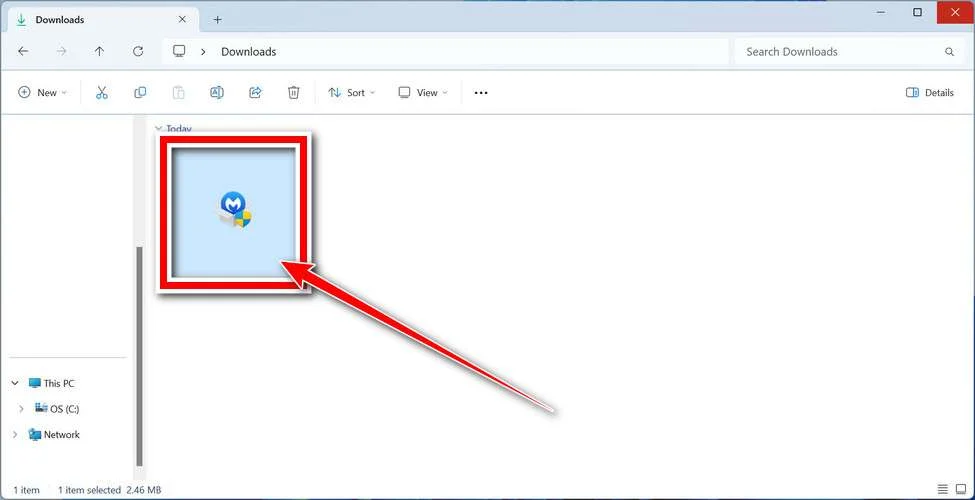
Follow the On-Screen Prompts to Install Malwarebytes
The setup wizard will walk you through a few quick screens:
-
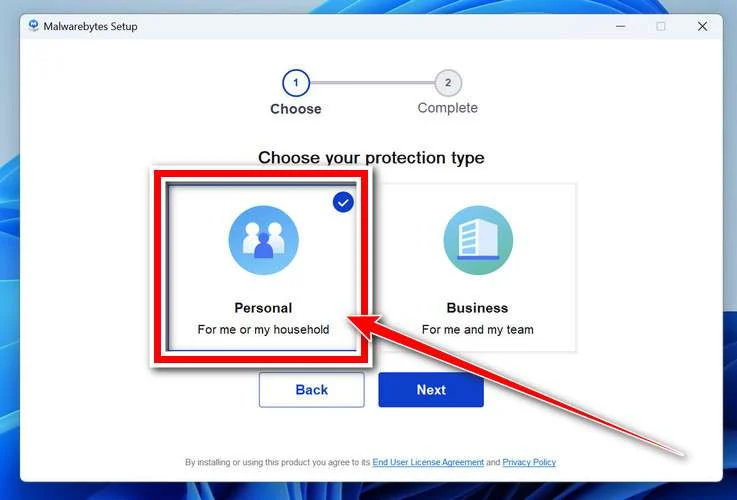
Choose where you’re installing the program — “Personal Computer” or “Work Computer” — then click Next.
-
Malwarebytes will now install on your device. This usually takes under a minute.

-
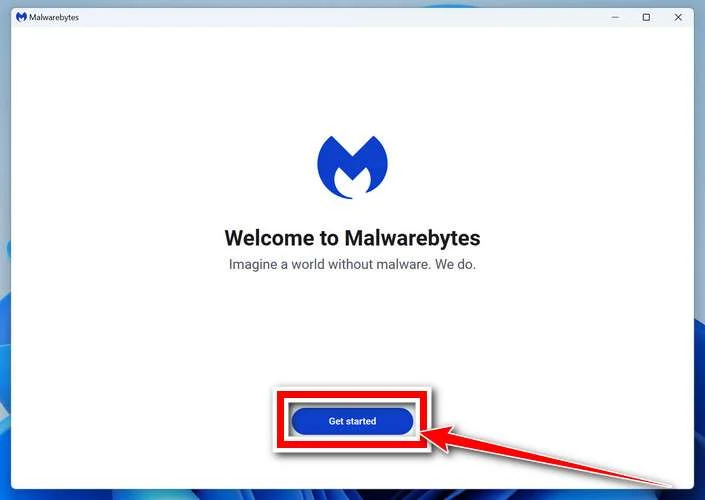
When installation is complete, the “Welcome to Malwarebytes” screen will open automatically.
-
On the final screen, click Open Malwarebytes to launch the program.

-
Enable “Scan for Rootkits”
Before scanning, turn on rootkit detection so Malwarebytes can find even the most hidden threats. Click the Settings gear icon on the left side of the screen.
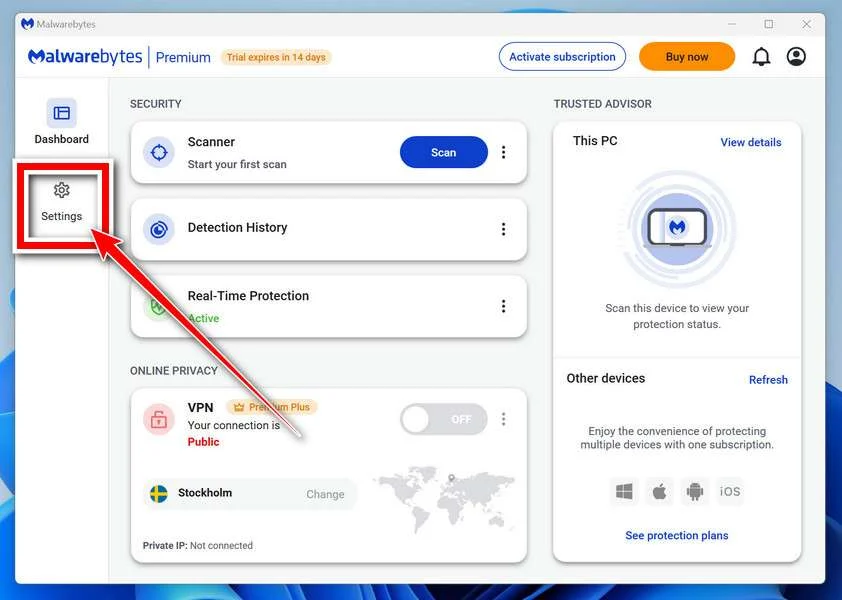
In the settings menu, find “Scan for rootkits” and click the toggle so it turns blue.

Done? Click “Dashboard” in the left pane to return to the main screen.
Start the Scan
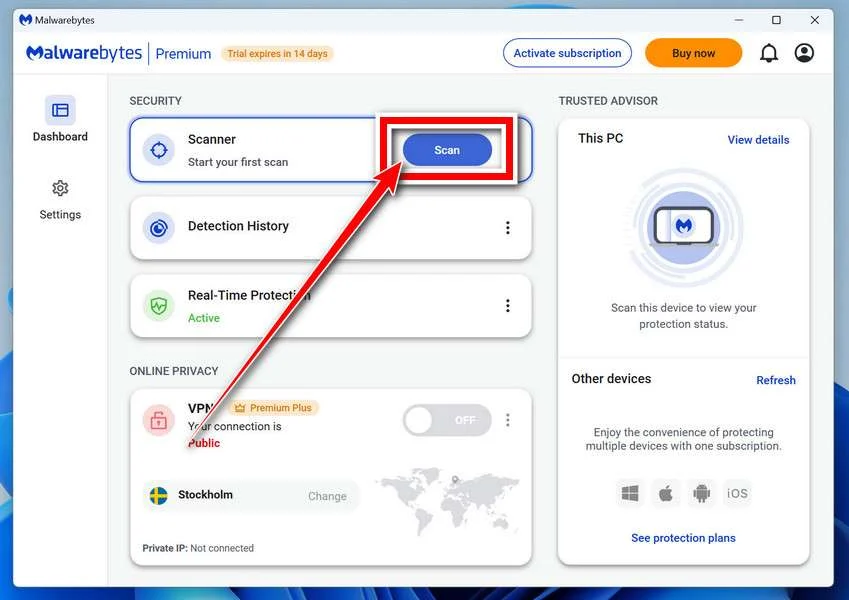
Click the blue Scan button. Malwarebytes will automatically update its virus database and start checking your computer for malware.
-
Wait for the Scan to Finish
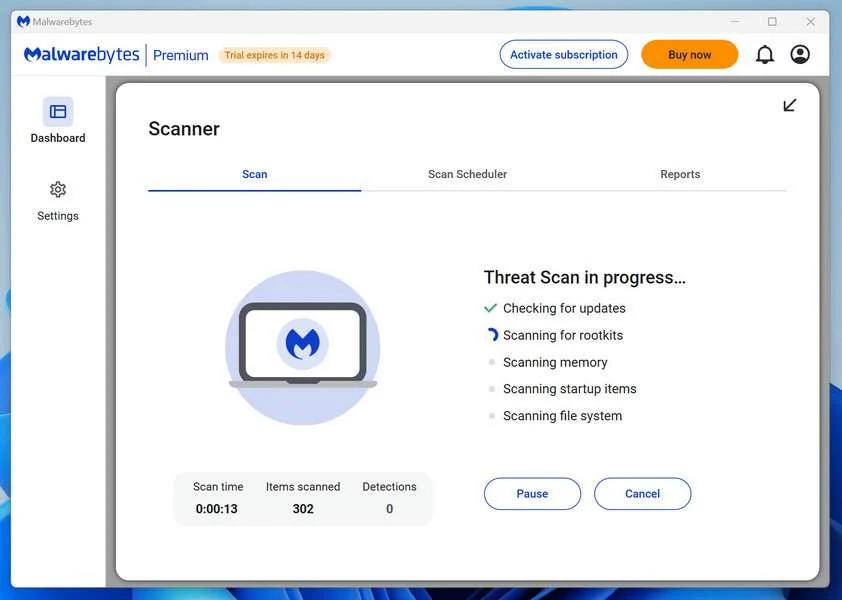
The scan checks your entire system for browser hijackers and other malicious programs, so it can take 5 to 20 minutes depending on your computer. Feel free to do something else — just check back occasionally to see the progress.
-
Quarantine the Detected Threats
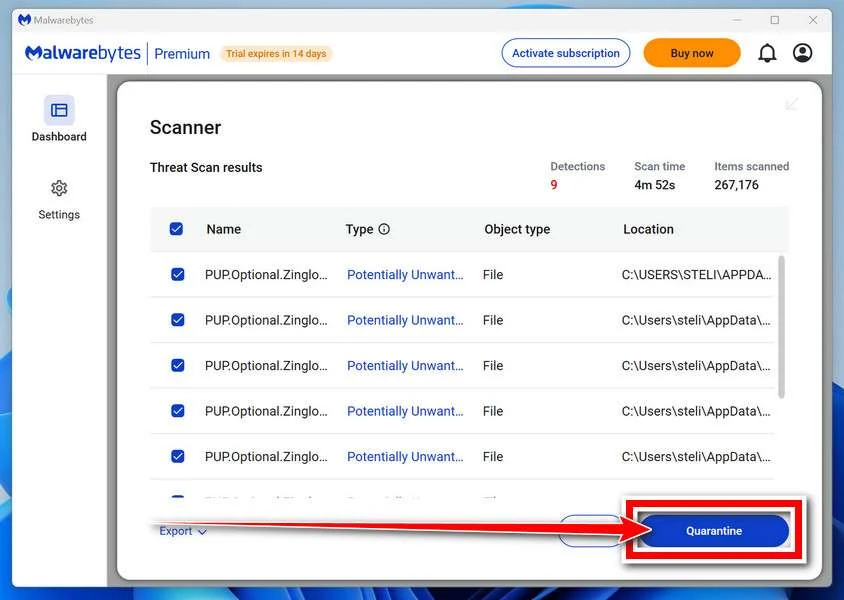
When the scan is done, you’ll see a list of everything Malwarebytes found — malware, adware, and potentially unwanted programs. Click the “Quarantine” button to remove all of them at once.
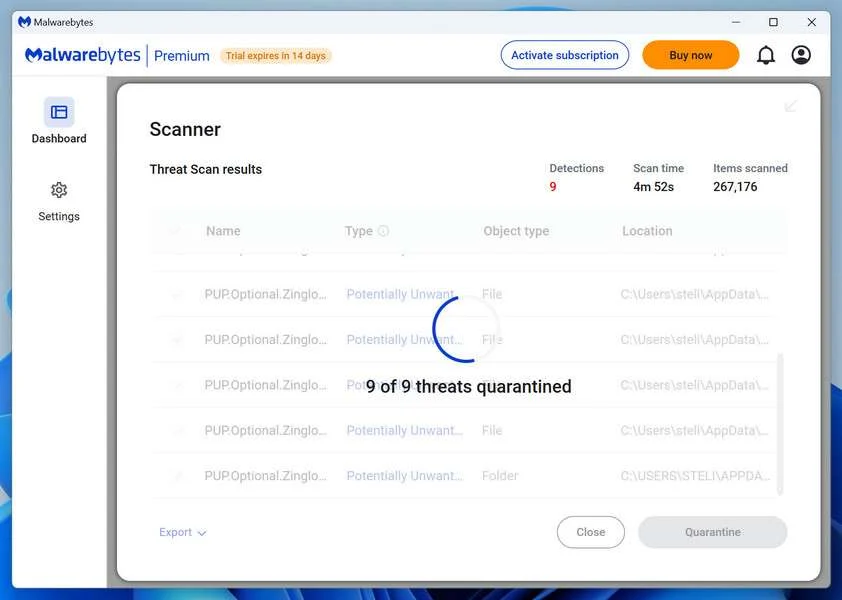
Malwarebytes will now remove the malicious files and registry entries and move them safely into quarantine.
-
Restart Your Computer
Some threats can only be fully removed after a reboot. If Malwarebytes asks you to restart, click Yes. Once you’re logged back in, Malwarebytes has finished removing the threats it found.
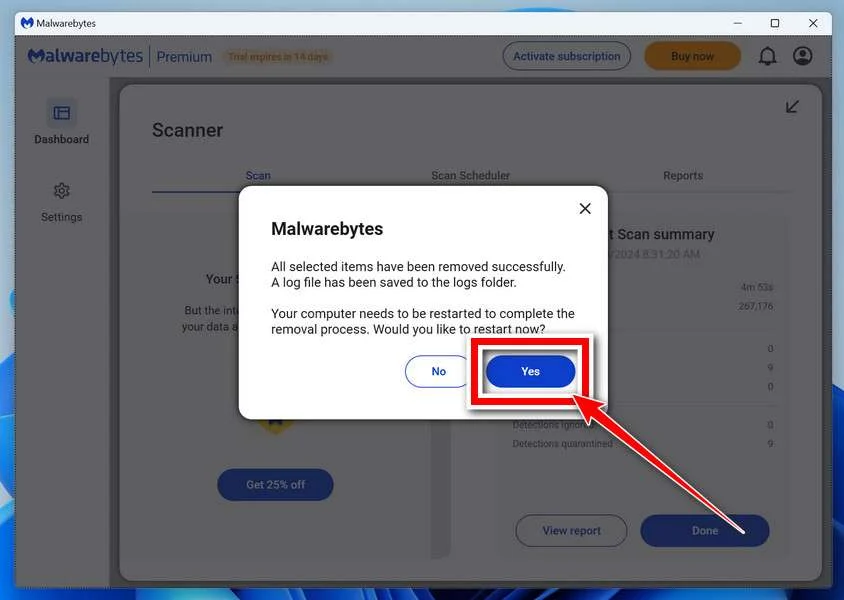
That’s it — your Windows PC is now clean of trojans, adware, and other malware, and should be back to running smoothly.
If you are still having problems with your computer after completing these instructions, then please follow one of the steps:
- Run a computer scan with ESET Online Scanner
- Ask for help in our Windows Malware Removal Help & Support forum.
Run a Malware Scan with Malwarebytes for Mac
Malwarebytes for Mac is a free on-demand scanner that removes the malware other security software tends to miss — adware, browser hijackers, and unwanted programs included. Cleaning an infected Mac with Malwarebytes has always been completely free, and it’s our go-to recommendation. Follow the steps below to scan and clean your Mac in just a few minutes.
-
Download Malwarebytes for Mac
Click the button below to download the latest version of Malwarebytes for Mac.
Download MalwarebytesOfficial installer for macOS. Your download starts right away.Want real-time protection? See Malwarebytes PremiumMalwarebytes Free for MacScans and removes malware at no cost -
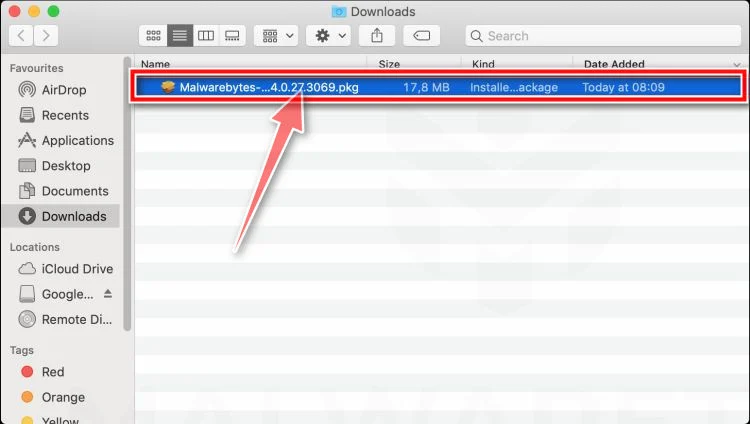
Open the Malwarebytes setup file
When the download finishes, open your Downloads folder and double-click the setup file to begin the installation.
-
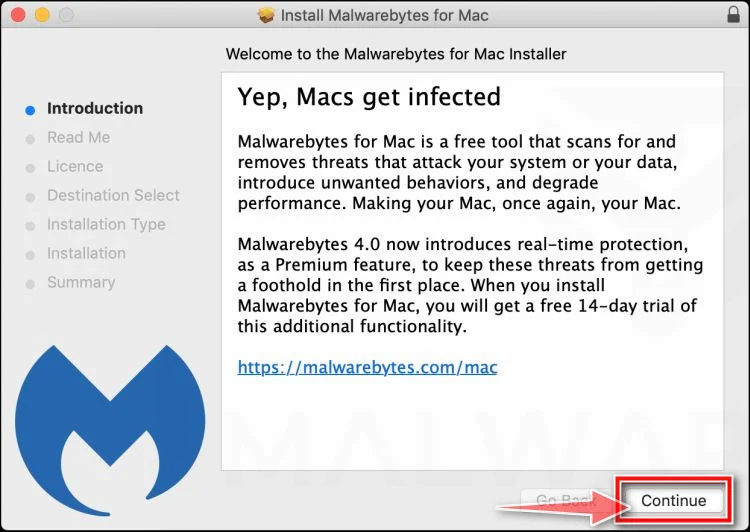
Follow the On-Screen Prompts to Install Malwarebytes
The Malwarebytes for Mac Installer will guide you through a few quick screens. Click “Continue” and keep following the prompts until the installation completes.
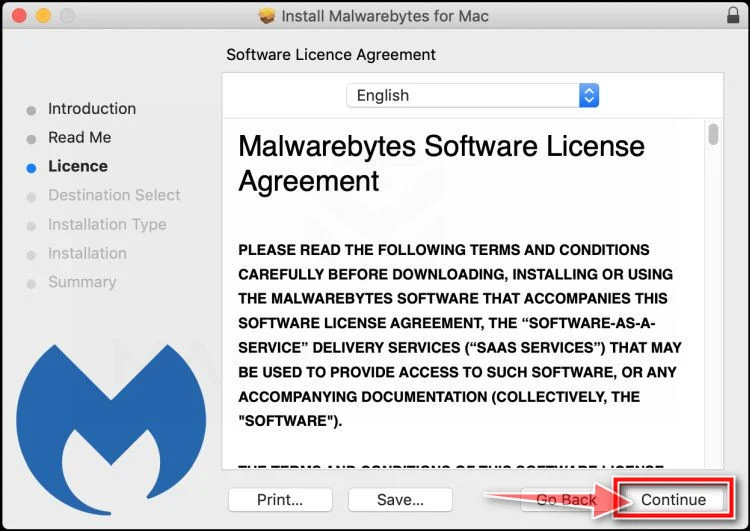
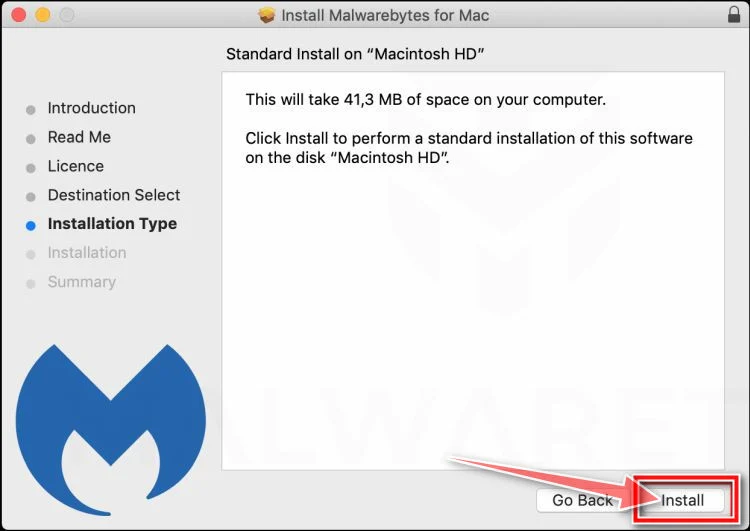
When the installation is complete, Malwarebytes opens to the Welcome to Malwarebytes screen. Click “Get started“.
-
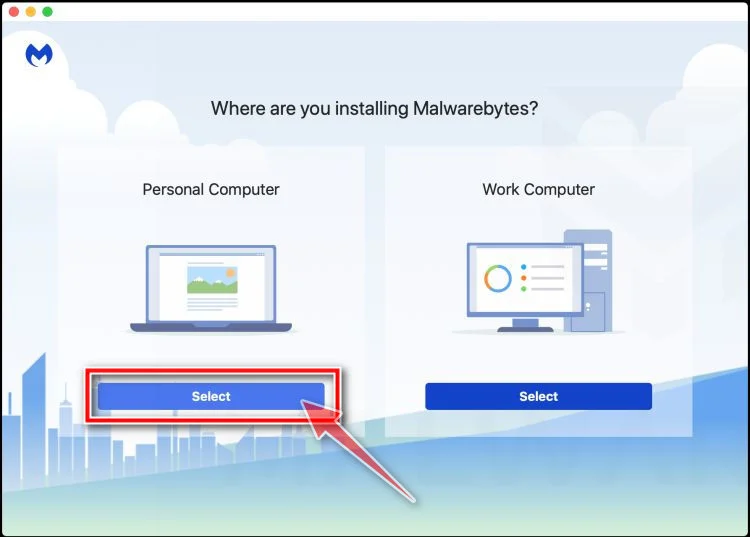
Select “Personal Computer” or “Work Computer”
Malwarebytes will ask what type of computer you’re installing it on. Click either Personal Computer or Work Computer, whichever applies.
-
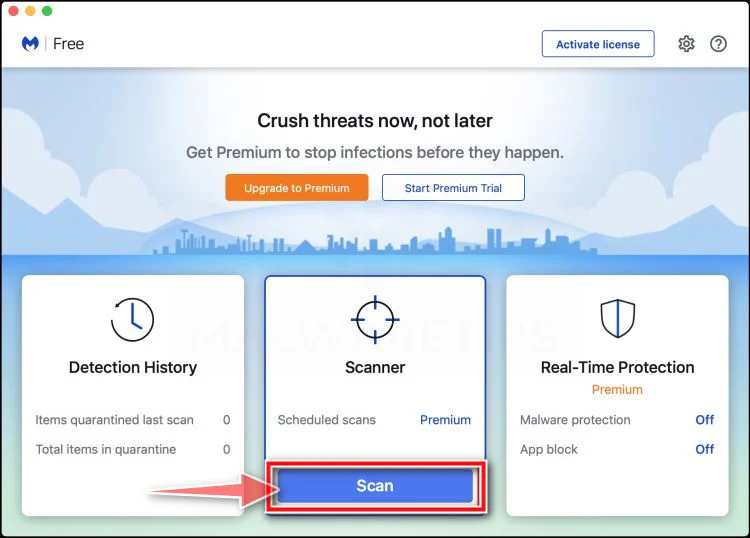
Start the Scan
Click the “Scan” button. Malwarebytes will automatically update its detection database and begin checking your Mac for malware.
-
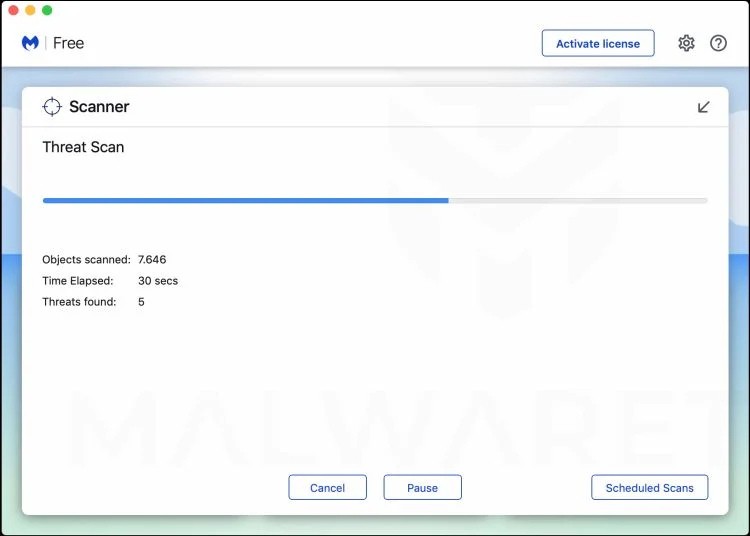
Wait for the Scan to Finish
Malwarebytes will scan your Mac for adware, browser hijackers, and other malicious programs. This can take a few minutes, so feel free to do something else — just check back occasionally to see the progress.
-
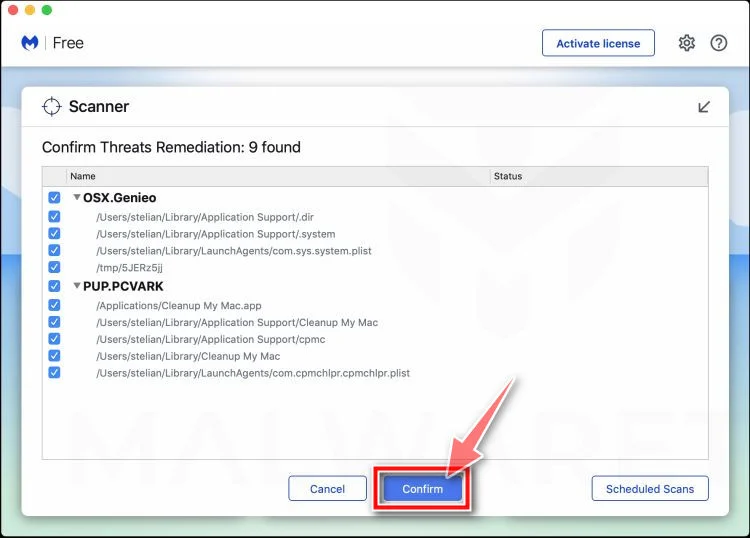
Quarantine the Detected Threats
When the scan is done, you’ll see a list of everything Malwarebytes found. Click the “Quarantine” button to remove all the threats at once.
-
Restart Your Mac
Malwarebytes will now remove all the malicious files it found. Some threats can only be fully removed after a reboot — if Malwarebytes asks you to restart, allow it. Once you’re logged back in, your Mac is clean.
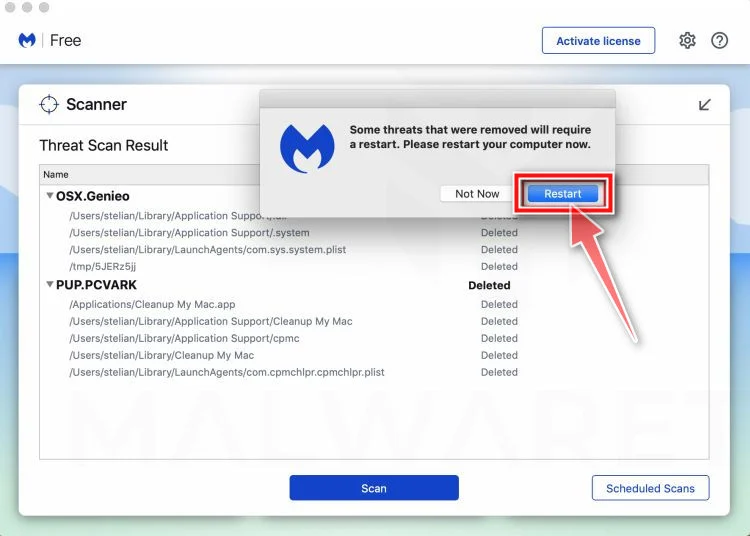
That’s it — your Mac is now free of adware, rogue browser extensions, and other potentially harmful software.
If you are still experiencing problems while trying to remove a malicious program from your computer, please ask for help in our Mac Malware Removal Help & Support forum.
Run a Malware Scan with Malwarebytes for Android
Malwarebytes for Android automatically detects and removes dangerous threats like malware and ransomware so you don’t have to worry about your most-used device being compromised. Aggressive detection of adware and potentially unwanted programs keeps your Android phone or tablet running smooth.
-
Download Malwarebytes for Android.
You can download Malwarebytes for Android by clicking the link below.
Get Malwarebytes for AndroidOpens Google Play in a new tab.Want real-time protection? See Malwarebytes Premium for AndroidMalwarebytes for AndroidScans your phone and removes malware at no cost -
Install Malwarebytes for Android on your phone.
In the Google Play Store, tap “Install” to install Malwarebytes for Android on your device.

When the installation process has finished, tap “Open” to begin using Malwarebytes for Android. You can also open Malwarebytes by tapping on its icon in your phone menu or home screen.

-
Follow the on-screen prompts to complete the setup process
When Malwarebytes will open, you will see the Malwarebytes Setup Wizard which will guide you through a series of permissions and other setup options.
This is the first of two screens that explain the difference between the Premium and Free versions. Swipe this screen to continue.
Tap on “Got it” to proceed to the next step.
Malwarebytes for Android will now ask for a set of permissions that are required to scan your device and protect it from malware. Tap on “Give permission” to continue.
Tap on “Allow” to permit Malwarebytes to access the files on your phone.
-
Update database and run a scan with Malwarebytes for Android
You will now be prompted to update the Malwarebytes database and run a full system scan.

Click on “Update database” to update the Malwarebytes for Android definitions to the latest version, then click on “Run full scan” to perform a system scan.

-
Wait for the Malwarebytes scan to complete.
Malwarebytes will now start scanning your phone for adware and other malicious apps. This process can take a few minutes, so we suggest you do something else and periodically check on the status of the scan to see when it is finished.

-
Click on “Remove Selected”.
When the scan has been completed, you will be presented with a screen showing the malware infections that Malwarebytes for Android has detected. To remove the malicious apps that Malwarebytes has found, tap on the “Remove Selected” button.

-
Restart your phone.
Malwarebytes for Android will now remove all the malicious apps that it has found. To complete the malware removal process, Malwarebytes may ask you to restart your device.
That’s it — your Android phone is now clean — no more malicious apps, adware, or browser redirects.
If you are still having problems with your phone after completing these instructions, then please follow one of the steps:
- Restore your phone to factory settings by going to Settings > General management > Reset > Factory data reset.
- Ask for help in our Mobile Malware Removal Help & Support forum.
Stay Protected: Block Ads and Malicious Sites
Now that your device is clean, keep it that way. Most infections start with a malicious ad or a fake download button — so blocking them at the source is your best defense.
We recommend AdGuard, which blocks malicious ads, phishing pages, and dangerous redirects before they can reach you.
👉 Download AdGuard and browse safely
The Bottom Line
The WeTransfer Received Transfer Expired scam is a sophisticated phishing operation that uses urgency, brand impersonation, and psychological manipulation to trick victims into entering their email credentials. Once attackers gain access, they can steal sensitive files, compromise additional accounts, and spread the scam further.
Although the email looks convincing, the promise of “recovering” an expired transfer is fake. WeTransfer does not allow expired files to be restored. This alone is a major red flag.
If you interacted with one of these messages, take action immediately. Change your passwords, enable two-factor authentication, remove malicious forwarding rules, check for unauthorized logins, and notify your contacts. The sooner you respond, the better your chances of preventing further damage.
FAQ
What is the WeTransfer Received Transfer Expired scam?
This scam is a phishing campaign designed to imitate a legitimate WeTransfer email. Victims receive a message claiming that a file transfer has expired but can still be recovered. The email contains a fake “Recover Your Transfer” button that redirects users to a fraudulent login page. Once victims enter their credentials, attackers gain access to their email accounts and potentially other linked services.
How can I tell if a WeTransfer email is fake?
Fake WeTransfer emails often contain small but important red flags. These include incorrect sender addresses, unusual domains in the link, generic greetings such as “Dear user,” poor grammar, suspicious urgency, or claims that expired files can be recovered. WeTransfer does not allow expired transfers to be restored. If an email suggests otherwise, it is fraudulent.
What happens if I click the “Recover Your Transfer Now” button?
Clicking the button usually leads to a phishing page disguised as a WeTransfer login portal. While the page looks identical to the real one, it sends your login credentials directly to the attackers. After entering your details, you might be redirected to a real WeTransfer page or shown an error message to avoid suspicion, but the damage is already done.
What do scammers do with stolen credentials?
Once scammers obtain your email and password, they may access your inbox, steal sensitive files, reset passwords for connected accounts, use your identity to scam others, or sell your credentials on dark web forums. Some attackers set up email forwarding rules to intercept communication without being detected.
Is it possible to recover an expired WeTransfer file?
No. WeTransfer does not offer any method to restore expired files. The sender must upload the files again and resend the transfer. Any email claiming that expired files can be recovered is automatically suspicious and fraudulent.
Does the scam only target WeTransfer users?
No. The scam targets anyone who uses email. Even if you do not use WeTransfer, the attackers rely on curiosity or confusion to encourage you to click. Many people receive shared files regularly, so the message can appear relevant even if you were not expecting anything.
How dangerous is this scam for businesses?
This scam can be particularly harmful to businesses because email accounts often serve as gateways to internal systems, shared drives, cloud storage, and communication tools. If an employee’s email is compromised, attackers may launch Business Email Compromise (BEC) attacks, send fraudulent invoices, impersonate staff, or steal confidential documents.
What should I do immediately after realizing I was scammed?
You should change your email password right away, enable two-factor authentication, review your account’s recent login activity, remove suspicious forwarding rules, and check for unauthorized access to other connected accounts. Running a security scan and notifying your contacts or IT team is also recommended.
How can I prevent falling victim to similar phishing emails?
Always verify the sender’s email address, inspect links by hovering over them, avoid clicking buttons in unexpected messages, and enable multi-factor authentication on all your accounts. Most importantly, remember that expired WeTransfer files cannot be recovered. When in doubt, log directly into the service instead of using email links.

Join the discussion
0 commentsShare your experience or ask a question about this article.
Community experiences
Did this happen to you?
Your experience could help someone recognize the same scam. Submit a private report for our team to review.
I experienced this tooReports are reviewed before publication. Sharing publicly is always your choice.
Discussion
Start the conversation
Have a question or something useful to share? Add the first comment.