


FastWealth.io offers an appealing shortcut: watch a video, discover overlooked digital assets, and let a simple system do the hard part of making money.
The modest price and promised reward make watching feel worthwhile. But the offer takes a different shape by the time you reach the payment screen.
Overview
The current domain offer is not an automatic income machine
FastWealth’s affiliate page promotes a method called Nested Domains. Customers receive suggestions for unregistered domain names, buy names separately, and list them for sale.
The affiliate pitch emphasizes inexpensive registrations alongside much larger automated appraisals. It presents the difference as an unusually accessible opportunity.
The crucial missing step is a buyer. Registering a name and receiving an estimated value does not put resale proceeds in your account.
The gift and price claims need translating
The affiliate material promotes a $200 viewing incentive, then explains that it is not a cash payment. The supposed benefit is a suggested domain opportunity.
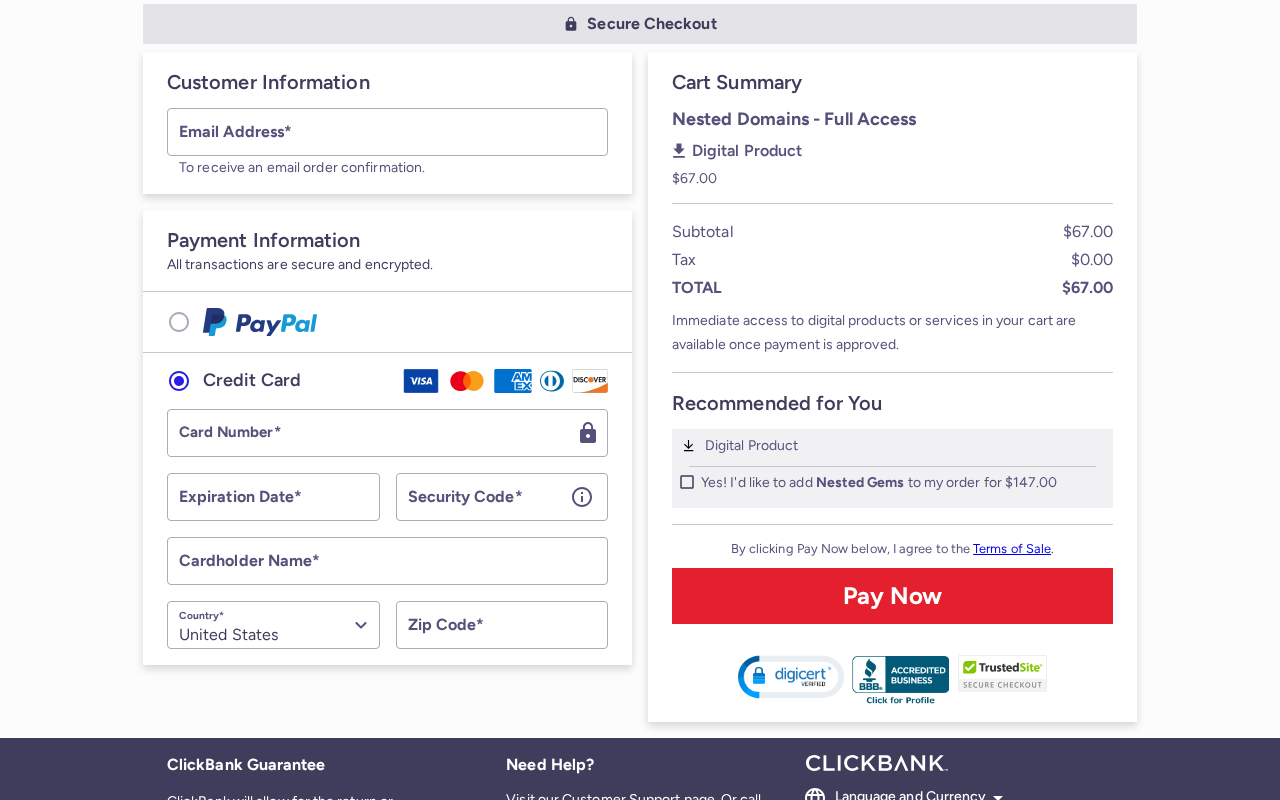
A live sales letter offers a $39 wealth-themed audio track. Its own order button instead opens a $67 Nested Domains checkout.
That is a different product, not just a different price. The order screen also offers a separate, unselected $147 Nested Gems add-on.
Other live pages tell a different wealth story
- The /start/ page sells a wealth-attracting audio track through a brainwave story.
- The actual checkout names domain access, not the audio track described by the sales letter.
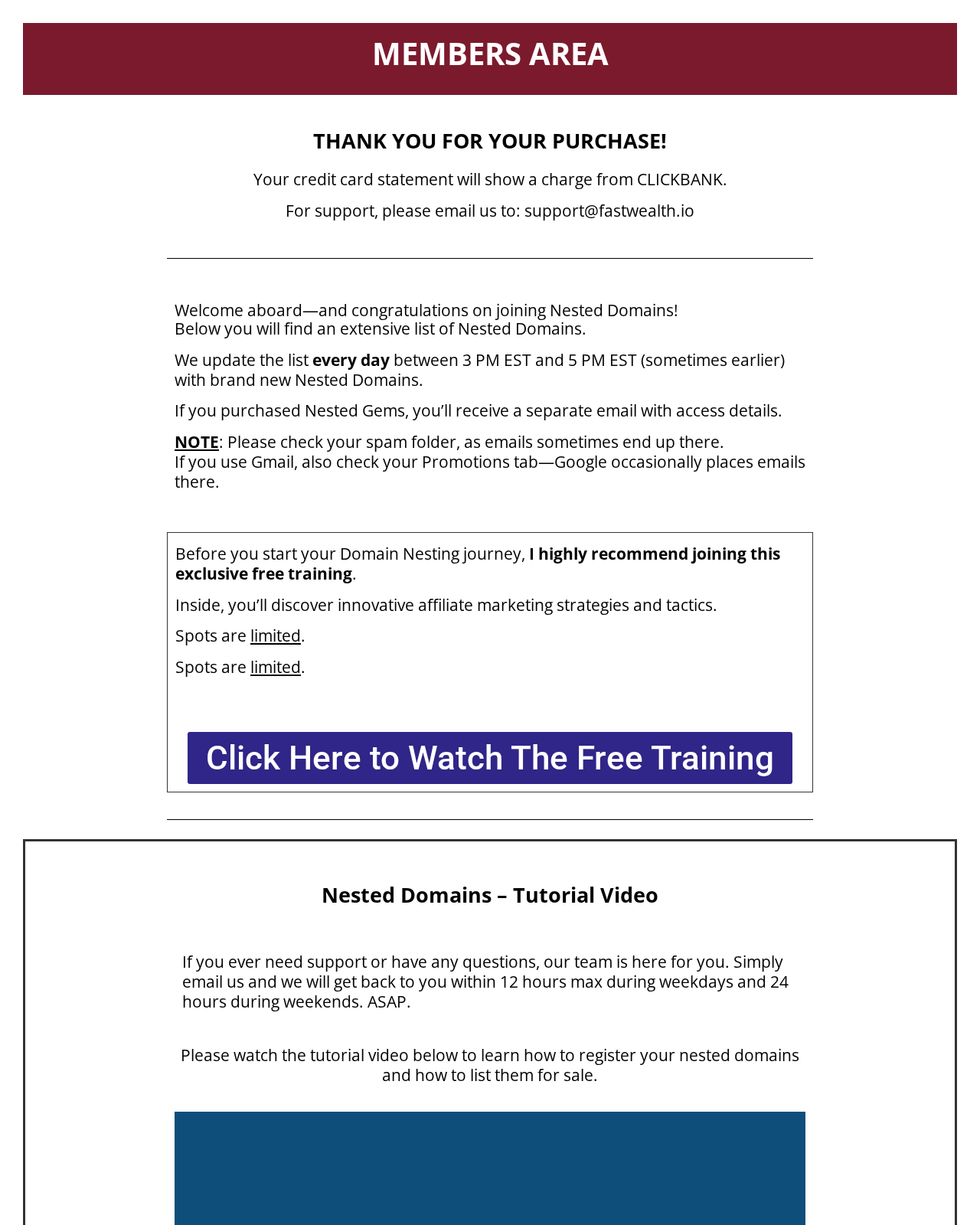
- The membership page promises daily domain updates but displays September 2025 update dates.
- Small-print disclosures identify promotional names as pseudonyms and describe the material as entertainment.
Do not buy FastWealth through these offers. The supposed gift still needs registration and a buyer, while the audio pitch leads to a different product.
The $200 Gift Is Not $200 You Can Withdraw
The affiliate page explains the giveaway in unusually revealing terms. Viewers are shown an available domain name whose estimated value is presented as the benefit.
The viewer would still need to pay a registrar to obtain the name. The pitch uses approximately $7 as an example registration cost.
A suggested name is not an asset you already own. Until registration succeeds, someone else may obtain it, and the suggestion itself confers no ownership.
After registration, an automated appraisal still is not a purchase offer. Nobody is obliged to pay its figure, even if a reputable tool produced it.
GoDaddy explains that automated appraisals cannot guarantee a buyer’s payment. It treats them as one input alongside actual evidence of market interest.
That distinction changes the entire sales pitch. You are buying a speculative registration opportunity, not collecting cash that a video has earned for you.
The affiliate copy also says participants need not sell anything, then describes registering a name and listing it for sale. The promised outcome depends on selling.
A vending machine can sell an existing product to passing customers. A domain listing needs a buyer interested in that particular name at an acceptable price.
Calling the method new does not remove that commercial reality. An unsold name can remain unsold while renewal and marketplace expenses continue.
The Basic Cost Calculation the Pitch Skips
Consider one illustrative purchase using the displayed $67 access price and the affiliate page’s $7 registration example. That already means $74 spent before any sale.
Adding the optional $147 product would bring that illustration to $221. It would not make the domain more valuable or oblige anyone to buy it.
Actual registration prices vary by name, extension, registrar, and promotion. Renewal charges and any marketplace commission also affect the result.
This is not a forecast or an order total. It shows why subtracting a registration fee from an appraisal is not a profit calculation.
The useful questions are how many suggested names sell, how long sales take, what buyers actually pay, and how many registrations never recover their costs.
A seller showcasing only large appraisals leaves those questions unanswered. Ask for completed, independently checkable transactions and the unsuccessful recommendations too.
What the Membership Page Actually Shows
The publicly reachable membership page welcomes customers to Nested Domains. It provides a tutorial, domain suggestions, and instructions for registering and listing names.
A domain list and tutorial are real deliverables. They are not evidence of profitable recommendations, exclusive access to valuable names, or a business running itself.
The instructions refer to ordinary services such as Namecheap, GoDaddy, Sedo, and Afternic. Those providers are not evidence that FastWealth’s suggestions will generate profit.
The page says it supplies new names daily. However, its visible update label reads September 24, 2025, with the next update listed as September 25.
An old label alone cannot prove every suggestion is stale. It does mean a buyer should not accept the daily-update promise without a clear explanation.
The page also warns that some names may already be registered and directs members to keep looking farther down the list.
This creates a practical limit on exclusivity. A name shown to multiple members cannot be registered by every member who wants it.
Its disclaimer further distances the service from the accuracy and outcome of third-party valuations. The reassuring appraisal numbers are not backed by a guaranteed purchase.
How the FastWealth Sales Funnel Works
Step 1: Use curiosity to delay the ordinary explanation
The affiliate material encourages a digital-vending-machine hook and a video-based reveal. It emphasizes simplicity, little technical knowledge, and the prospect of a valuable discovery.
The reader should ask what actually produces the income. Here, the described method ultimately relies on acquiring domain names and finding buyers.
The same distinction matters in our WiFi Profits investigation: an intriguing label is not an explanation of a functioning business.
Step 2: Turn estimated values into a feeling of immediate gain
A low registration price beside a four-figure appraisal creates an attractive apparent margin. But the two figures answer different questions.
The first concerns acquiring a name. The second estimates what a hypothetical resale might achieve. Neither establishes a completed sale or net profit.
Step 3: An audio pitch leads to a domain-access order
The /start/ sales letter offers a downloadable Fast Wealth audio track for $39. Following its exact order link opens a Nested Domains checkout at $67.
The homepage’s separate order link reaches the same $67 domain-access item. Neither order screen identifies the advertised audio track as the product being purchased.
The item name matters as much as the amount. Domain suggestions and an audio download are different deliverables, with different reasons a customer might want them.
Do not pay to discover which one arrives. Require a clear description matching the item you intended to purchase and the product named on your receipt.
The checkout separately offers Nested Gems for $147. Its checkbox was unselected in the captures; check your own selection and total before authorizing payment.
Step 4: Move the customer into domains and further training
The membership page supplies registration and listing instructions. It also promotes separate training and says purchasers of Nested Gems receive another access email.
Each extra purchase should have a separate purpose, price, and consent. Buying the initial program does not establish that additional tools are necessary or profitable.
The affiliate page offers promoters 75% commissions across the funnel, including upsells and downsells. A recommendation may therefore be financially motivated.
Why the Brainwave Page Should Not Be Confused With Domain Training
The live /start/ route describes another Fast Wealth product: a downloadable audio track associated with a supposed wealth-blocking Crave Wave in the thalamus.
Its story invokes Harold Alexander, a scanner accident, a seminar, and people experiencing unexpected prosperity after listening to particular sounds.
Those are promotional assertions. The page does not supply a controlled finished-program study demonstrating that its audio attracts money or produces the described financial outcomes.
Relaxing while listening to audio and earning money from a business are different claims. Feeling calmer does not authenticate a claimed mechanism for attracting wealth.
The same page says names are pseudonyms and describes the material as entertainment. That disclosure undermines treating the characters’ stories as independently identified scientific evidence.
Our Brain Song audio-program report discusses a related evidence problem: technical-sounding brain language is not finished-product validation.
If the advertisement concerned cognition rather than earnings, our Brain Song memory-claim investigation addresses that different promise.
The Seller, ClickBank, and the Terms Behind Your Order
Several names appear in the legal and promotional pages
FastWealth.io is the domain being investigated. Its terms repeatedly refer to fastwealth.com and also retain a DimensionalWealthMagnet.com reference.
The terms identify Charlie Gates as a pseudonym, while other promotional material uses different personalities. That is not a transparent identification of the person selling the claims.
The unreconciled names leave customers without a clear answer about who is responsible for the product. Keep every seller name printed on your order.
The retailer is not the source of the earnings claims
The pages identify ClickBank as retailer. The checkout says a purchase would appear as CLKBANK*fastwealth on the customer’s statement.
ClickBank’s involvement does not validate the proposed domain values, scientific story, or expected income. The seller’s own footer expressly separates the retailer from those claims.
The Boise address printed for Click Sales, Inc. identifies the retailer, not necessarily FastWealth’s office, founder, or course producer.
Match the guarantee to the item you actually bought
The audio sales letter promises 180 days, and the inspected Nested Domains checkout also displays a 180-day period. Save the guarantee attached to your actual order.
ClickBank’s current policy allows product-specific periods and discretionary decisions. A prominent guarantee is not proof that your refund has been approved.
Use the order’s support route, not an unverified lookalike
The product pages and membership area publish support@fastwealth.io. The terms instead give a fastwealth.com contact, another discrepancy worth documenting.
A second promotional route, wealthnesting.com/start/, carries the same audio story, support address, and checkout destination. That is a specific funnel connection, not a universal ownership map.
For payment issues, use independently verified ClickBank order support and your receipt. Keep its order number and the exact item name together when requesting help.
What to Do If You Paid for FastWealth
-
Identify the actual purchase. Record the product name, initial payment, optional extras, order date, currency, and any recurring terms shown on the receipt.
Check the receipt for a renewal amount or interval. If it authorizes future billing, request cancellation separately from the refund.
-
Save the offer and order details separately. If you followed the $39 audio letter, preserve it beside the domain-product checkout, gift wording, and receipt.
Describe any mismatch precisely. An item or price differing from the sales letter is a different issue from a payment exceeding the amount you approved.
-
Use ClickBank’s published refund instructions to locate the order through its official customer-support route.
Select the relevant purchase, request the appropriate refund, explain the specific problem, and retain the ticket confirmation. Do not wait until the latest possible deadline.
-
Handle separate products separately. If an unwanted add-on was purchased, name it explicitly. Request future-billing cancellation as well if your receipt establishes recurring charges.
A cancellation stops future payments where applicable; it does not automatically reimburse earlier charges. Ask for written confirmation of each requested outcome.
-
If the charge was unauthorized or a supported complaint remains unresolved, contact the original payment provider about its dispute process and time limit.
Explain what happened honestly and attach your records. A bank dispute or retailer guarantee does not make recovery certain.
-
Pause further spending on suggested names, upgrades, or coaching. Assess any domains already registered on their own costs and realistic prospects, not a promotional appraisal.
Decline anyone requesting bank credentials, remote control, or another payment to release a supposed viewing reward. Those demands require separate verification.
Frequently Asked Questions
What does FastWealth.io actually sell?
The inspected domain funnel sells Nested Domains access: suggestions, tutorials, and registration/resale instructions. Another live route promotes a wealth-themed audio download.
Check your exact offer and receipt. Do not assume every Fast Wealth advertisement describes the same deliverable.
Do I receive $200 for watching the video?
The affiliate explanation says the incentive is not cash. It refers to a domain suggestion with an estimated value, which would still need registration and a buyer.
Is a domain appraisal money I can collect?
No. An appraisal is an estimate, not a committed purchase. Registration, ownership, a marketplace listing, and a completed sale are separate events.
Calculate actual proceeds only after payment from a buyer, allowing for relevant fees and expenses.
Why does the audio offer lead to a $67 domain product?
The $39 audio letter’s exact order link opened Nested Domains Full Access at $67. That observed mismatch leaves the advertised deliverable unclear.
Do not pay until the seller resolves both the product name and total. Keep screenshots of the sales letter and order screen if already charged.
Can the audio track make me wealthy?
The sales story does not provide reliable finished-product evidence for that outcome. Scientific terminology and unidentified testimonials are not an income guarantee.
Listening preferences and a demonstrated method of earning money are different questions.
Is FastWealth a legitimate income opportunity?
A real digital product and recognizable retailer do not establish a dependable business opportunity. The noncash gift framing, speculative valuations, and product mismatch undermine the pitch.
Do not buy through this offer. The noncash gift and mismatched order route undermine the sales pitch. If already charged, request an order-specific refund promptly.
The Bottom Line
FastWealth sells domain speculation behind a noncash gift, while its $39 audio pitch sends buyers to a $67 domain checkout.
Do not buy FastWealth.io through these offers. If you already paid, identify each item on your receipt and request a refund through ClickBank promptly.

Reviews & discussion
0 commentsShare a firsthand experience, or ask a question.
Community reviews
fastwealth.io
Moderated reader experiences, not an editorial verdict.
Start the conversation
Have a question or something useful to share? Add the first comment.