

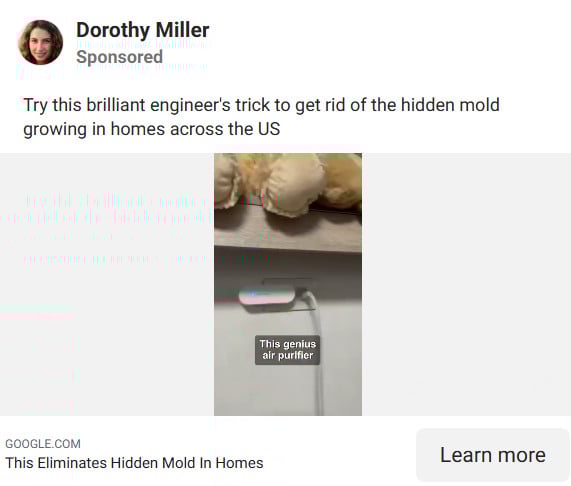
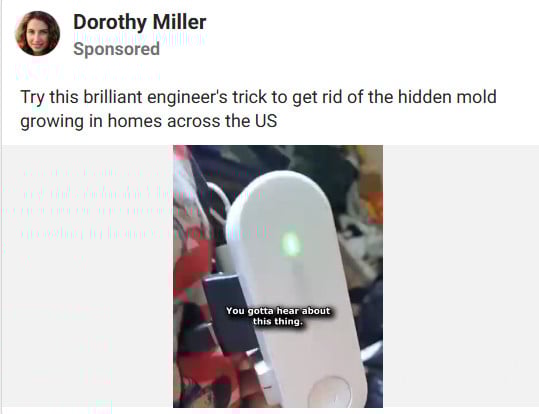
If you’ve spent any time on social media lately, you’ve probably seen ads for the MagAir Mold Remover Device. These ads promise a revolutionary way to eliminate hidden mold in your home, boasting claims like “NASA-grade technology” and “removes 99.8% of mold spores in 72 hours.” They even feature an emotional backstory about an ex-NASA engineer creating this miracle product after a personal tragedy involving mold.
But here’s the big question: Is MagAir Mold Remover legit, or is it just another scam designed to take your money?
In this article, we’ll dive deep into this viral product and uncover the truth. We’ll analyze the marketing tactics, break down how the scam works, and provide actionable steps if you’ve already purchased this device. By the end, you’ll know whether MagAir is worth your hard-earned money—or if you should steer clear.
Scam Overview: What Is MagAir and Why Are People Talking About It?
MagAir Mold Remover has become a hot topic because of aggressive marketing campaigns across Facebook, Instagram, TikTok, and YouTube. These ads are everywhere, targeting homeowners who fear mold-related health risks like respiratory issues, allergies, and infections. Mold is a serious concern, so it’s no surprise people are paying attention.
The ads promise something almost magical: a small plug-in device that supposedly destroys 99.8% of mold spores using NASA-inspired negative ion technology. They claim:
- It can make your home as clean as a sterile lab.
- It removes hidden mold spores—even inside walls and vents.
- It works in just 48–72 hours without any maintenance.
- It’s more powerful than HEPA filters and mold remediation services.
They even throw in urgency tactics like “limited stock,” “banned by mold remediation companies,” and emotional stories about families saved from toxic mold exposure.
Sounds impressive, right? Unfortunately, there’s zero scientific evidence to support these claims. In fact, everything points to MagAir being a classic drop-shipping scam that preys on fear and urgency.
Key Red Flags
- No Peer-Reviewed Evidence
Despite bold claims, MagAir provides no credible scientific studies, certifications, or independent lab tests proving it works. - Fake Backstory
The emotional story about an ex-NASA engineer creating this device after a family tragedy is a common scam tactic. There’s no verifiable evidence that this person exists or ever worked for NASA. - Over-the-Top Promises
“Eliminate 100% of mold spores in 72 hours” is scientifically unrealistic. Mold removal requires addressing moisture sources and often physical remediation—not just plugging in a gadget. - Identical Devices on Alibaba
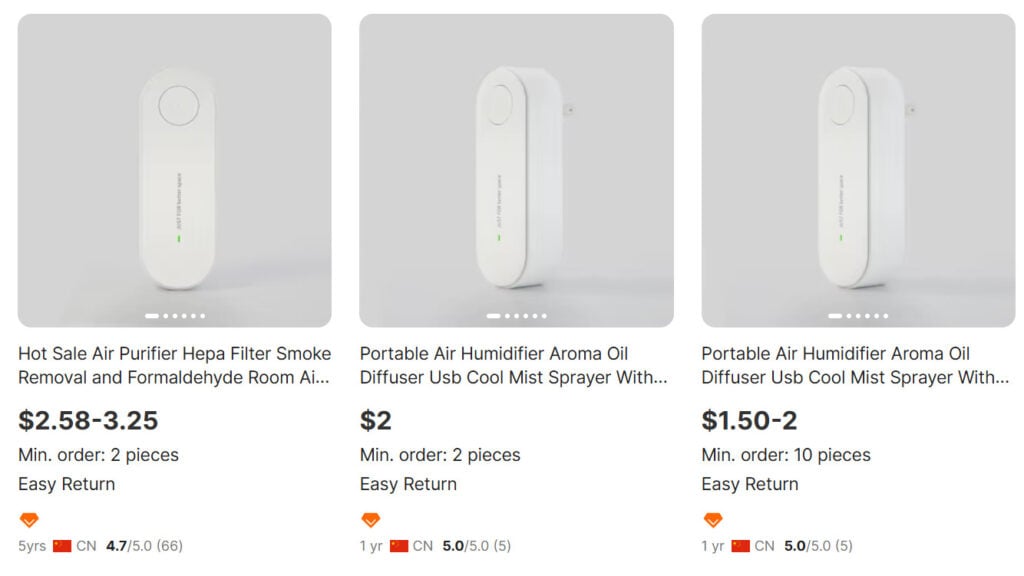
The biggest smoking gun: The same device is available on Alibaba for as little as $2, marketed as a simple air freshener or humidifier. MagAir sellers mark it up to $100 or more, using fake branding and misleading claims. - No Real Customer Support
Victims report that refunds are nearly impossible. Emails go unanswered, and phone numbers often lead nowhere.
How the MagAir Scam Works
Understanding the mechanics of this scam can help you avoid falling for similar traps in the future. Here’s a detailed breakdown:
Step 1: Emotional Hook in Ads
The scam begins with high-budget ads featuring dramatic voiceovers and videos of mold infestations. They often show worried parents or children coughing, suggesting a health emergency. The ads claim mold is a “silent killer” lurking in your home.
Step 2: Authority Illusion
To build trust, they introduce a fictional character—usually an “ex-NASA engineer” or “brilliant scientist”—who supposedly invented MagAir. This backstory is designed to create credibility and urgency. They often throw in phrases like “NASA-grade technology” or “government agencies don’t want you to know this.”
Step 3: Fear + Urgency Marketing
The ads exploit fear by stating that mold can cause deadly health issues and urging viewers to act immediately. They add urgency with lines like:
- “Limited stock available!”
- “Banned by big mold remediation companies!”
- “Order now before it’s gone forever!”
Step 4: Inflated Pricing
On their official website, MagAir sells for anywhere between $99 and $150 per unit, sometimes with fake discounts like “70% OFF today only!” In reality, the exact same device costs $1.50–$3 on Alibaba. It’s just a rebranded air freshener or diffuser.
Step 5: Fake Reviews and Social Proof
They flood their pages with glowing five-star reviews, often featuring stock photos or AI-generated images. These fake reviews make the scam look legitimate and push hesitant buyers over the edge.
Step 6: No Refunds or Support
Once you buy the product, the nightmare begins. Victims report:
- Long shipping times (4–6 weeks).
- No tracking updates.
- No responses to refund requests.
- Websites disappearing after a few months.
What to Do If You Fell Victim to the MagAir Scam
If you’ve already purchased MagAir and realized it’s a scam, don’t panic. Here’s what you can do:
1. Contact Your Bank or Credit Card Company
- File a chargeback immediately.
- Explain that you were misled by false advertising.
- Provide screenshots of the ads and proof that identical products cost only a few dollars on Alibaba.
2. Report the Scam
- Federal Trade Commission (FTC): ReportFraud.ftc.gov
- Better Business Bureau (BBB): File a complaint to warn others.
- Your Country’s Consumer Protection Agency: Submit evidence to help track the scam.
3. Leave Reviews to Warn Others
- Post your experience on Trustpilot, Reddit, and social media.
- Share screenshots of the ads and the real Alibaba listing to expose the scam.
4. Monitor Your Bank Account
- Scammers sometimes attempt additional unauthorized charges.
- Set up alerts for any suspicious activity.
5. Use This as a Learning Experience
- Research before purchasing from unknown brands.
- Be skeptical of over-the-top claims and fake urgency.
MagAir Mold Remover FAQ – Everything You Need to Know
1. What is the MagAir Mold Remover Device?
The MagAir Mold Remover Device is advertised as a compact plug-in gadget that claims to eliminate up to 99.8% of mold spores using “NASA-grade negative ion technology.” The company markets it as a revolutionary solution to mold problems, promising to make homes as clean as a sterile lab within 48–72 hours. However, there is no scientific proof or independent testing to support these claims.
2. Is MagAir Mold Remover Legit or a Scam?
MagAir is widely considered a scam based on the evidence:
- There is no scientific data or peer-reviewed research supporting its effectiveness.
- The so-called “NASA-grade technology” is a false claim with no verification.
- The same device is sold on Alibaba for $1.50–$3, indicating that it’s a cheap air diffuser being marketed at inflated prices of $99 or more.
- Many users report no noticeable results and difficulty getting refunds.
3. How Does the MagAir Scam Work?
The MagAir scam uses classic fear-based marketing and fake credibility to trick customers:
- Step 1: Emotional ads show dramatic mold infestations and health risks.
- Step 2: They introduce a fake backstory about an ex-NASA engineer who invented the device after a mold-related tragedy.
- Step 3: Ads claim the device is banned by mold remediation companies to create urgency.
- Step 4: Consumers pay $100+ for a product that costs $2 wholesale.
- Step 5: Refunds are nearly impossible, and the seller often disappears after a few months.
4. Does MagAir Really Remove Mold?
No. MagAir does not eliminate mold from your home. Mold removal requires addressing the source of moisture, improving ventilation, and sometimes physically removing affected materials. No plug-in device can solve mold problems hidden inside walls or flooring. Claims of “destroying mold spores at a molecular level” are unsubstantiated and scientifically unrealistic.
5. Where is MagAir Actually Manufactured?
The device is not a unique invention. It is a generic product made in China, commonly sold on wholesale websites like Alibaba for under $3 per unit. Sellers rebrand the product and inflate the price to over $100 using aggressive marketing tactics.
6. Why Are MagAir Ads All Over Social Media?
MagAir ads are heavily promoted because the scam relies on impulse buying. The ads use:
- Emotional stories about families harmed by mold.
- Fake urgency like “limited stock” or “banned by big companies.”
- Claims of government suppression to make it seem exclusive.
Social media platforms allow these ads because they look like legitimate product promotions.
7. What Are the Red Flags of the MagAir Scam?
- Over-the-top claims like “100% mold removal in 72 hours.”
- Fake backstory involving a NASA engineer.
- No independent lab tests or certifications.
- Identical devices sold for a fraction of the cost on wholesale sites.
- Poor customer service and no clear return policy.
8. What Should I Do If I Bought MagAir and Got Scammed?
If you’ve purchased MagAir and realized it’s a scam, follow these steps:
- Request a Refund: Contact the seller immediately.
- File a Chargeback: Call your credit card company or bank and explain the fraudulent nature of the transaction.
- Report the Scam: Submit a complaint to the FTC (ReportFraud.ftc.gov), BBB, and consumer protection agencies.
- Warn Others: Post reviews on Trustpilot, Reddit, and social media to prevent more victims.
- Monitor Your Bank Account: Watch for unauthorized charges from the seller.
9. Are There Any Legitimate Alternatives to MagAir?
Yes, but none are as simple as plugging in a device. Real mold removal involves:
- Controlling humidity levels.
- Fixing leaks and water damage.
- Using HEPA air purifiers for airborne spores.
- Hiring professional mold remediation services for severe infestations.
10. How Can I Avoid Similar Scams in the Future?
- Be skeptical of products that promise quick fixes for complex problems.
- Check for scientific evidence and third-party testing.
- Search for the product on Alibaba or AliExpress before buying.
- Read real reviews on independent platforms.
- Avoid websites with no clear refund policy or physical address.
The Bottom Line
MagAir Mold Remover is not the miracle product it claims to be. It’s a classic example of fear-based marketing combined with drop-shipping tactics. The device is essentially a cheap air diffuser that costs under $3 on wholesale sites, rebranded with false promises and emotional stories.
If you’re concerned about mold in your home, the real solution is professional mold remediation and addressing moisture problems—not a plug-in gadget. Always verify claims, look for scientific evidence, and avoid products that sound too good to be true.
Final Advice: Before buying any trending gadget, do a quick reverse image search or check wholesale sites like Alibaba. Scammers thrive on ignorance, but a little research can save you hundreds of dollars.

Join the discussion
0 commentsShare your experience or ask a question about this article.
Discussion
Start the conversation
Have a question or something useful to share? Add the first comment.