


FundKey puts a daily profit figure next to each of its crypto packages. A referral may make the offer sound less like trading and more like a pay schedule.
The numbers worth reading are not all in the sales cards. Some are in the rules that apply when you want your money back out.
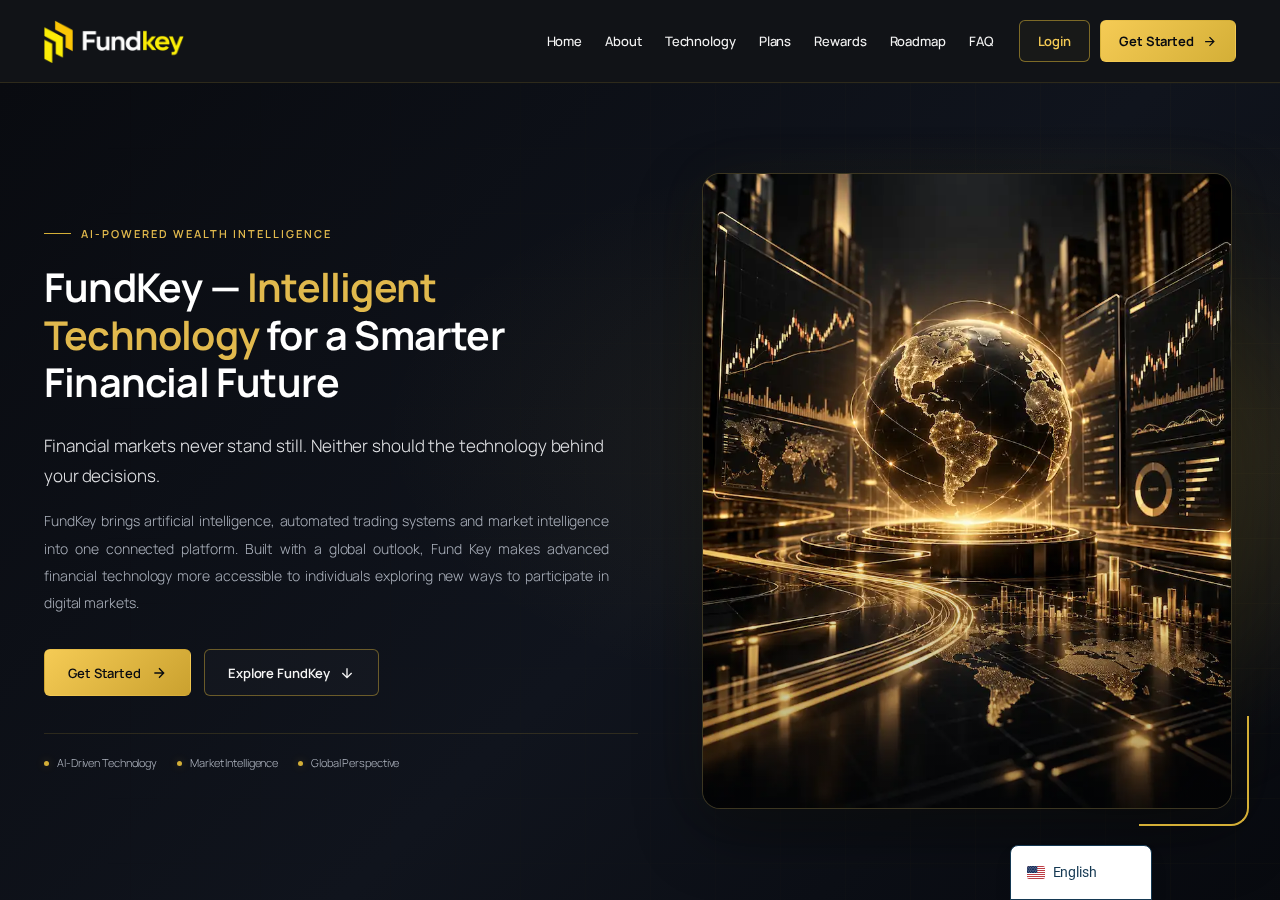
Overview
The advertised rates are estimates, not a record of what people earned
FundKey presents six packages. Its $100 starter option displays estimated daily profit of 0.5%. Its $10,000 elite option displays an estimate of 1% daily.
Those figures come from the promotional site. Its FAQ explicitly says they aren’t guaranteed or independently verified. The numbers do not establish that anyone earned or withdrew them.
The promotional site, fundkey.cloud, links to fundkey.ai for member login. The two addresses are part of the same advertised path, not two independent sources for the performance figures.
Getting out of a package has a different price from making a withdrawal
FundKey lists a 2% deduction on withdrawals. Its example reduces a $100 request to $98, subject to any other applicable charges.
Early package closure has another rule. The offer describes subtracting 10% of the original package amount and subtracting profit the package has already generated.
That matters if a promoter tells you that you can simply take your original stake back whenever you like. The published formula does not say that.
The referral reward is not evidence of trading results
FundKey advertises direct referral commissions of 5% to 10%, tied to eligible package activity. Higher leadership ranks also depend on qualifying business volume or team structure.
That gives a promoter a financial reason to show you the offer. It doesn’t show whether trading produced enough cash to meet everybody’s withdrawal requests.
- $10 is the advertised funding minimum, not the price of the cheapest package.
- The 0.5% to 1% rates are estimates, not independently established results.
- The published early-exit calculation can return less than the opening amount.
- A separate fee demand is not the same thing as a deduction shown in a withdrawal calculation.
How the FundKey Offer Works
Step 1: A daily rate makes the offer easy to picture
The plans display an amount, estimated daily profit and a maximum trade-profit figure. It’s easy to start multiplying those numbers before asking what they represent.
At the stated starter rate, 0.5% of $100 is 50 cents for one day. A simple calculation describes the offer; it doesn’t describe a settled payout.
At the other end, 1% of $10,000 is $100 for one day. The larger estimate is attached to a much larger amount of money at risk.
Don’t multiply those figures by a month or a year and call the result an expected return. Doing so assumes the same rate continues and ignores losses.
Step 2: The account funding minimum and package prices are separate
The published rules list a $10 minimum for deposits in USDT. Buying the least expensive package is a separate decision that starts at $100.
The distinction is useful when a promoter presents $10 as the cost of trying the advertised trading program. That is not what the package table says.
Funding an account also isn’t the same as buying a subscription to read analysis. With a transfer, the practical question is who controls the assets after they leave.
A receipt from the service that sent your crypto can show it went somewhere. It does not show that FundKey placed a trade on your behalf.
Step 3: Packages can also qualify promoters for rewards
FundKey describes commissions that depend on referred participants activating qualifying packages. It also publishes rank-based rewards connected to a wider team.
Ask a person recommending the offer whether they get paid if you join or upgrade. A referral payment is a conflict worth knowing about before you decide.
The same person can be sincere about what they see on their screen and still have no way to verify where the money comes from.
Step 4: The exit terms matter once money is committed
The site describes withdrawals as instant, then qualifies that language by saying completion can depend on processing and blockchain conditions. The public page isn’t a payment receipt.
It describes withdrawing from an available balance and closing a package early separately. Before committing, you need to understand which rules apply to the money you send.
We did not fund an account or attempt a withdrawal. Those published formulas show what the seller says it will do, not how an actual request was handled.
What the Early Closure Rule Leaves You With
FundKey gives a concrete example. A $1,000 package has $200 in previously generated profit. A separate $100 fee represents 10% of the starting package amount.
The published calculation subtracts both amounts, leaving $700. Notice the term generated profit. The example does not answer every question about how displayed or unsent gains are reconciled.
That is especially important if the account shows gains you have never received. Don’t assume the figures on the screen can be spent, or that they are irrelevant.
Ask for an itemized calculation. You want the original amount, the closure fee, the profit deduction and a separate record of what has actually reached your own wallet.
A $100 withdrawal from an available balance is a different example. The site shows a $2 fee taken from the request itself, leaving $98 before other possible charges.
If someone tells you to transfer another $2 to a separate wallet to release that $100, that is a new payment request, not the deduction in the example.
The same distinction applies to the 10% closure rule. A calculation that subtracts a fee from an amount is not an instruction to send new funds up front.
Don’t pay anyone who turns a withdrawal question into an urgent deposit. Preserve the demand and compare it with your original records before you engage further.
Who Controls the Money Behind the FundKey Name?
A named company on a website is a claim you can check
The public site names Fundkey Holdings Pte. Ltd. and says it was established in Singapore in 2026. That is the legal name to start checking, not a license.
Use Singapore’s MoneySense verification guidance. It explains why you need to check the entity and its authorized activities, not just find the same name in a register.
Even a real company record would not tell you which entity owes you money under the package or which wallet receives your payment. Ask for that connection directly.
The member site and promotional site are not two separate witnesses
The promotional page links to fundkey.ai for member access. A logo and price repeated across those pages can be the same offer repeated at different stages.
The connection shows where the marketing directs readers. Without account or contract records, it doesn’t establish who controls the destination wallet or what happens after sign-in.
Don’t use an invitation link to verify that relationship. Compare the operator named in the actual agreement with independently obtained records before trusting any destination with funds.
Familiar logos don’t prove custody or protection
The marketing lists technology providers and exchanges, including Google Cloud, Microsoft and Coinbase, under its ecosystem. It doesn’t show that those companies insure these packages.
Even a confirmed vendor relationship would not answer whether customer money is held separately, whether the provider owes customers anything, or who signs off on transfers.
Look for actual documents: the contracting party, the named custodian, what happens if the operator fails and where a customer can dispute an account balance.
Referral activity and investment performance need different records
A table of commission rates tells you how the offer motivates recruitment. Independent financial statements or records of executed trades would address a different question.
A promoter’s successful transfer would establish that one transfer took place if independently verified. It would not tell you whether a trading program generated the money.
The offer’s estimated rates and account rules provide no independent reconciliation of charted gains, available assets and transfer obligations. Don’t treat a dashboard as a substitute.
Five Questions the Promotional Page Cannot Answer for You
Which specific balance can you actually withdraw?
Ask whether the total combines funded cash, estimated gains, referral credits and money tied up in a package. Those categories can have very different exit conditions.
If you have several packages, obtain a breakdown for each one. Combining them into a single total makes it harder to see which closure calculation applies.
What does the advertised maximum refer to?
The plan cards show maximum trade profit of 250% to 300%, depending on the package. A maximum is a ceiling described by the offer, not a target reached.
Look for the definition in the actual contract. Specifically, check whether the limit includes amounts already paid, how the package ends, and how a loss affects it.
Where is the documented record of trading?
Ask whose books contain the trades, how the results account for costs and loss periods, and whether an independent party checks the figures.
A presentation that gives you only a percentage and a payout example doesn’t answer those questions. Neither does a roadmap showing how large the company wants to become.
Can you identify the exact recipient before you send anything?
The account website and the name in a slide are not necessarily the names you’ll see on payment records. Ask who owns the receiving account and why.
If the promoter asks you to pay them directly instead, you’ve been offered a different route. Do not assume the original terms would follow that payment.
What rights survive if the website stops responding?
A support chat may be convenient while the site is available. You still need terms naming the company, a working contact independent of the promoter, and a complaint route.
Save those details with the version of the offer you received. A newer version of a webpage might describe different rules from the ones in your agreement.
Don’t rely on a conversation in a group where other users can delete messages. Preserve your own records without posting your balance or financial identifiers publicly.
What to Do If You Already Sent Money to FundKey
- Stop adding funds while you can’t reconcile your balance. Don’t increase your package to qualify for help or send crypto to someone promising a faster exit.
- Save the exact invitation, marketing page and package terms. Keep the date so you can show what was represented when you paid.
- Export or record transfer evidence. Keep the transaction hash, payment service receipts, wallet address, token, network, timestamp and amount in one private file.
- Record amounts separately. List what you paid, what appeared as profit, what you requested back, and what you actually received outside the platform.
- Contact the exchange or wallet provider you used if you suspect fraud. Ask what it can record, verify or flag. Don’t assume it can reverse the transfer.
- Report a suspected loss through your own financial regulator or police. Use independent contact details and do not pay someone claiming to file the report for you.
Already shared an account password? Change it through the real provider whose credentials you exposed. Do not send account backups or wallet recovery phrases to anyone offering help.
If a transfer appears on a public chain, the record can help an investigator trace it. A stranger who can see that record doesn’t thereby have recovery authority.
Someone promising guaranteed recovery may also ask to see your wallet, request a signature or demand a retainer. If you receive that approach, don’t interact with it.
Frequently Asked Questions
Does FundKey guarantee 1% a day?
No. FundKey shows 1% as an estimate for its highest-priced package. Its FAQ says rates are neither guaranteed nor independently verified and that losses are possible.
Can you buy the starter plan for $10?
No. The page lists $10 as the minimum account deposit. Its advertised starter package costs $100. Those figures refer to different actions.
Is the 10% closure charge the same as the 2% withdrawal fee?
No. The first is part of the stated early-exit calculation and is based on original package size. The second is described as a deduction from a withdrawal request.
What does FundKey subtract when you close a package early?
Its published formula subtracts 10% of the package amount and profit already generated. In its $1,000 example, the closure figure is $700 after both deductions.
Does a Singapore company name prove it is licensed to take my investment?
No. Check the exact entity and permitted activity with the relevant financial authority. Incorporation and authorization to provide a financial service are separate questions.
Should I send a fresh transfer to release a withdrawal?
No. The published example describes a deduction, not a new payment to a different wallet. Preserve any demand for fresh funds and contact the service that moved your money.
The Bottom Line
Do not put money into FundKey’s packages on the strength of a daily estimate or a referral. The stated exit rules alone undermine any promise of easy access.
Already transferred crypto? Document your actual payments and receipts, and contact the sending provider if you suspect a loss. Don’t send more money to unlock a balance.

Join the discussion
0 commentsShare your experience or ask a question about this article.
Discussion
Start the conversation
Have a question or something useful to share? Add the first comment.