

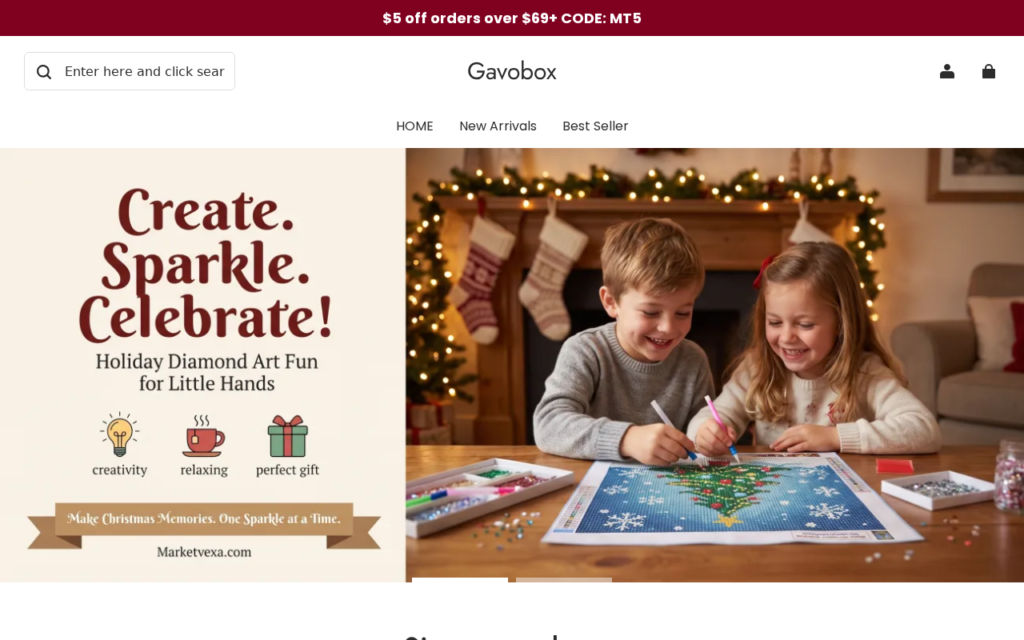
Gavobox.com is built to make you pause. Stylish clothes, home gadgets and gifts appear at prices that are a fraction of what they normally cost.
Placing an order is the easy part. The item that arrives is often far from the great-looking photos, and getting a refund can be much harder.
Overview
Behind the storefront: dropshipping, not a brand
Gavobox.com isn’t the maker of what it sells. It works like thousands of other shops, listing low-cost supplier items that ship directly out of warehouses in China.
Your purchase never passes through the store itself. It sets prices, runs ads and collects the money, and a supplier you’ll never hear from packs and posts the parcel.
This isn’t a single rogue shop. Gavobox.com is one of many near-identical stores in a scam network, sharing templates, product photos and return policies, and reopening under new names.
What arrives is far below what the ads show
Nothing about the items matches the ads. They’re very low quality, and the pictures are usually borrowed from other sellers or brands, so they show a product you’ll never get.
Sending it back can cost more than you paid
The refund policy can sound reassuring at first glance. The details tell a different story:
- The return address is overseas. In most cases, items go back to China, and the postage is at your expense.
- You can lose money returning. International postage for a $25 item can be more than the item cost you.
- The refund gets smaller. Instead of a full refund, a return request usually brings an offer of 15% to 30% back on the condition you keep the item.
- Help takes its time. Email is usually the only way to reach anyone, and you can wait days for each answer.
Our verdict on Gavobox.com is High Risk. Do not buy. What you pay will likely dwarf what the item is worth, and practically speaking, you can’t return it.
What Happens When You Order from Gavobox.com
There’s a script most orders follow. Read it before buying, and you can avoid both the loss and the weeks of back-and-forth emails.
Step 1: It starts with an ad and a too-low price
Usually you’ll spot it on Facebook, Instagram or TikTok: a polished photo or short video, the product at a deep discount, and often a “limited time” label.
The marketing material is often borrowed: the same product video appears in ads for dozens of other shops, all buying from the same suppliers.
Step 2: The store looks larger than it really is
Gavobox.com dresses itself like an established shop, complete with categories, star ratings and a friendly About Us page. Often the whole operation is a store template and a supplier list.
Many unrelated shops use the very same About Us wording. The story of a small family business or a devoted founder is usually just part of the template.
Step 3: A slow, drawn-out delivery
The promise is 5 to 7 days. Three or four weeks can be the reality, because the parcel travels from China and tracking can freeze on one update for days.
Tracking gets more confusing when an order is split. Some arrive in several small packages, each with its own number, and a lost one can be hard to prove.
Step 4: What arrives isn’t what the pictures showed
The delivery, when it comes, doesn’t hold up against the ad. You get something smaller, thinner or simpler, the sort of item that costs pocket change elsewhere.
The biggest share of complaints is about clothes. You get cheap-feeling fabric, stitching that pulls loose, and sizes cut to a chart that doesn’t match the site’s.
Step 5: Postage makes the return a bad deal
Once you ask for your money back, the store asks for photos and then tells you to return the item to China. Postage alone can eat the entire refund.
Their usual way out is a 15% to 30% refund, provided you keep the item. Fair at first glance, except most of your money went on something you didn’t want.
Many buyers simply stop here. That’s not an accident; it’s the reason the policy reads the way it does.
Red Flags at Gavobox.com
On the surface, Gavobox.com looks like a great deal. These signs tell a different story, and each one can be checked in a minute before you pay.
A mismatch between price and product
A lucky find? Not at $29 for a leather bag or $19 for a smartwatch. That kind of price gets you a much cheaper version than the photos promise.
Watch the crossed-out “was” prices too. They rarely reflect anything real; they exist to make a regular price feel like a markdown.
The same photos appear elsewhere
These images often aren’t unique, and a reverse image search shows where else they live: other stores, marketplaces or a brand’s own website.
The brand in the picture won’t be the one sending your product. And if the image comes from a marketplace, buying the same item there is often cheaper.
No traceable company details
You’ll rarely find a registered company name, tax number or local address on stores in this network. That leaves you guessing who’s behind the shop when an order goes wrong.
Help is limited to email
There’s usually no phone number and no live chat, only an email address or a contact form. Issues that need quick help can drag on for weeks.
Slow replies have a second cost: they eat into your time to open a dispute with your bank or PayPal. Keep an eye on the deadlines while you wait.
Countdown timers and false scarcity
“Only 2 left” on every product. A timer that refreshes along with the page. Neither tells you anything true about stock; both are built to rush your decision.
Leave and come back later. A “limited” sale that’s still running on your return was never limited at all.
Extras that show up in your cart
Don’t skim the order summary. Shipping protection, priority handling or an extra item can be pre-ticked in your basket, so read every line before you pay.
You rarely get faster delivery or real cover from those add-ons. You do get a bigger bill, on an order that may already be worth far less than its price.
Payment handled by a name you don’t recognize
Some checkouts hand you off to a payment page under another, unrelated name. If that happens, stop. The company collecting your card details is one you’ve never heard of.
Lookalike stores, one scam network
Each shop looks new, but the About Us story, policies and product photos repeat on dozens of others. When one closes, the same catalog reopens under another name.
How to Check an Online Store Before You Buy
A few minutes of checking can tell you whether an online shop is worth your money. Start with these questions before you pay:
- Who is selling to you? Look for a company name, a registration or tax number and an address. A shop that names nobody is hard to hold to a promise.
- Where do returns go? Find the return address in the refund policy. If it’s overseas or missing, assume a return will cost more than it’s worth.
- How old is the website? Paste the address into the MalwareTips Website Scanner. It shows the domain’s age and any known warning signs in seconds.
- Are the photos original? Run a reverse image search on a product photo. If the same picture appears on many sites, the item is a generic product.
- What do buyers say elsewhere? Search the store on Trustpilot and in search results, not just the reviews on the shop itself.
- Is the ad real footage? Many shop ads now use AI-generated videos and photos. If the product only ever appears in slick renders, expect something plainer.
- Does the price make sense? Compare it with the same item on a major marketplace. A huge markdown on an unknown shop is a reason to slow down.
- Can you reach a person? A phone number or live chat is a good sign. An email address alone means problems will take a long time to solve.
If several answers come back wrong, close the tab. There’s almost always a seller with a clearer return policy and a company you can actually look up.
For extra protection while you browse, Malwarebytes Browser Guard warns you about many known scam and phishing sites before they load.
Where to Buy Instead
Something on Gavobox.com still tempting you? These are safer ways to buy it:
- Find the same product on a large marketplace. Buyer protection and honest reviews come standard there, and the price is often much lower.
- Favor a seller who lists a local return address. Cheap return postage means the return option is one you’ll really use.
- Seek out customer photos. Pictures from people who bought it show the actual item, not the advertised version.
- See where the seller ships from. Marketplaces list the seller’s location, and a local warehouse gets you faster delivery and returns you can really make.
- Stick to safer payment. Paying by credit card or PayPal means you can open a dispute if you have to.
A slightly higher price may be part of the deal, but the item that arrives will match your order, and refunds will be honored.
What to Do If You Already Ordered from Gavobox.com
Ordering from a shop like this doesn’t mean the money is gone. Acting early gives you the best chance of fixing the order or getting a refund.
- Save everything. Keep the order confirmation, the tracking number, every email from the store and screenshots of the product page as it looked when you bought.
- Photograph what arrives. Take clear photos of the item, the label and the packaging, especially anything that doesn’t match the listing.
- Ask the store in writing. Email support, describe the problem plainly and say what you want: a full refund or a replacement. Give them a short deadline.
- Don’t pay for an overseas return yet. If the store asks you to ship the item to China, check with your card issuer or PayPal first.
- Don’t accept a token refund. Offers of 15% to 30% back to keep the item are common. If the item isn’t as described, a dispute may get you more.
- Open a dispute if the store stalls. Use “item not received” or “not as described” with your card issuer or PayPal, and attach your evidence.
- Watch the deadlines. Card disputes often allow around 120 days, and PayPal generally accepts claims within 180 days of payment. Don’t let weeks of unanswered emails use them up.
- Ignore “customs fee” texts. Fake delivery messages asking you to pay a fee or update your address often follow online orders. Don’t pay or click.
- Leave an honest review. A short review on an independent site, with photos, helps the next shopper decide.
If you paid by bank transfer, contact your bank right away and ask whether the payment can be recalled. The sooner you call, the better the odds.
If the store won’t cooperate, file a complaint at econsumer.gov, which handles cross-border shopping complaints, or at ReportFraud.ftc.gov in the US.
Frequently Asked Questions
Is Gavobox.com a scam?
Gavobox.com is a High Risk store from a scam network. You may get a parcel, but expect very low-quality goods, and returns cost too much. Do not buy.
Where does Gavobox.com ship from?
Most items go straight from suppliers in China to your door. Delivery can stretch to several weeks as a result, and tracking often updates slowly.
Why does the product look so different from the photos?
Other sellers or brands usually took those photos, not the store. You receive a cheaper version of the item, produced to hit a low price.
Can I return an item to Gavobox.com?
You usually can, but the package has to go to China and you cover the shipping. On a cheap order, that can wipe out the refund and then some.
Your first call should go to your card issuer or PayPal, not the post office. Ask whether a “not as described” dispute would cover you.
My order never arrived or isn’t as described. What now?
Give the store a chance in writing first. When that brings a refusal or delays, open a dispute through your card issuer or PayPal, with item photos and listing screenshots.
Are the reviews on Gavobox.com real?
It’s wise to be cautious here. Reviews on the store’s site are easy to fill with glowing ratings, so check what buyers say and show on independent sites.
The Bottom Line
Gavobox.com is a high-risk store, part of a scam network built from lookalike shops. Expect very low-quality items that look nothing like the ads, plus returns that rarely make sense.
Do not buy from Gavobox.com. If something there caught your eye, search for the same item on a marketplace that offers buyer protection.
If you’ve already ordered, keep the order email and product screenshots, and photograph what arrives. Should the store refuse to fix it, open a dispute with your card or PayPal.

Reviews & discussion
0 commentsShare a firsthand experience, or ask a question.
Community reviews
gavobox.com
Moderated reader experiences, not an editorial verdict.
Start the conversation
Have a question or something useful to share? Add the first comment.