

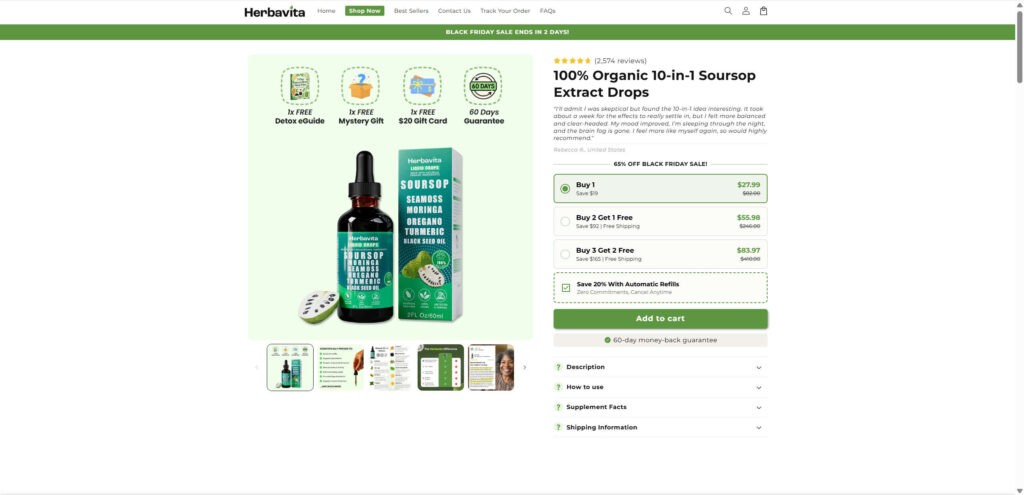
Herbavita Liquid Drops are advertised as a powerful 10 in 1 natural formula that promises better immunity, higher energy, improved digestion, reduced inflammation, and overall superior health. The product page looks polished and convincing, and the claims sound impressive enough to make anyone curious.
But behind the glowing marketing and dramatic health promises, there is a completely different story. Before buying these drops, it is important to understand where they really come from, how the operation works, and why so many customers report hidden subscriptions, unresponsive support, and bottles that cost only a few dollars to source. If you are thinking about buying Herbavita Liquid Drops, this investigation will show you everything you need to know first.
Scam Overview
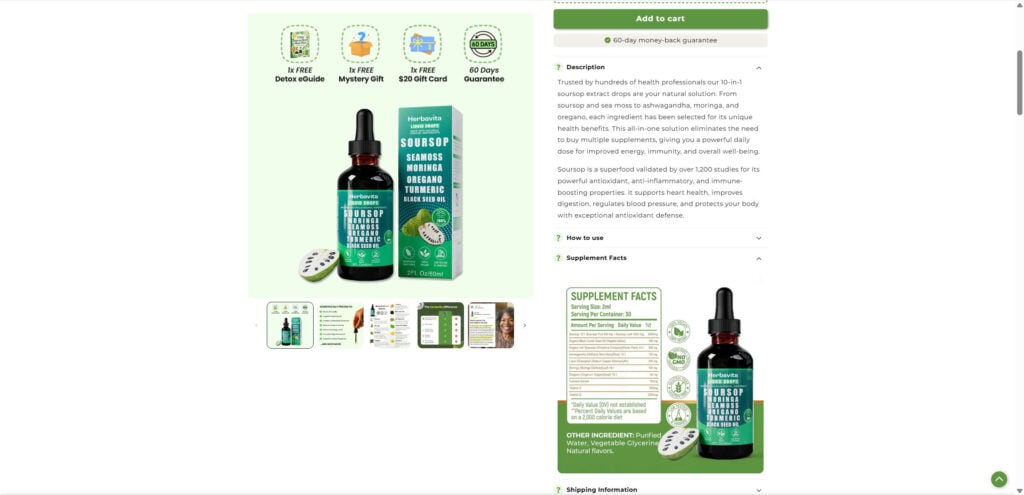
Herbavita Liquid Drops are promoted as a powerful blend of soursop, sea moss, moringa, oregano, turmeric, black seed oil, and several other ingredients packaged into a 10 in 1 formula. The website claims that the drops are backed by scientific studies, recommended by health professionals, and used by thousands of satisfied customers. These statements are crafted to encourage trust, reduce hesitation, and convince the shopper that the product is medically credible.
The website design is clean and polished. It uses soft green tones, minimalist icons, and smooth product photography to create an appearance of professionalism. Many consumers see the presentation and assume that the company behind the drops is a legitimate supplement manufacturer. However, a closer look reveals numerous red flags.
The first red flag is the origin of the product. Identical soursop 10 in 1 herbal drops are available on Chinese wholesale platforms such as Alibaba and AliExpress for about $1 to $3 per bottle. These listings show the same packaging style, the same ingredient list, and the same design elements. Manufacturers in China offer private labeling services that allow resellers to replace the packaging with any brand name they choose. Herbavita Liquid Drops are simply one of these rebranded variants.
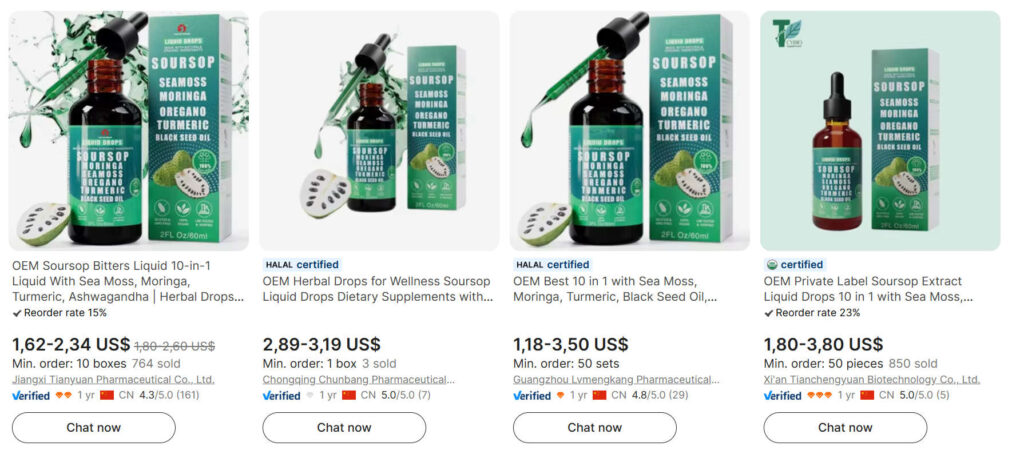
The sellers behind Herbavita add a new label, change the colors, and rewrite the marketing text. Nothing about the formula or ingredients is unique. The drops are not manufactured by a Western wellness company. They are produced by low cost factories that mass produce identical herbal mixtures for thousands of unrelated brands.
Another red flag is the exaggerated health messaging. The website claims that the drops boost immunity, support heart health, provide antioxidant protection, reduce stress, enhance energy, regulate digestive function, improve clarity, reduce inflammation, regenerate cells, and even help support cancer prevention. These statements mimic the language of medical supplements but lack evidence, disclaimers, or clinical support.
Statements that imply cancer related benefits are regulated heavily in most countries. No dietary supplement can legally claim to prevent cancer. Herbavita uses vague phrases and indirect wording to avoid explicit violations, but the implication remains clear. These claims are designed to appeal to individuals who are worried about their health or looking for natural ways to improve their condition.
The testimonials on the product page create another layer of concern. Many of the reviews appear scripted, repetitive, and artificially enthusiastic. Several customer profile photos are stock images or AI generated faces. The reviews describe dramatic improvements in mood, digestion, immunity, and energy levels in a short period of time. These unrealistic testimonials are created to make the shopper believe that the product is widely trusted and highly effective.
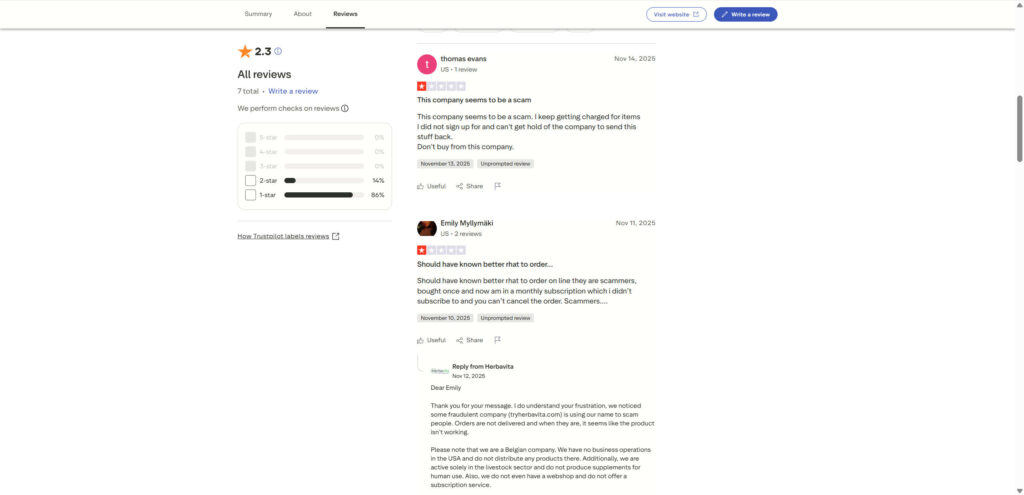
The site also advertises a high Trustpilot rating, but the real Trustpilot page linked to Herbavita shows a flood of one star reviews and warnings from real customers. Shoppers describe unauthorized subscriptions, repeated billing, nonexistent customer service, and no product delivery. Several victims report being charged multiple times even after attempting to cancel.
A particularly concerning discovery is that real Herbavita, a legitimate Belgian agricultural company, has issued public statements claiming that a fraudulent website is stealing their name to scam customers. The real Herbavita does not produce supplements for human use, does not ship to the USA, and does not operate an online store. This means that the scammers behind Herbavita Liquid Drops are impersonating an existing business to appear credible.
The product page is filled with behavioral triggers designed to push customers into buying quickly. Limited time discounts, 65% off messaging, free eGuides, free mystery gifts, and fake stock counters create artificial urgency. These tactics are standard in dropshipping scams because they prevent buyers from researching the product before making a decision.
The pricing strategy further exposes the nature of the operation. While the product costs only $1 to $3 to manufacture, the website lists the normal price as $82 and claims a limited time drop to $34.99 or lower for bundle deals. This artificially inflated pricing is a psychological trick to make the discount appear significant. Many wellness scams use this technique to increase perceived value.
Shipping information also raises concerns. Many customers report waiting weeks or months for the product. Some never receive anything at all. Tracking numbers are delayed or invalid. Packages that do arrive often contain bottles with generic labels or designs that do not match the images on the site.
The customer support system is unreliable. Emails often go unanswered. Phone numbers do not work or connect to unrelated parties. Many victims describe a cycle of automated responses that do nothing to resolve the situation. Some customers are told to contact their bank instead of receiving help from the company.
The return policy is intentionally vague. It claims a 60 day money back guarantee but requires customers to return unused bottles to an address not provided until after purchase. When the address is revealed, it is often located in China or another international location. The cost of shipping is higher than the cost of the product, making refunds financially impossible.
Subscription charges are the biggest issue. Many customers describe signing up for a one time purchase but discovering later that a recurring monthly subscription was activated without permission. Attempts to cancel frequently fail. This deceptive billing practice is a common component of supplement scams that operate through aggressive subscription traps.
Herbavita Liquid Drops combine every major characteristic of a dropshipping based supplement scam. The product is cheaply sourced, heavily rebranded, and sold through emotional marketing rather than scientific support. The brand identity is fabricated. The testimonials are fake. The health claims are exaggerated. The customer service is nonexistent. The billing practices are predatory. The entire operation is engineered to extract money from customers as quickly as possible before moving on to new victims.
How The Dropshipping Operation Works
Herbavita Liquid Drops follow the same structure used by thousands of deceptive supplement sellers online. The process is organized, repeatable, and highly profitable for the operators. Understanding each step will help you recognize similar scam patterns in the future.
Step 1: Sourcing a Cheap Product From China
Dropshippers begin by searching wholesale platforms such as Alibaba or AliExpress. These websites feature thousands of low cost herbal tinctures, detox drops, and wellness mixes priced between $1 and $3 per bottle. The 10 in 1 soursop formula used in Herbavita Liquid Drops is widely available from multiple Chinese suppliers.
Manufacturers offer private labeling options. This allows any reseller to replace the packaging with their own brand name and color scheme. No reformulation, testing, or research is needed. The reseller simply uploads a label design and orders a batch of bottles.
Step 2: Creating a Fake Brand Identity
The scammer creates a brand identity that looks trustworthy. They choose a name that sounds natural or scientific. They create a logo using simple icons. They design packaging that uses clean typography, plant graphics, and green tones to evoke health and purity.
This identity has no legal foundation, no company registration, and no manufacturing credentials. It is constructed entirely through graphic design with the goal of manipulating the buyer’s perception.
Step 3: Building the Website
The seller creates a Shopify or WooCommerce store using a prebuilt template. The website is designed to look like a legitimate wellness company. It includes product images, scientific icons, ingredient lists, and lifestyle photos.
The site includes:
- Countdown timers
- Fake limited stock alerts
- Pop ups showing fabricated purchases
- Free gift claims
- Artificial discounts
- Inflated retail prices
- Health benefit charts
These elements create urgency and credibility even though they are entirely manufactured.
Step 4: Adding Fake Testimonials
Herbavita displays numerous five star reviews. Many of these reviews contain identical writing patterns. The profile photos used for reviewers are AI generated or taken from stock image libraries. These fake testimonials describe life changing results that appeal to people seeking natural health improvements.
On social media, the scammers post doctored screenshots of Facebook comments or create fake user profiles to generate the illusion of community approval.
Step 5: Running Aggressive Advertisements
Once the website is ready, the scammer launches ads on Facebook, Instagram, TikTok, and YouTube. These ads target individuals interested in detox products, natural health, herbal supplements, or immune boosting solutions.
The ads often include:
- AI generated voice overs
- Dramatic health claims
- Influencer style testimonials
- Warning style messages such as “Your body is toxic and needs cleansing”
These ads lead directly to the product page where the conversion tactics begin.
Step 6: Taking Orders and Forwarding Them to China
Dropshippers do not hold stock. When a customer places an order, the seller immediately forwards the customer information to a supplier in China. The supplier then ships the product directly to the buyer.
This means the seller never sees, touches, or inspects the product. They cannot guarantee quality, safety, or purity.
Step 7: Delayed or Missing Shipments
Chinese shipping routes often involve long processing times. Many buyers wait 3 to 6 weeks for a product that was advertised as fast shipping. Some orders never arrive. Others arrive in damaged condition or feature packaging that does not match the website photos.
Tracking numbers frequently fail to update or appear invalid for long periods. The seller will claim that delays are due to customs, logistics issues, or global supply chain problems.
Step 8: Customer Complaints Begin
By the time customers receive the product, many realize that the drops do not work at all. Some describe experiencing no change. Others report negative reactions or digestive discomfort.
Buyers who investigate the brand online discover the real Trustpilot reviews that warn about unauthorized billing and nonexistent customer service.
Step 9: Subscription Trap Activates
Many customers report being charged again without permission. Even if they purchased a one time bottle, the scammer may automatically enroll them in a monthly subscription priced between $40 and $80 per month.
When customers try to cancel, they encounter email loops, broken phone lines, and delayed responses.
Step 10: The Return Policy Blocks Refunds
Customers seeking refunds are asked to return the product to a Chinese address. Return shipping can cost $20 to $60 depending on the courier service. This makes refunds financially pointless.
Even if a customer pays for return shipping, scammers often claim the package never arrived. They use this claim to deny refunds despite the advertised 60 day money back guarantee.
Step 11: The Scam Rebrands and Continues
Once enough negative reviews accumulate, the seller often deletes the website and reopens under a new domain. The product is renamed, the label changed, and the marketing restarted.
This cycle continues indefinitely. It is highly profitable because the cost of each bottle is extremely low and the markup is enormous.
What To Do If You Have Fallen Victim To This Scam
If you purchased Herbavita Liquid Drops or were charged without permission, there are specific actions you should take immediately. These steps can reduce your losses and improve your chances of receiving a refund.
1. Stop Using the Product
Discontinue the drops right away. The formula is manufactured without verified testing or regulatory oversight. Some ingredients may trigger allergic reactions, stomach discomfort, or interactions with medications.
2. Document Everything
Collect all relevant information, including:
- Order confirmation emails
- Screenshots of the product page
- Screenshots of claims made in ads
- Tracking numbers
- Emails exchanged with customer support
- Photos of the delivered product
This documentation will support your refund or chargeback request.
3. Contact the Seller Once
Send a short, clear request for a refund. Mention that the product does not match the advertised claims and that you were charged without authorization if applicable. Do not argue or send multiple messages. Most scammers use repetitive replies to delay action.
4. Do Not Ship Anything Back Until Refund Is Confirmed
Scammers often demand returns to China. The shipping cost can exceed the price of the product. Insist on a refund without return if the cost of return shipping is unreasonable.
5. File a Chargeback With Your Bank
If the seller does not refund you within a reasonable period, contact your bank or credit card provider. Provide your documentation and explain that the product was misrepresented. Banks often support customers in cases of subscription fraud or deceptive marketing.
6. Open a PayPal Dispute If Applicable
If you paid with PayPal, file a dispute under “Item not as described.” Upload all evidence. PayPal frequently sides with buyers in supplement related scams.
7. Cancel Unauthorized Subscriptions
Check your bank statements for recurring charges. Cancel them immediately. Inform your bank that the recurring charges were fraudulent.
8. Report the Scam
Submit a complaint to consumer protection agencies such as:
- Federal Trade Commission
- Better Business Bureau
- Your local consumer authority
This helps prevent others from being scammed.
9. Post a Public Review
Warn other shoppers by writing honest reviews on platforms like Trustpilot, Reddit, and health forums. Your experience may prevent future victims.
10. Monitor Your Payment Method
Keep an eye on your bank statements. Some scammers attempt repeated charges under different merchant names.
The Bottom Line
Herbavita Liquid Drops are not a premium health supplement produced by a reputable wellness company. The drops are generic $1 to $3 Chinese manufactured products rebranded with a new label and sold through a deceptive dropshipping operation. The website uses false health claims, fake testimonials, aggressive marketing tactics, and predatory subscription traps to extract money from unsuspecting customers.
The scientific claims on the site are not supported by clinical research. The testimonials are fabricated. The reviews shown on the product page are misleading. The Trustpilot page exposes real victims who describe unauthorized charges and nonexistent customer service. Even worse, the scammers appear to be impersonating a legitimate Belgian agricultural company that has warned the public about this fraud.
If you are considering buying Herbavita Liquid Drops, the safest option is to avoid the product entirely. There is no evidence that the formula works. The marketing is deceptive. The billing practices are dangerous. The return policy is intentionally impossible. The entire operation benefits only the scammers behind it.

Join the discussion
0 commentsShare your experience or ask a question about this article.
Reader experiences
How was your purchase experience?
Bought Herbavita Liquid Drops? Rate ordering, delivery, billing or returns. This is not a rating of health benefits or safety.
Share your experienceRatings appear after moderation and reflect readers’ experiences, not an editorial verdict.
Have firsthand experience?
Your review can help the next reader.
Discussion
Start the conversation
Have a question or something useful to share? Add the first comment.